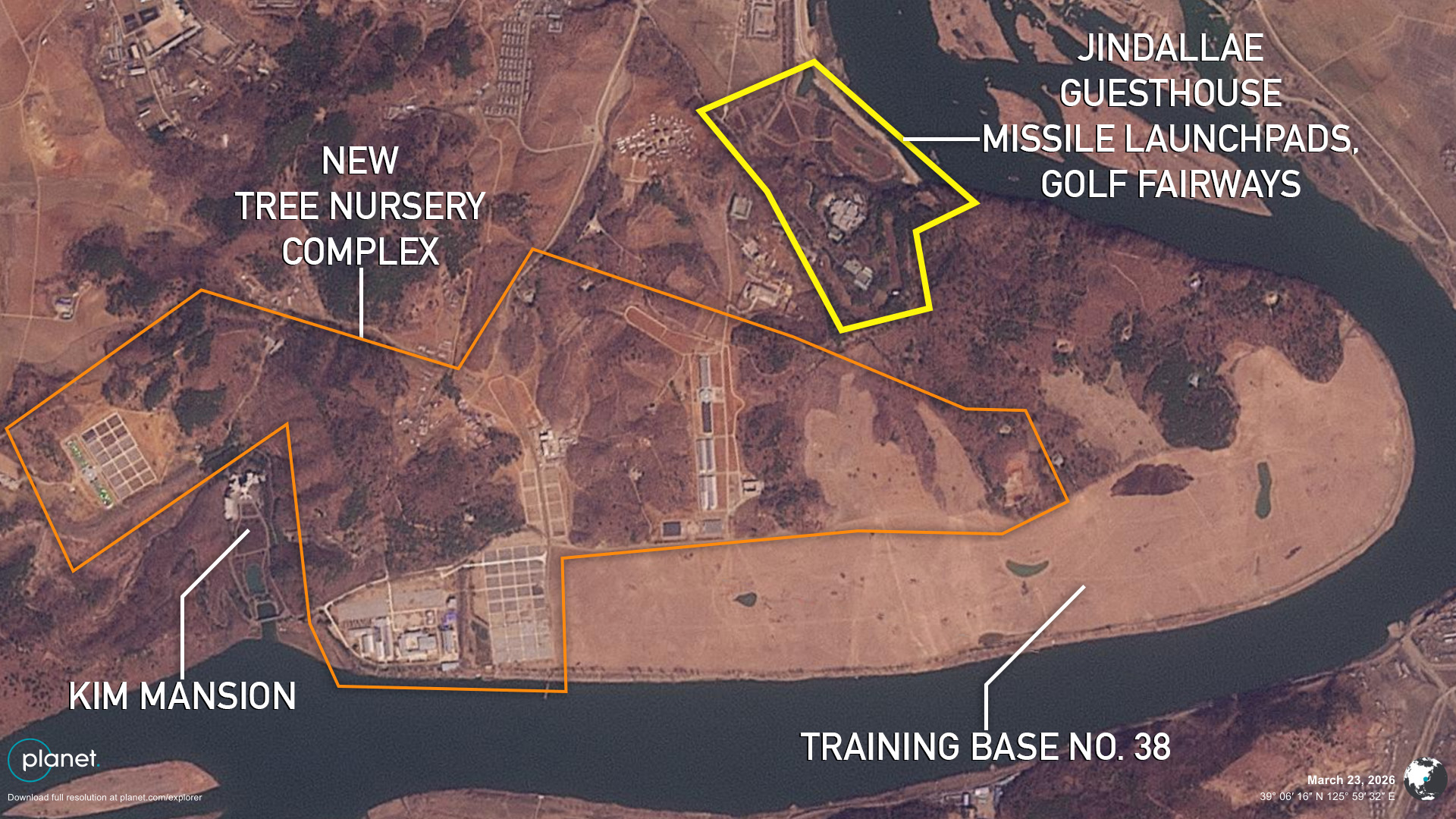
  Investigations North Korea may be hiding missile site behind new tree farm, imagery suggestsSimilarity between the project and existing military tree nursery points to attempt to obscure military activities  A large-scale construction project at a North Korean missile test site appears to be modeled after an existing military-run tree nursery, according to NK Pro analysis of satellite imagery, pointing to a possible attempt to obfuscate military activities at both locations. The new construction is located at the Korean People’s Army (KPA) Training Base No. 38 on the eastern outskirts of Pyongyang, situated among two large mansion complexes owned by leader Kim Jong Un, one of which may be called the Jindallae Guesthouse. Different areas of the base were built to serve as launchpads for tests of intercontinental ballistic missiles (ICBM) and shorter-range missiles from early 2023. One grassy area used for a missile launch in April 2024 was used last month for sniper rifle target practice by Kim, his young daughter and other officials. Initially, the new construction project at the base looked related to military activities, as it featured large new structures with apparent buried walkways connecting them. Additional hilltop areas were hardened with concrete and covered in grass, just like the known missile launchpads nearby. But NK Pro has found that hexagonal-shaped buildings, greenhouses and outdoor planting grids built at the site share design features with the KPA Tree Nursery No. 122 in Hwangju County, just southwest of Pyongyang. The similarities raise questions about the purpose of the two sites and may be part of a deliberate strategy to confuse enemies. 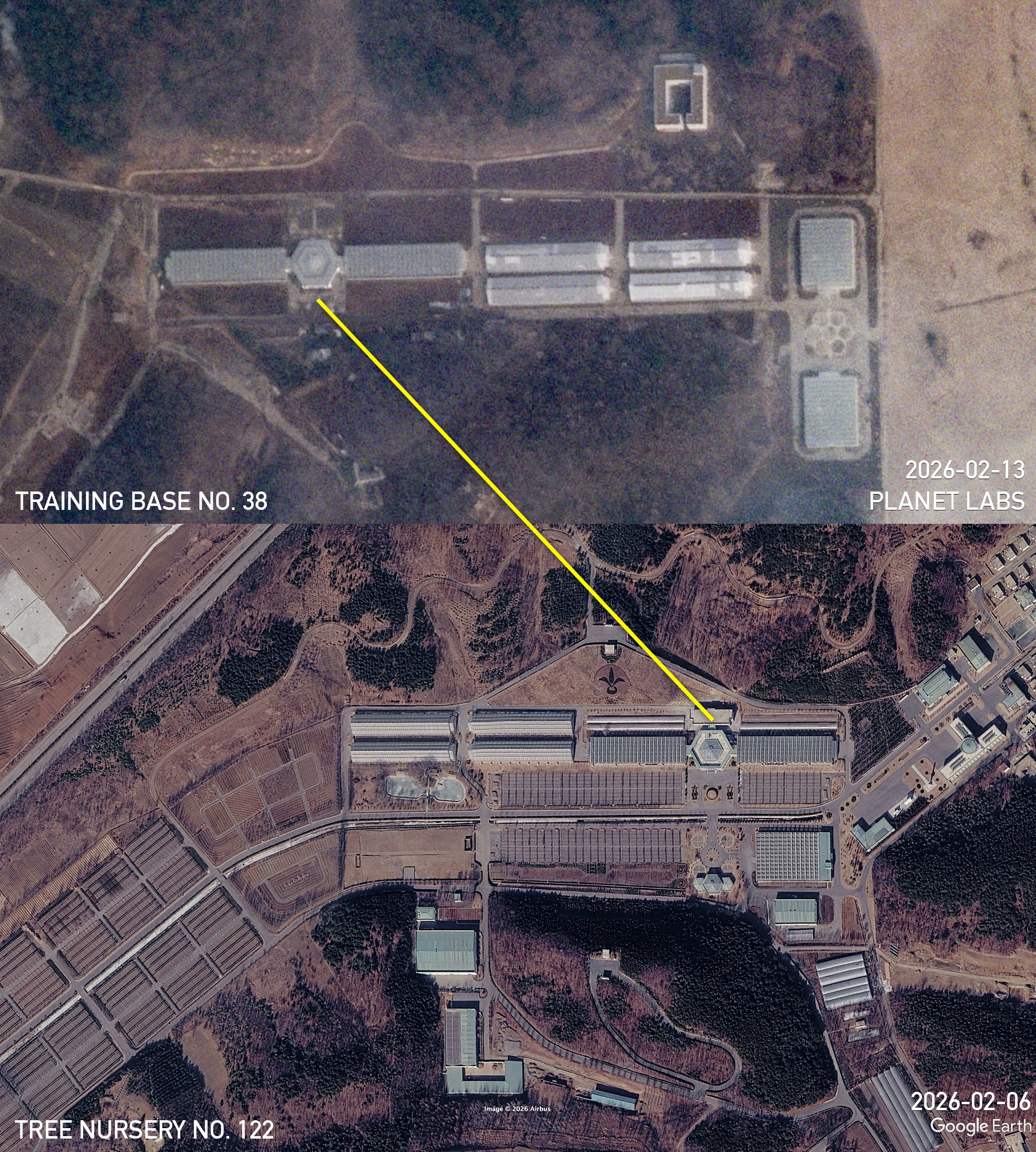
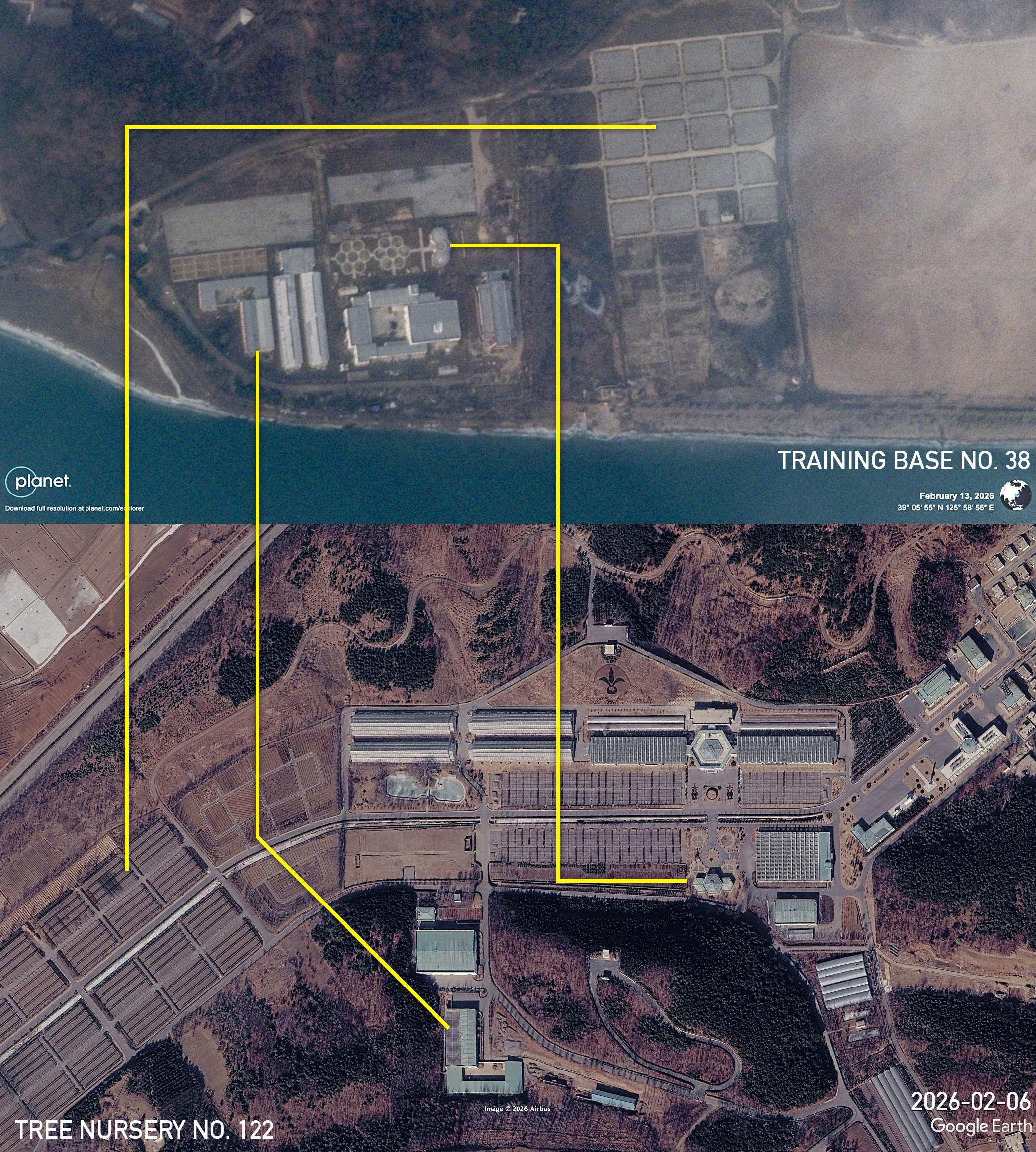
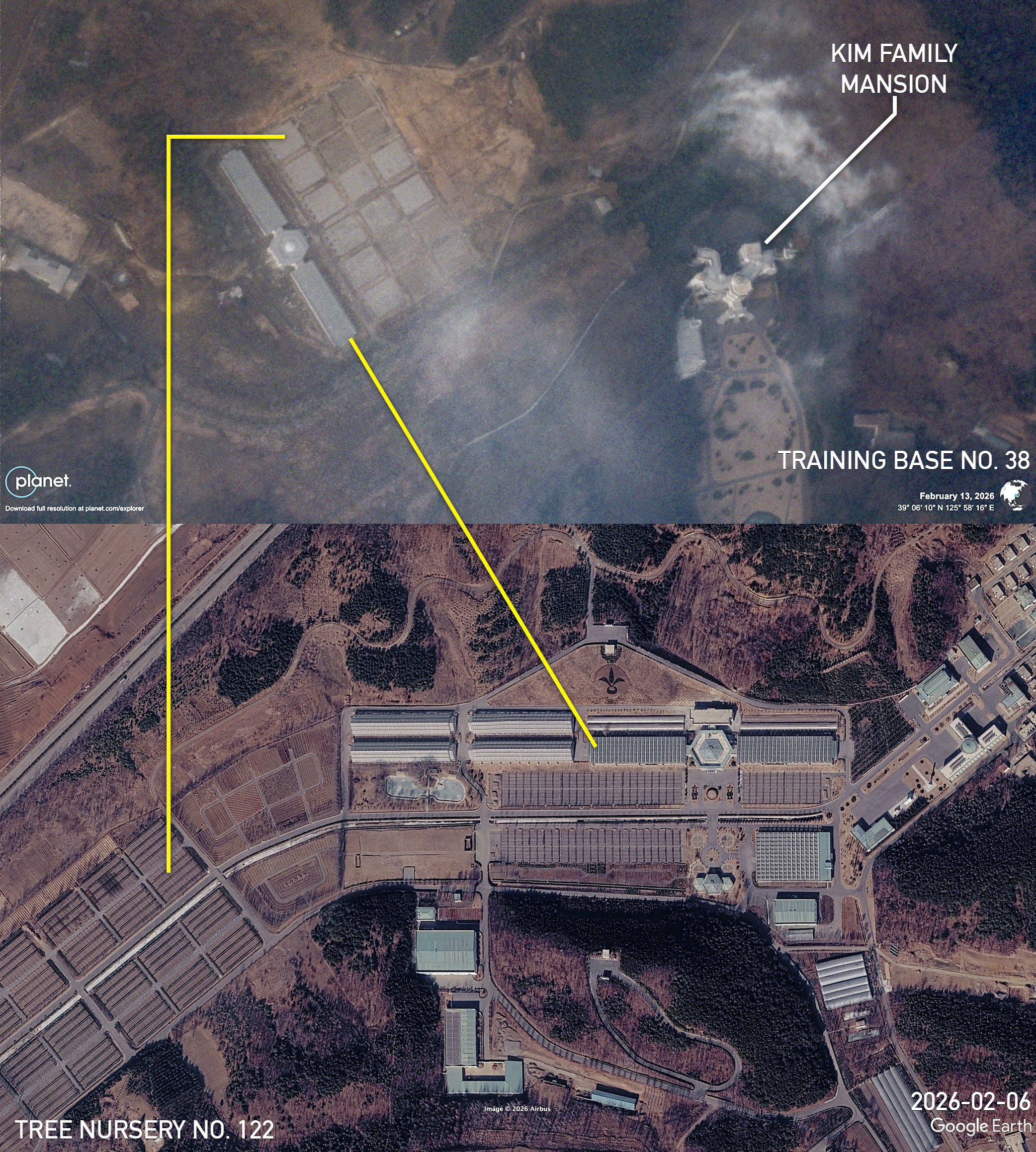
FARM NO. 122 Like Training Base No. 38, the No. 122 farm exhibits several mysterious features that suggest there is a military aspect to the complex. First, it is in a valley with active artillery installations on five surrounding hills, with more launch positions to the north. All existed prior to the farm’s construction and continue to undergo maintenance, according to Google Earth high-resolution satellite imagery, showing that the area has long been an important military site. The first roads and features of the tree nursery started to appear between 2007 and 2011, while it was expanded in 2012 and 2013. Kim then initiated wider construction of the valley in 2015. A vehicle garage was built by 2017 next to a hill and covered in ground, possibly hardened to protect important assets, before another structure was built and buried nearby the next year. 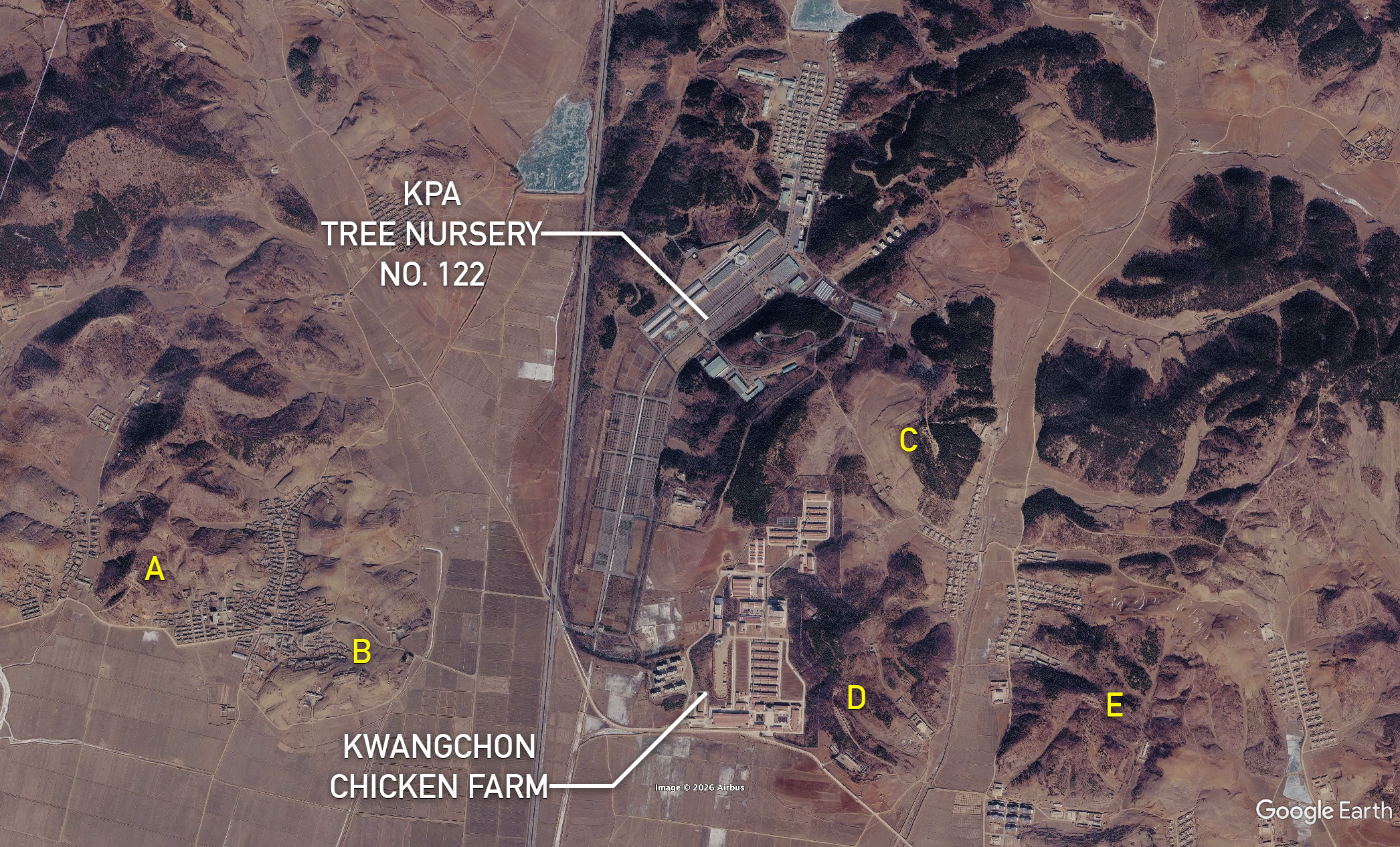
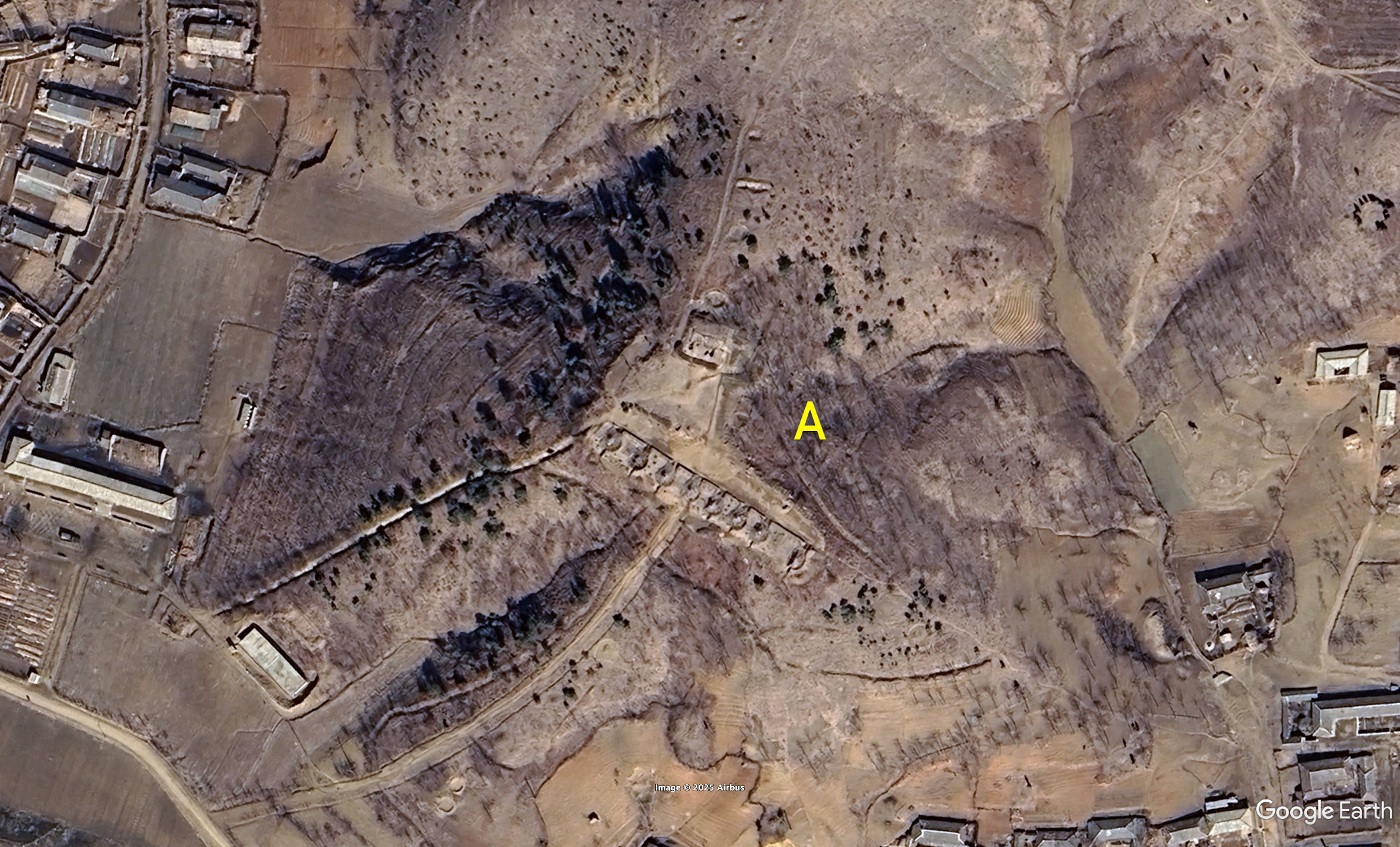
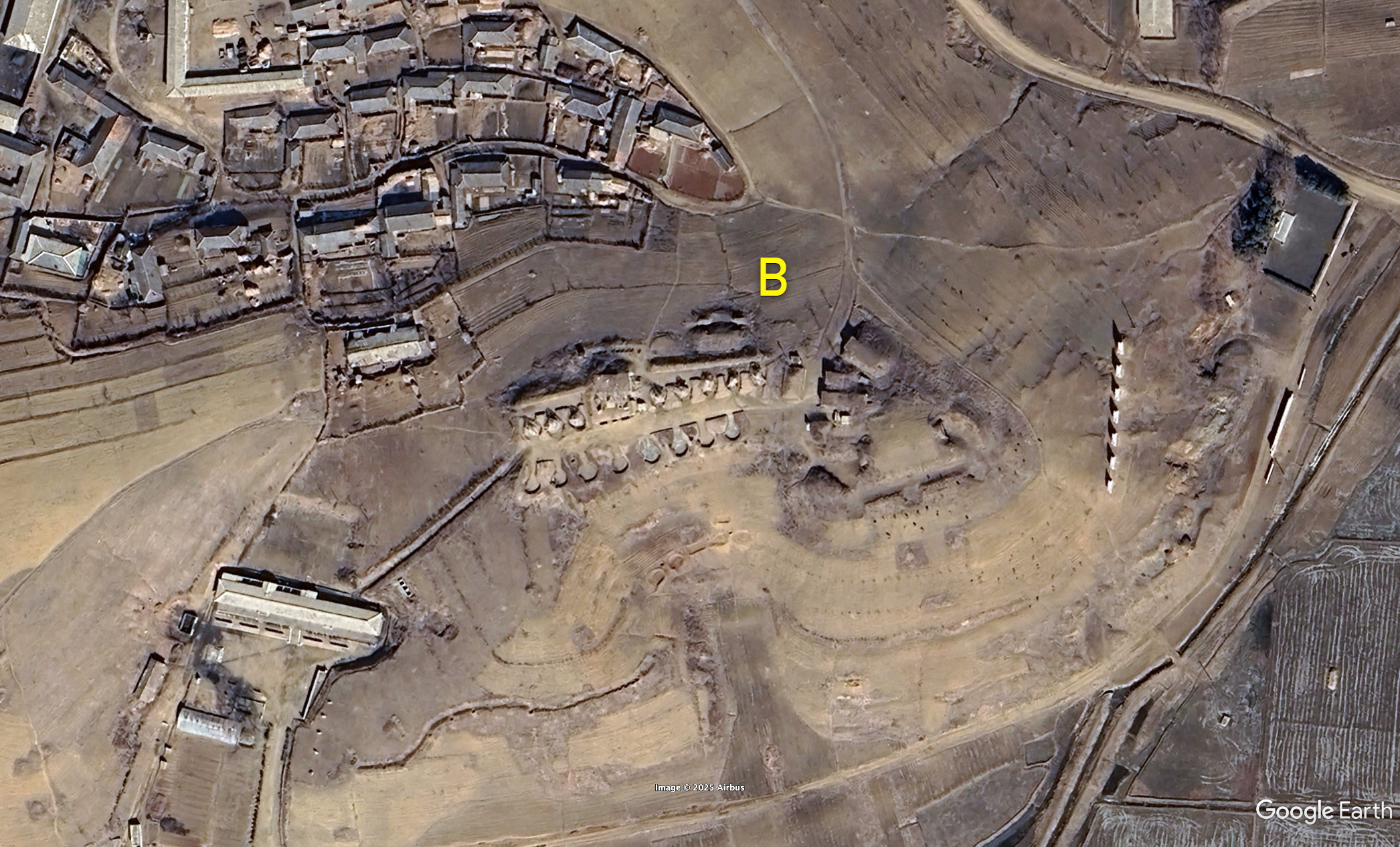
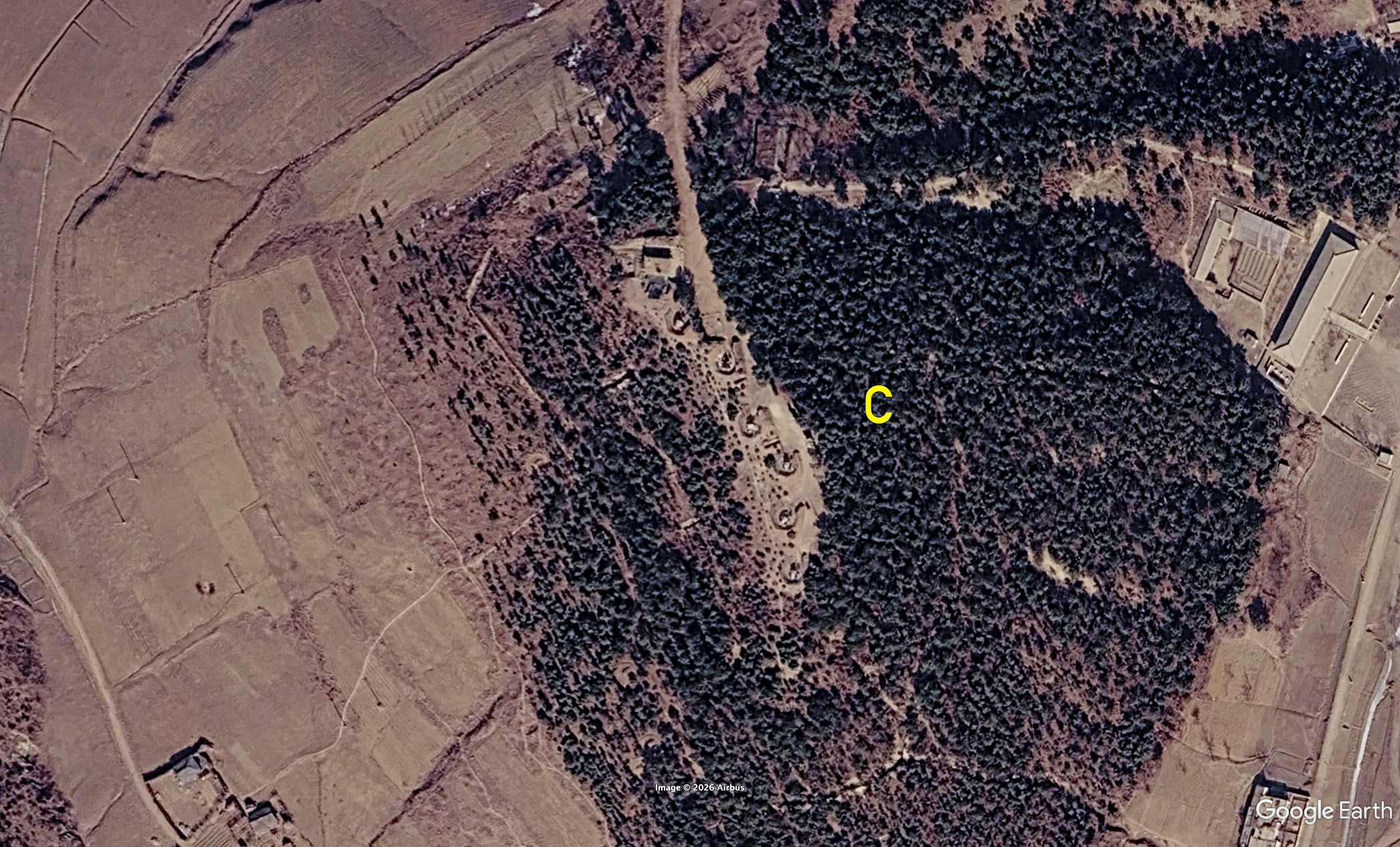
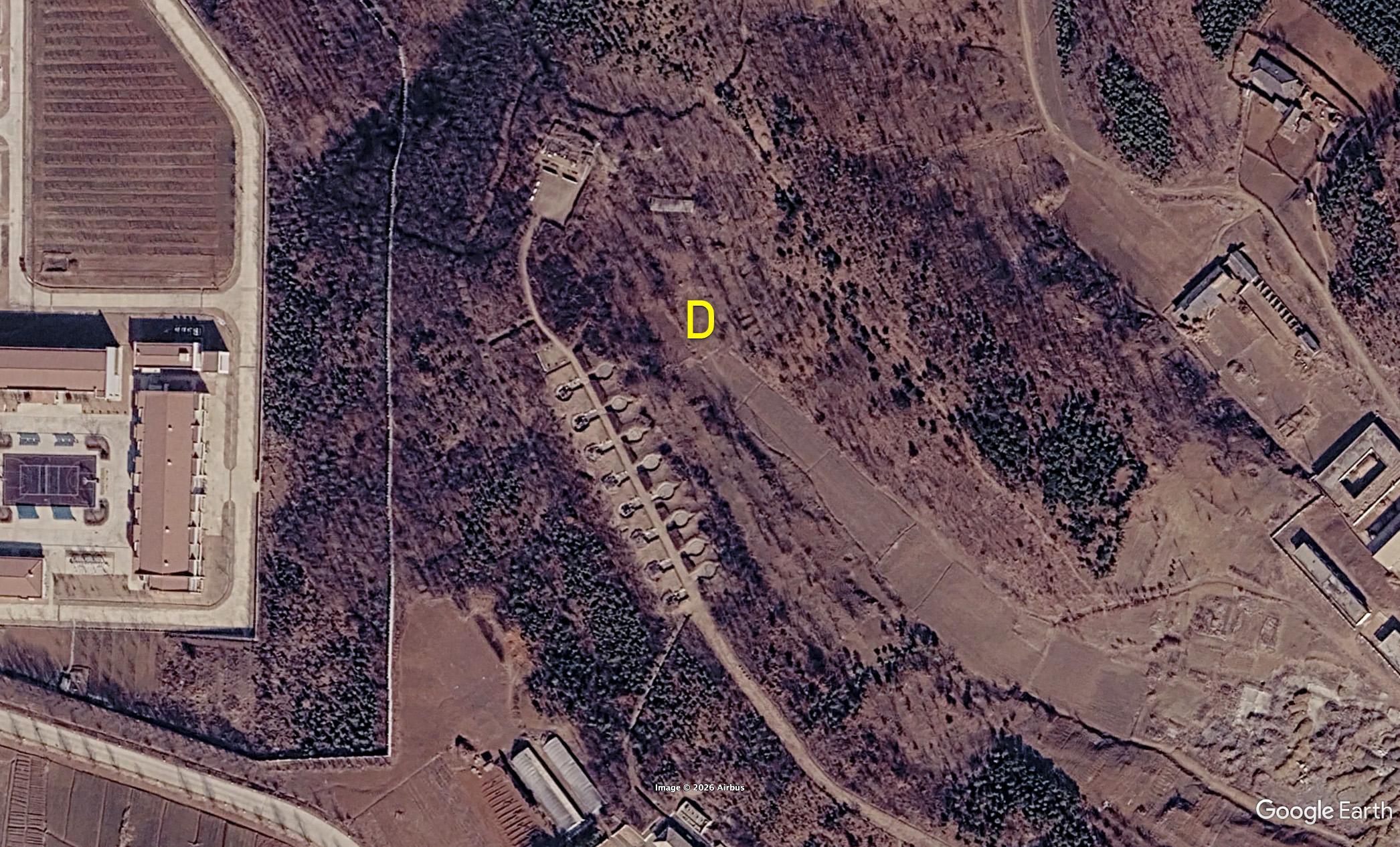
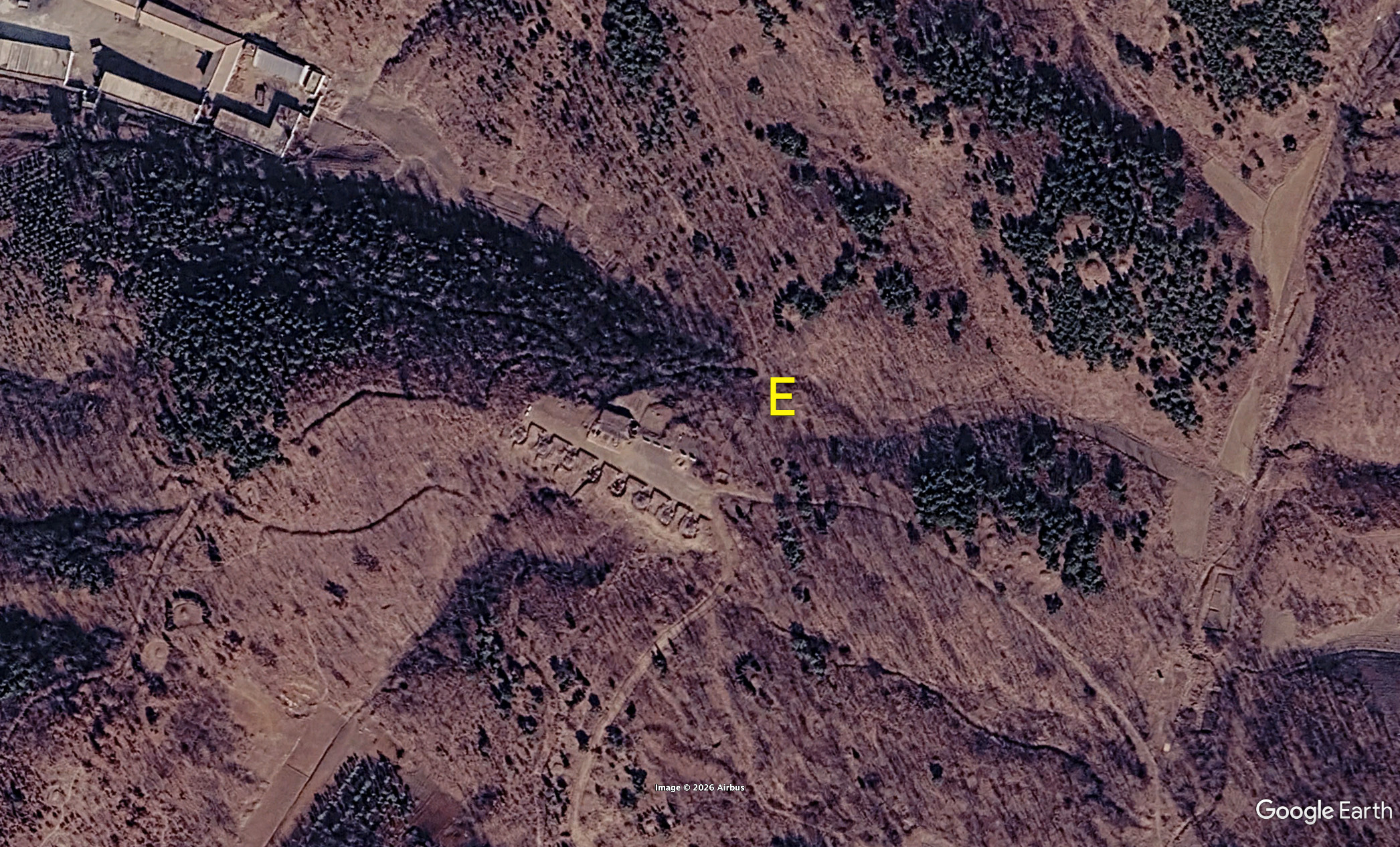
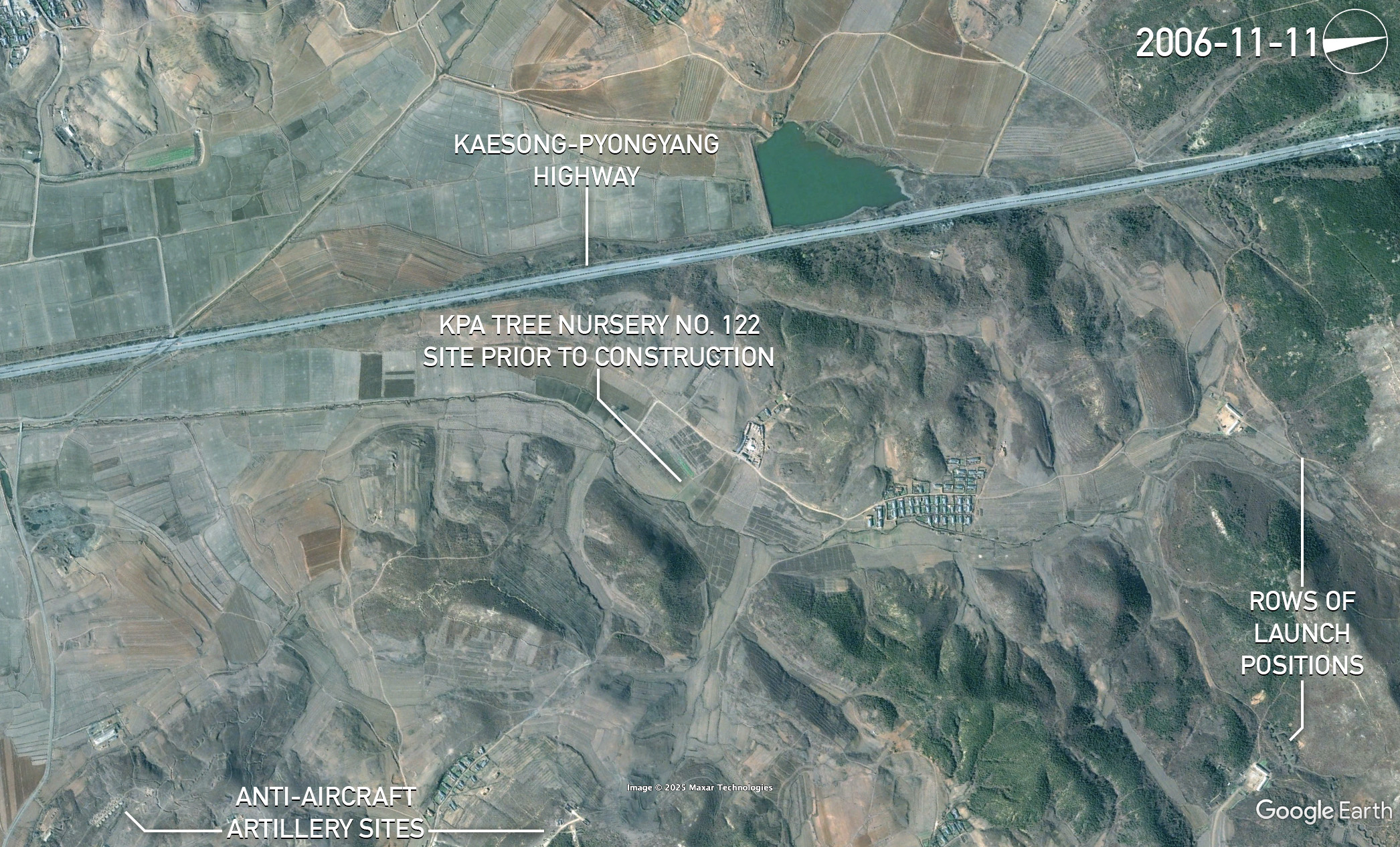
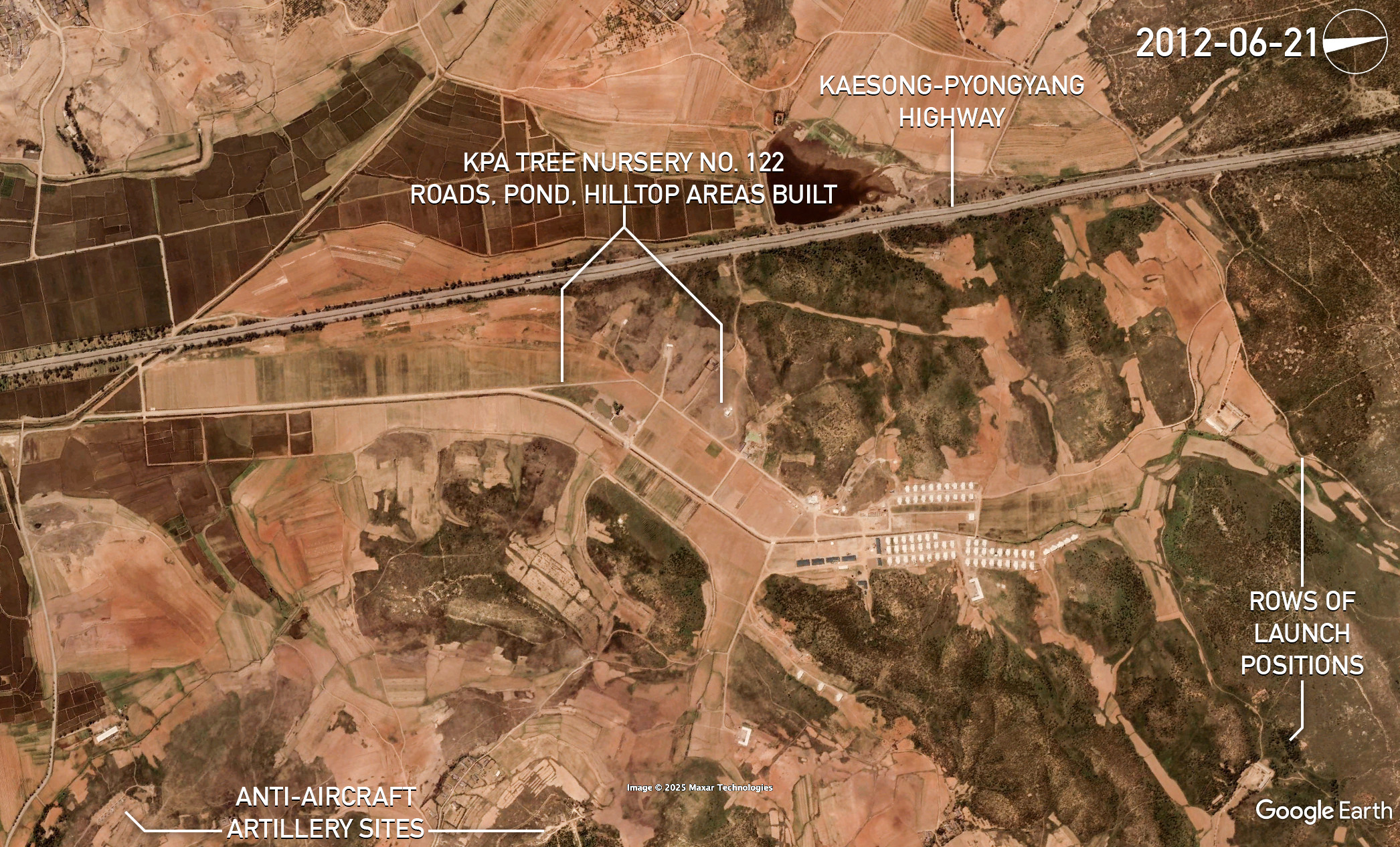
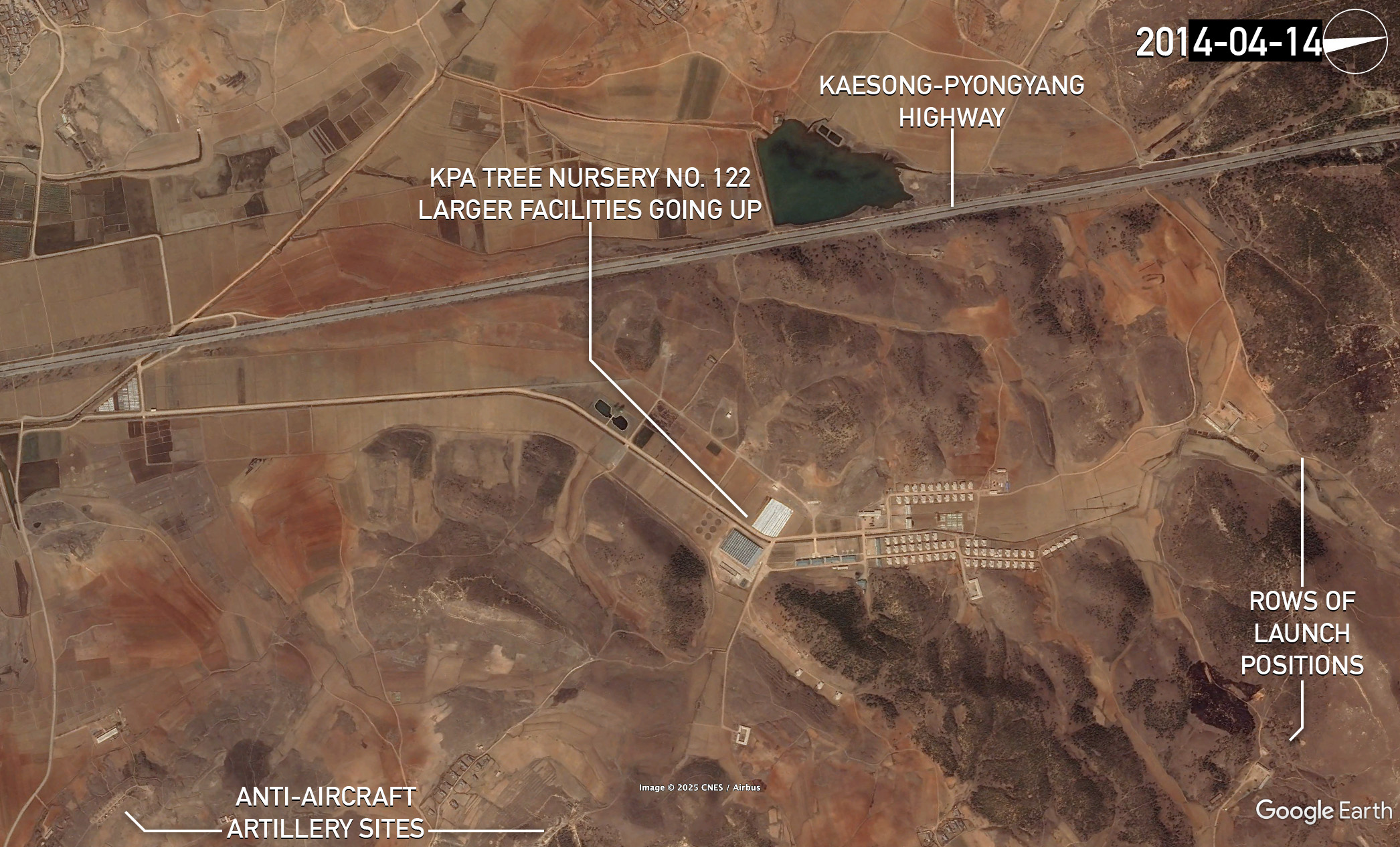
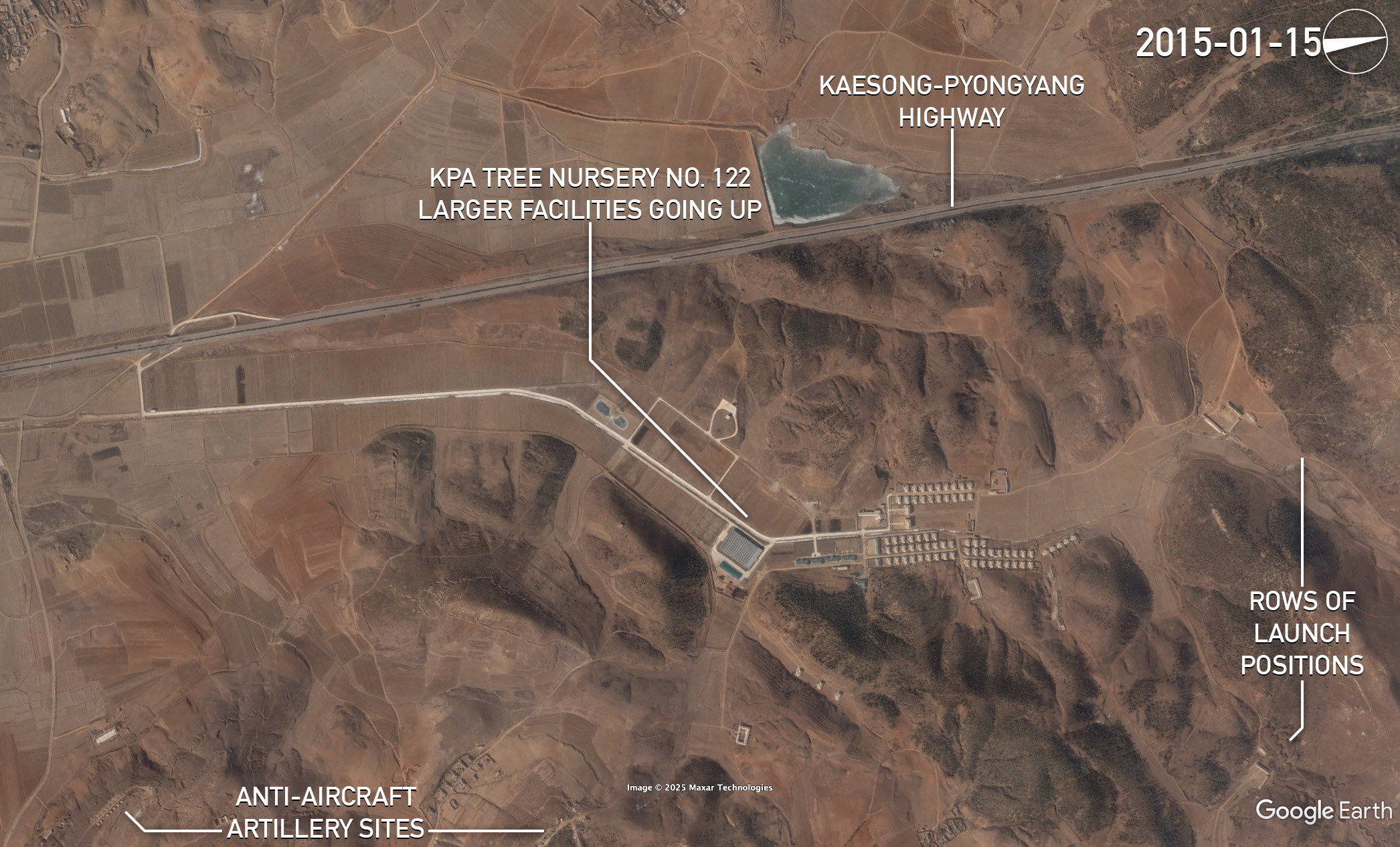
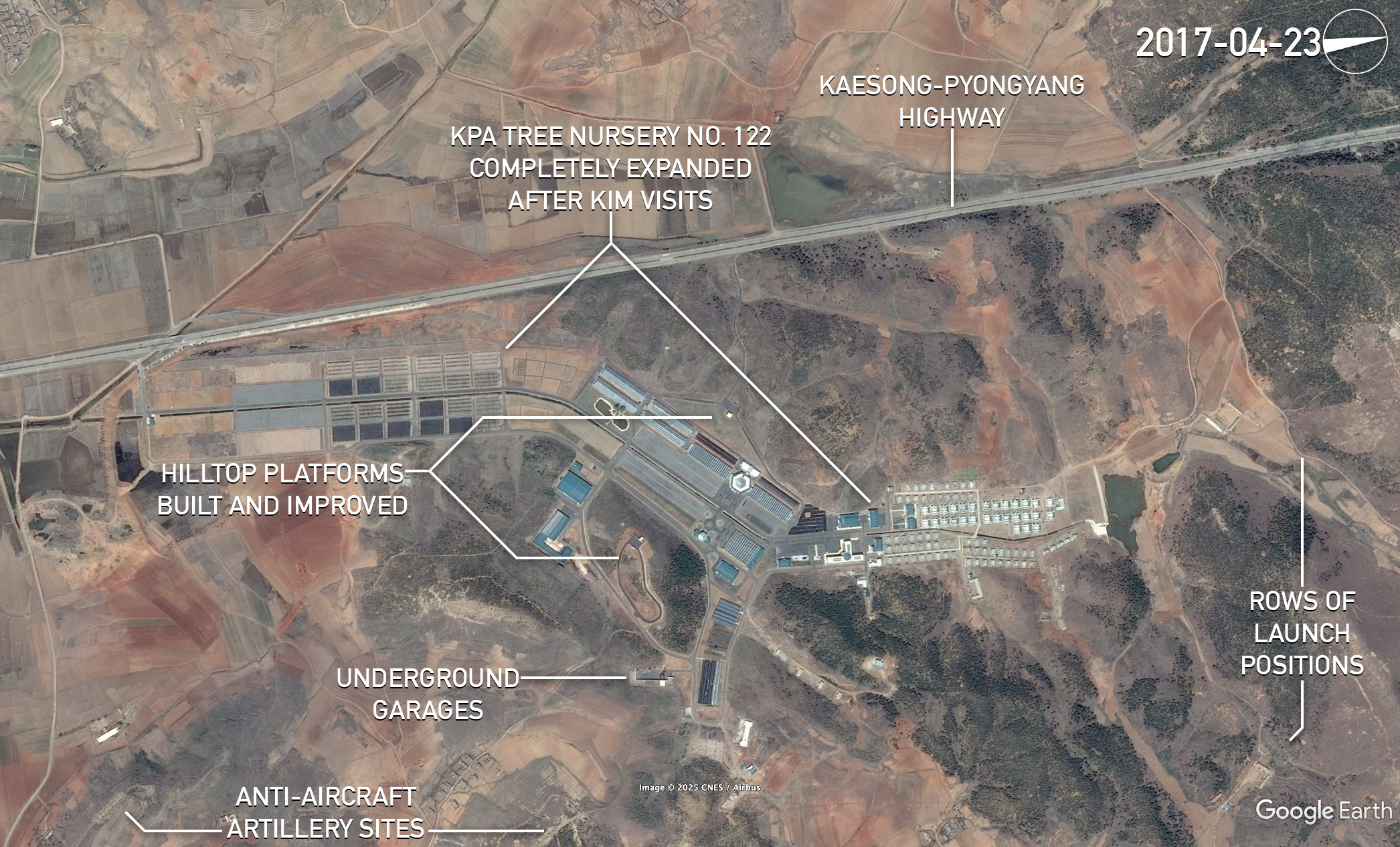
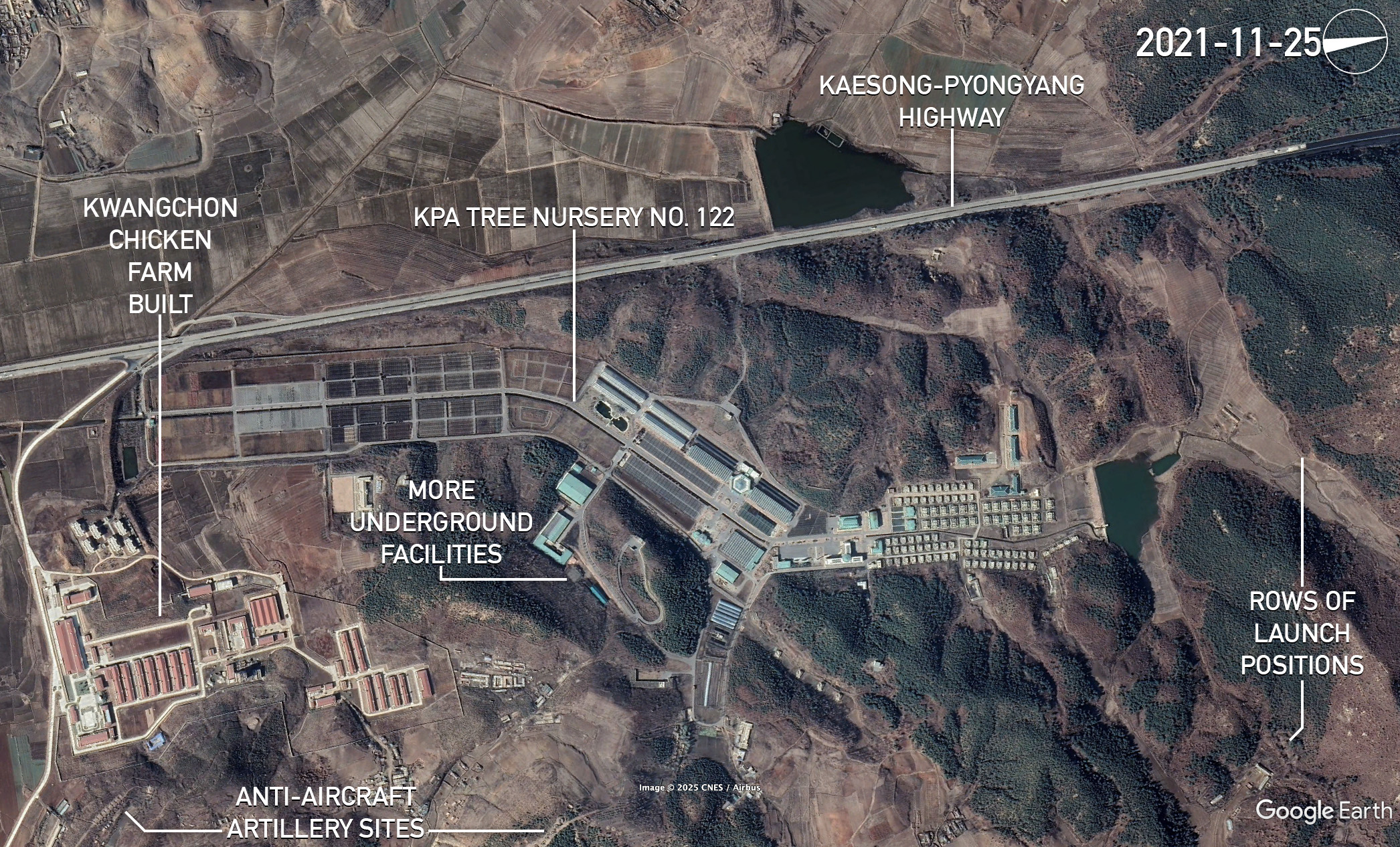
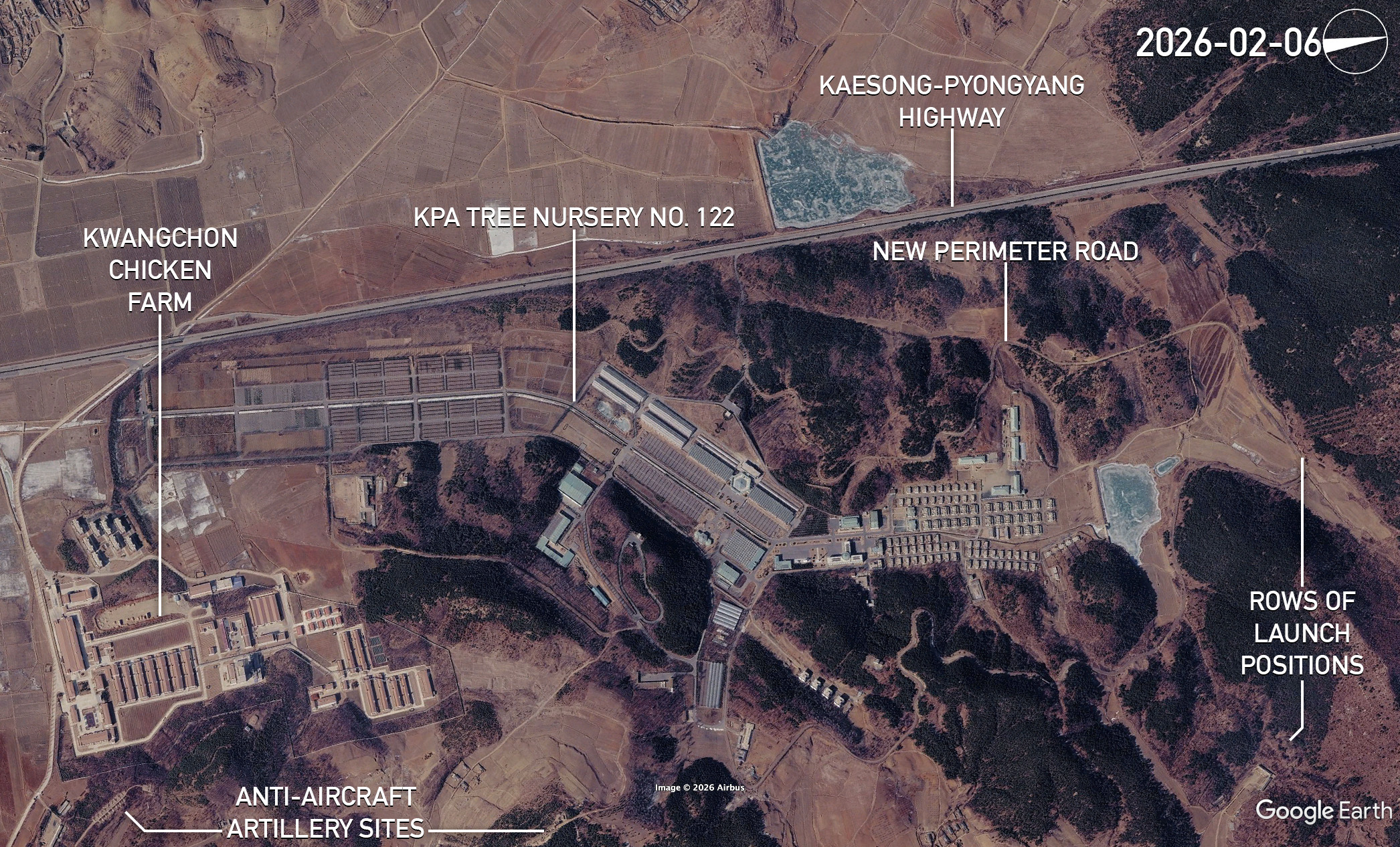
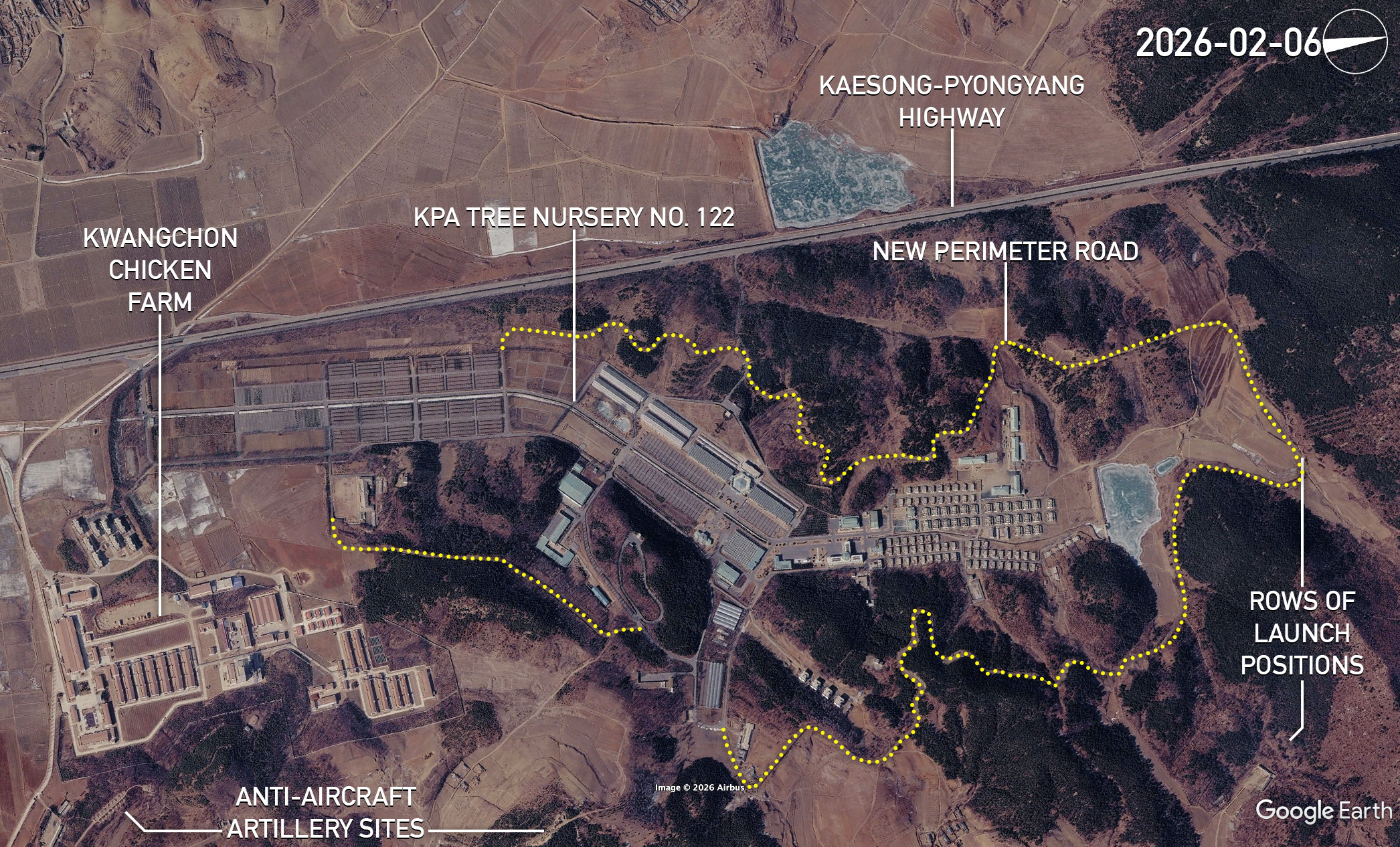
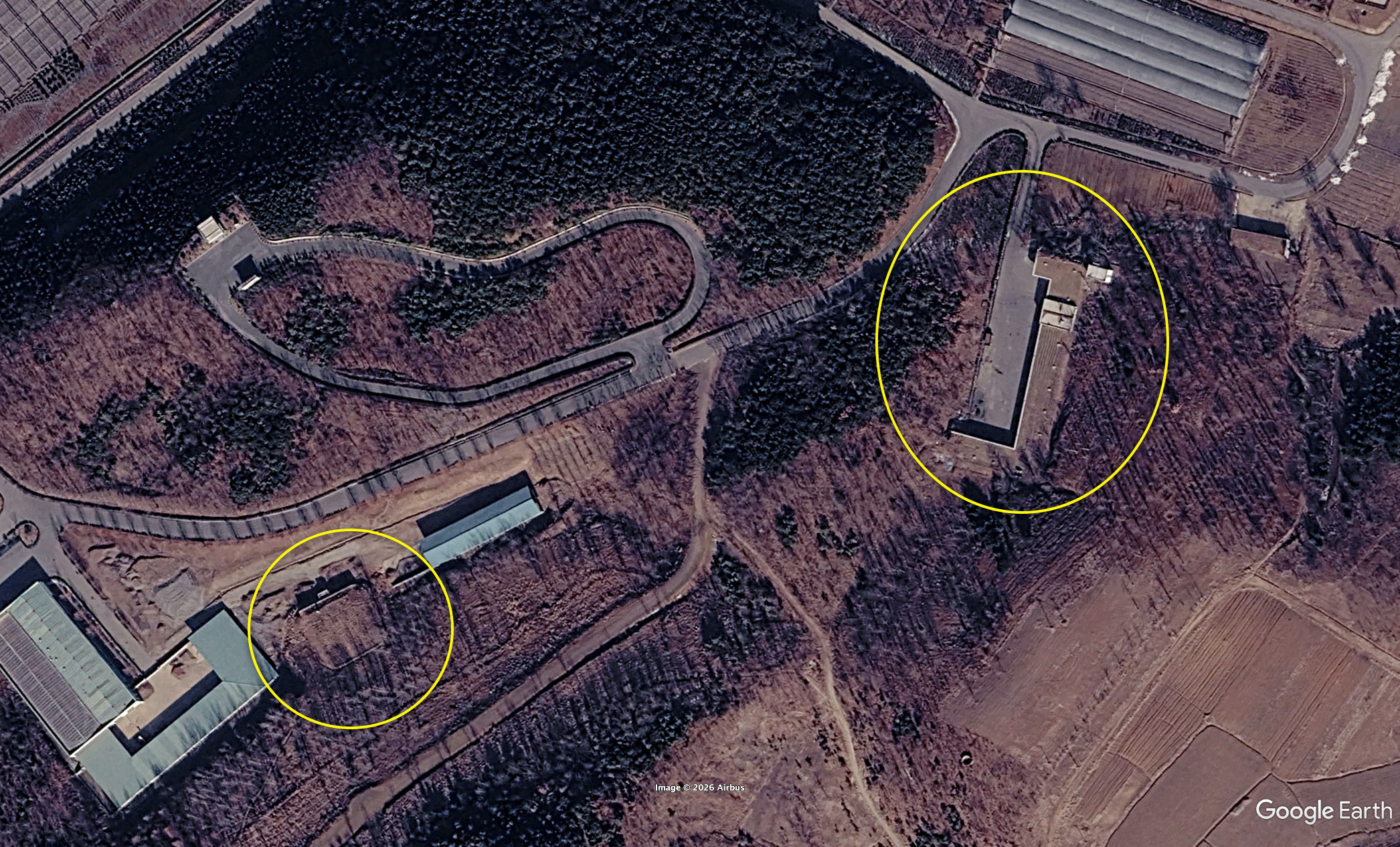
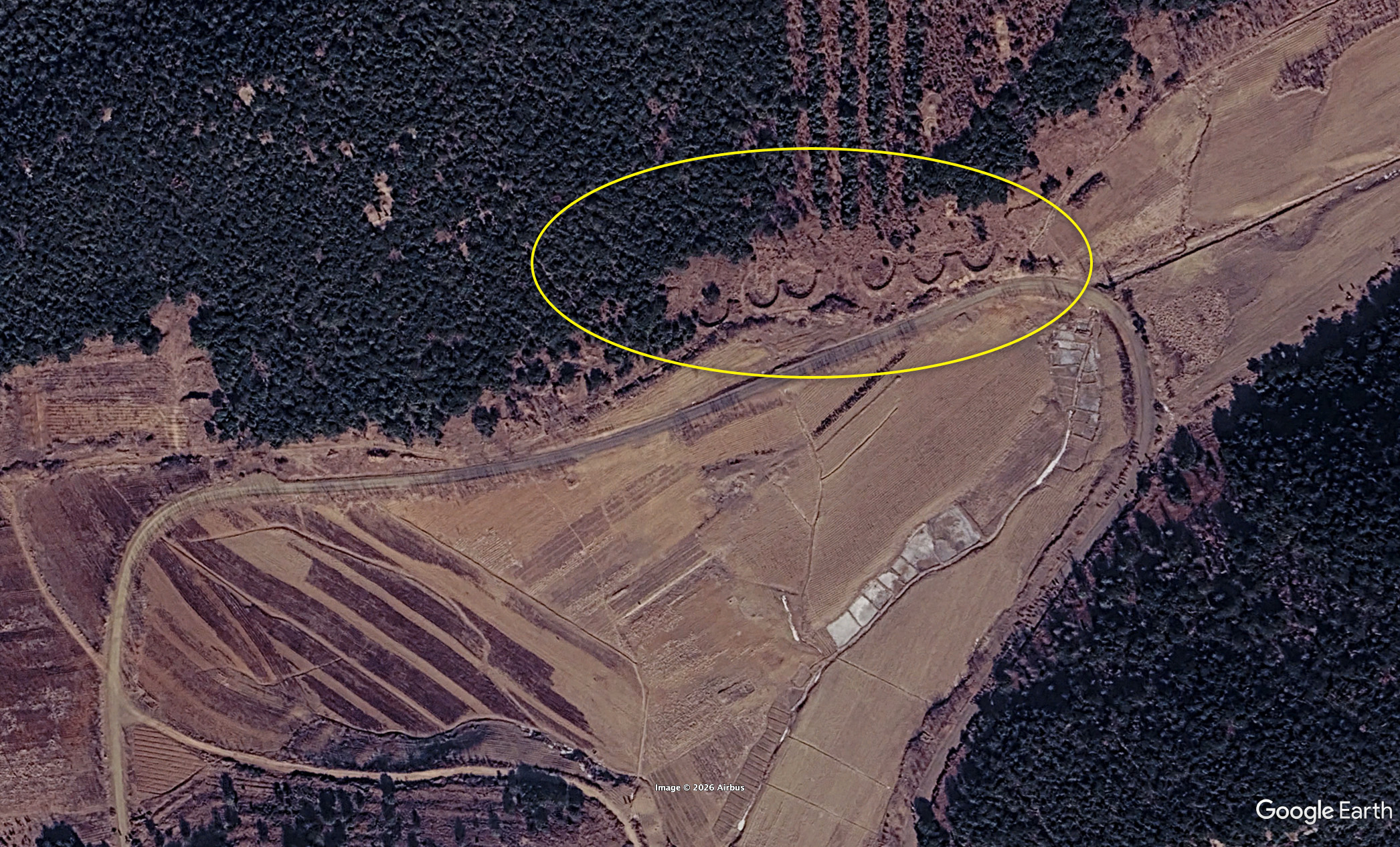
More resources were poured into the project in 2022 to build a wide road with long curves surrounding the whole compound, going past two hilltop platforms in the center as well as the old rows of circular launch positions at the north end. Such roads aren’t inherently suspicious, but they would be well-suited to large military vehicles and can also serve as a security perimeter. Kim’s keen attention to the project — he visited three times between 2015 and 2016 — is another sign that there may be more to it than state media has let on. He even continued his high interest in the location of the No. 122 farm by personally overseeing construction of the Kwangchon Chicken Farm next door from 2020 to 2024. This complex is highly secure as well, with three guarded entrances. State media quoted Kim talking about the importance of expanding tree planting to address deforestation during his No. 122 farm visits. He also said he saw the military-run facility as a trustworthy place to test ideas to later implement nationwide. However, the string of provincial tree nurseries that were subsequently built around the country followed one main design that was entirely different from the KPA No. 122 farm. AN ENVIRONMENTAL DISGUISE? The most innocent explanation for the combination of military and non-military construction at the No. 122 farm is that Kim trusts the soldiers there to carry out experimental projects, and all army activities in the area are coincidental. However, the reappearance of the same design features as the No. 122 farm at Training Base No. 38 raises the possibility that Pyongyang is attempting to hide some military activities behind legitimate environmental facilities at the two locations. North Korea has a history of attempting to disguise military bases and factories. For example, Pyongyang has called weapons factories “tractor plants” and dressed up another new apparent missile base with golf course features last year. One of the missile test launchpads at the so-called Jindallae Guesthouse was also built to resemble a putting green surrounded by ponds, while the mansion has featured a small golf course that may have been related to launch contingencies for years. The newest facility would not be the first tree nursery to be involved in missiles: Kim Jong Un oversaw a missile test from the Central Tree Nursery under the Ministry of Land and Environment Protection in Sept. 2022. If not to solely disguise military installations, building a tree farm at military bases could simply serve to confuse enemies about the purpose of occasional military movements, as activity becomes constant and almost always related to tree planting. As part of presenting the No. 122 farm as a legitimate tree nursery, North Korea invited high-profile South Korean guests including Samsung Chairman Lee Jae-yong in 2018, suggesting not all areas of the site are sensitive. It indeed appears to function as a large-scale tree nursery, and the new one likely will too. Regardless of the true purpose of the tree nursery facilities at Training Base No. 38, it is likely that the sprawling complex it resides in will continue to be used for military drills and missile tests. In recent weeks, Planet Labs satellite imagery has revealed controlled burning of many acres of grass in the riverside military training area as well as ICBM launchpads, a regular wildfire prevention maintenance measure seen annually at military bases and Kim mansions. 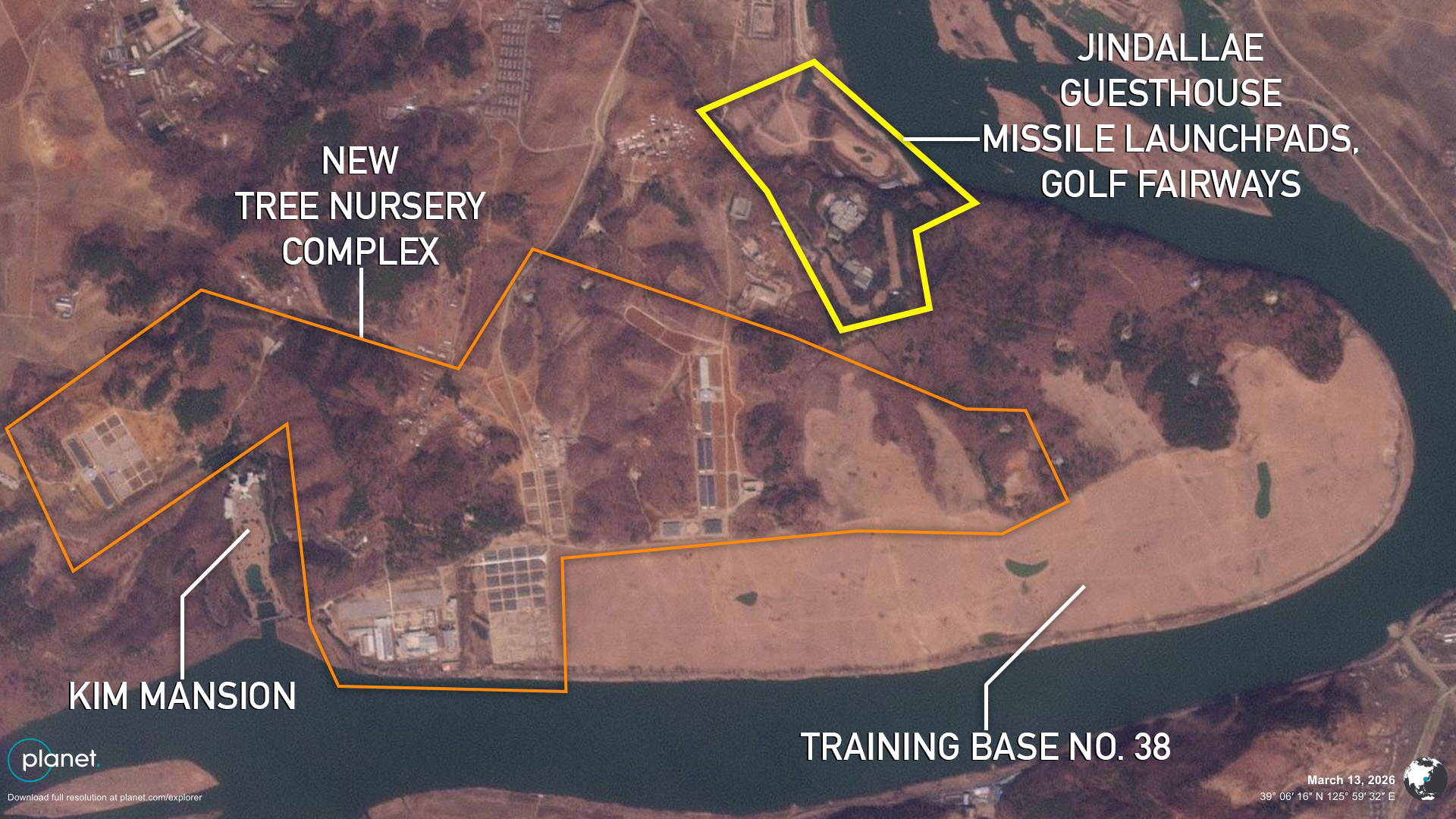
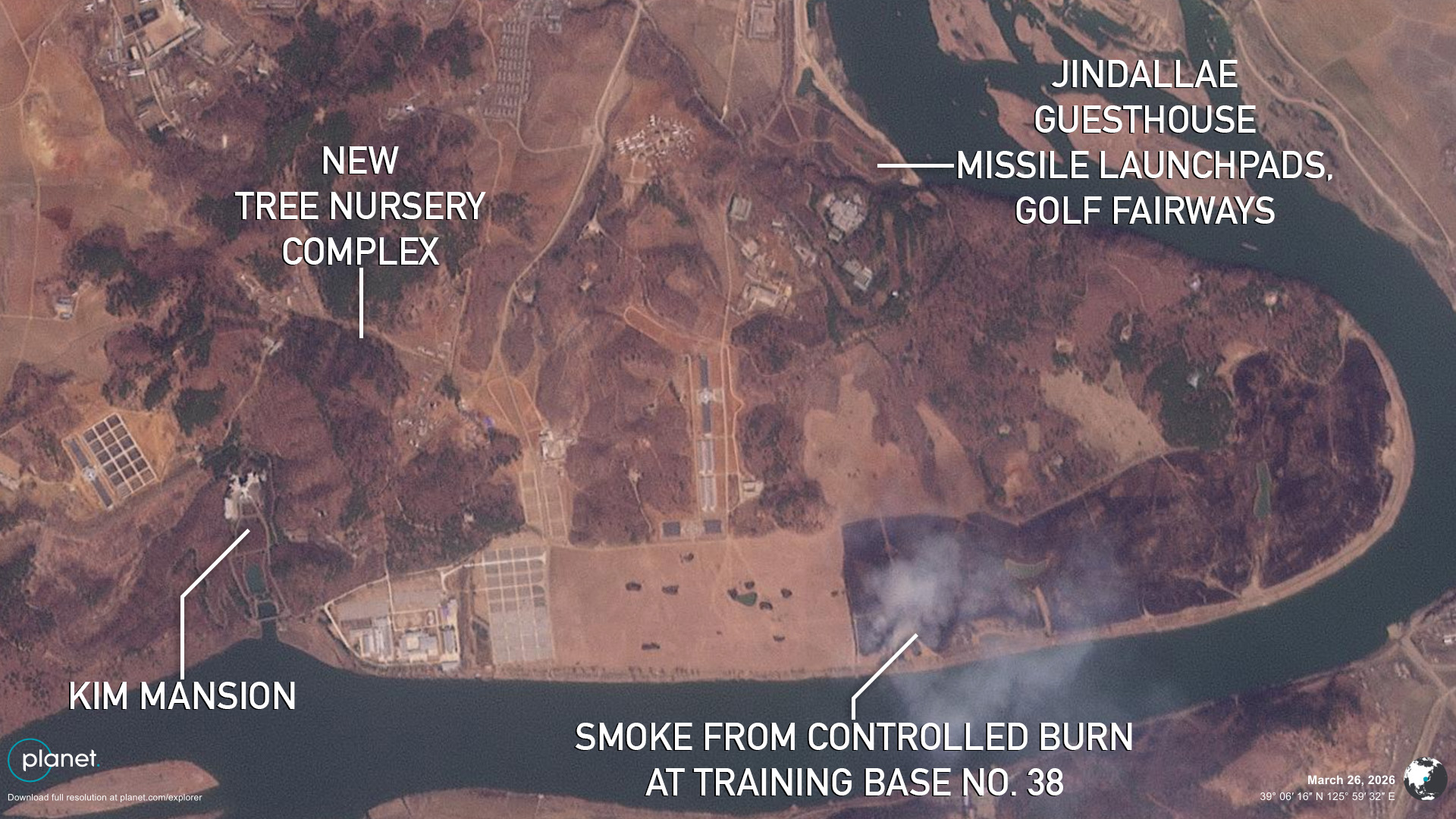
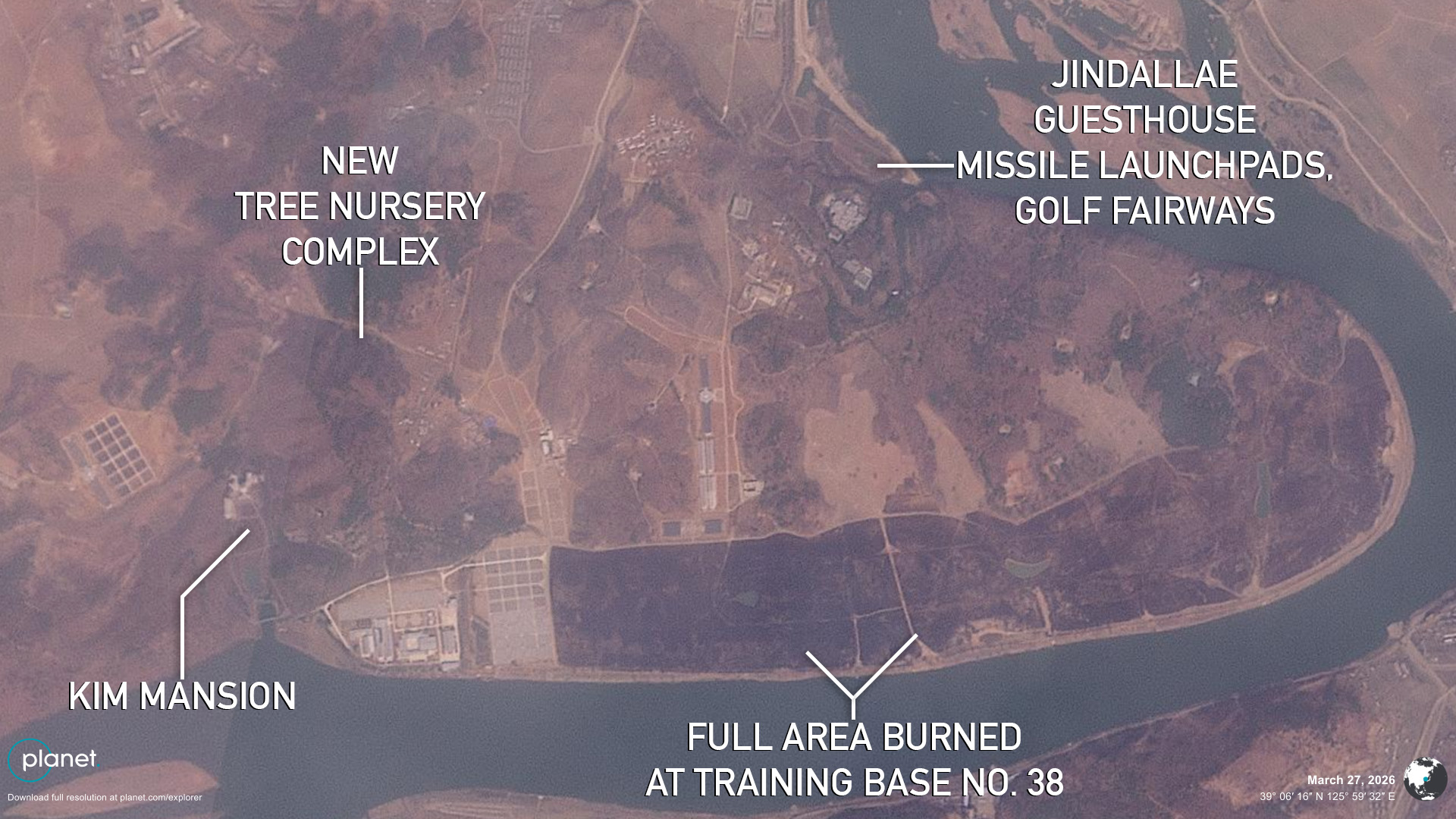
Meanwhile, it remains unknown why a large apparent construction worker camp was built almost two years ago at another tree farm south of Pyongyang. The area around the Central Tree Nursery under the Ministry of Urban Management is dominated by missile bases, including the one disguised as a golf course. The camp remains in place today, but no new construction has taken place in the time since. Edited by Bryan Betts © Korea Risk Group. All rights reserved. |

October 20, 2026Oct 20, 2026

The ultimate resources for professionals working on North Korea
 SHARE
SHARE COPY LINK
 X
X MASTODON