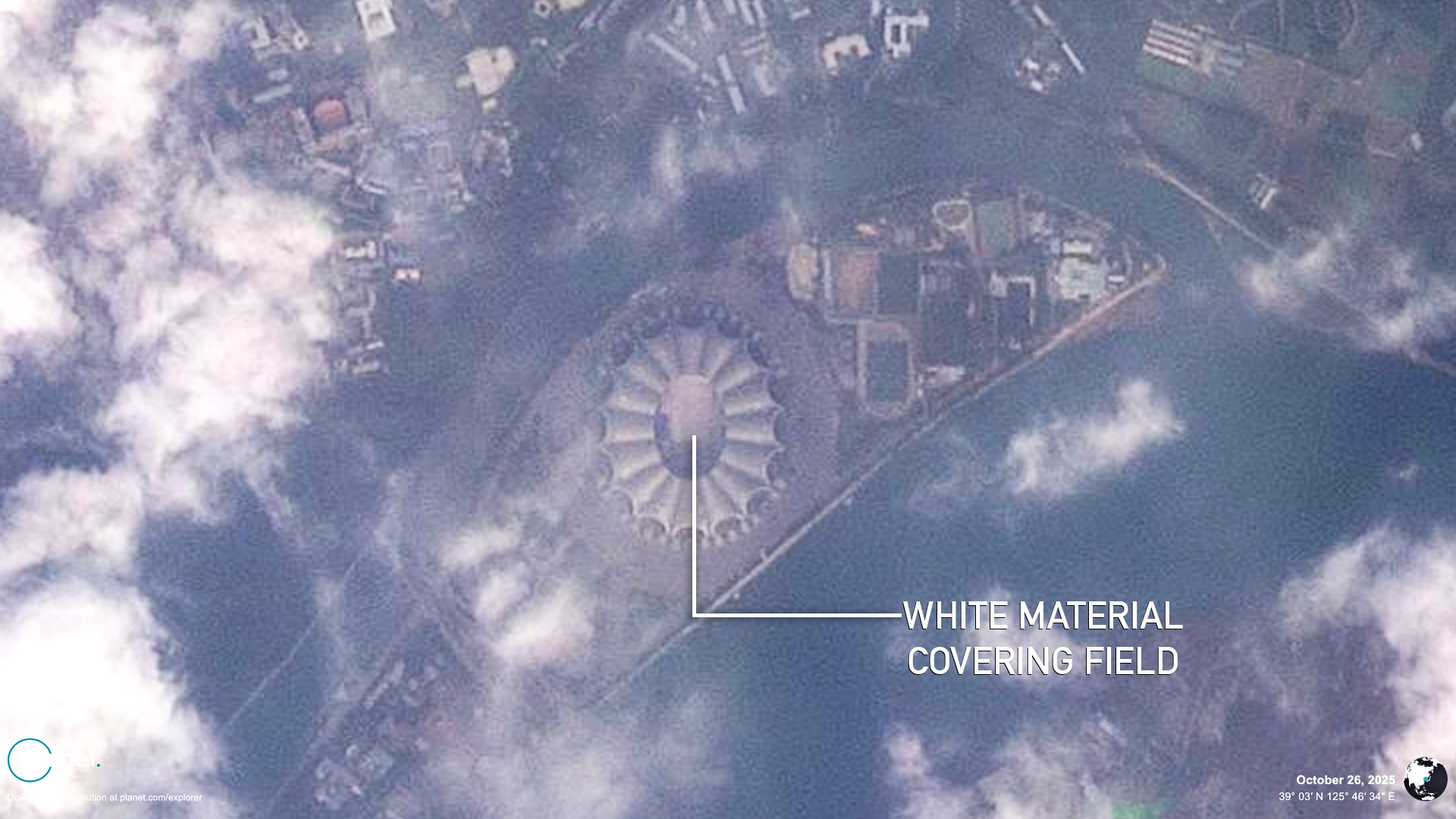
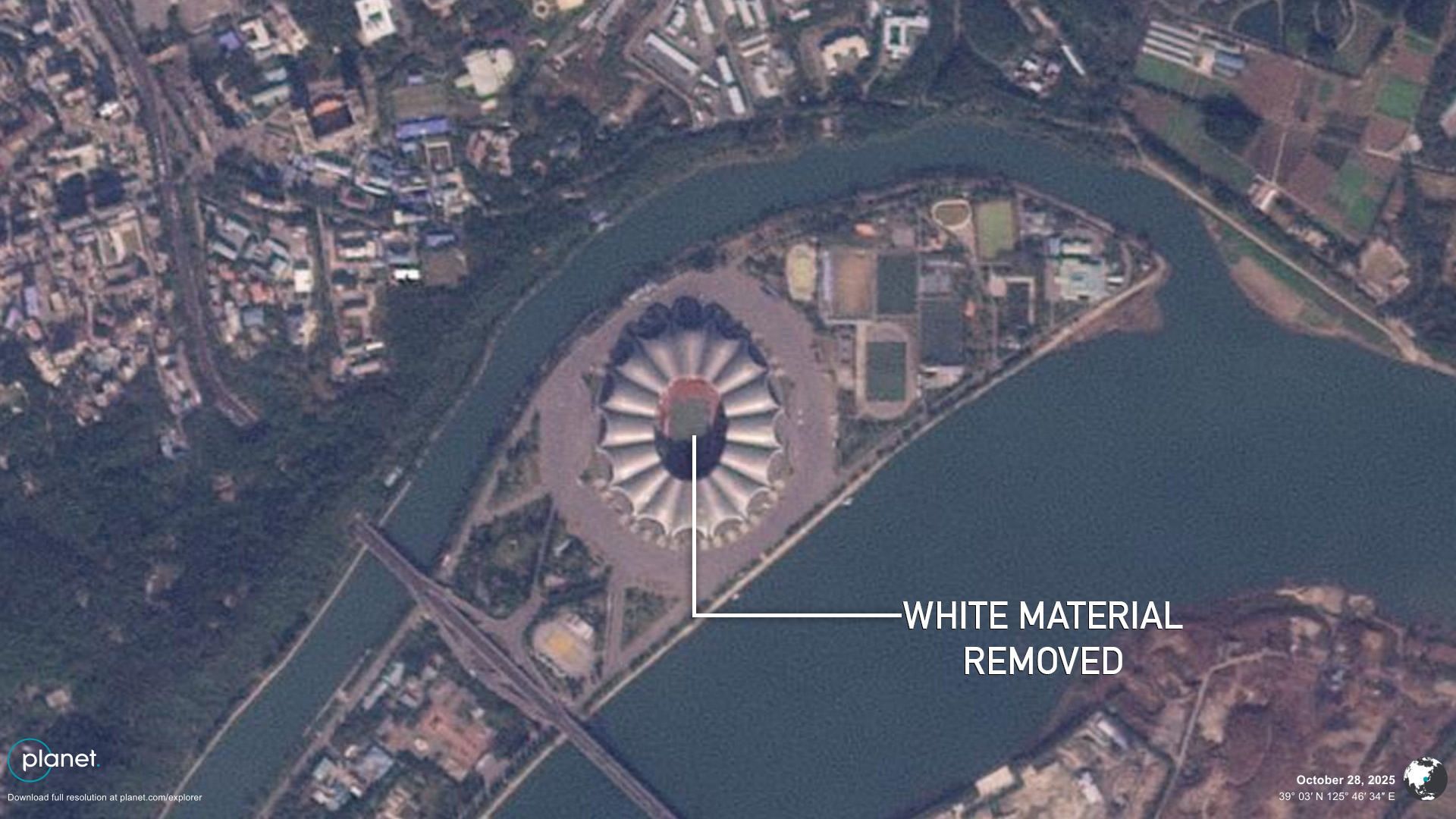
  Investigations North Korea ends ‘mass games’ propaganda spectacle after two-week runFirst edition in five years focused on glorifying Kim Jong Un to citizens rather than earning cash from foreign tourists  North Korea has ended this year’s run of large-scale propaganda performances known informally as the “mass games,” two weeks after the first show, according to NK Pro analysis of satellite imagery. Planet Labs imagery shows that white material covering the field of May Day Stadium in Pyongyang to facilitate the events was removed between Oct. 26 and 28, indicating the performances have ceased. It was the country’s first mass games in five years, solidifying a shift in the purpose of the events from a money-making opportunity targeting foreign tourists to a tool for encouraging social conformity targeting domestic audiences. North Korea has mobilized tens of thousands of people, from young children to adults, for decades to perform the mass games. The shows feature synchronized dances in costumes that dramatize official state narratives, while other performers flip colored pages to create the “human pixel” backdrop of propaganda art and slogans glorifying leader Kim Jong Un and the ruling party. Pyongyang calls the events the “Grand Mass Gymnastics and Artistic Performance.” This year’s show was titled “Long Live the Workers’ Party of Korea (WPK)” (조선로동당 만세). 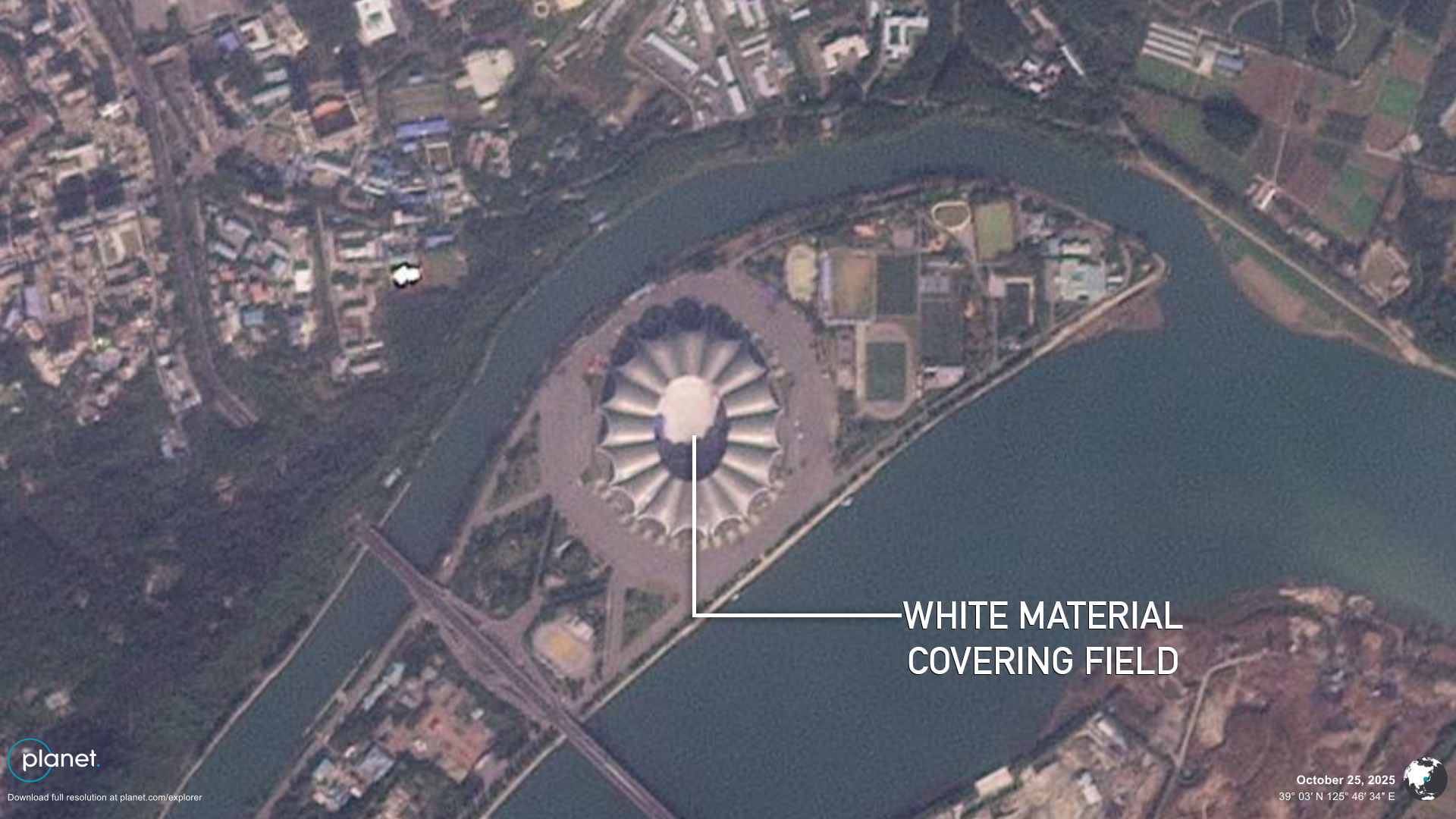
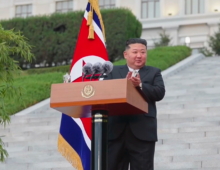
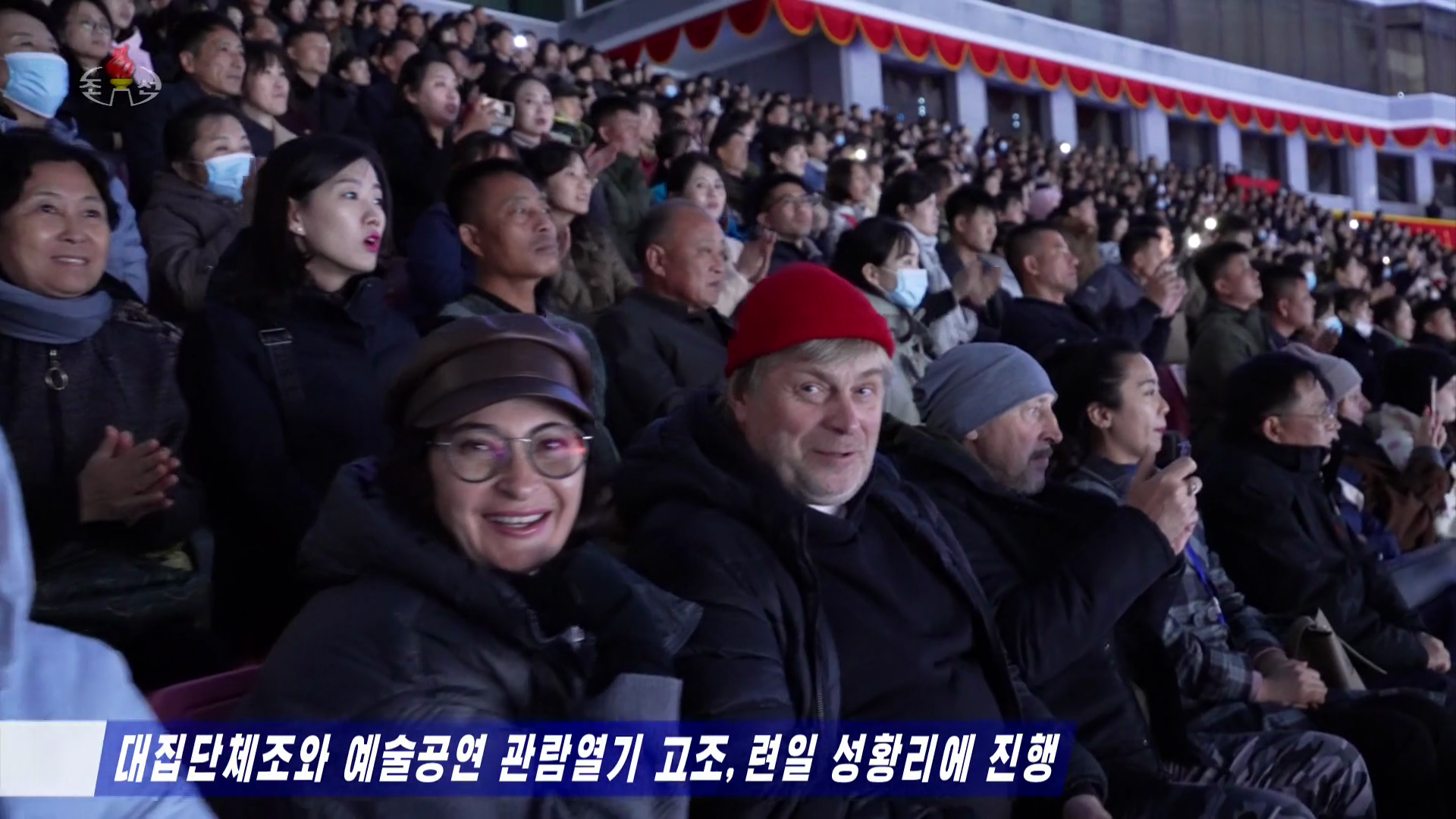
2025 MASS GAMES DPRK leader Kim Jong Un attended the first show on Oct. 9 with high-level Chinese, Russian and Vietnamese guests, as well as the second show on Oct. 12 with military parade participants. State media reported last week that the event was being held “every day” for domestic attendees brought in by party-affiliated groups at workplaces and schools, suggesting up to 17 performances could have taken place between Oct. 9 and 27, when the flooring was removed. Korean Central Television (KCTV) aired a full broadcast last week of the 75-minute show from Oct. 9 (see video here, or here at the KCNA Watch KCTV Archive at the 11:28:00 mark). It started with a brief official history about the WPK before songs praising “the Party of Kim Jong Un” and his “singular” and unchallengeable totalitarian system, urging citizens to be loyal and obedient. 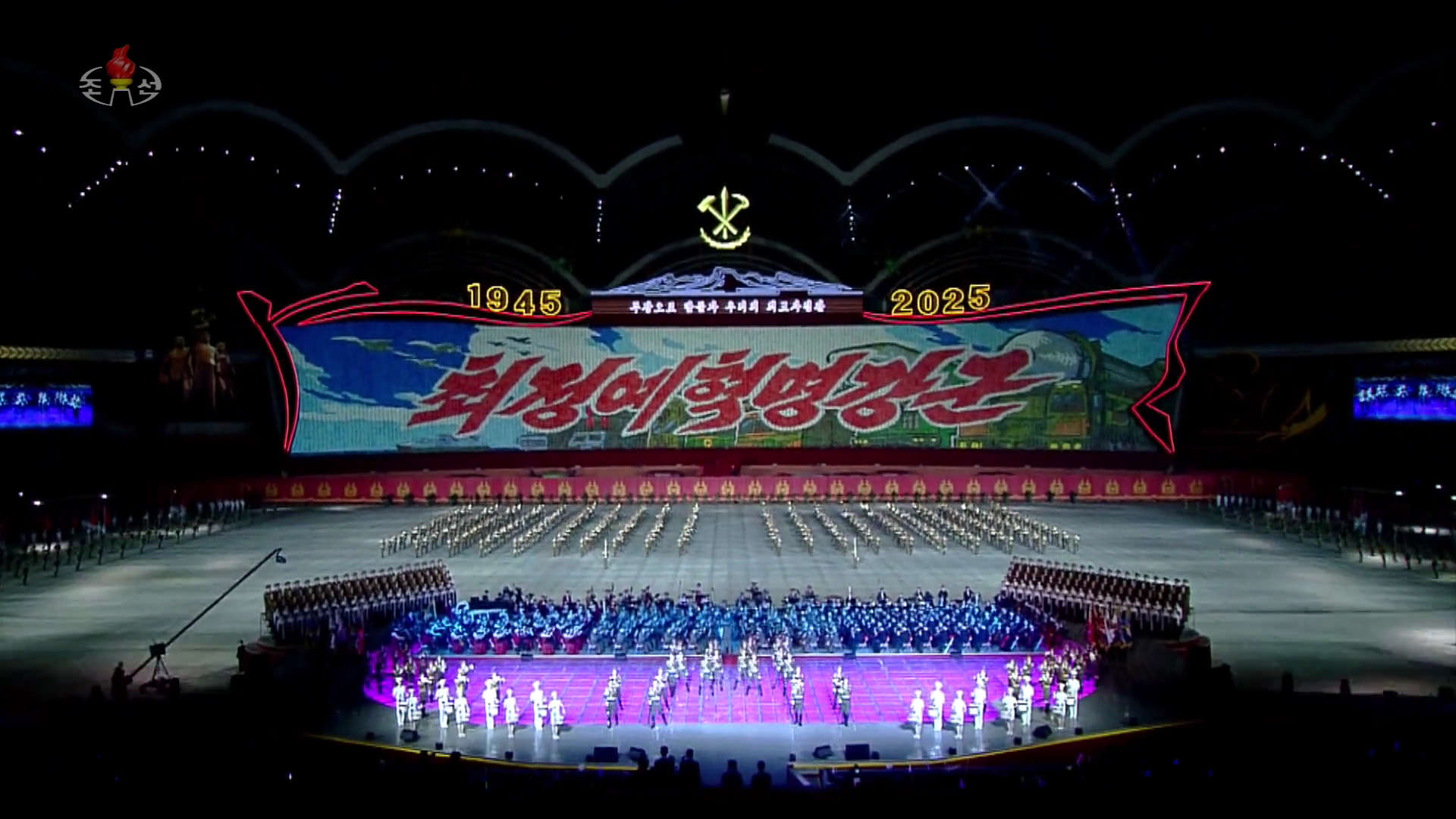
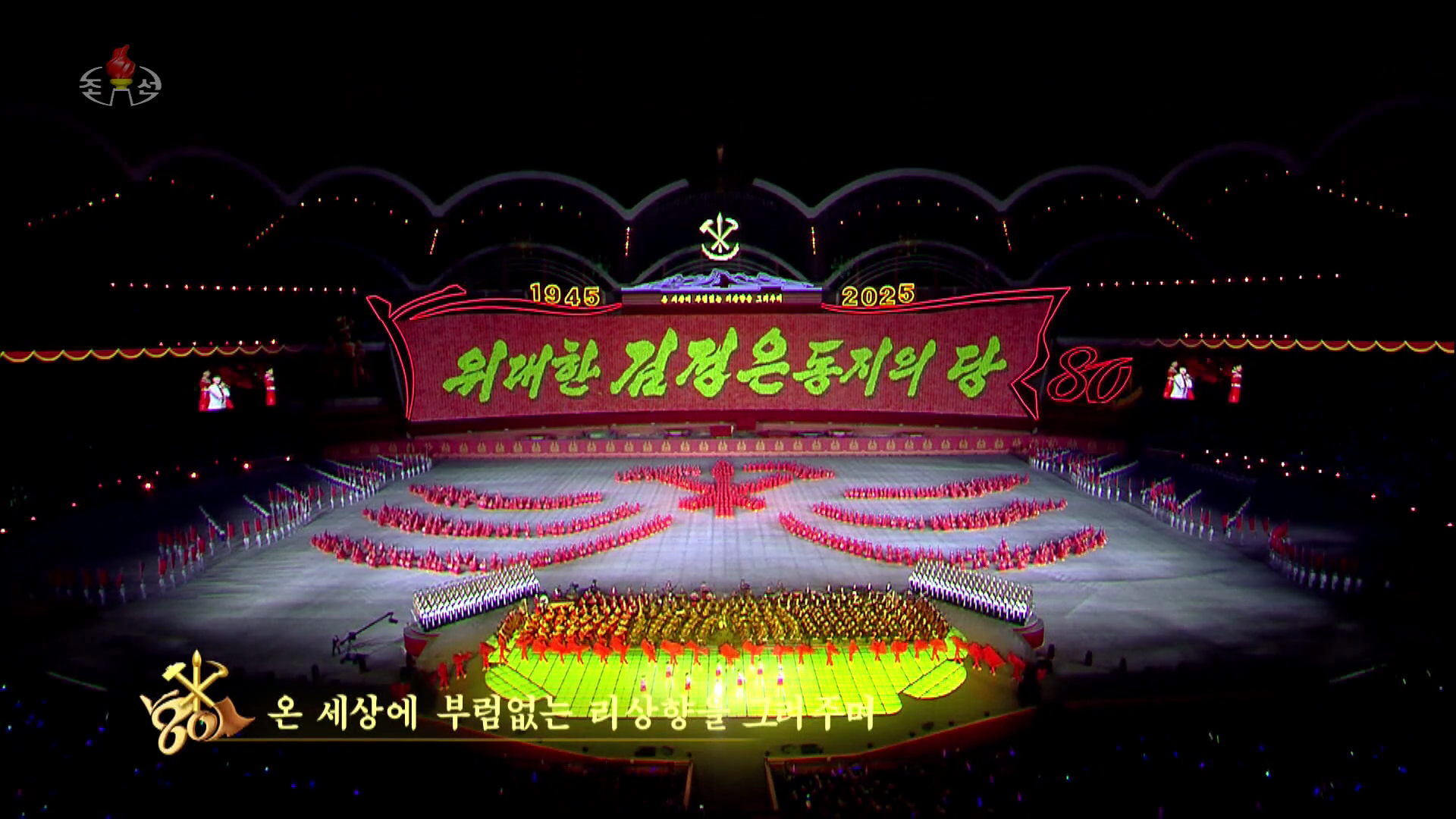
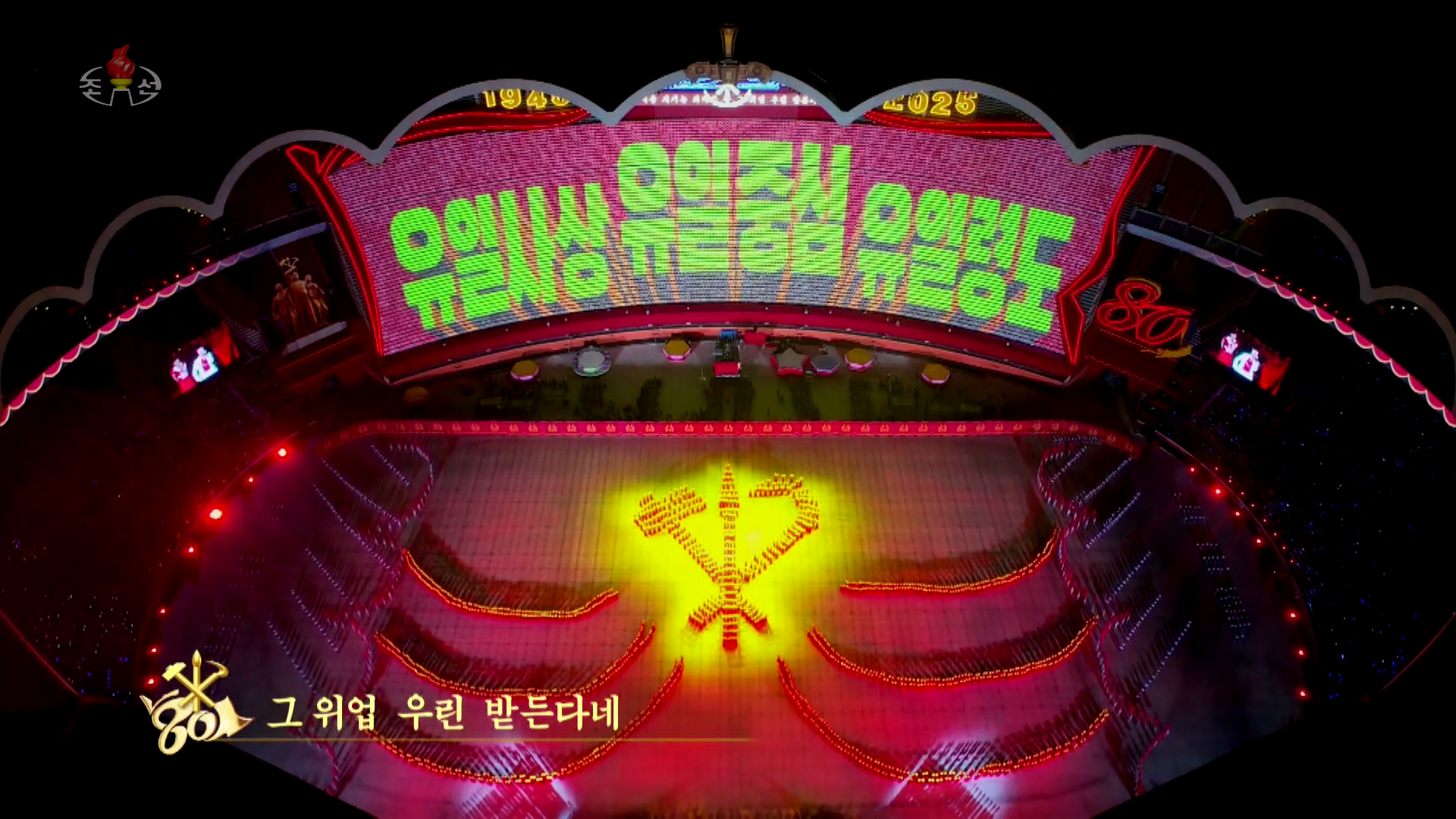
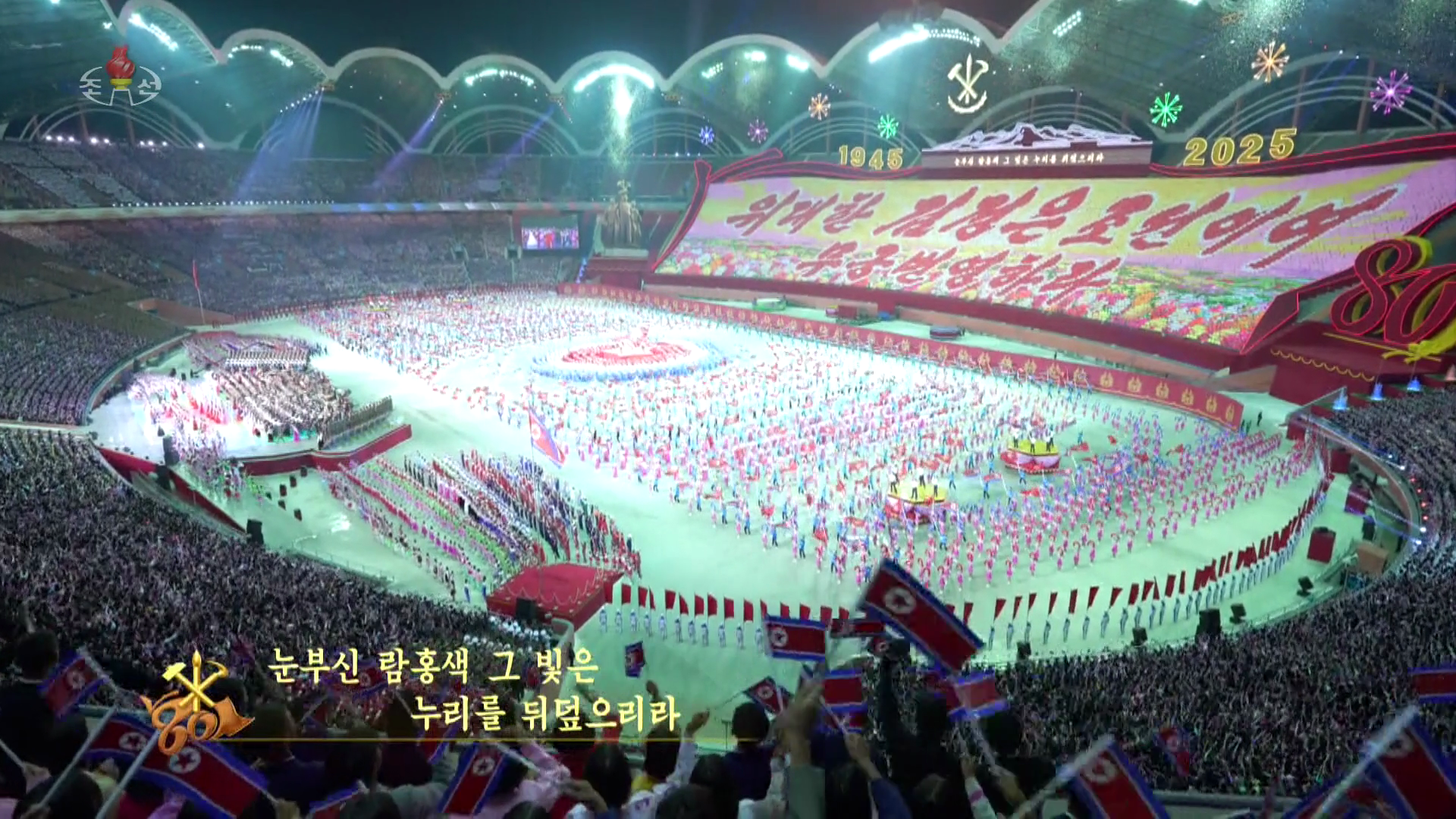
The next sections were on Kim’s “20×10” rural development project and policies on child education and manufacturing school supplies, calling Kim the “father” of all children. Around 30 minutes in, the performance promoted traditional dances and music, wrestling and taekwondo. Then the event featured a seven-minute section promoting the country’s nuclear missiles and other recent weapons development — a feature missing from the mass games in 2018 and 2019 amid Pyongyang’s diplomatic negotiations with the U.S. and South Korea. This included strength demonstrations by shirtless, muscular troops bending metal bars with their throats and taking axes to their wrists. The first KCTV news report of the Oct. 9 event showed close-ups of deranged-looking soldiers performing the stunts, but the second airing later the same day replaced these clips with wider shots, in an apparent attempt to hide their alarming facial expressions. Patriotic ballads celebrating Kim and state policies followed the military section, and the show ended with more upbeat songs about the state and flag, a declaration of “Kim Jong Un’s Korea” and the final backdrop “Long Live the 80th Anniversary of the Workers’ Party of Korea!” 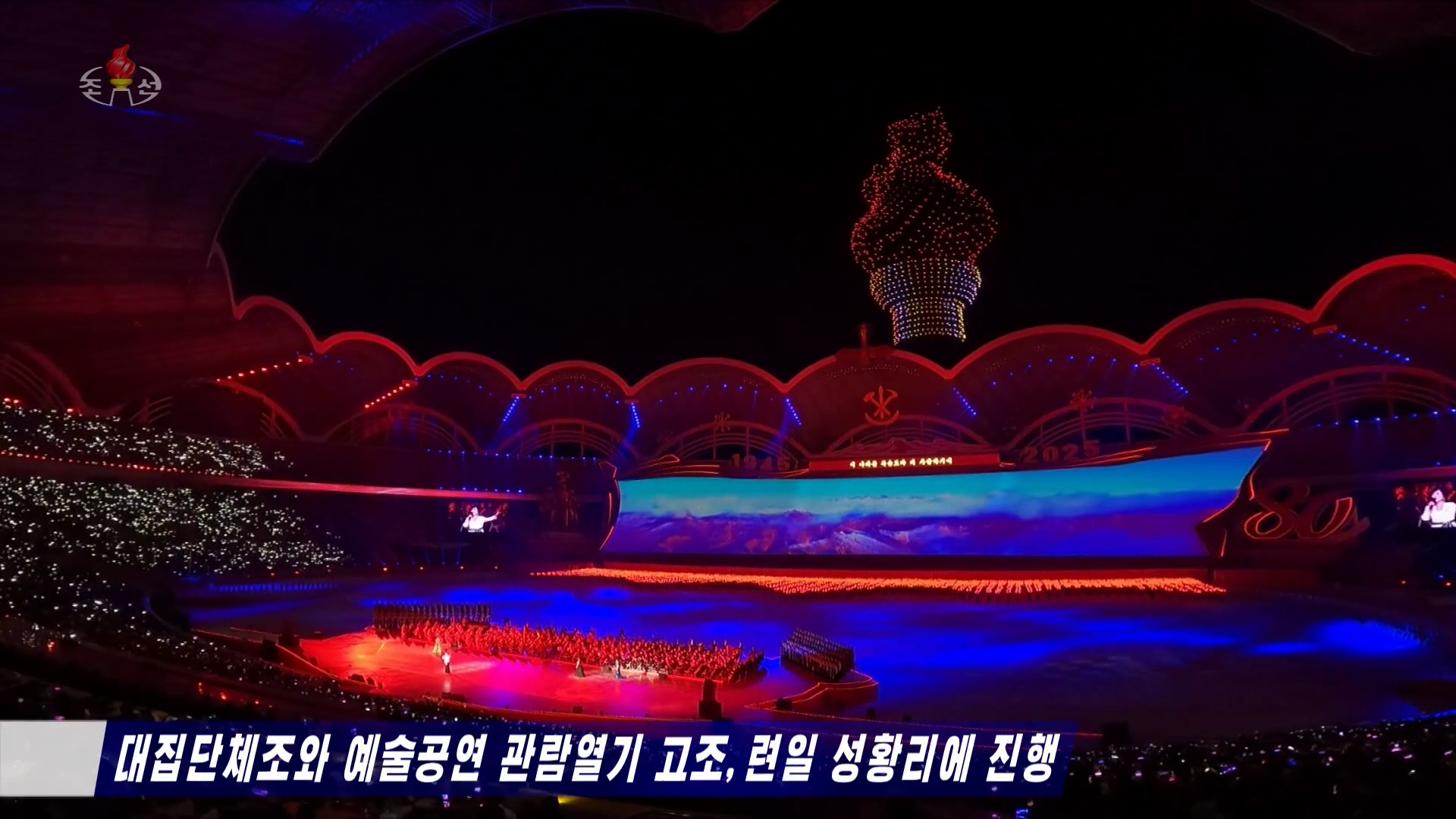
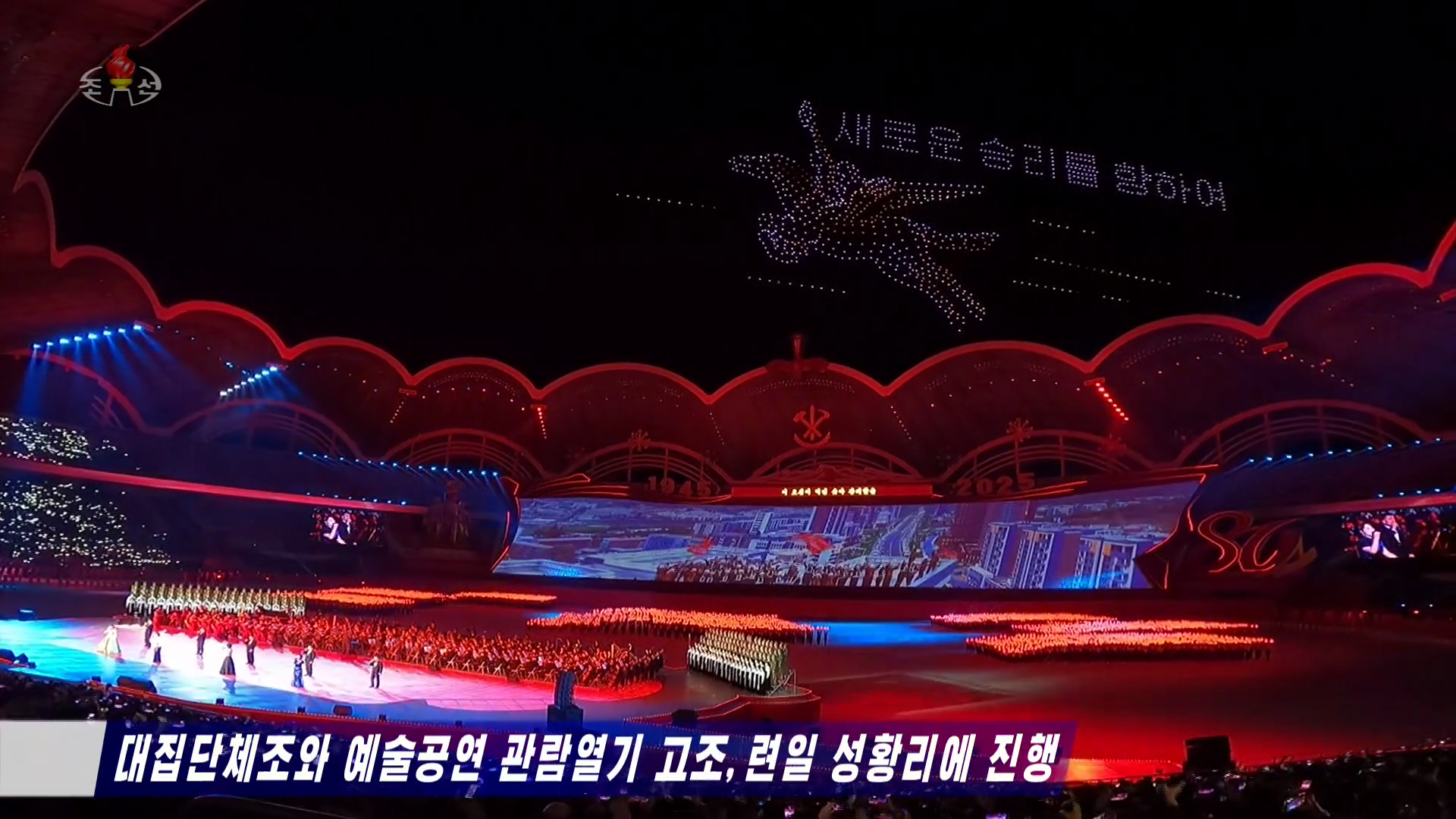
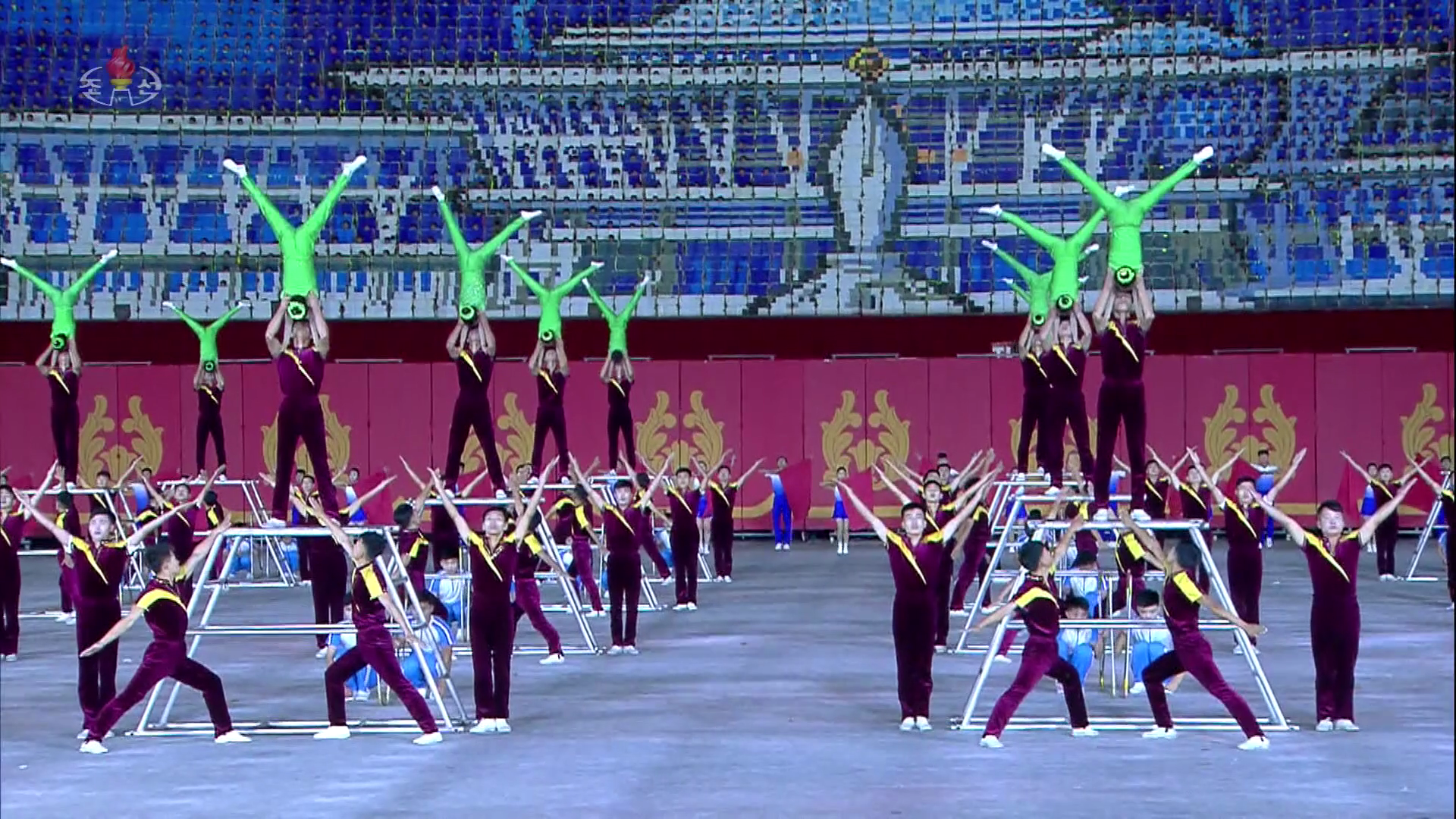
A pro-North Korea Japanese group that attended this year’s event called it a demonstration of “the might of the single-minded unity of the people in the homeland, tremendous military muscle and loyalty of all the people,” according to state media. KCNA also emphasized that North Koreans “enthusiastically” sang along during the shows and that the spectacle made them “full of enthusiasm to devote all their wisdom and passion to the prosperity of the motherland.” This year’s mass games still featured tens of thousands of children flipping colored cards to form dynamic and sometimes animated backdrop illustrations and slogans, but they also sometimes flipped to white pages to serve as a screen for displaying projected videos. This suggests the DPRK imported highly advanced and expensive projection equipment — now often installed at sports arenas around the world — in violation of U.N. sanctions. The show also utilized a larger number of drones than previous years for light shows suspended above the stadium. This part of the show didn’t appear during the first night, but KCTV news clips of the event on later dates showed drones forming a dazzling Juche torch as well as a Chollima horse. 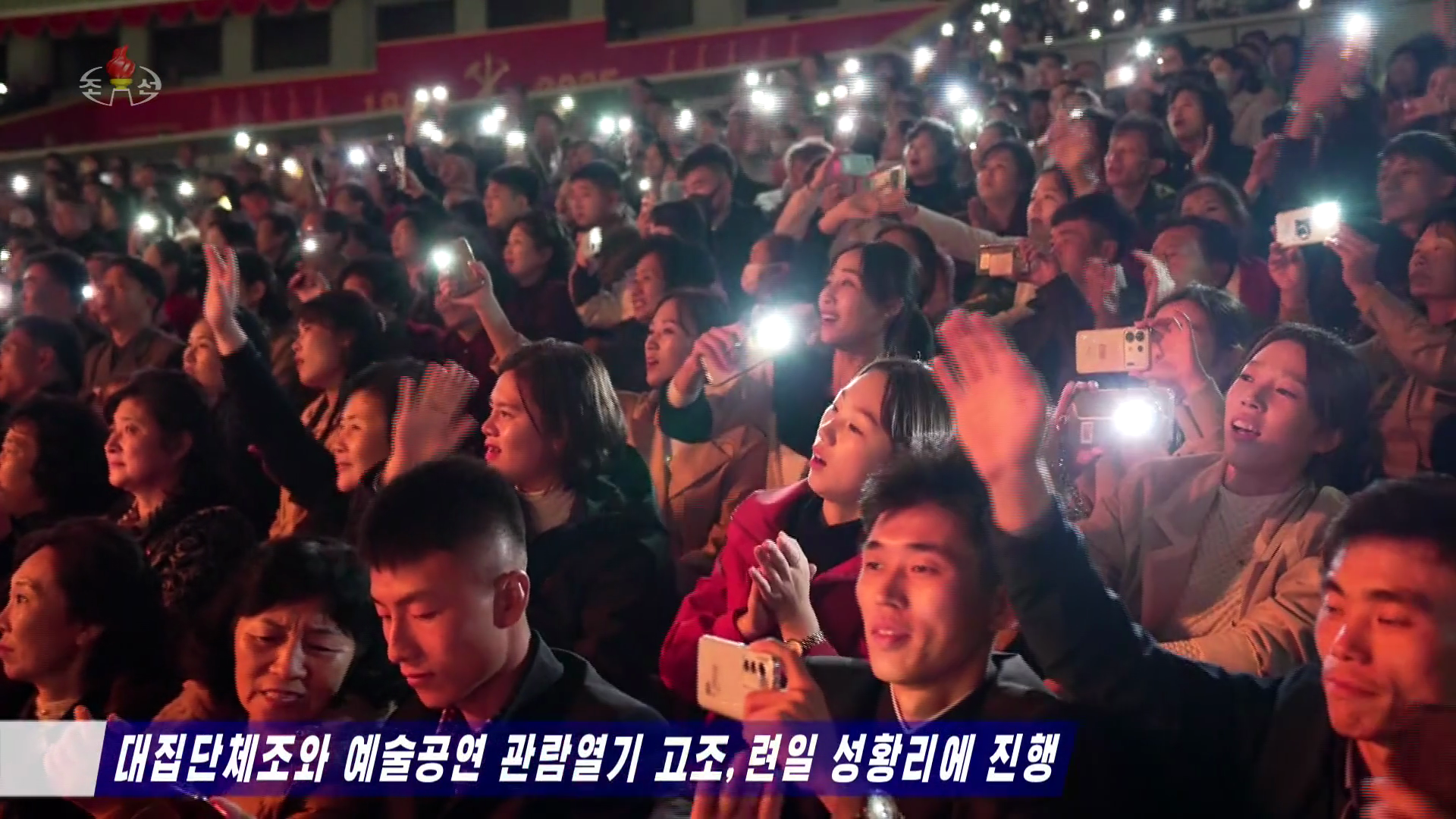
PAST MASS GAMES The previous mass games in 2020, titled “Great Guidance” (위대한 향도), appeared to only take place on a single night in October, likely due to concerns over the spread of COVID-19 and the lack of foreign tourists. North Korea revived the mass games in 2018 after a five-year hiatus, calling it “Glorious Country” (빛나는 조국) and putting on shows from September to November — including two special events Kim Jong Un attended with the leaders of South Korea and Cuba, and another for a visiting Chinese artists’ delegation. Foreign tour companies were involved in booking the shows, unlike this year, as authorities demanded exorbitant amounts up to 800 euros per ticket. Pyongyang escalated ticket-related demands the following year, requiring all tourists visiting the country to pay up regardless of whether they wished to attend the previously optional event. The 2019 mass games, titled “People’s Country” (인민의 나라), ran from June to October. Kim Jong Un publicly complained about the “wrong spirit of creation and irresponsible work attitude” of the showrunners after its first night, leading to a two-week hiatus after the second show. It returned for a special event Kim attended with visiting Chinese leader Xi Jinping titled “Invincible Socialism” (불패의 사회주의), and carried on afterward with the “People’s Country” show without noticeable changes from the opening night. In 2013 and prior years, the event was widely known by its consistent title “Arirang” (아리랑). Edited by Bryan Betts © Korea Risk Group. All rights reserved. |

October 14, 2026Oct 14, 2026

The ultimate resources for professionals working on North Korea
 SHARE
SHARE COPY LINK
 X
X MASTODON