  Investigations North Korea endorses e-buses over ‘outdated’ trams to cut costs: ImageryTraffic delays and accidents caused by aging tram infrastructure led to prioritizing electric vehicles, sources said  North Korea has removed an entire tram line in eastern Pyongyang to make way for electric buses, NK Pro analysis confirmed, in a bid to improve public transportation and cut electricity use following reported complaints from residents. Pyongyang moved to replace trams with electric buses on its east side after over 30 years of service, the DPRK-affiliated Choson Sinbo reported last year, for the “switch” away from the aging network. The transition aimed to replace “outdated” trams on the Munsu-Tosong line with battery-powered buses linking Pyongyang’s northeastern upscale district with the southwestern Rangrang area, according to the paper. The DPRK’s Rodong Sinmun party daily also reported that aging infrastructure and tram cars had caused “inconvenience” for residents, prompting authorities to introduce electric buses and install charging stations along the route. A local transport official reportedly hailed the e-buses as a faster and agile alternative that does not require tracks, saves electricity and improves Pyongyang’s “urban aesthetics,” Choson Sinbo said. NK Pro analysis of Planet Labs satellite imagery concluded that authorities discontinued the 12-km line (7.5 miles), removed tracks from streets and cleared the depot that housed tram cars. 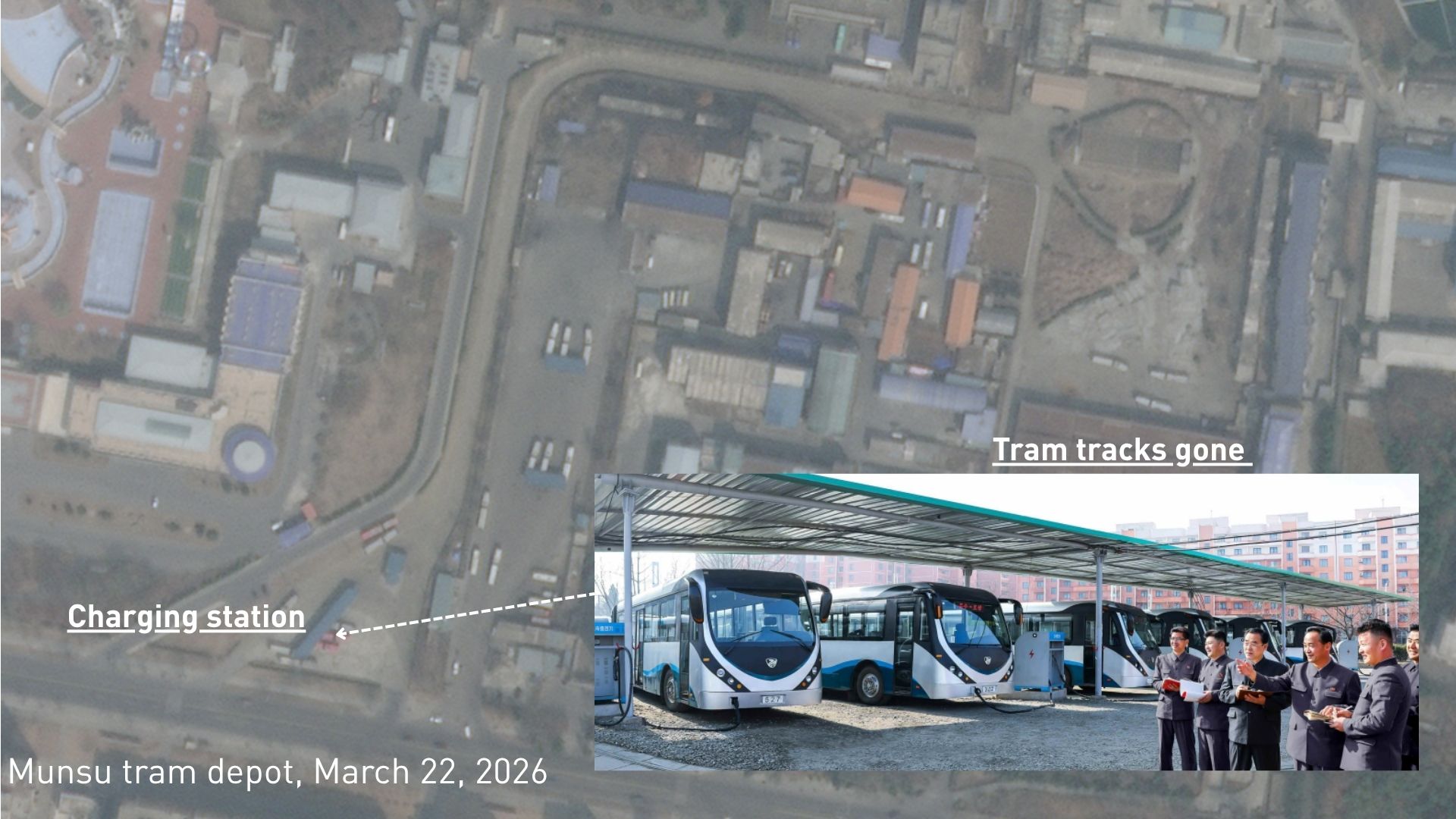
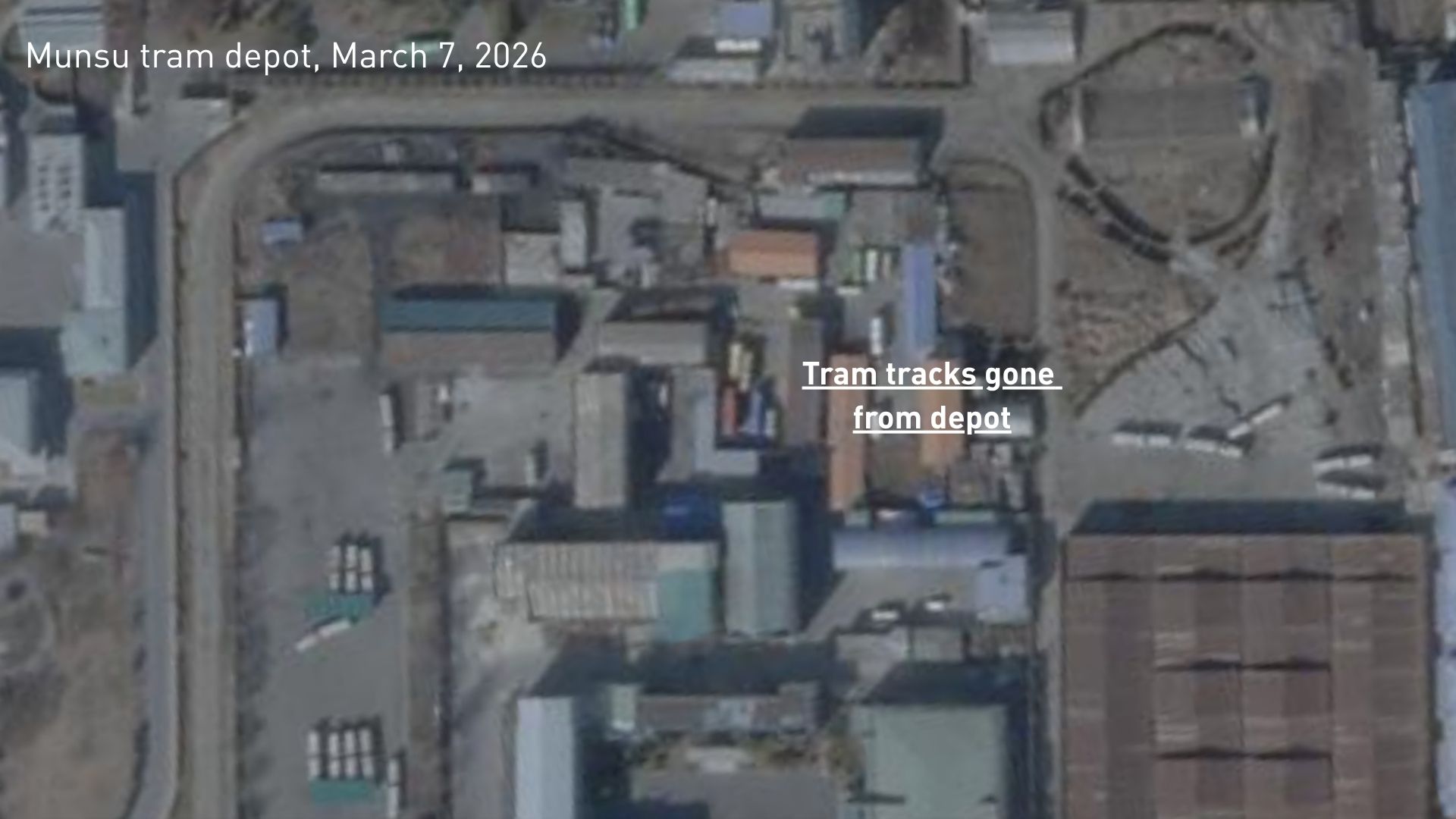
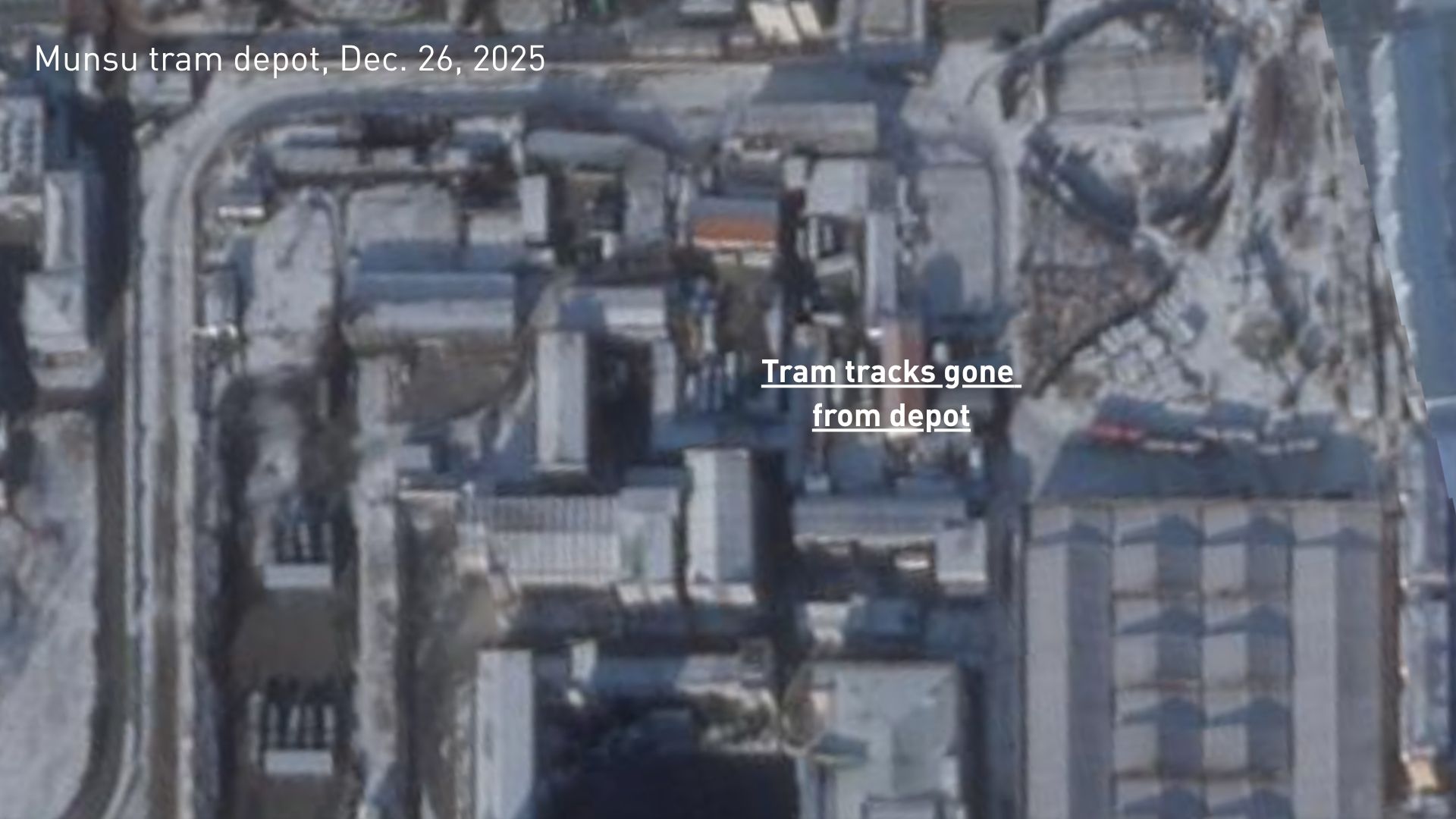
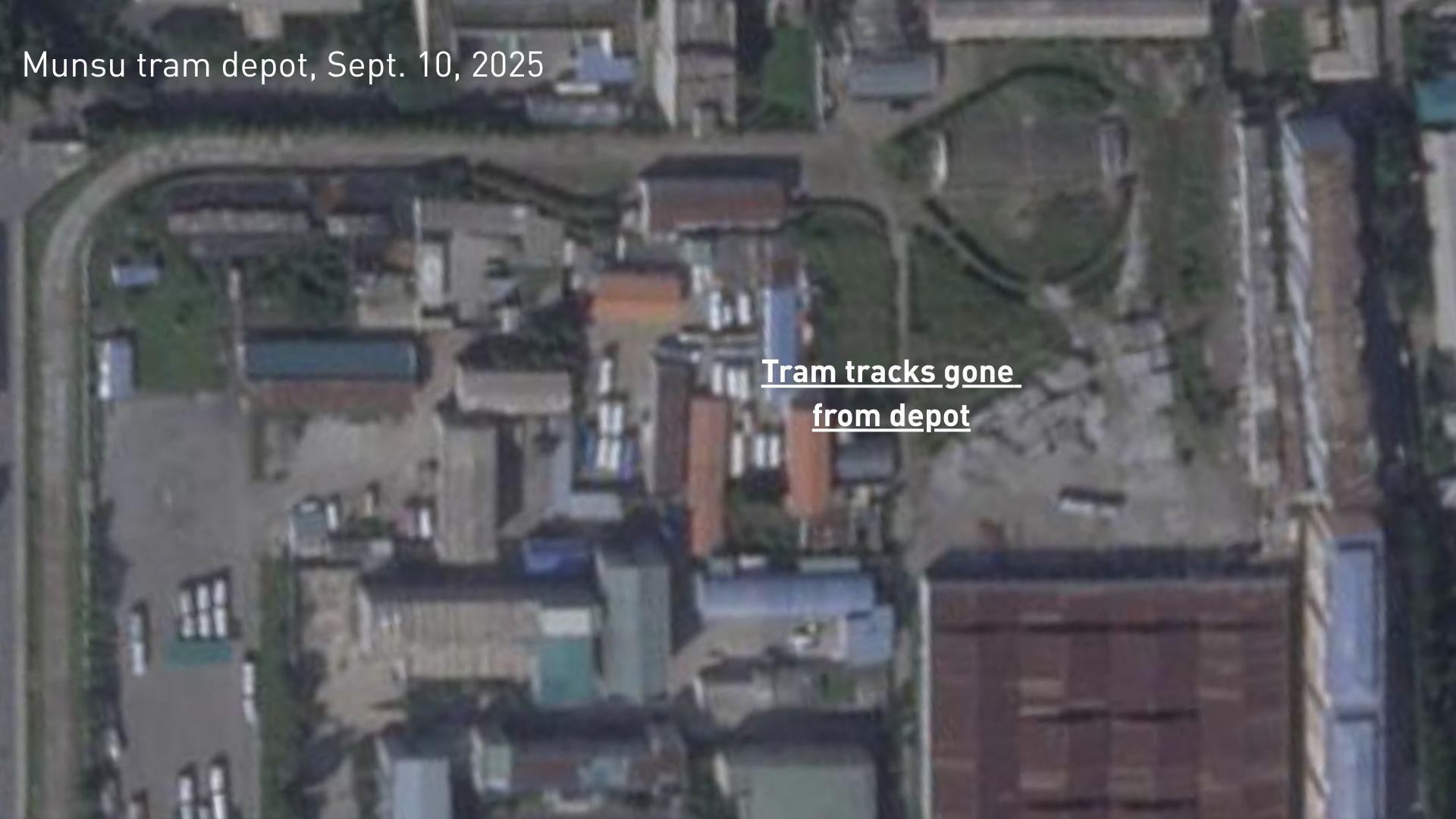
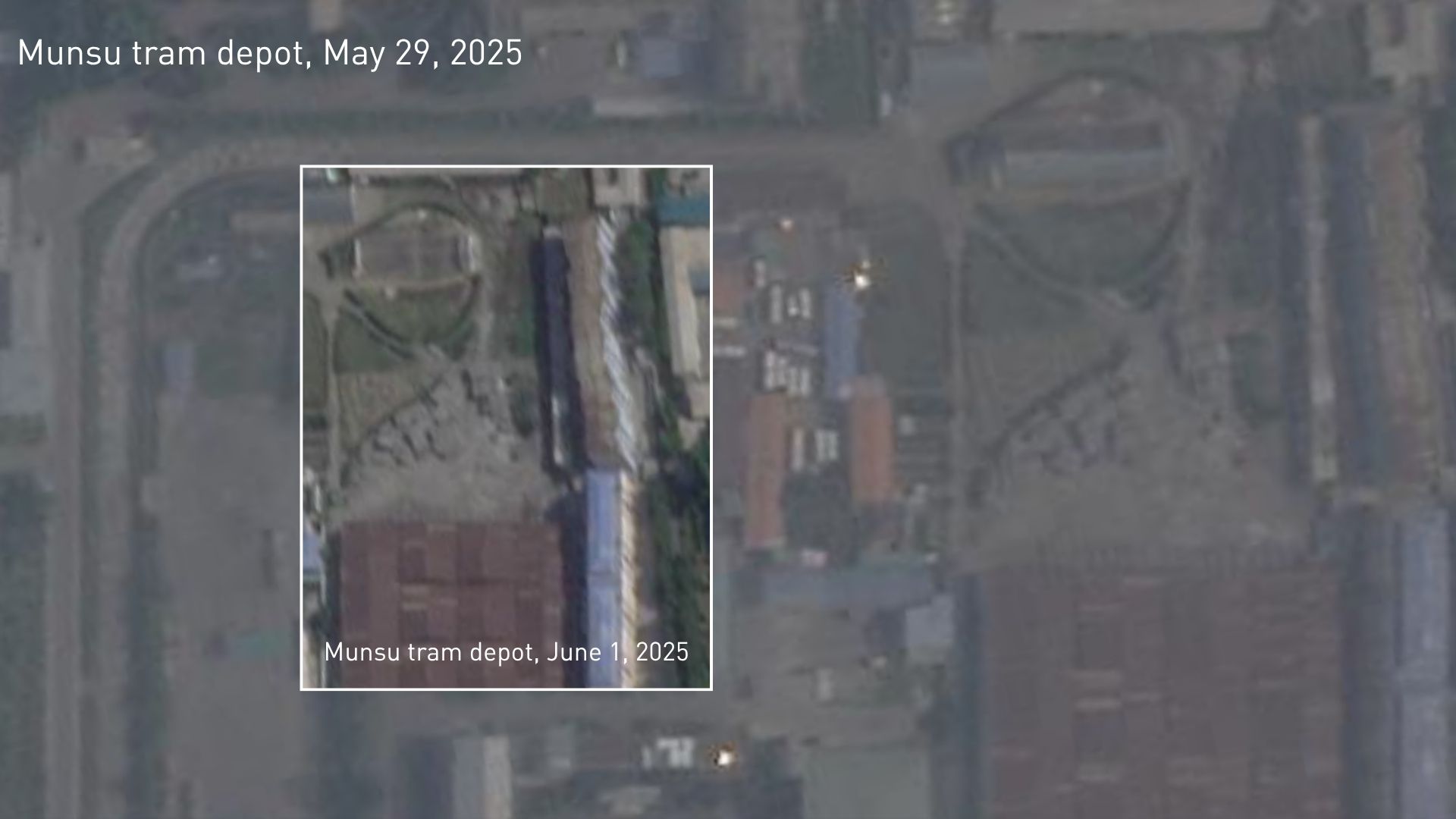
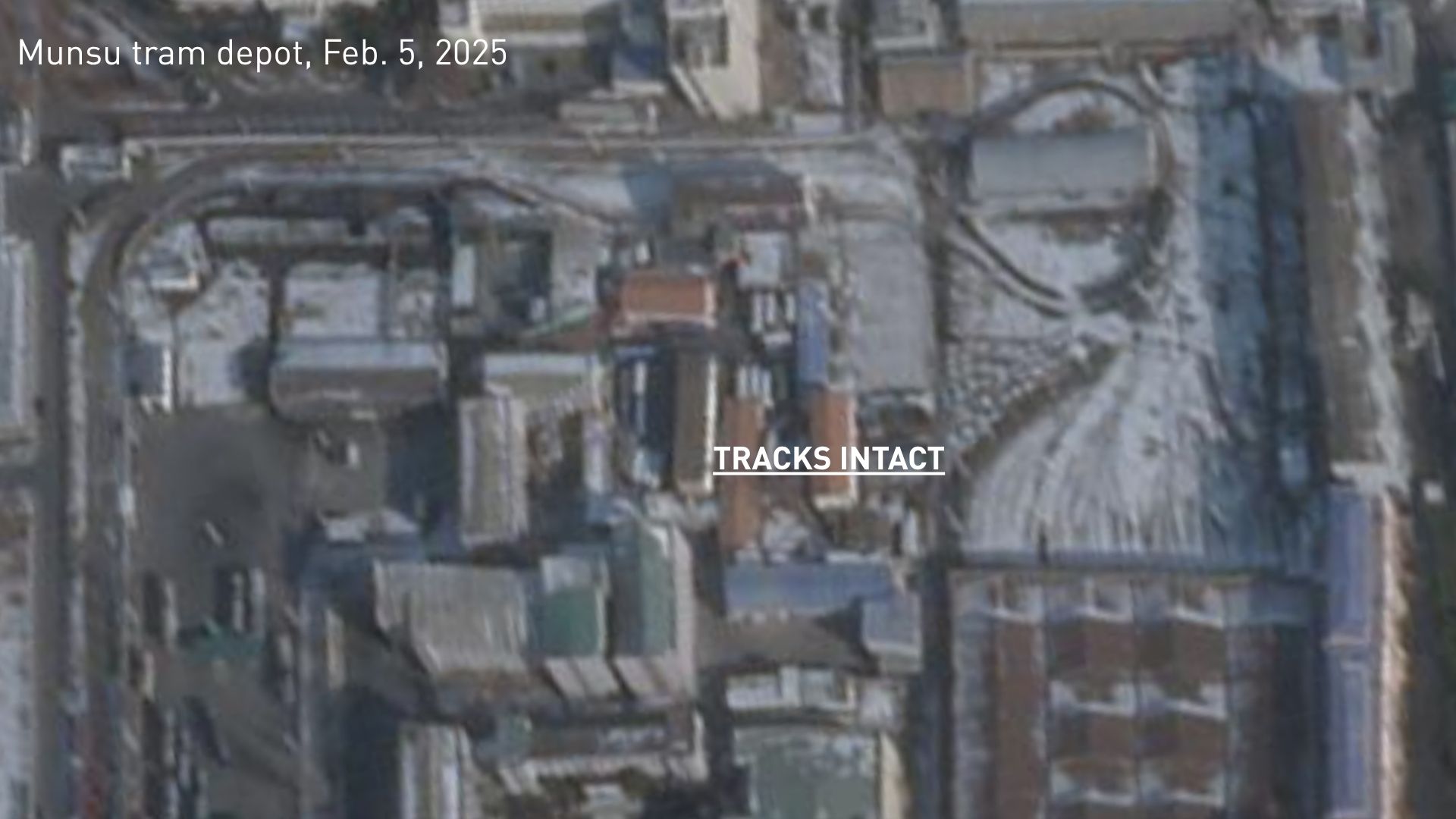
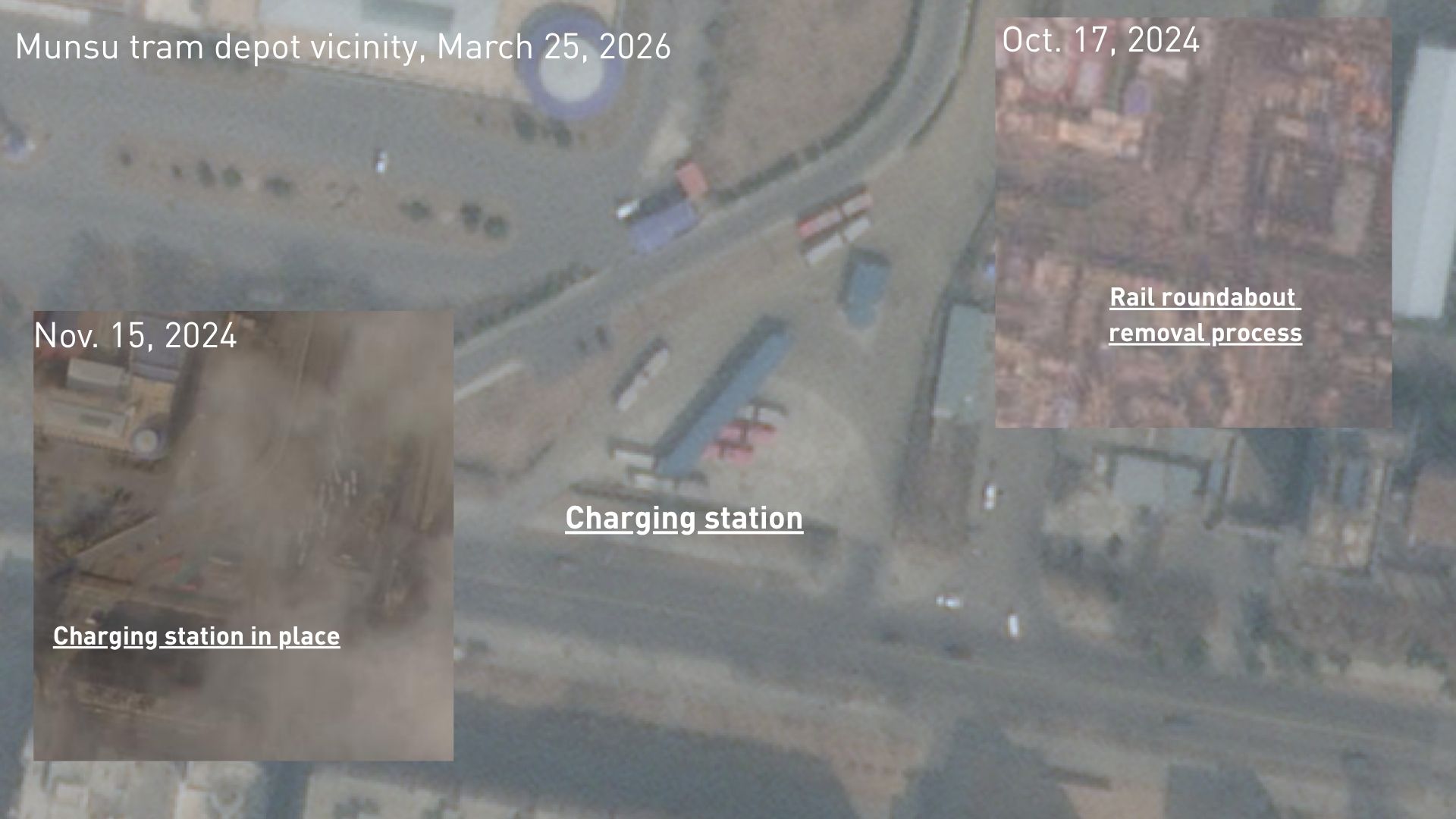
The change occurred between early February and late May 2025, according to imagery. DPRK state media released a photo of a new charging station near the Munsu depot in its March 28 issue. Satellite imagery shows construction of the station began as early as Oct. 17, 2024, and finished in early November, with high-resolution images showing it completed by Nov. 15 that year. A likely similar charging station appeared southwest of the line in Tosong around Oct. 17. Authorities may have also removed tracks in the area to accommodate e-buses and trolleybuses. Jacob Bogle, a geospatial specialist and NK Pro contributor, assessed that Pyongyang’s move to roll out e-buses comes in the context of a “showcase capital,” with officials preferring to “show off the ‘newest’ technology.” An added advantage of e-buses is its flexibility, he said, noting that trams follow fixed routes and require additional investment to expand, such as adding new power lines and tracks. “The buses will be able to travel farther and to more destinations within the city,” he said. “Depending on how many buses are deployed, the change may also improve wait times and move more people overall.” The modernization does not come without obstacles, however, the expert noted. Authorities must still build the charging infrastructure and train personnel for maintenance. “The fact that authorities removed the tram tracks suggests they are confident in their ability to operate the buses and charging stations, and that they will have enough dedicated electricity supply to keep them running.” 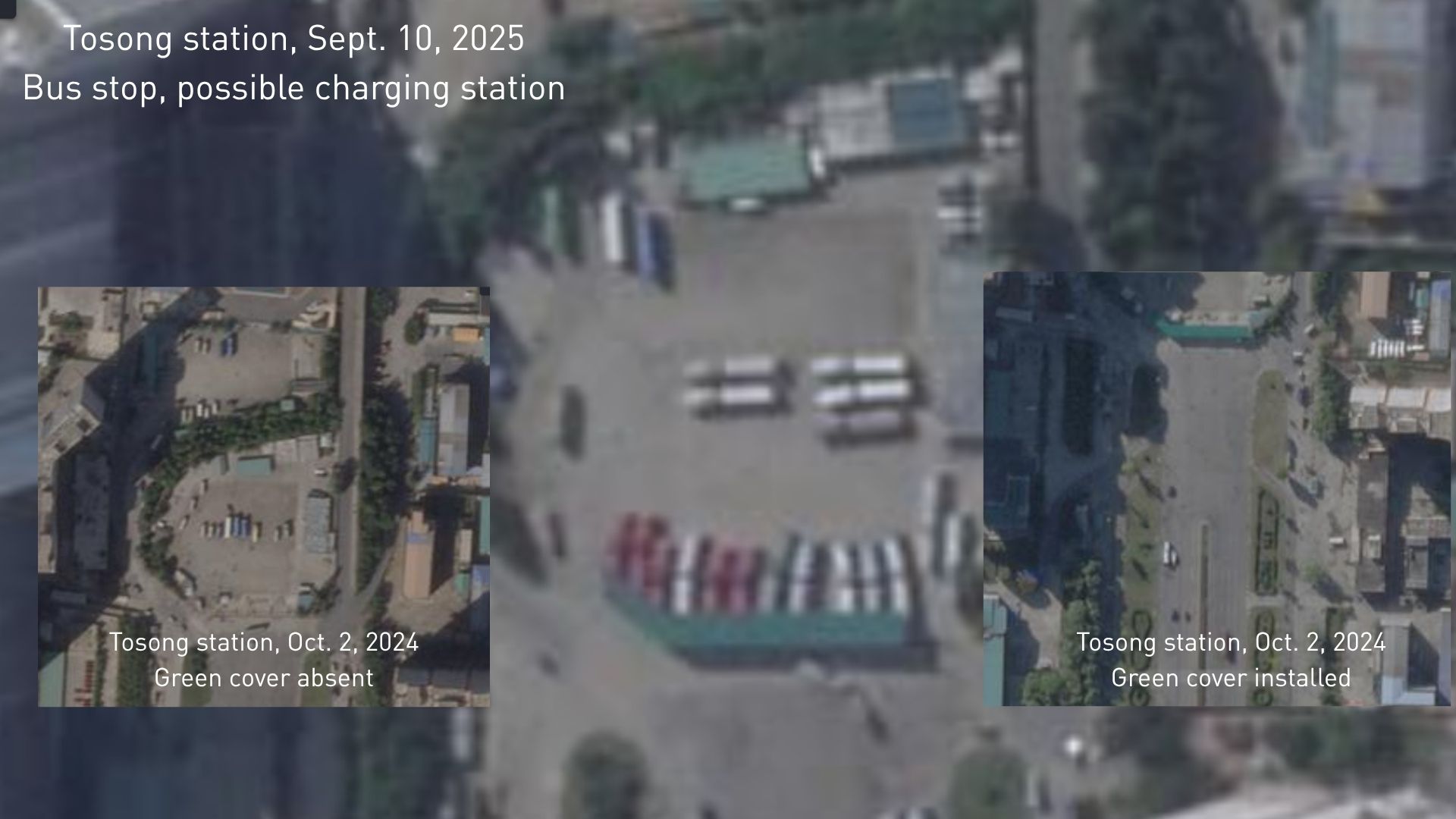
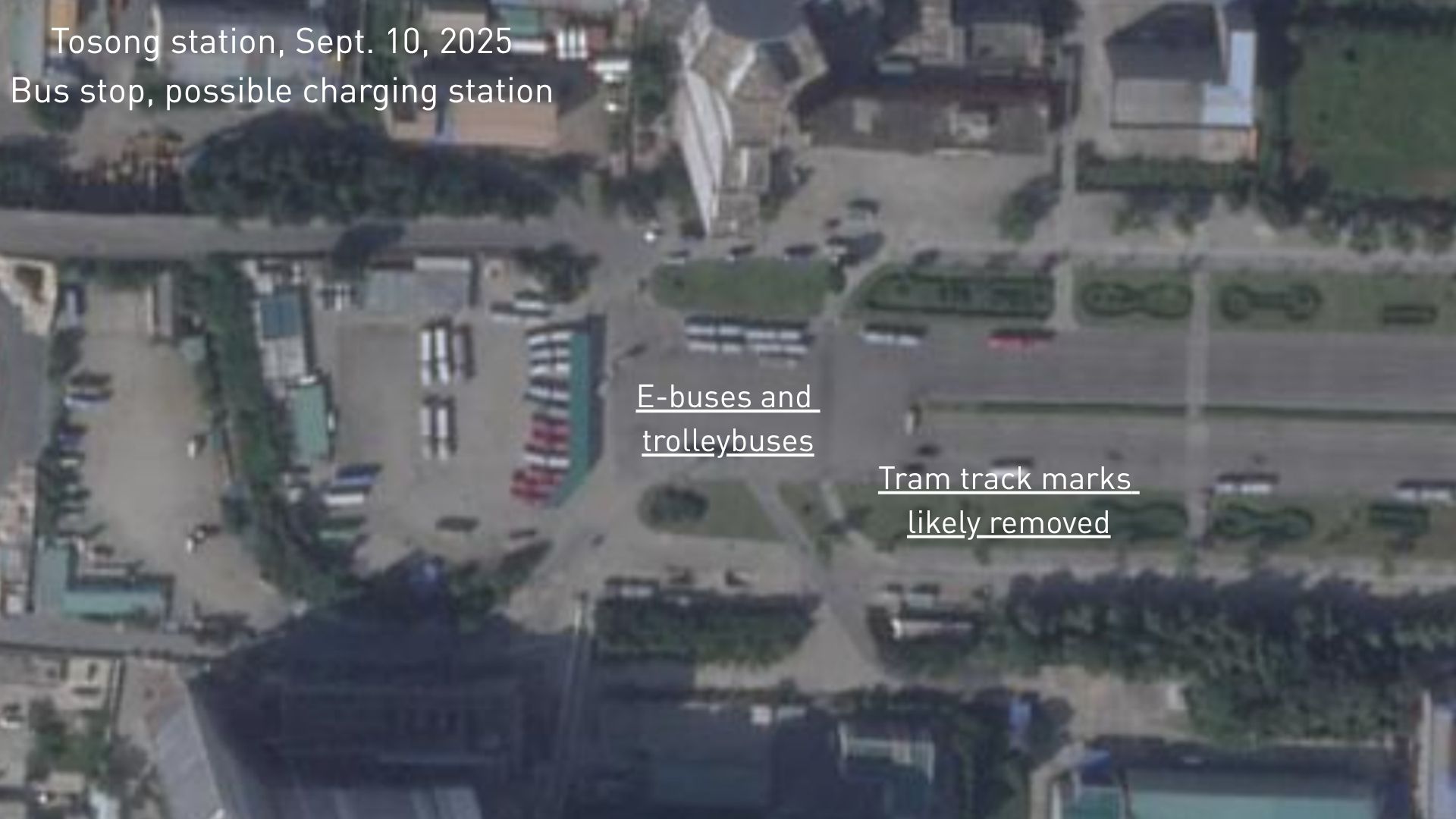
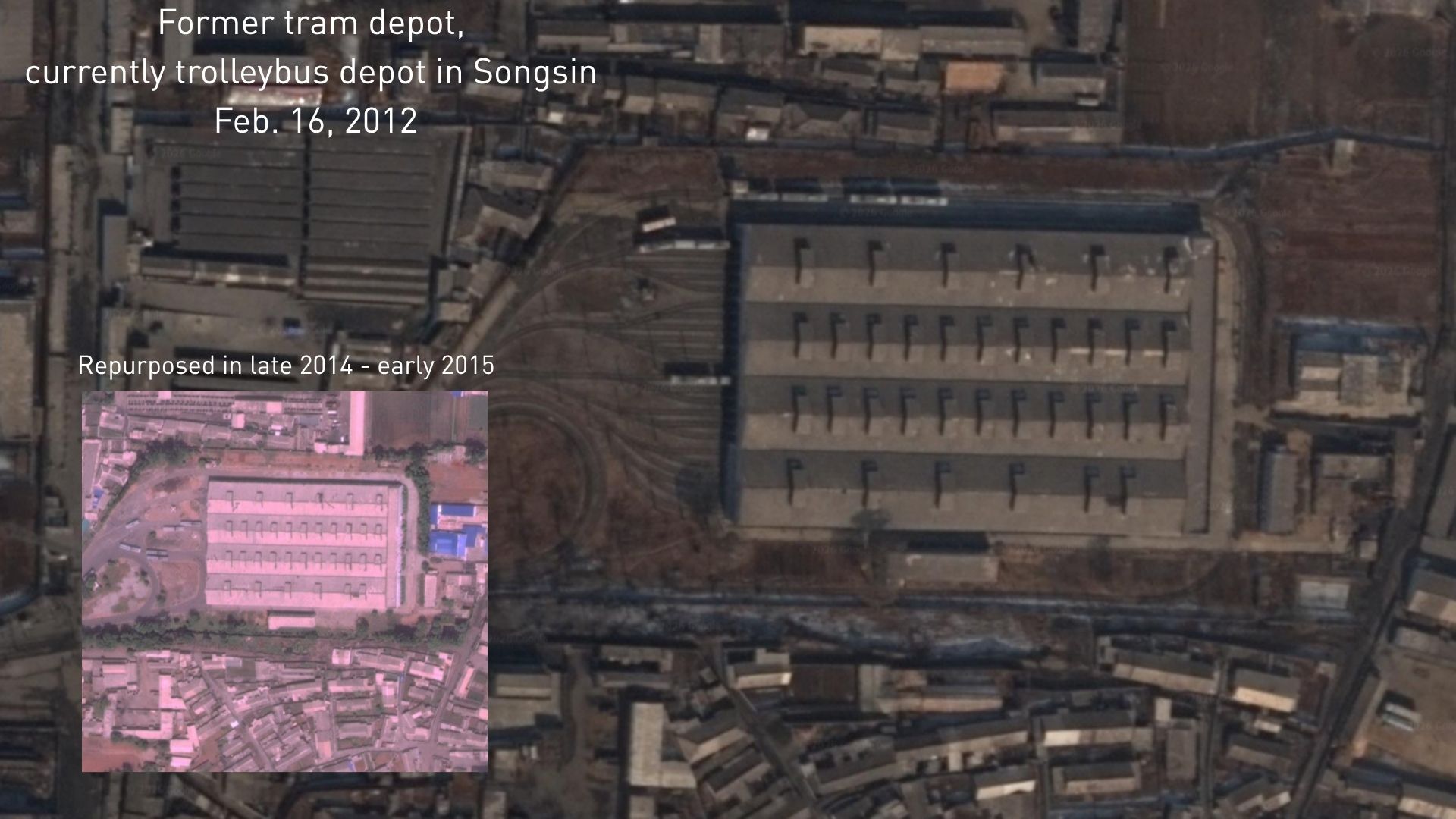
The emergence of charging stations comes shortly before a Chinese businessman posted a photo of a charging unit produced by a Shanghai-based firm at the Pyongyang Trolleybus Plant, which manufactures electric buses and trolleybuses. The development suggests Chinese technology may be involved in domestic electric vehicle production, despite DPRK state media focus on indigenous manufacturing. Informed sources told NK Pro that while the trams were aging Czechoslovak models, the poor condition of the infrastructure — tracks being riddled with potholes under the rails due to lack of maintenance — was likely the primary reason for replacing them. Derailments and wire ruptures were also common, causing delays and traffic jams, sources said, noting that older trams often had to operate at low speeds to avoid accidents. This is not the first instance Pyongyang has replaced trams with electric alternatives. Between 2014-2015, authorities repurposed a section of a tram line between Mangyongdae in the west and Songsin in the east for trolleybuses. Trams currently service only a 10-km section (6.7 miles) between Mangyongdae and Pyongyang Station, with the east side being operated by trolleybuses and possibly e-buses. While electric vehicles are more visible across the capital, the transition has not affected all tram lines evenly. 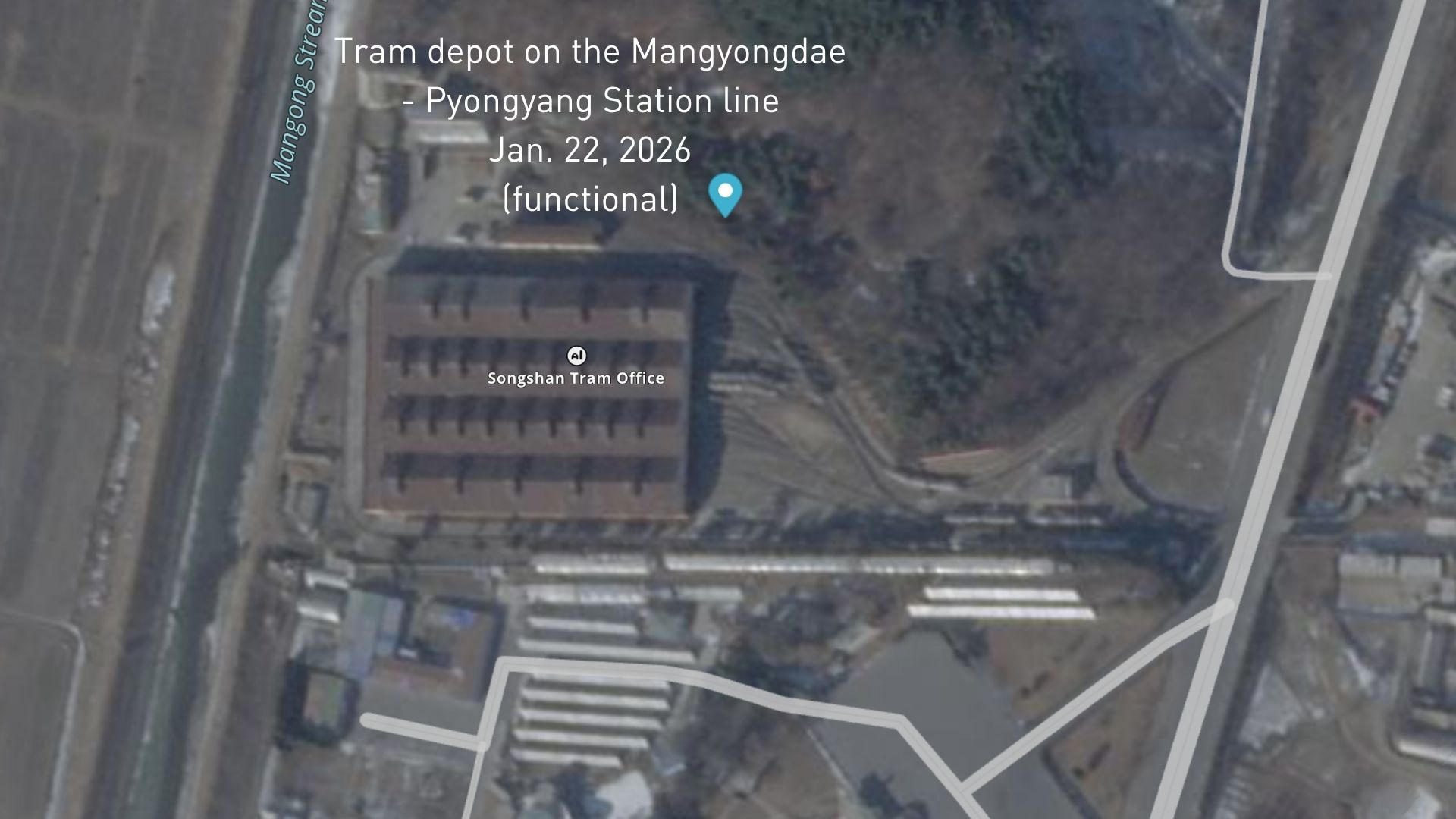
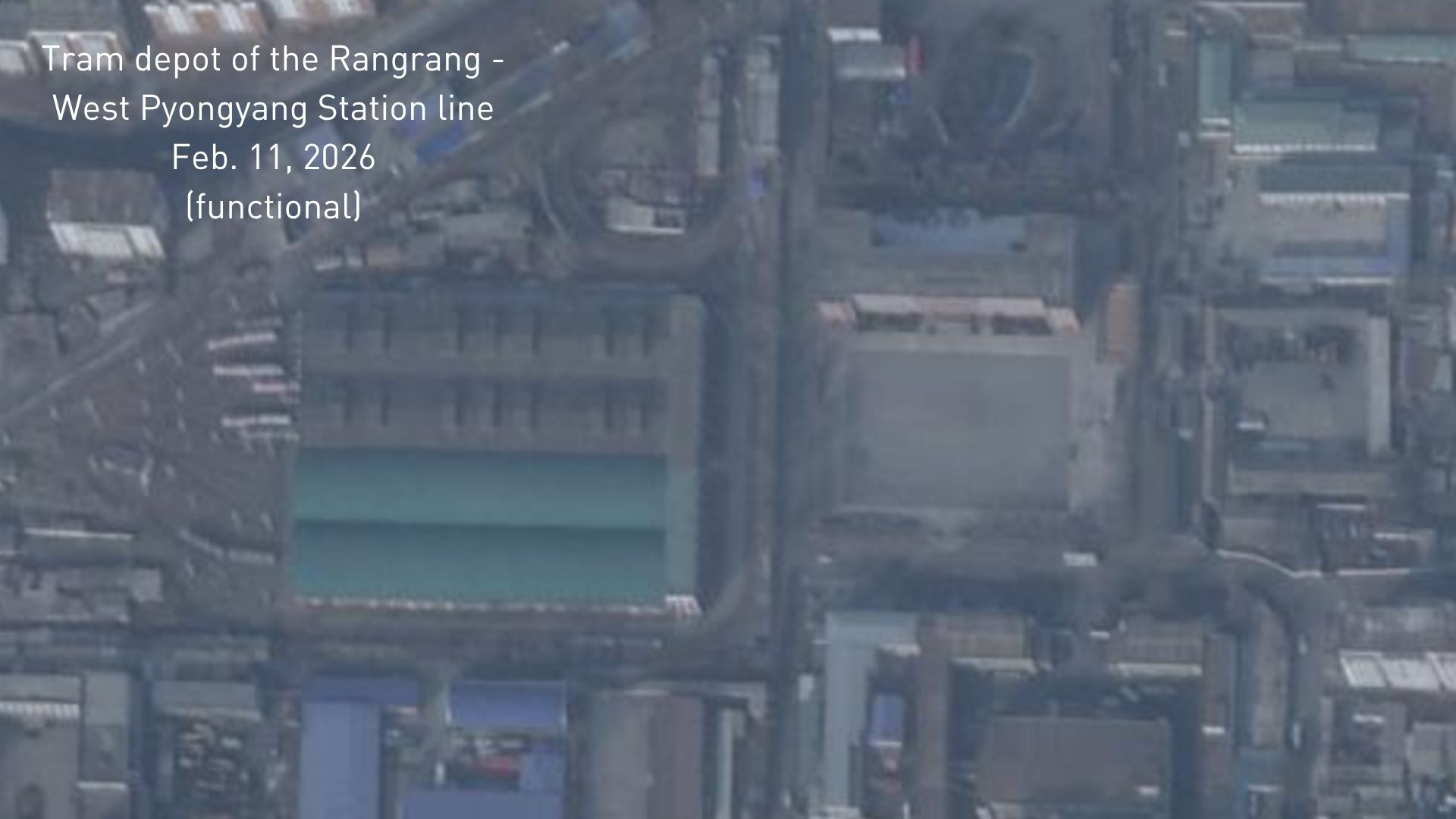
The over 12-km tram line reportedly built in 1998 running from Rangrang in the south past the Ryugyong Hotel to West Pyongyang Station in the north appears intact, with its depot continuing to process trams. A shorter, three kilometer (1.8 miles) tram route also runs in the northeast along Ryomyong Street, linking Jonu subway station to the Kumsusan Palace of the Sun. It is unclear whether the line is currently in use, though it was still operational in 2023, according to Google Earth imagery. As of April 2025, Pyongyang maintained around 10 bus routes and roughly 30 tram and trolley lines, serving nearly one million passengers daily, according to Choson Sinbo. Edited by David Choi © Korea Risk Group. All rights reserved. |

October 18, 2026Oct 18, 2026

The ultimate resources for professionals working on North Korea
 SHARE
SHARE COPY LINK
 X
X MASTODON