  Analysis North Korea dismantling more South Korean tourism buildings at Mt. KumgangSatellite imagery reveals recent work to remove theater, hotel and other assets owned by Seoul and Hyundai Asan 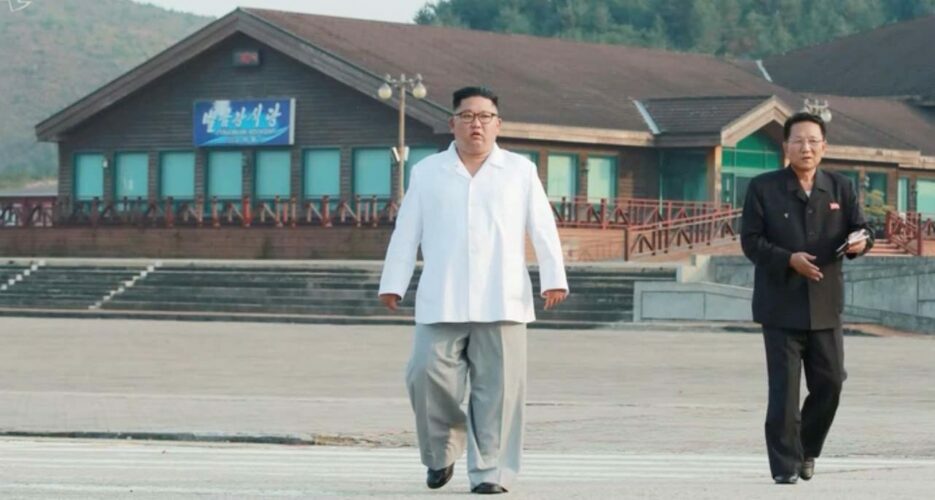 North Korea has begun removing at least four more tourist installations owned by the South Korean government and Hyundai Asan in the Mount Kumgang tourist zone, NK Pro analysis of satellite imagery shows, the latest sign that Pyongyang intends to follow through with plans to rid the area of “shabby” ROK assets. According to Planet Labs imagery, work started in the second half of July to demolish or otherwise dismantle the Kumgangsan Cultural Center theater (금강산 문화회관), multiple buildings formerly housing restaurants and shops in the West and East Onjong Pavilions (온정각 동관, 서관) and a complex of around 200 trailer lodgings called the Kuryong Village (구룡마을). The imagery also suggests North Korea may have started demolishing or remodeling a 12-story hotel (이산가족면회소) that was built in 2008 for the express purpose of hosting inter-Korean separated family reunions. South Korea’s Ministry of Unification (MOU) confirmed to NK News on Aug. 8 that the Hyundai Asan Kumgangsan Office, located next to the Kumgangsan Cultural Center and West Onjong Pavilion, is also being demolished and that trailers at the Kuryong Village appear to have been moved. The MOU called the latest moves a “clear violation of inter-Korean agreements” and an “illegal infringement on [South Korean] property rights,” adding Pyongyang “must immediately cease its unilateral actions and move to address these issues through dialogue.” North Korea began demolishing other South Korean assets in the area earlier this year, starting with the Hyundai Asan-owned Haegumgang Hotel in March and the Ananti Golf Resort in April.  The Mount Kumgang tourist zone is located in the DPRK town of Kosong on the eastern edge of the inter-Korean border. The zone was a joint project in the late 1990s and early 2000s utilizing South Korean funding and management and North Korean labor, giving ROK tourists a chance to see the North and conduct limited cultural exchanges. Seoul cut off operations after a North Korean soldier killed a tourist in 2008, and Pyongyang later froze ROK government and company assets. DETAILS ON NEW REMOVAL WORK Higher-resolution imagery is needed to determine precisely what kind of work is being done on the South Korean facilities in recent weeks, but Planet Labs PlanetScope imagery points to a flurry of activity across the interior Onjong-ri area of the Mount Kumgang tourist zone. The imagery shows that between July 15 and 25, the roofs of West Onjong Pavilion and Kumgangsan Cultural Center buildings changed color, indicating possible dismantlement, and white-colored items appeared on the ground in the surrounding area, indicating possible interior removal work. The large domed roof of the cultural center theater appeared intact as of Aug. 4. Similar work to the roof of the East Onjong Pavilion across the street and a buildup of items in its parking lot appeared between July 25 and Aug. 4. 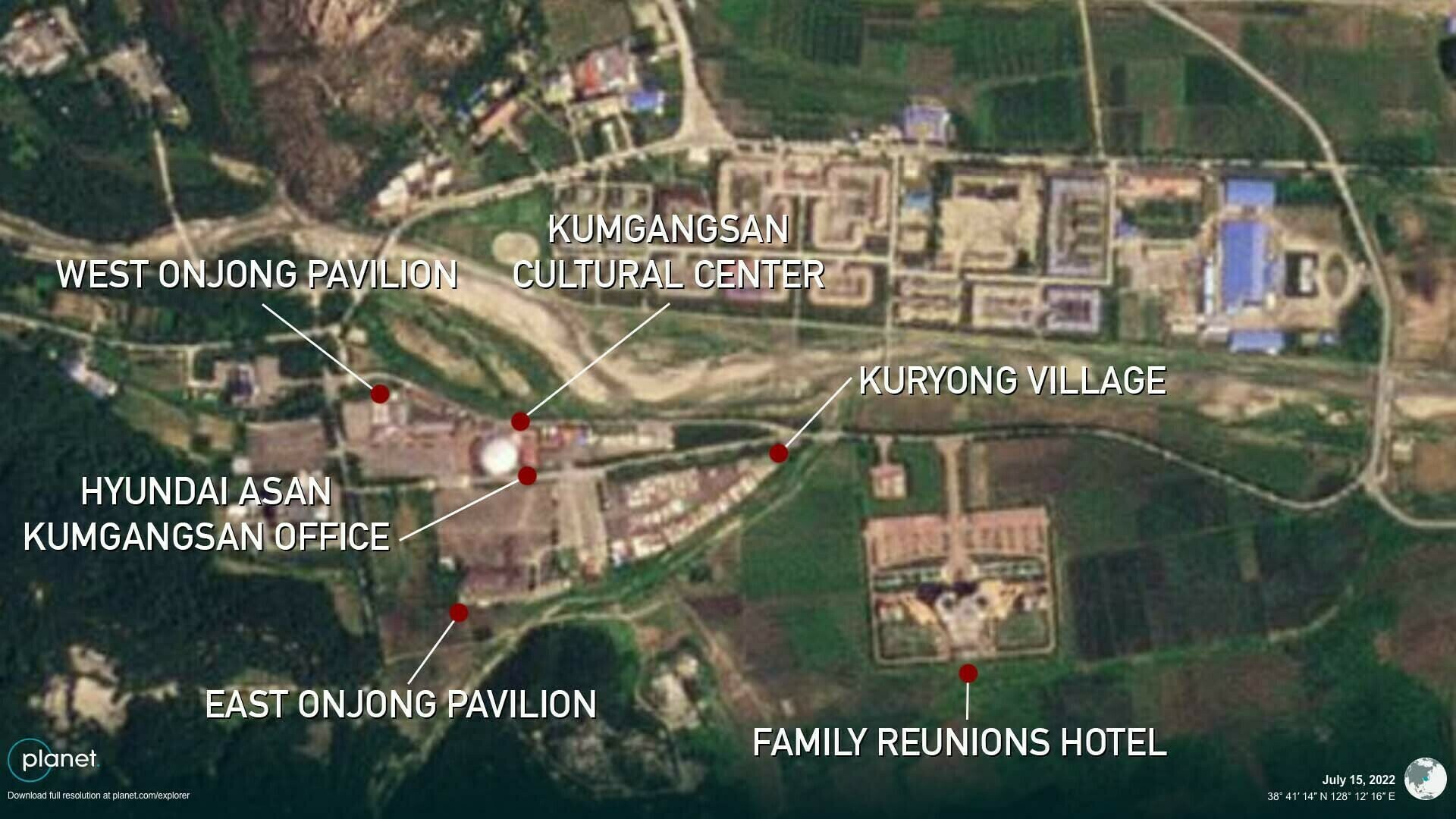 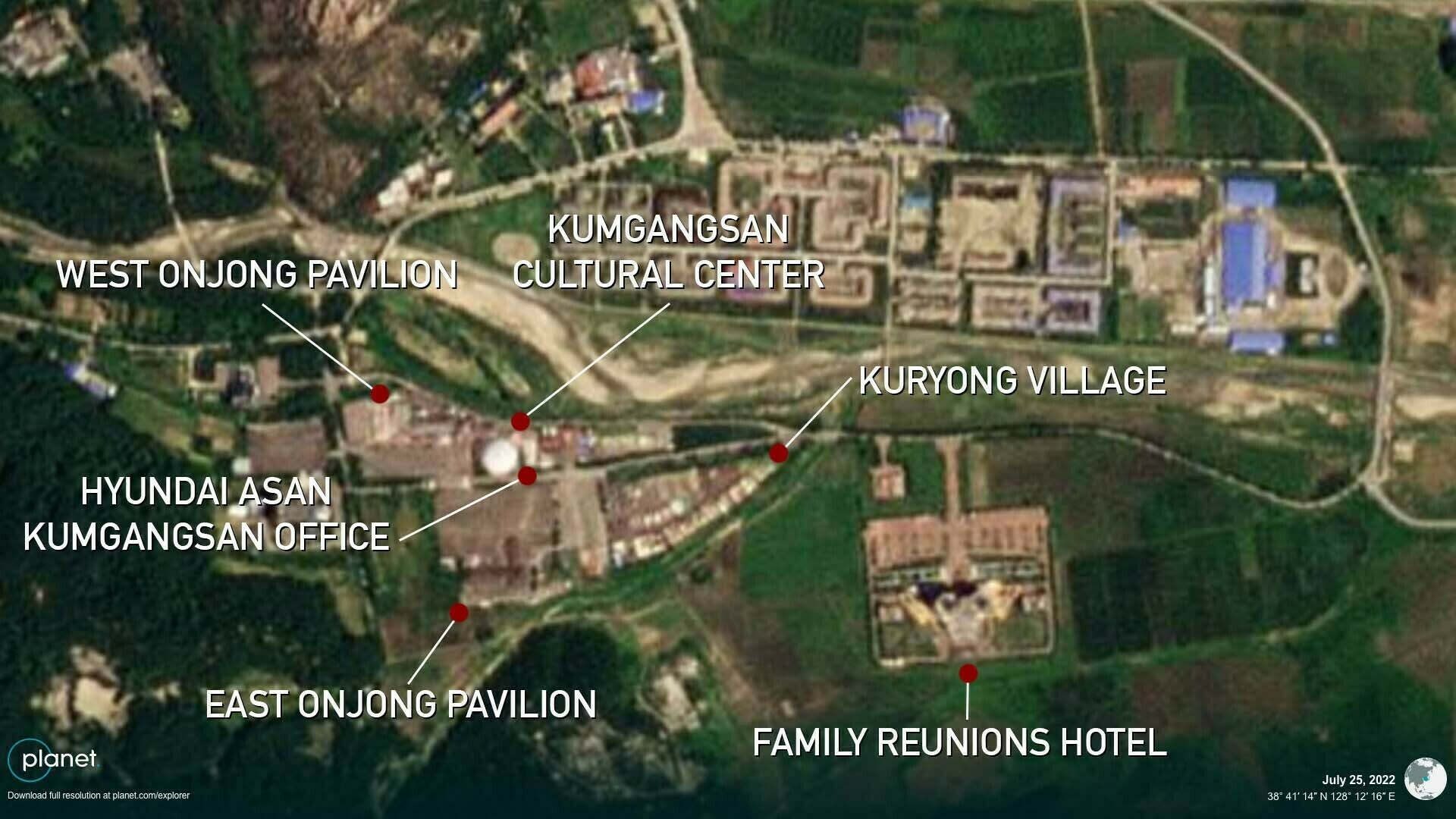 This comparison shows the first signs of dismantlement of South Korean facilities in the Onjong-ri area in the Mount Kumgang tourist zone last month | Images: Planet Labs PBH, edited by NK Pro  Dismantlement work appeared to expand to other areas in the last week | Images: Planet Labs PBH, edited by NK Pro The Korea Tourism Organization (KTO), under the Ministry of Culture and Tourism, and Hyundai Asan owned and operated these facilities in the past. The Onjong Pavilion once housed duty-free shops, restaurants and a branch of South Korea’s Nonghyup Bank, while the cultural center hosted traditional performances for visitors from across the border. White-colored items also began appearing in the parking lot of the South Korean government-owned hotel for separated families between July 15 and 25 and grew in number by Aug. 4. It’s possible workers are clearing out its interior ahead of demolition or renovation. Former South Korean unification minister Kim Yeon-chul said in 2019 that the hotel had not been maintained and that the South would need to carry out inspections before resuming reunions there.   The hotel only hosted three family reunions — in 2009, 2010 and 2014 — according to the ROK National Institute for Unification Education. Planet Labs imagery also shows hundreds of trailers inside the Hyundai Asan-owned Kuryong Village being partially removed or dismantled in stages since mid-July. It’s possible Kim Jong Un was referring to this site when he said in his 2019 visit that parts of the zone looked like “isolation wards” or “makeshift tents in a disaster-stricken area.” It was originally built to accommodate a growing number of South Korean tourists and included a grid of around 200 small trailers with shared bathrooms and showers, as well as a branch of the South Korean Family Mart chain convenience stores. Former unification minister Kim suggested in 2019 that the trailers may not be viable for maintenance and reuse given their state of disrepair. 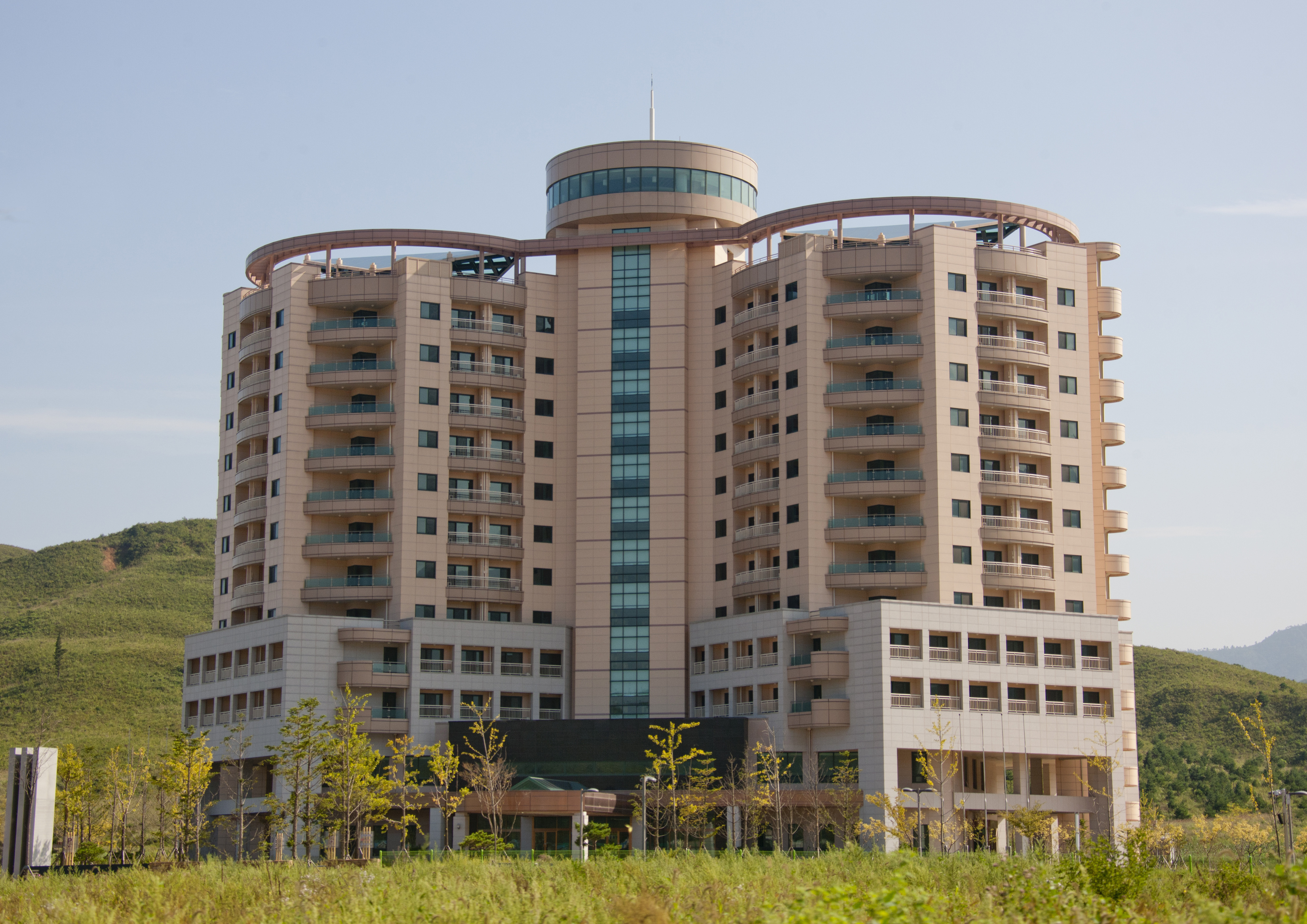  BACKGROUND Removal work on the floating Haegumgang Hotel appeared ongoing through late July, but there was little activity between July 25 and Aug. 3 and the ship’s foundational structure has yet to be fully removed, according to Planet Labs imagery. In April, DPRK state media claimed a forest fire destroyed a multi-million dollar golf course owned by the South Korean company Ananti, but workers have appeared active at the site in the months since, suggesting it may have also been intentionally demolished. North Korea previously demolished the Hyundai Asan-owned Kumgang Family Beach Hotel (금강패밀리비치호텔), also known as the Family Hotel (가족호텔), in summer 2017.  North Korean leader Kim Jong Un ordered all South Korean facilities to be removed when he visited the area in Oct. 2019, calling the facilities “shabby” and a “hotchpotch with no national character at all.” He said consultations with the South should precede their removal, leading Seoul to request visits and meetings to negotiate proceedings. Pyongyang refused the requests and said they would only accept document exchanges, and the two sides never reached an agreement on the matter. Kim also ordered officials to build “new modern service facilities our own way” after removing the South Korean facilities, including the new “Kosong Port coastal tourist area, Pirobong mountaineering tourist area, Haegumgang coastal park area and sports cultural area” featuring a “world-level hotel, golf course, [and] skiing ground.” They should be built “in 3-4 stages on a yearly basis after mapping out and examining the master development plan,” Kim added at the time. He indicated in a report at the Jan. 2021 party congress that the project should be finished by the end of 2025.  The Haegumgang coastal park area appears to be slated for construction just 5 miles (8 km) up the road from the inter-Korean border, so any future work to build new facilities there would suggest a willingness to restart inter-Korean tourism. Meanwhile, North Korea’s giant Wonsan-Kalma tourist zone up the coast remains unfinished and unopened. It is likely that Kim is spending significant resources on upkeep and maintenance of the zone’s dozens of hotels and malls along a 3.5-mile-long (5.5 km) stretch of beach if he still plans to open the megaproject in the future. Pyongyang closed the country’s borders to tourism in early 2020 to prevent the spread of COVID-19 and has not signaled intentions to reopen anytime soon due to lingering fears of new outbreaks. Edited by Bryan Betts. Updated on Aug. 8 at 15:05 KST to include comments by South Korea’s Ministry of Unification. © Korea Risk Group. All rights reserved. |

October 08, 2026Oct 08, 2026

The ultimate resources for professionals working on North Korea
 SHARE
SHARE COPY LINK
 X
X MASTODON