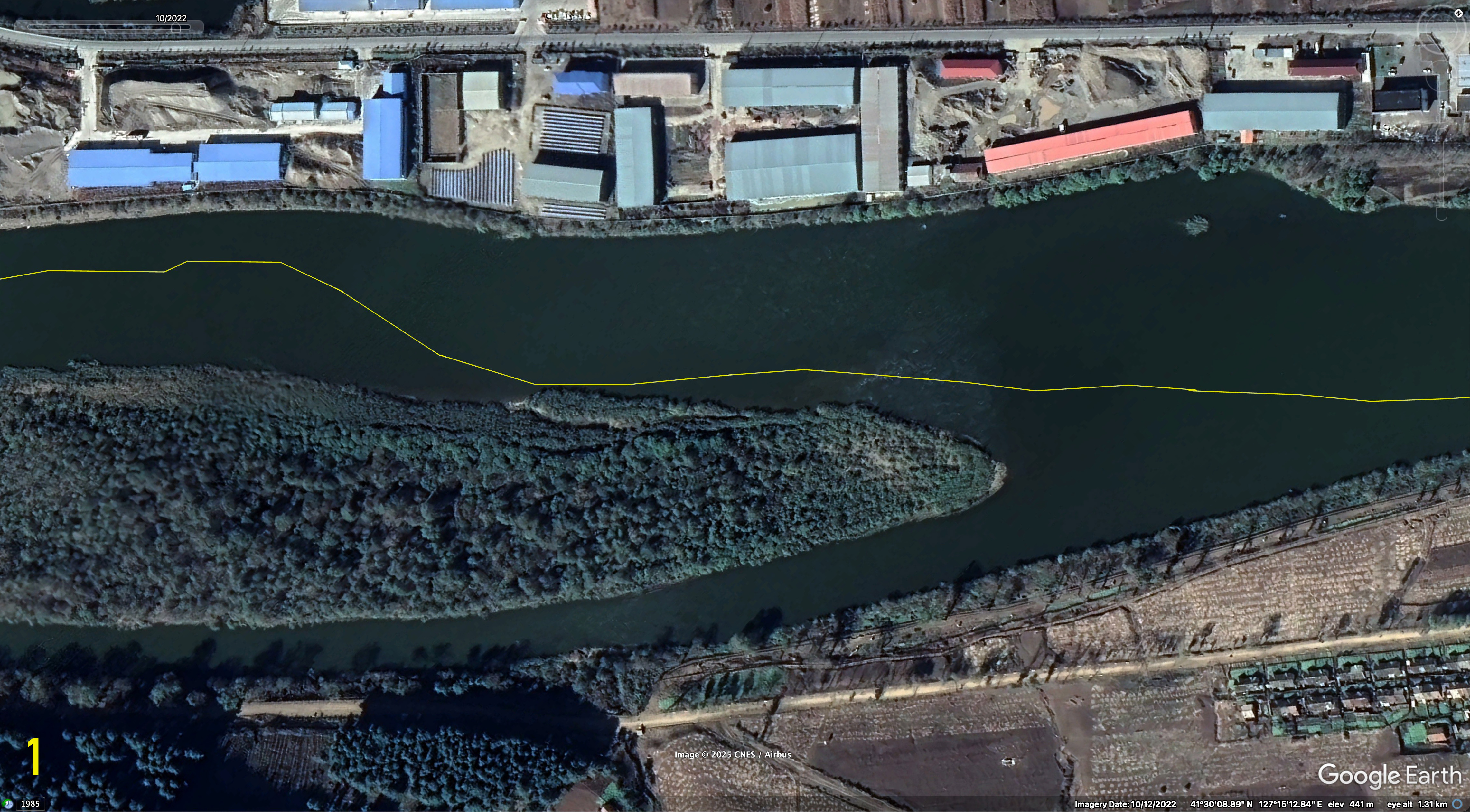
  Investigations North Korea, China using 32 makeshift bridges for extensive smuggling schemeNK Pro finds additional river crossings following exposé on sanctioned trade of Chinese vehicles across border  North Korea and China have established at least 32 makeshift river crossings to move cars, trucks and possibly other sensitive machinery to the DPRK, according to NK Pro analysis of satellite imagery, under a smuggling scheme meant to hide these transactions from scrutiny. The latest findings use daily Planet Labs satellite imagery to build upon an investigation by Asiapress Rimjin-gang that initially revealed 24 new crossings near North Korea’s Hyesan. Their reporting also featured photographs of hundreds of Chinese vehicles without license plates filling nearby lots on the DPRK side, helping to explain Pyongyang’s recent easing of restrictions on private car ownership. NK Pro has found that the crossings were built across a 59-mile (95 km) stretch of border spanning five counties in North Korea’s Ryanggang Province — Kim Hyong Jik, Kim Jong Suk, Samsu, Hyesan City and Pochon — that suffered heavy damages from floods in July 2024. They are all located across from China’s Baishan City of Jilin Province. 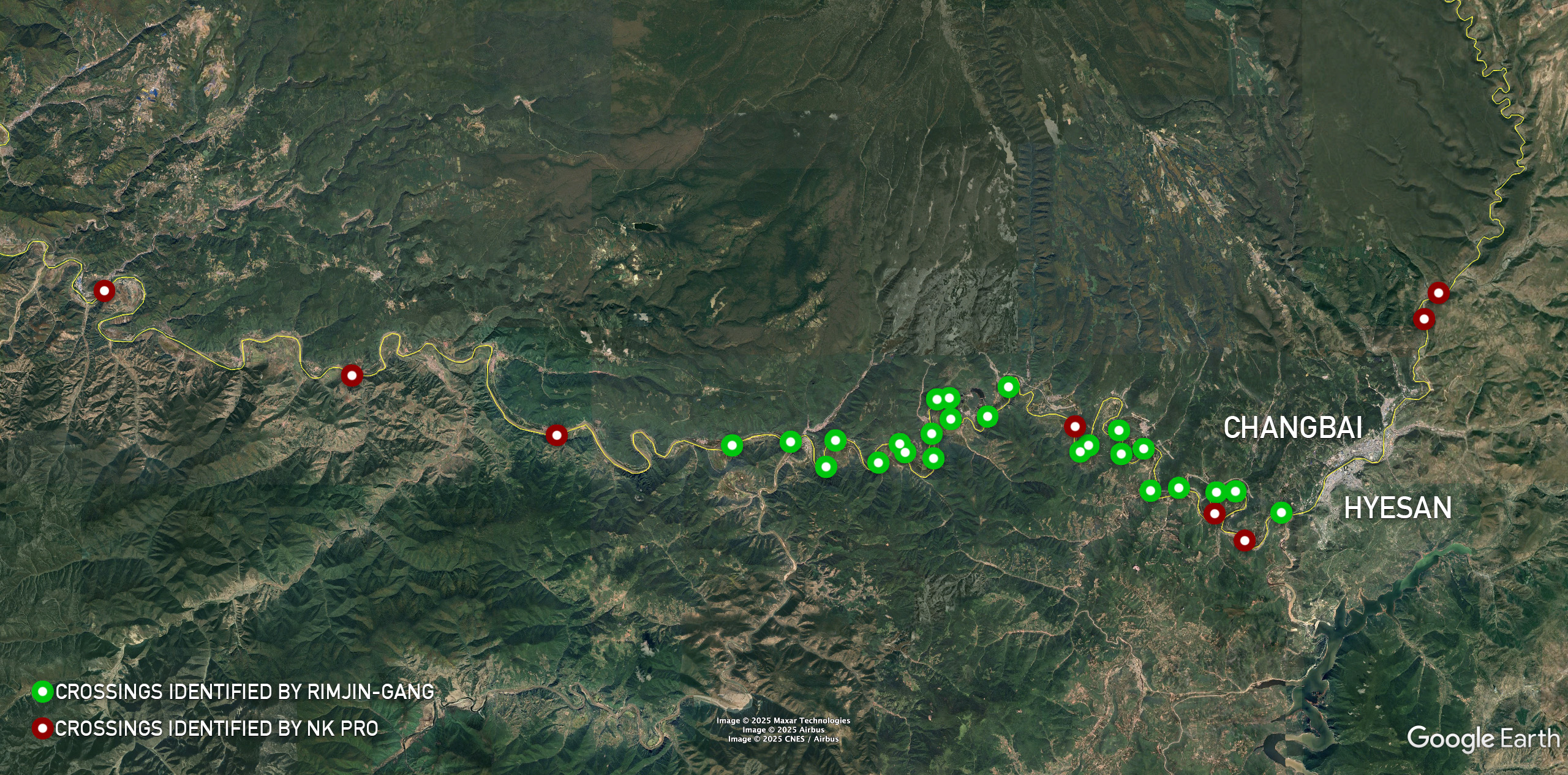 Planet Labs imagery suggests that the bilateral operation started between April and June 2024 with the establishment of four crossings. Seven appeared in the last three months of the year and five more from January to March 2025. The project then appeared to receive a significant boost when 14 more crossings were built by June, but only two more appeared in the months since then, NK Pro has found. The border construction has involved excavators moving dirt into the Yalu River to create makeshift bridges, many of which have been submerged or washed away over time and replaced with new ones nearby, according to satellite imagery and Rimjin-gang photos. New dirt parking lots for trucks and cargo staging have appeared on both sides of the border as well. Rimjin-gang reported that the latest trade in vehicles and other unknown items over the makeshift crossings is a form of “state smuggling carried out under the leadership of North Korean government agencies,” including the Ministry of External Economic Affairs. 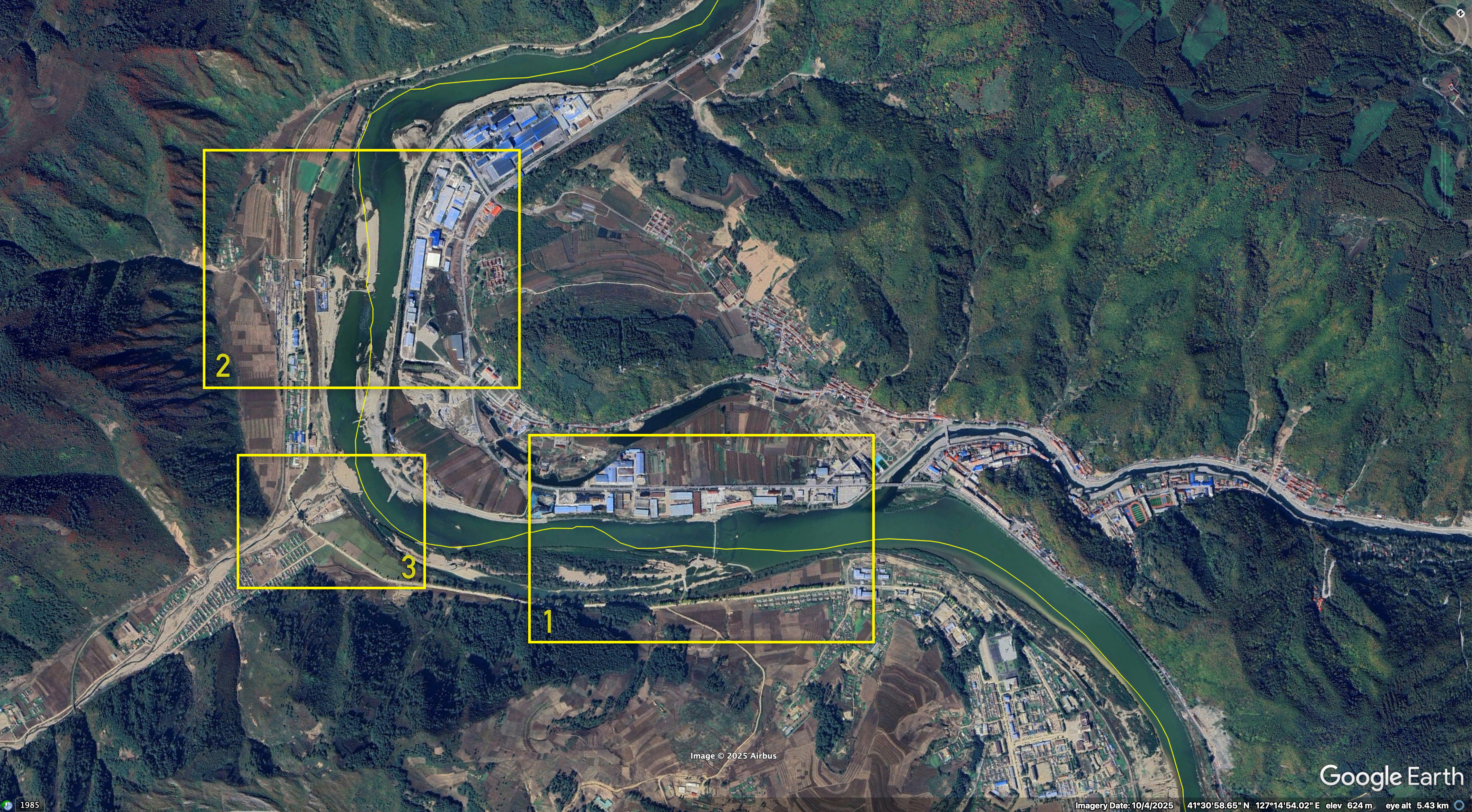
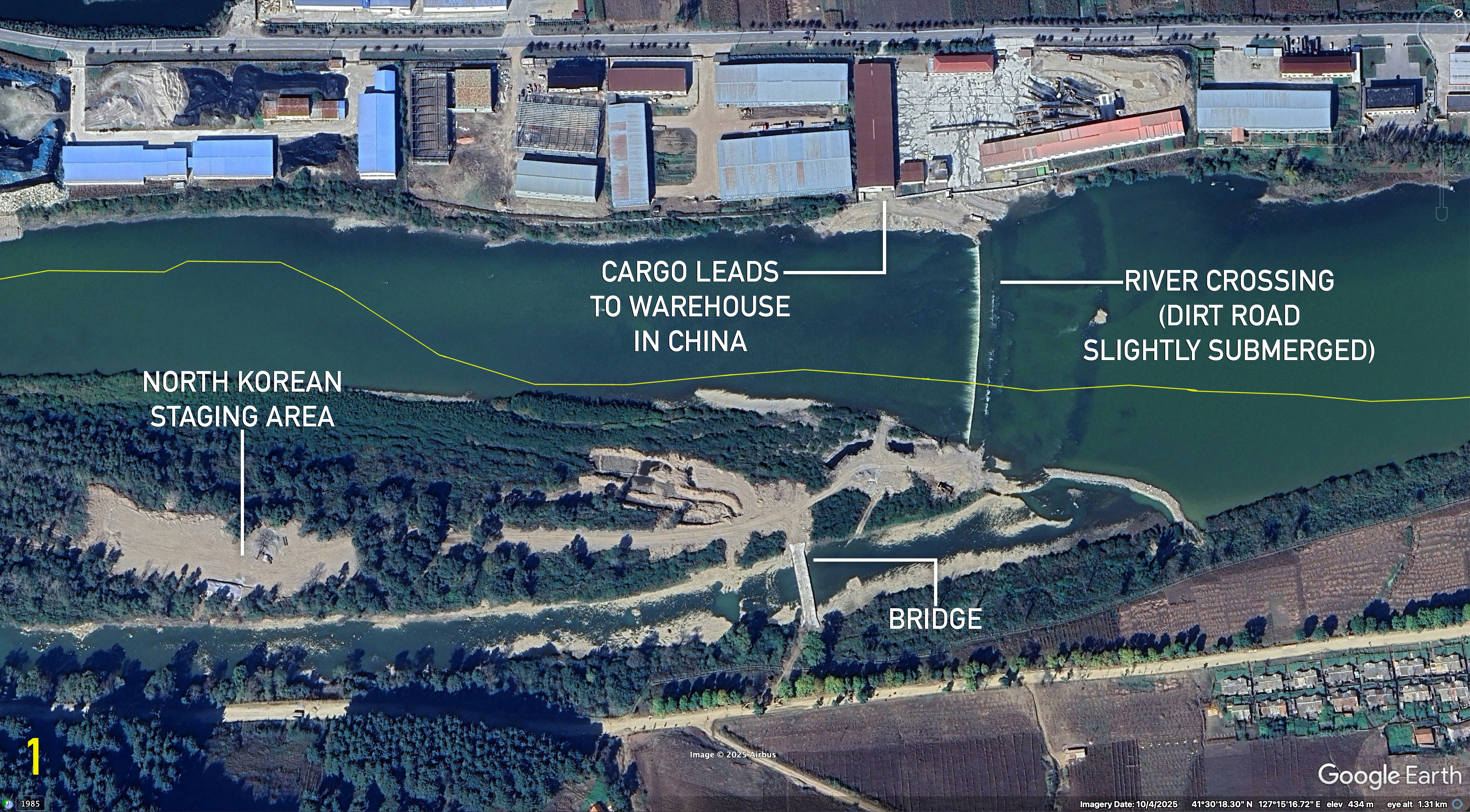
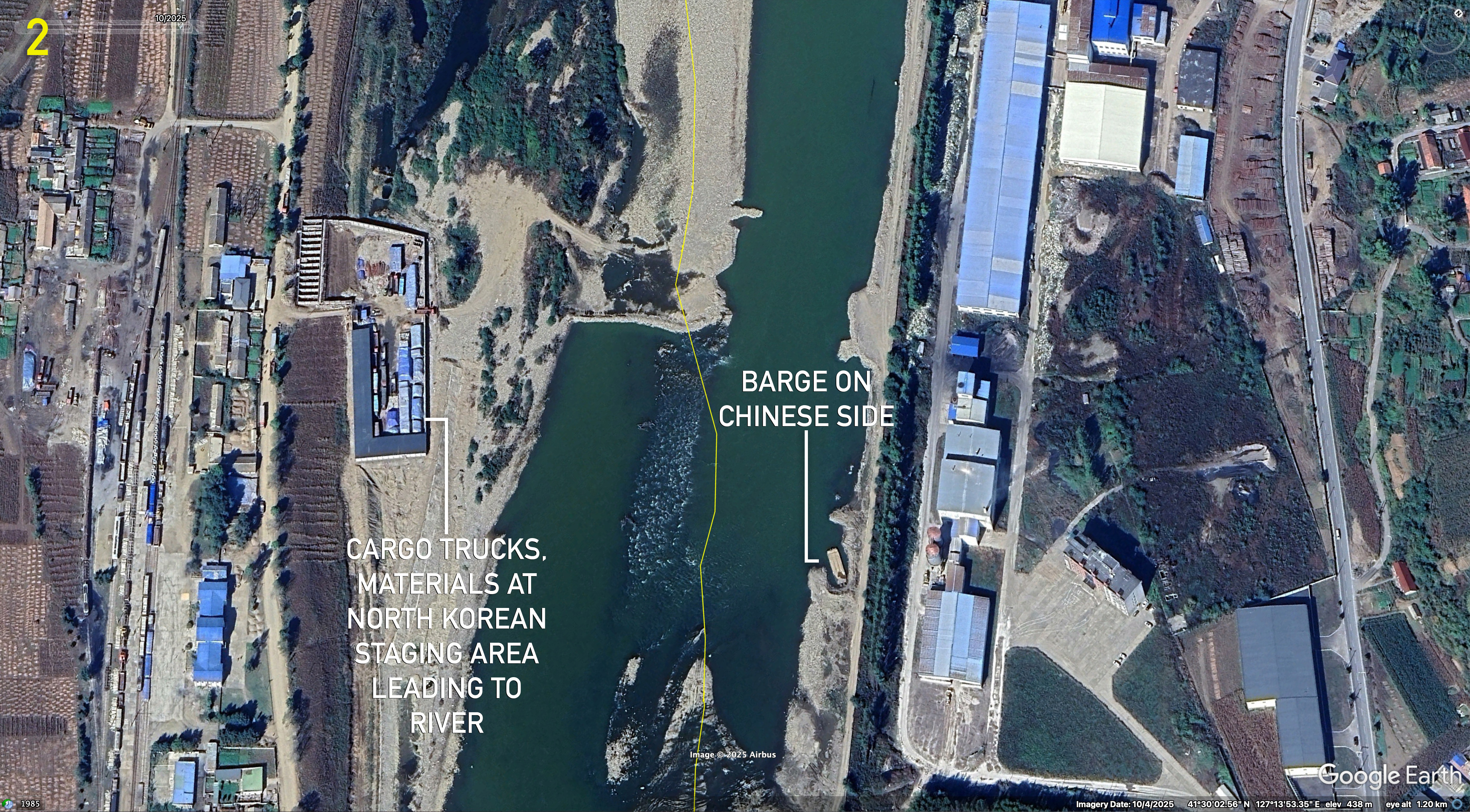
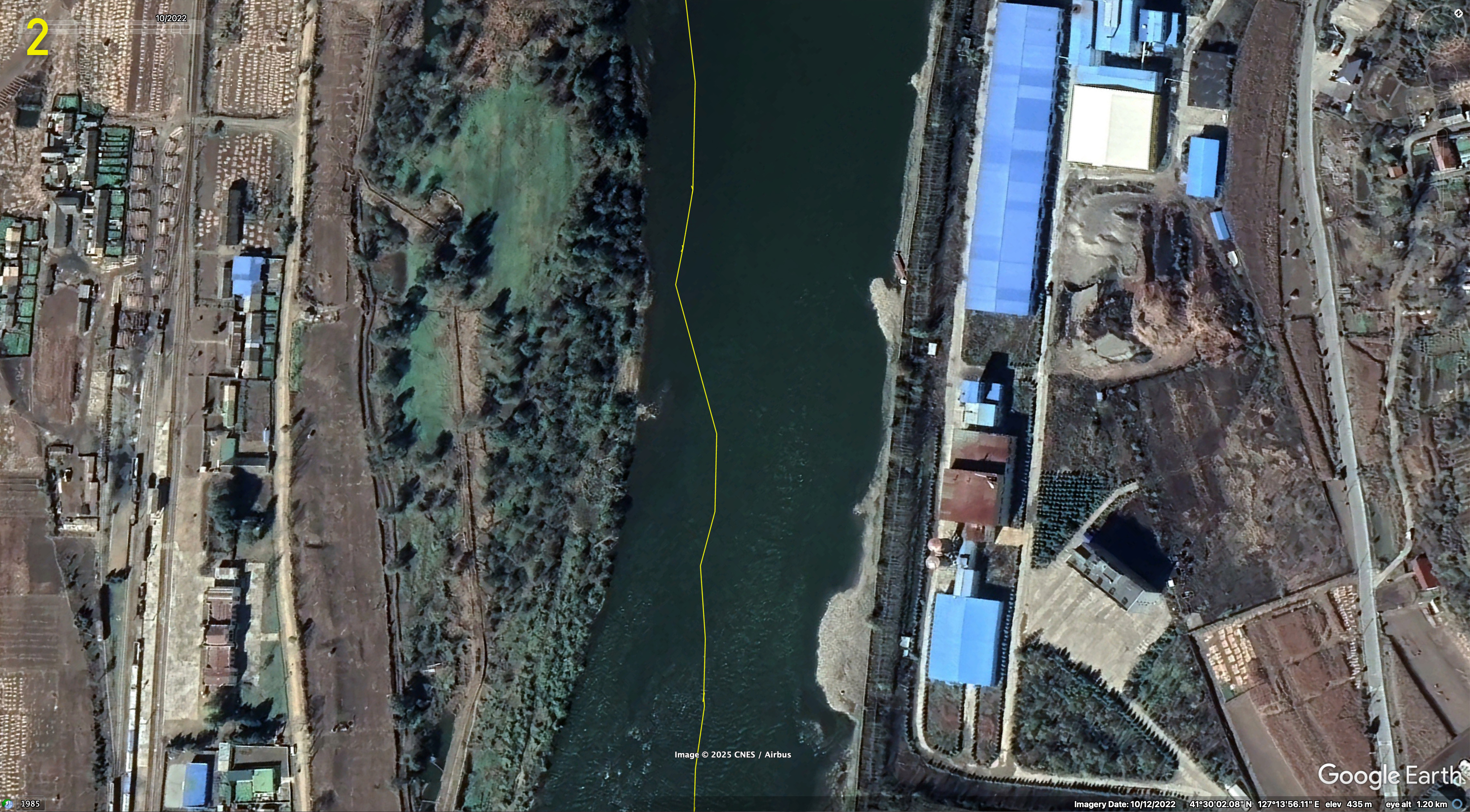
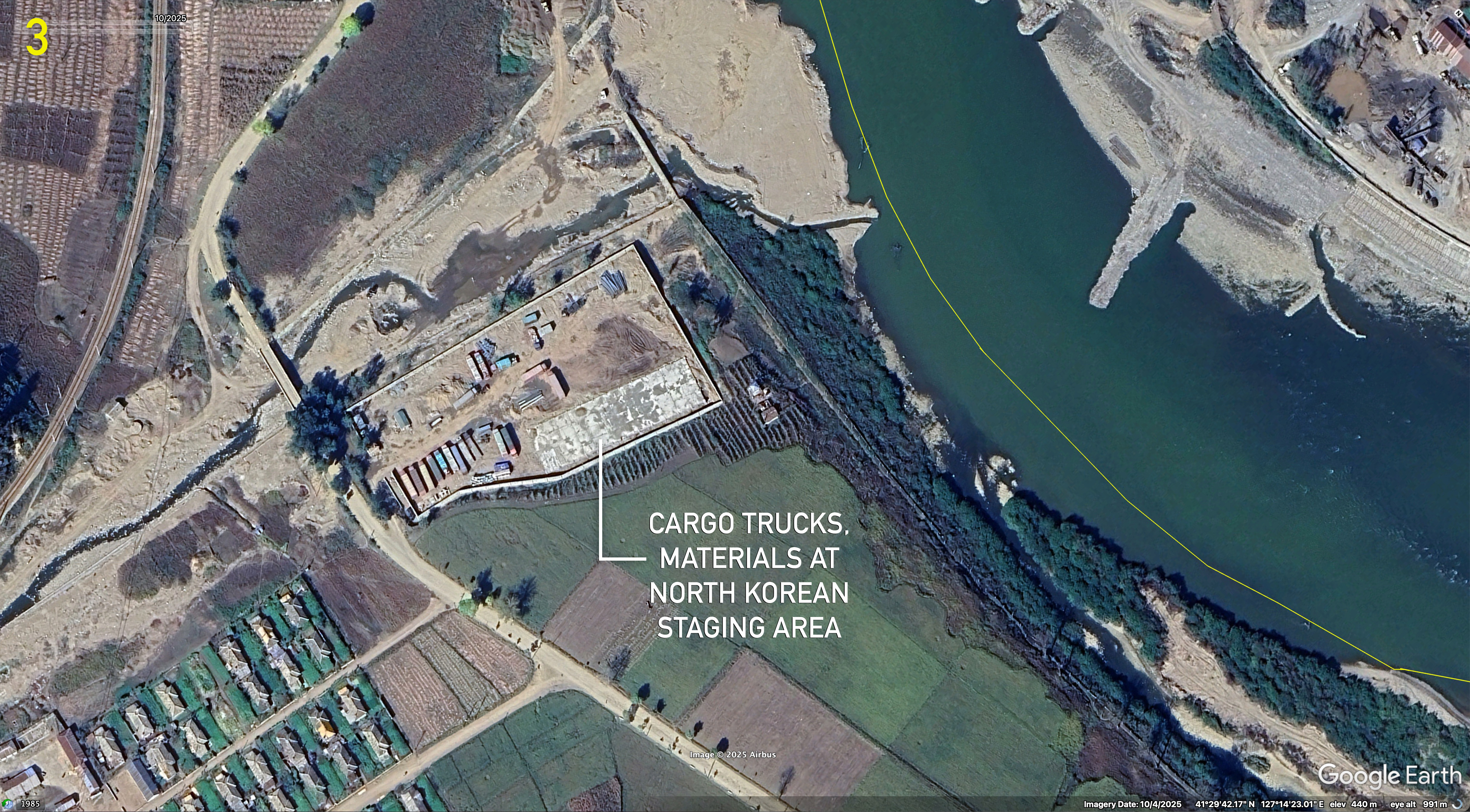
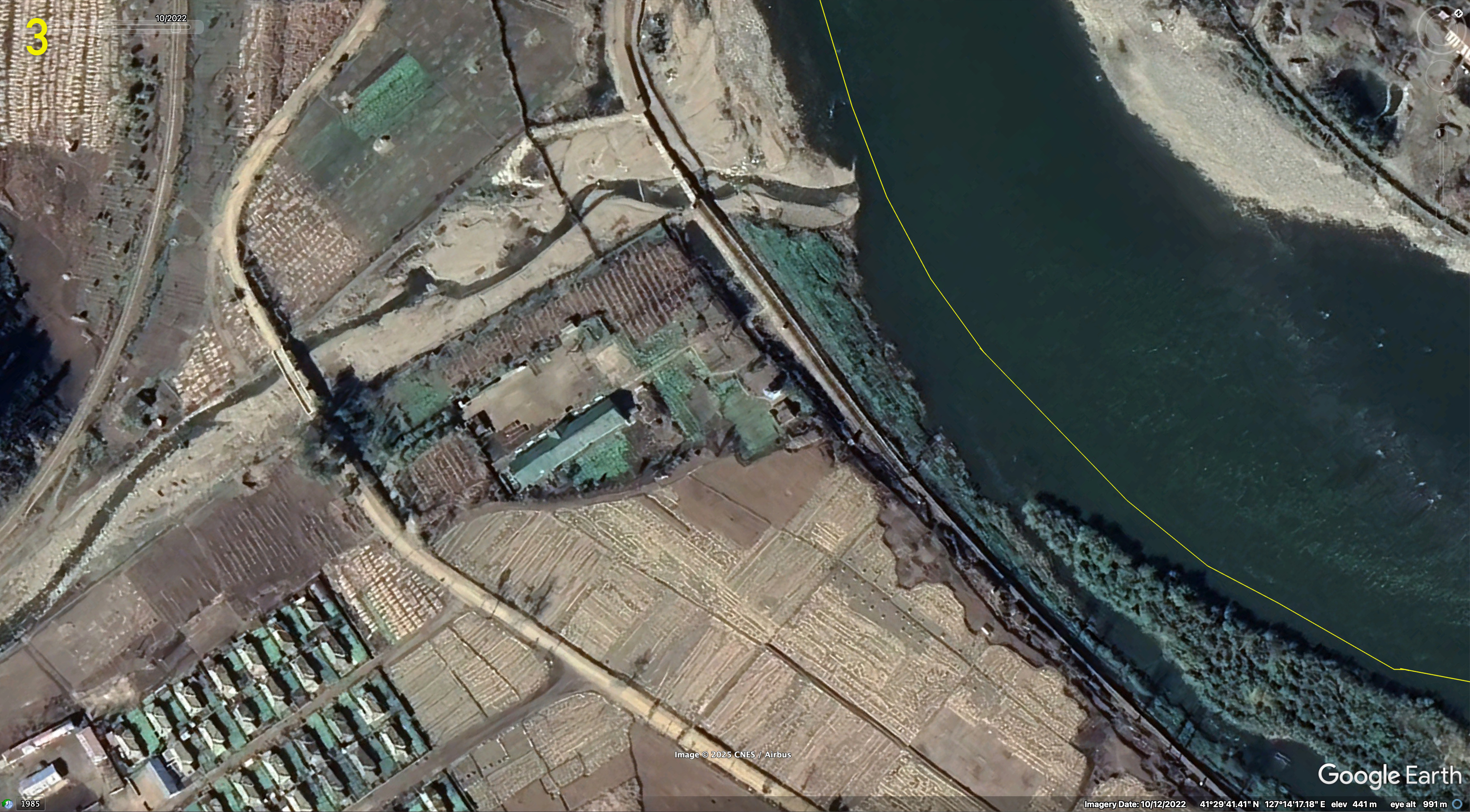
These activities are not conducted through formal channels or roads and rail bridges linking the two countries — some built only recently to boost trade — because Chinese authorities seek “plausible deniability” over their involvement with violations of U.N. sanctions, according to Peter Ward, a North Korean economy expert and research fellow at the Sejong Institute. China could say “some bad actors” are carrying out the trade over the dirt crossings, “whereas there’s no plausible deniability with a bridge, which the state has complete control over,” he told NK Pro. It is highly unlikely, however, that the scheme is being done without the knowledge of Chinese authorities, according to NK Pro analysis, since the crossings have been built up in close proximity to large-scale construction work under China’s G331 highway project right along the banks of the Yalu River. The highway project could help provide cover to explain the presence of so many trucks moving along the riverbanks, but it also means that hundreds of Chinese workers, officials and project managers in the vicinity have likely witnessed the movement of vehicles for export, as well as cargo trucks actually crossing the river via unofficial smuggling channels. 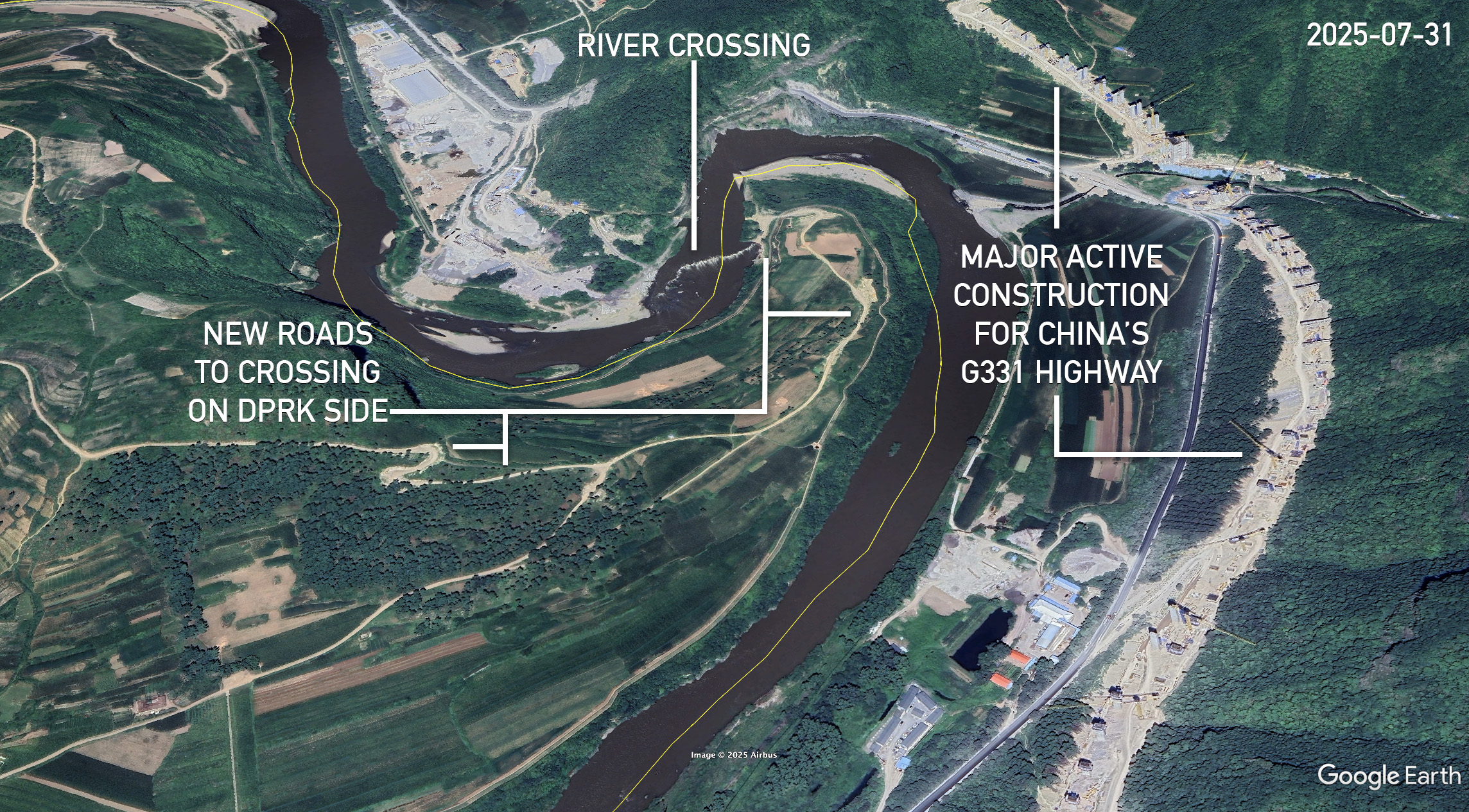
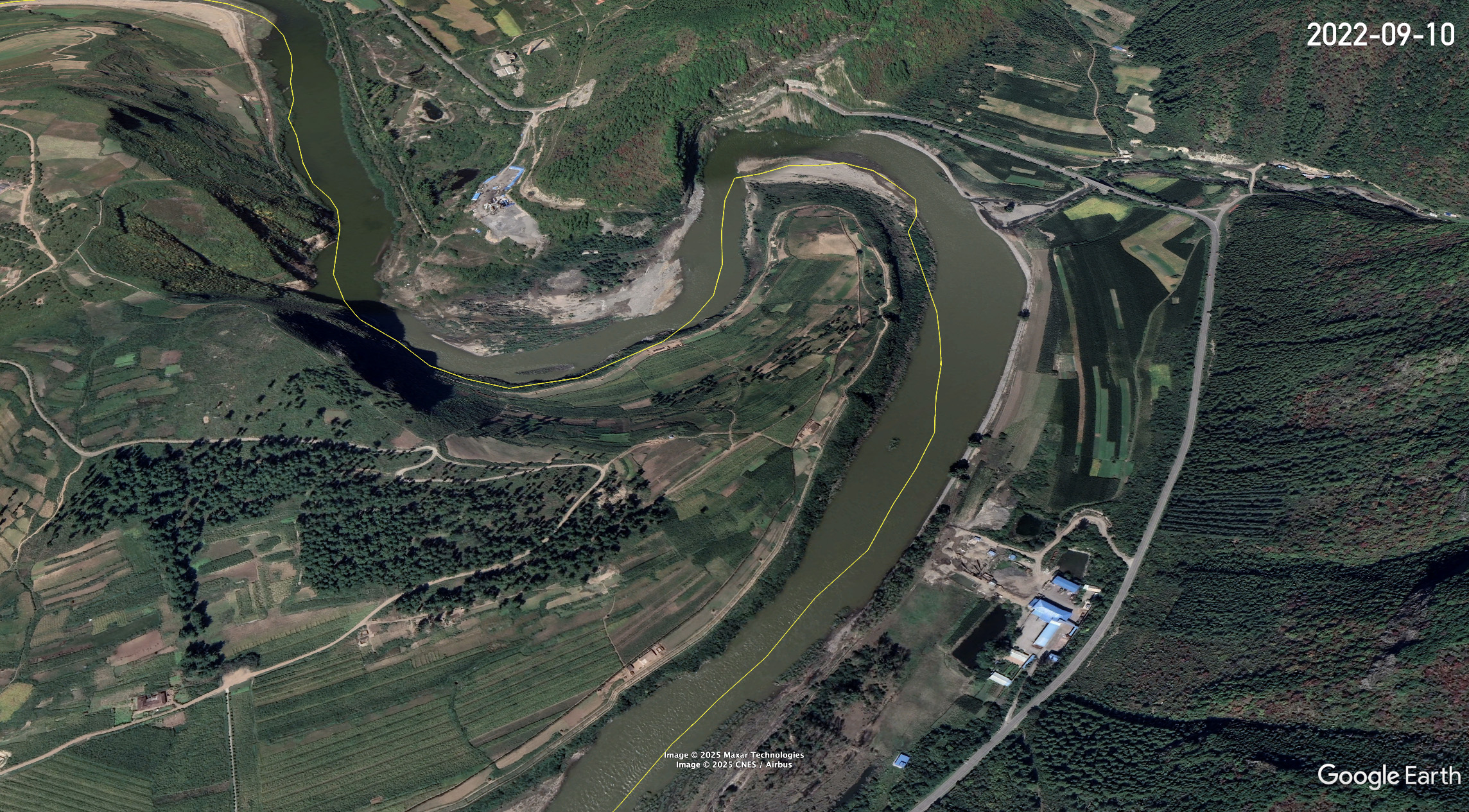
The scheme is yet another high-profile example of Xi Jinping’s China having largely turned its back on U.N. sanctions against the DPRK despite still attempting to appear committed to their enforcement, quietly reversing its former stance of trying to halt North Korea’s nuclear weapons development. This year’s boost in the number of crossings coincided with a rise in officially reported China-DPRK trade, a sign of strengthening economic relations feeding into the smuggling project. Items prohibited under U.N. sanctions that have shown up in official trade data before, like tractors, are unlikely to be the focus of this smuggling since China has already demonstrated its willingness to openly export these items to the DPRK. Instead, the scheme is likely built around sensitive items that the Chinese government is concerned would invite criticism — like private cars or dual-use machinery that could be used in weapons factories. North Korea flaunted the import of Chinese machinery to stock new weapons factories in July 2024, just after the first crossings were established, though there is no direct evidence that they were imported through this particular smuggling scheme. Satellite imagery has revealed a number of other new arms plant projects as Pyongyang has vowed to increase nuclear weapons stockpiles, showing it has the money and reliable unofficial shipping channels to support these developments. A military-linked Russia-DPRK cargo ship channel is also a viable source for many related items and equipment. The large number of makeshift China-DPRK river crossings suggests operators on the ground struggled to keep up with high volumes of cars and cargo coming from China, building more crossings to speed up shipments. Rimjin-gang reported that the operation is being driven by wealthy and well-connected North Korean businesspeople known as the “donju” class, but that DPRK authorities initiated the scheme to entice donju to let go of foreign currency they’ve been saving due to economic uncertainty since the pandemic. This suggests a significant decision by leader Kim Jong Un to risk loosening social controls by allowing private car ownership in hopes that wealthy citizens would give money to state agencies operating the shipments. NK Pro reviewed Planet Labs imagery of the entire China-DPRK border, finding that the scheme appears limited to the Ryanggang Province-Baishan City corridor, though there is also evidence of at least one possible river crossing to the west in North Korea’s Junggang County. However, similar unofficial river crossings have been used for decades by smugglers seeking to bypass customs procedures on both sides of the border. Google Earth imagery also shows similar dirt river crossings being used especially after China started signing on to U.N. Security Council Sanctions Resolutions banning trade in various items in 2013. The list of the 32 newer river crossings is included below, with those newly identified by NK Pro in bold. Location numbers from Rimjin-gang’s map are included next to the county location names.
Edited by David Choi © Korea Risk Group. All rights reserved. |

October 16, 2026Oct 16, 2026

The ultimate resources for professionals working on North Korea
 SHARE
SHARE COPY LINK
 X
X MASTODON