  Investigations North Korea-China smuggling scheme appears to restart after monthslong lullSatellite imagery shows staging lots and crossing points active along Yalu River soon after Kim-Xi summit  Over a dozen makeshift smuggling routes across the North Korea-China border that were used to send vehicles and other goods to the DPRK have appeared active in recent weeks after going quiet since late last year, according to NK Pro analysis of satellite imagery. The apparent shutdown by early 2026 came just months after Asiapress Rimjin-gang first unveiled photos and details of the scheme, and following NK Pro reporting in December on more locations across the Yalu River. Many of the crossings were in close proximity to construction sites for a major Chinese government highway project along the border, raising questions about Beijing’s knowledge of the transfers occurring in broad daylight and in violation of U.N. sanctions. The apparent restart came just days after the leaders of the two countries held a summit in Pyongyang, suggesting the events may be linked. Smuggling of private vehicles appeared to be a major driver of activity last year, as Pyongyang reportedly changed laws to allow private car ownership for the first time. The number of cars bearing yellow license plates, denoting private ownership, subsequently started to crowd the capital’s streets. WHAT THE IMAGERY SHOWS NK Pro recently reviewed Planet Labs satellite imagery of 34 crossing points and cargo-staging lots identified as active last year along the Yalu River between North Korea’s Ryanggang Province and China’s Baishan region in Jilin Province. Most appeared active from September to the end of the year, but imagery taken between January and May showed no major signs of activity like vehicles and cargo moving around in the staging lots. Makeshift road crossings made of dirt dumped into the river appeared intact in many locations. Now, NK Pro analysis shows renewed activity at 13 crossings, with apparent cargo showing up at unpaved, cleared lots on the North Korean side of the river at five locations between June 19 and 24, and five others between June 28 and 29. 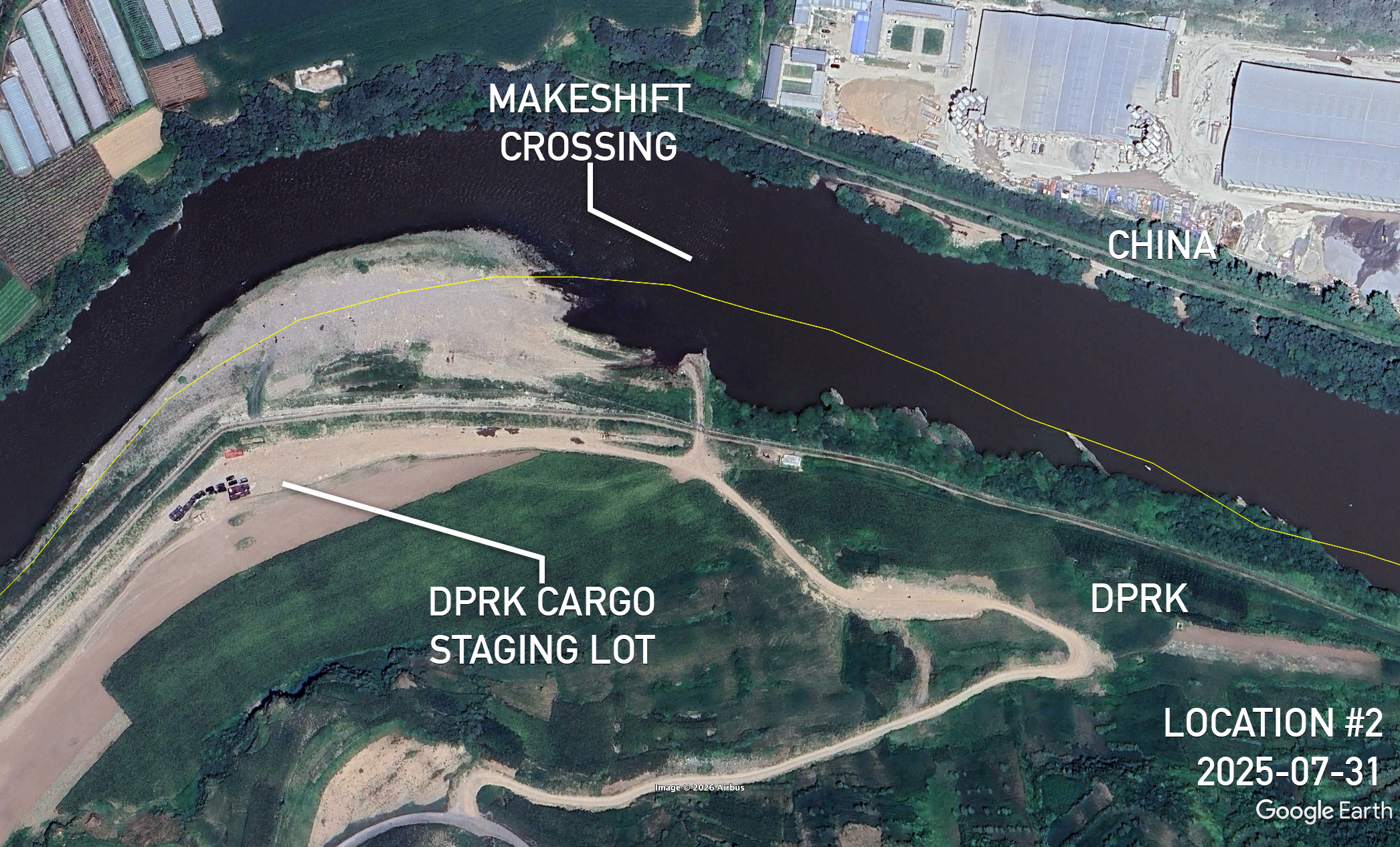 The cargo was likely brought over the border from China and cleared out from the staging areas within a few days for delivery inside North Korea, since this was the main direction of transfers last year. The imagery shows renewed activity at train stations near the staging lots during the same period. The restart came just after North Korean leader Kim Jong Un and his Chinese counterpart Xi Jinping held extensive talks in Pyongyang from June 8 to 9. Official readouts from the talks said the leaders discussed trade. Xi emphasized his desire to reopen official border crossings and customs complexes that have been closed since the start of the pandemic in early 2020, but it’s unclear whether the two discussed cross-border smuggling operations. 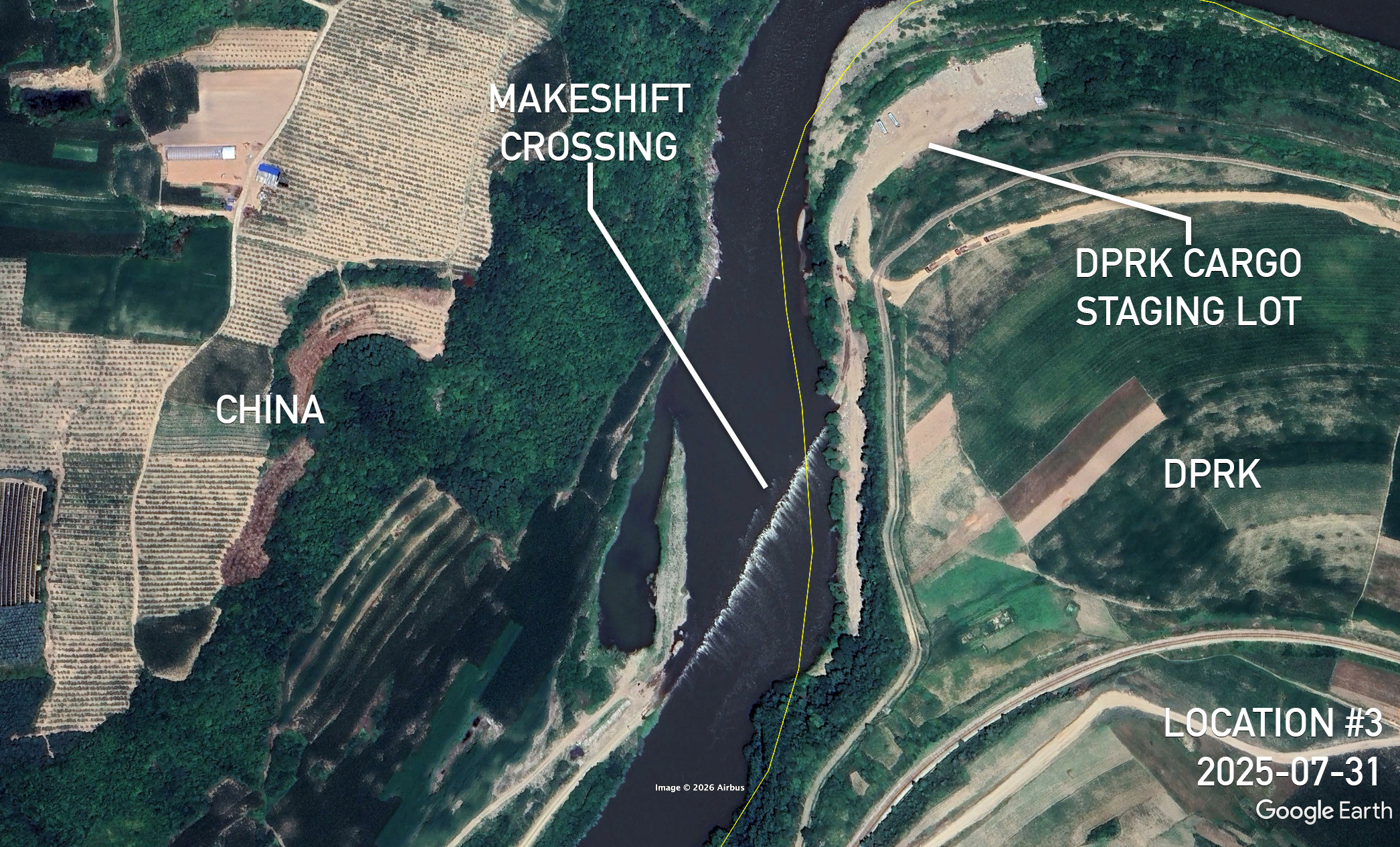
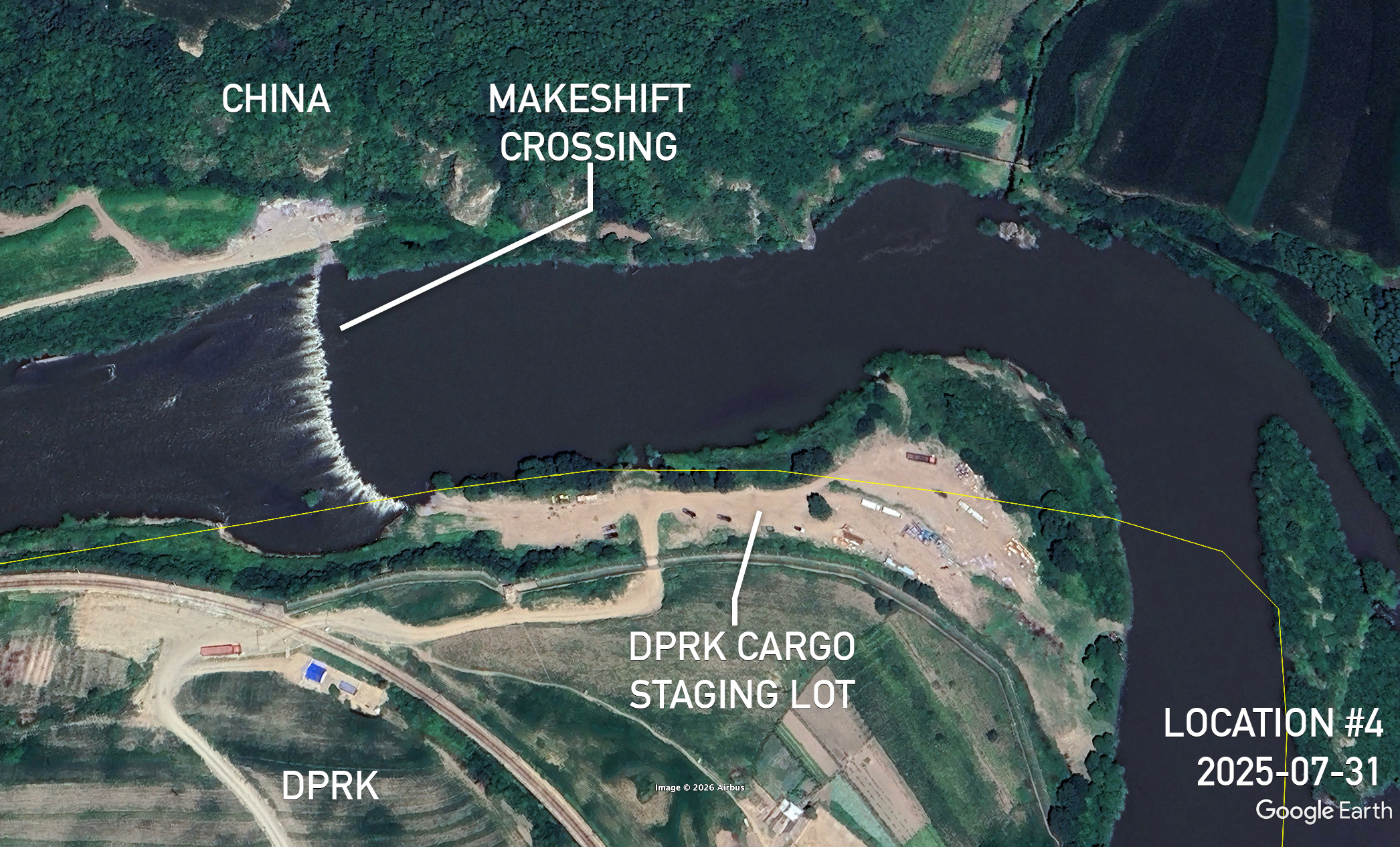
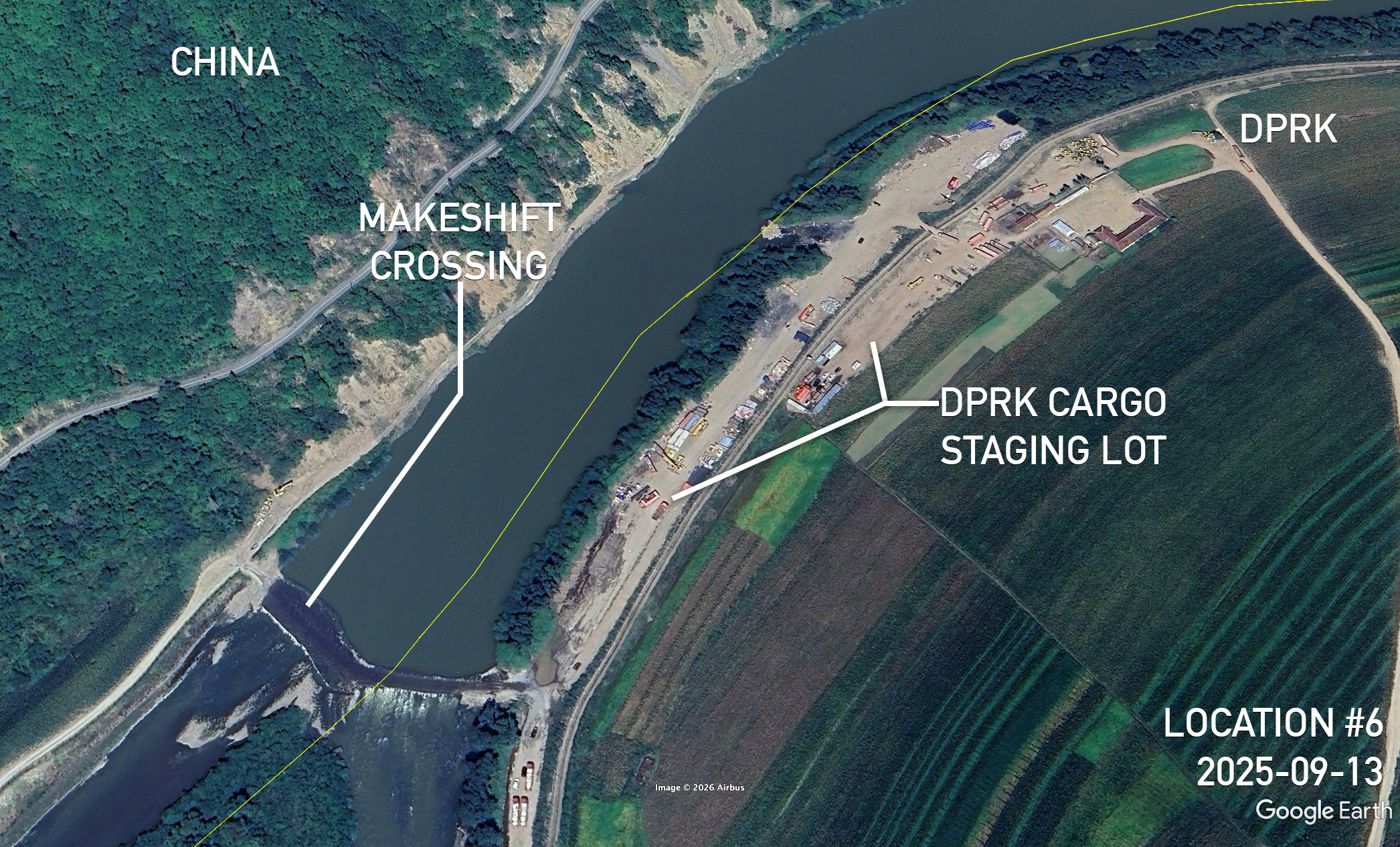
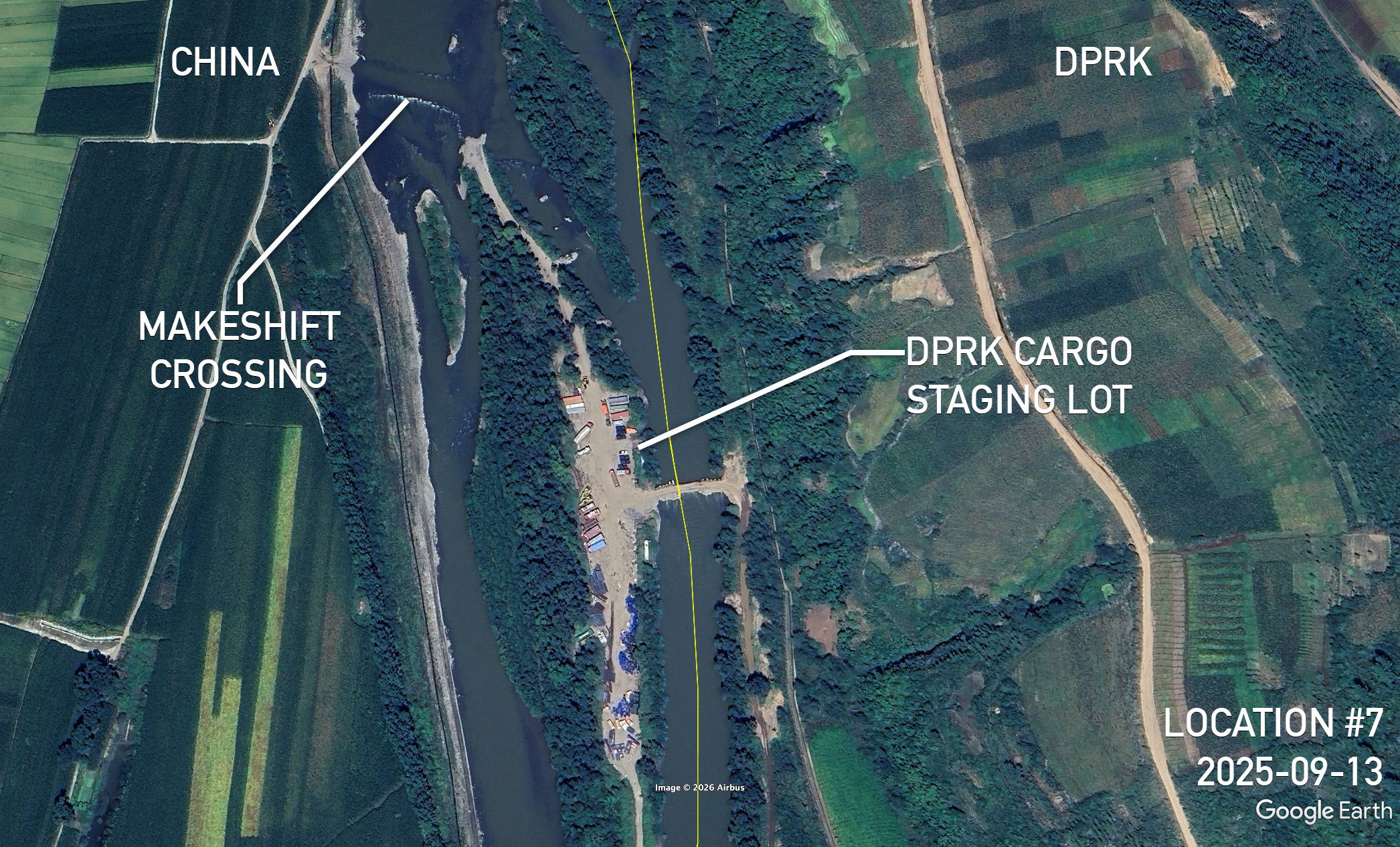
WHAT IT MEANS While transfers of sanctioned goods like vehicles to North Korea is a clear violation of U.N. resolutions, its continuation appears to be in Xi’s best interest. Xi has demonstrated a willingness to renege on his commitment to sanctions in order to provide Kim the goods he needs, and continues to maintain good relations that benefit the Chinese border areas. However, he likely does not want to flout these measures too blatantly, as Russia has with its weapons trade with North Korea, given China’s portrayal of itself as the arbiter of regional stability. Xi agreed to the last round of strict U.N. sanctions in 2017 under an earlier strategy of pressuring Kim to halt nuclear weapons development. The measures failed to stop Kim, and Beijing has since dropped public statements about denuclearization while Xi has sent officials to applaud Kim’s nuclear missiles at parades. As a permanent member of the U.N. Security Council, keeping the high volume of illicit trade away from public view gives Xi plausible deniability and diplomatic distance. Ultimately, it would be up to the U.S. and its allies to exert diplomatic pressure to stop the activity, since China and Russia have used their veto power as U.N. Security Council members to halt the relevant committee’s enforcement abilities and disband the Panel of Experts tasked with tracking violations. If unofficial cross-border trade was not brought up at the Xi-Kim summit and no relevant instructions were distributed afterward, local Chinese authorities in the border area may have signaled that it is condoned and that neither leader sees it as a problem. It is also possible that the scheme was previously halted by North Korean authorities, potentially to stem or regulate what may have been an overly rapid influx of vehicles. Going forward, the long-term use of trade routes like dirt roads across rivers is likely untenable because they are dangerous and prone to accidents. The scheme also opens opportunities for corruption on both sides of the border since the trade bypasses official customs procedures. Meanwhile, China will also want to put numerous large-scale customs complexes built and under construction along the length of the DPRK border to good use after standing empty for years. The following table lists the locations of the 13 crossings identified as newly active in June 2026:
Edited by David Choi © Korea Risk Group. All rights reserved. |

October 18, 2026Oct 18, 2026

The ultimate resources for professionals working on North Korea
 SHARE
SHARE COPY LINK
 X
X MASTODON