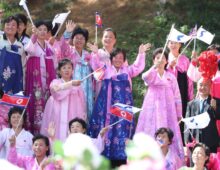
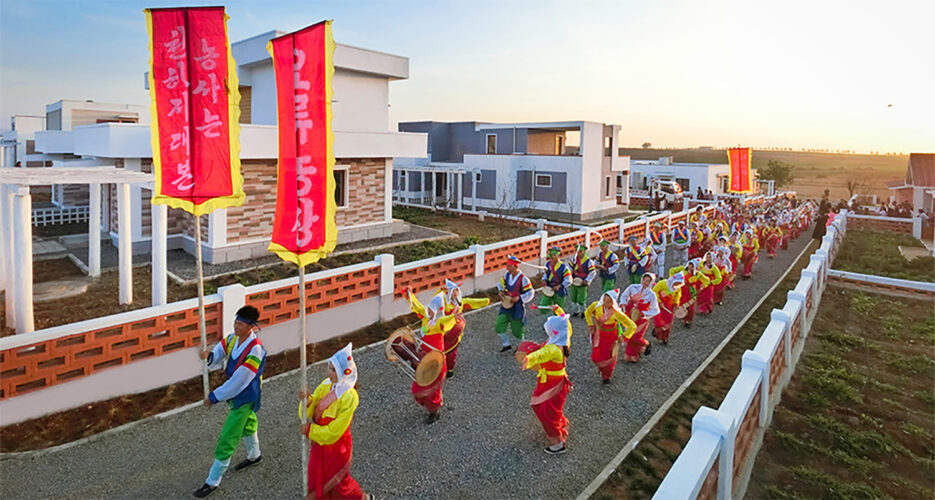
A moving-in ceremony for new homes under the rural housing construction project at Oryu Vegetable Farm | Image: Rodong Sinmun (Nov. 12, 2024)
North Korea’s ruling Workers’ Party led construction of over 25,000 new homes at rural farms across the country in 2024, according to NK Pro analysis of state media reporting, in the third year of leader Kim Jong Un’s “socialist fairyland” revival project aimed at increasing crop production.
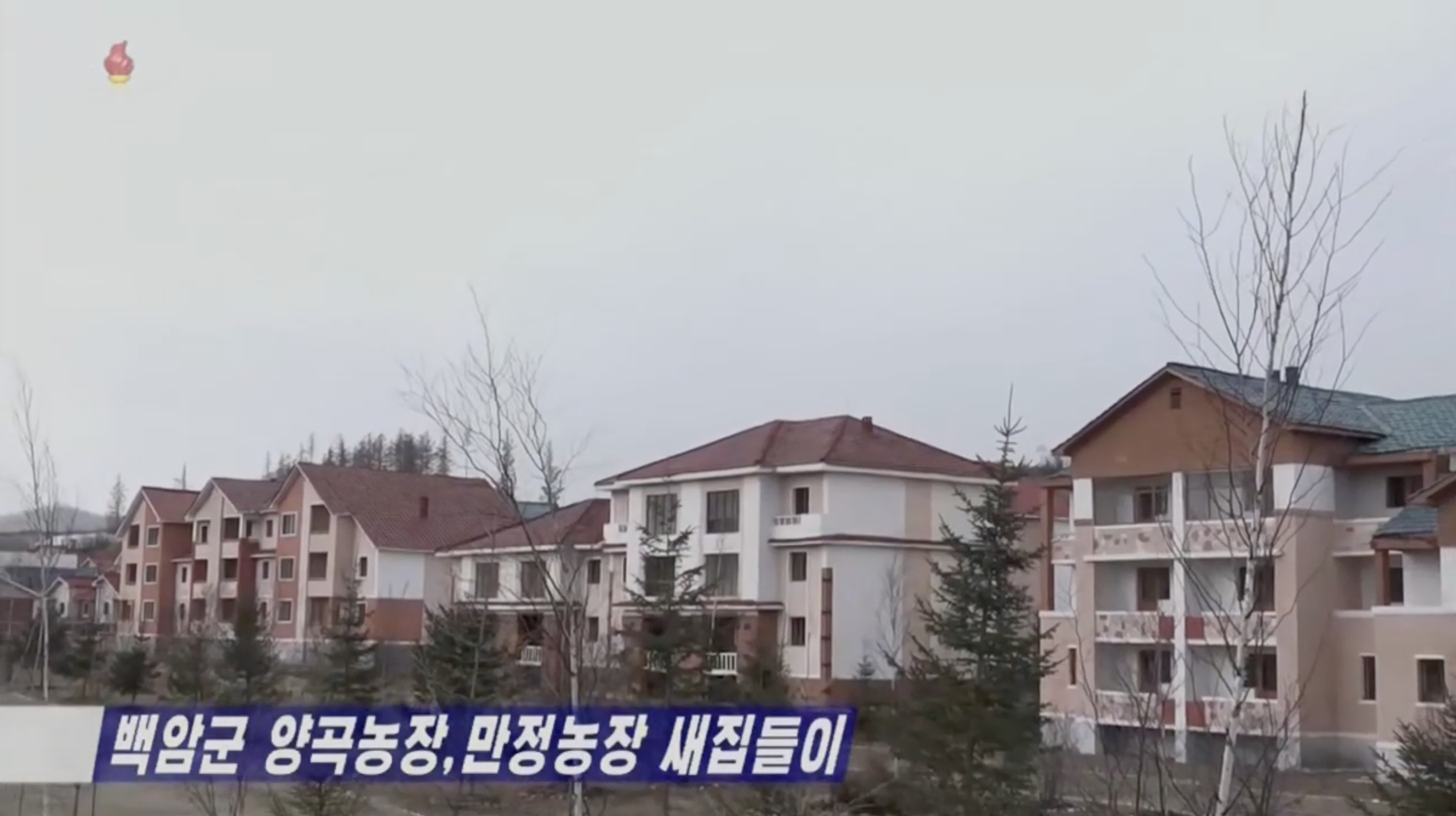
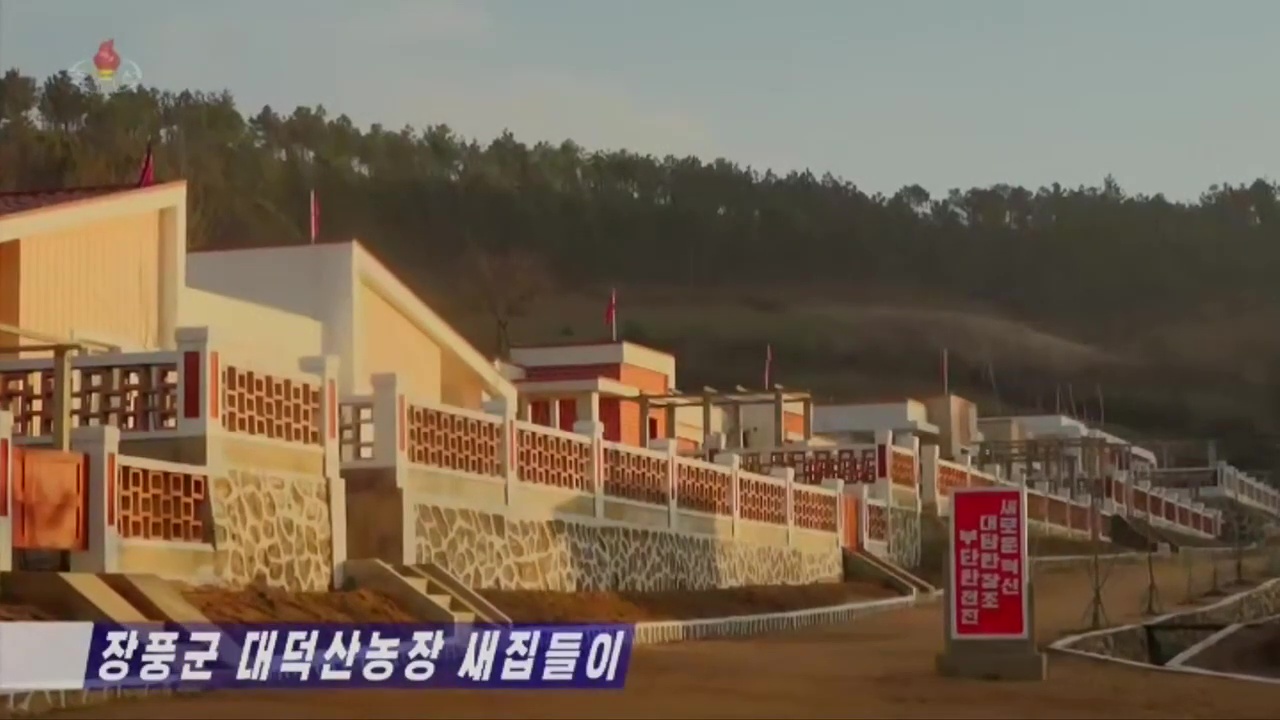
State media outlets like the Rodong Sinmun and Korean Central Television (KCTV) reported on moving-in ceremonies at new neighborhoods of duplexes and apartment blocks at 222 farms or rural villages last year.
It marks an increase of some 30% from 168 in 2023, and brings the total number of individual rural housing construction projects reported in state media to at least 434 since 2021.
Kim initiated the project in 2022, saying that improving living conditions for farmers will lead to stronger ideological obedience to the party and commitment to boosting agricultural output, thereby “solving the food problem of the country.”
The project has involved demolishing small neighborhoods of mostly duplexes in rural areas and building new apartment blocks or duplexes with “modern” designs in their place or nearby.
As part of Kim’s overall goal of “transforming” the “backward” countryside, the rural housing project addresses agricultural issues while his parallel “20×10” project seeks to improve industrial output in these areas.
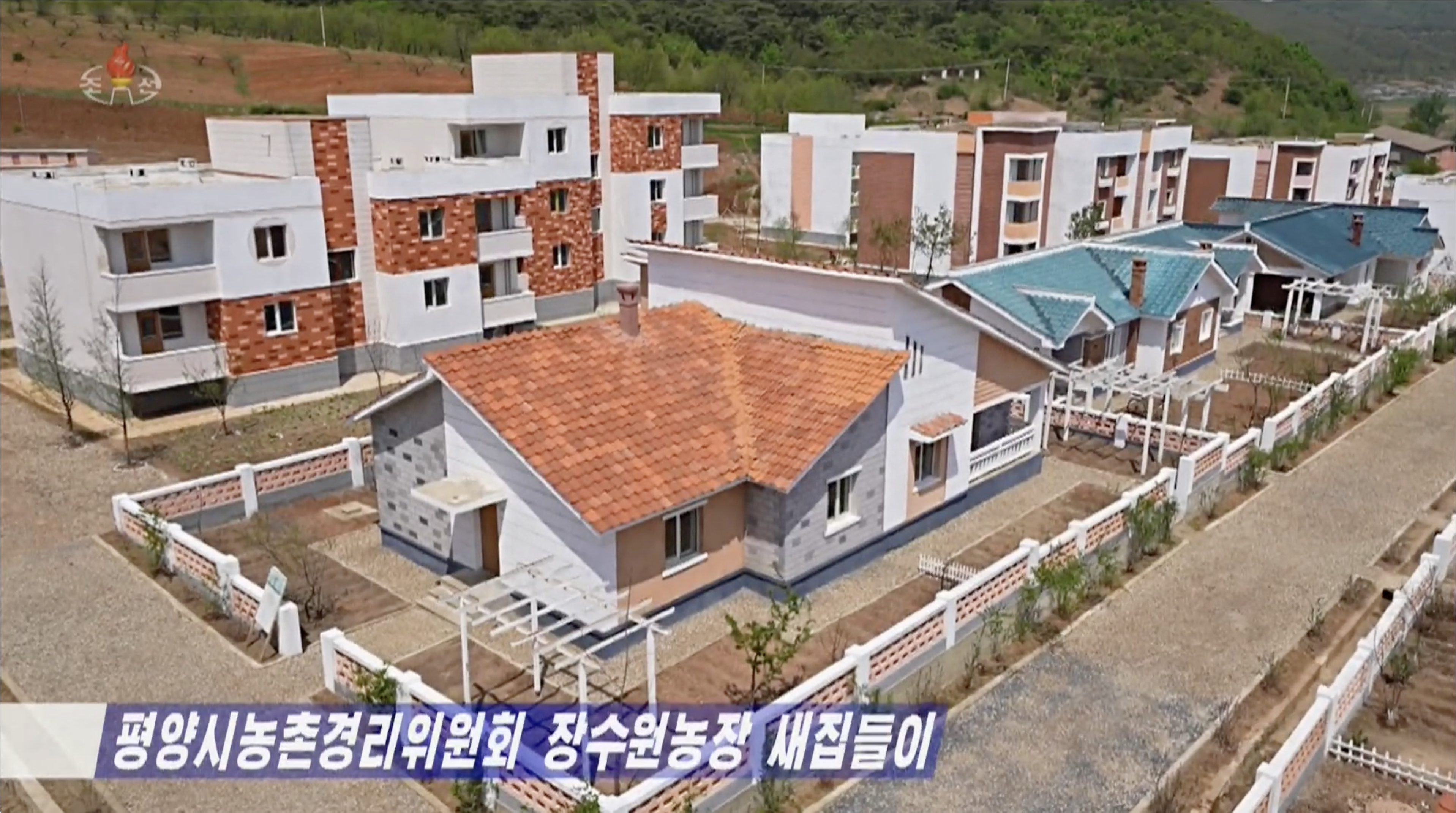
New duplexes and apartments finished in 2024 under the rural housing project at Jangsuwon Farm in Pyongyang | Image: KCTV (April 29, 2024)
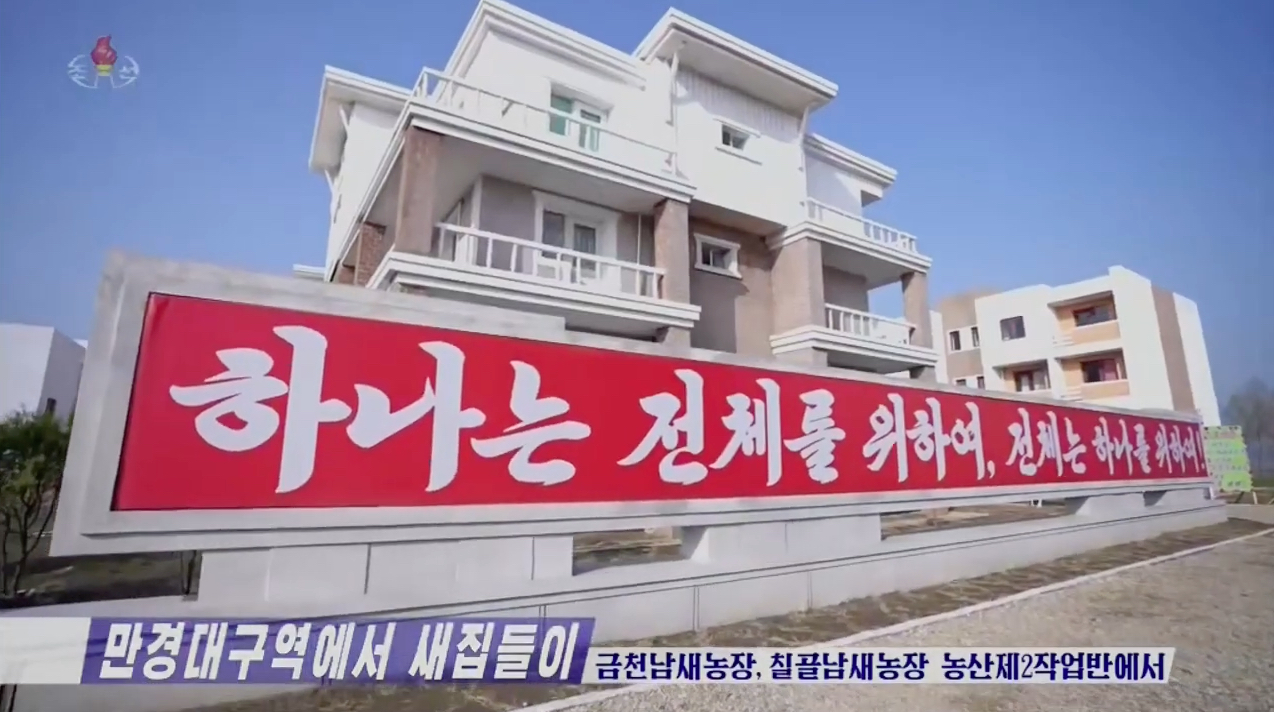
A new apartment building in the Mangyongdae District of the capital | Image: KCTV (Nov. 1, 2024)
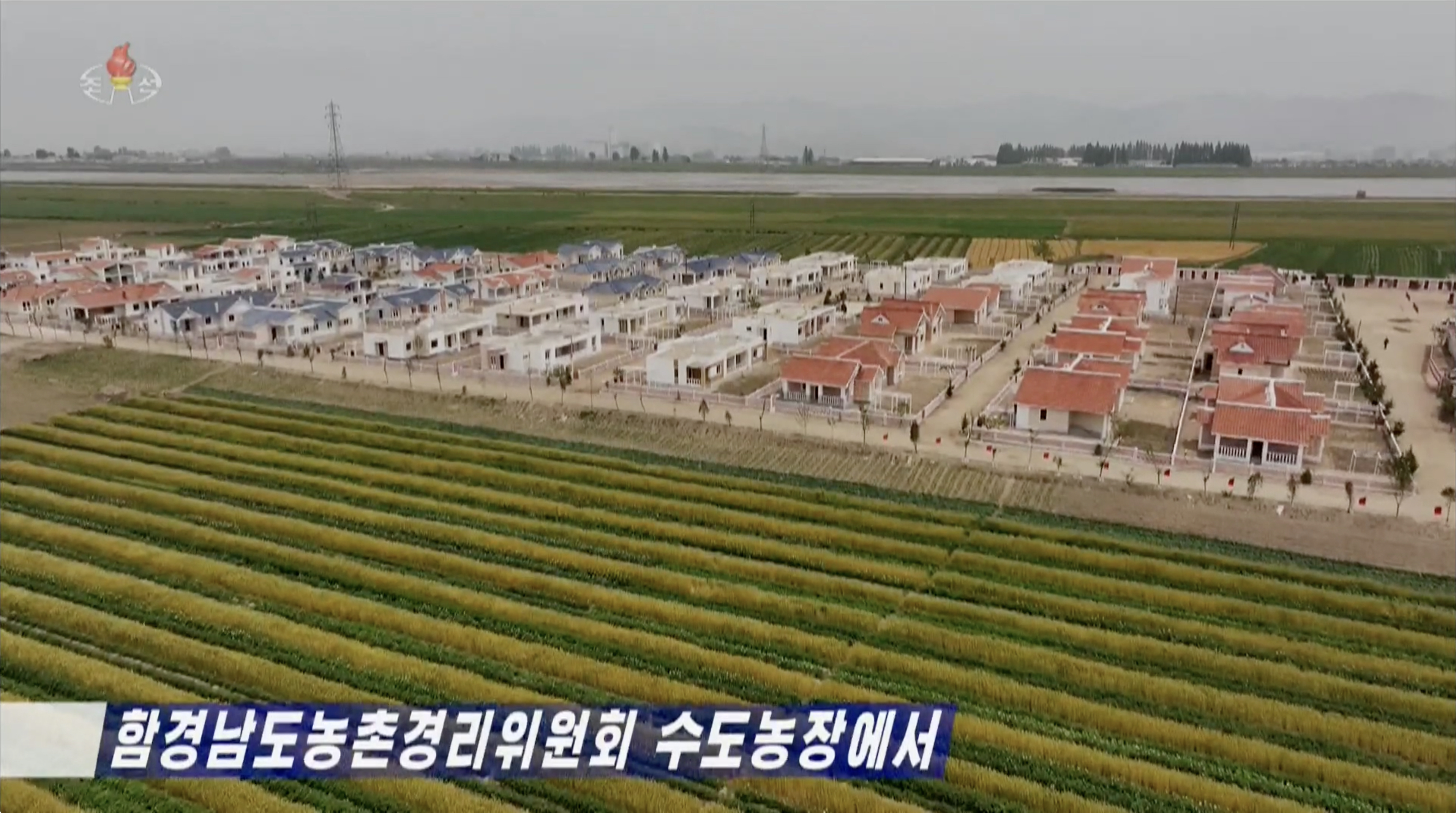
New duplexes finished in 2024 under the rural housing project at Sudo Farm in South Hamgyong Province | Image: KCTV (June 12, 2024)
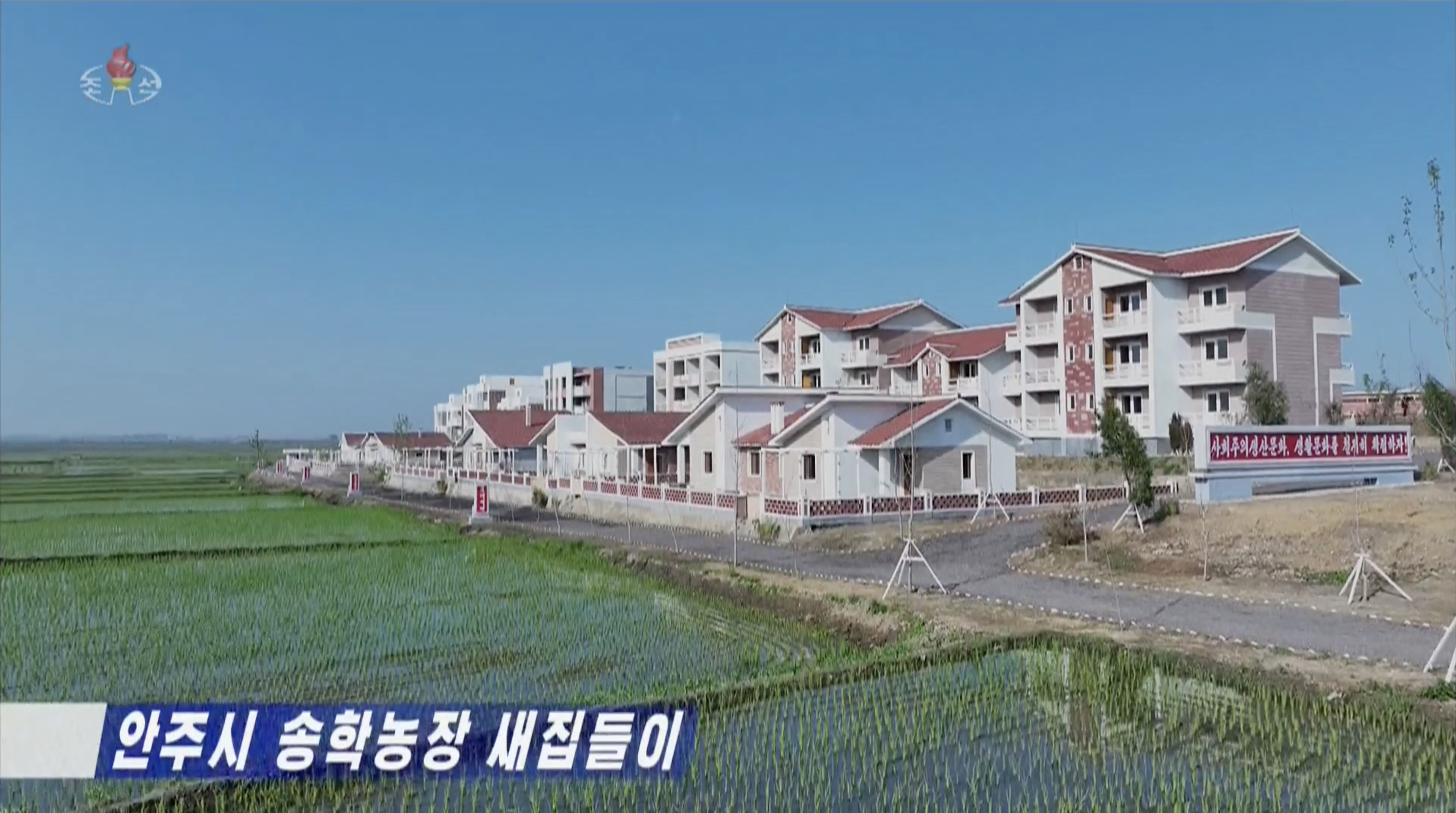
New duplexes and apartments finished in 2024 under the rural housing project at Songhak Farm in Anju City | Image: KCTV (June 2, 2024)
Each state media broadcast of a moving in ceremony under the rural housing project typically includes scenes of a local party official handing over a resident certificate to a family. The certificate officially gives a family free use of a home, but they do not own it, and defectors have spoken of cases where unofficial bribes and payments are required to obtain one. | Image: KCTV (June 2, 2024)
NK Pro analysis suggests Kim likely believes that tangibly showing modernization progress to people from all corners of the country — the housing project has extended to even remote areas — will reduce discontent with his past failed policies and inspire new hope in cynical rural people.
It likely also serves as an opportunity for party authorities to reorganize systems around how they monitor and control local people, both physically and conceptually.
But the DPRK leader has also complained of poor construction design and quality of homes, which has been clearly visible even in some state media coverage, meaning the project has not been without problems.
Experts have also questioned the value of Kim’s rural development strategy, emphasizing the state’s underinvestment in agriculture and failure to address structural problems that discourage farmers from boosting output.
Most reports on moving-in ceremonies in 2024 did not specify the number of households built, with most vaguely referring to “hundreds” or not mentioning any number at all, so it is difficult to count the exact number of new homes built in rural areas last year.
Taking the most often-used number in the previous year of 120 homes per ceremony, however, it appears that at least 26,640 homes were built across the 222 farms and villages.
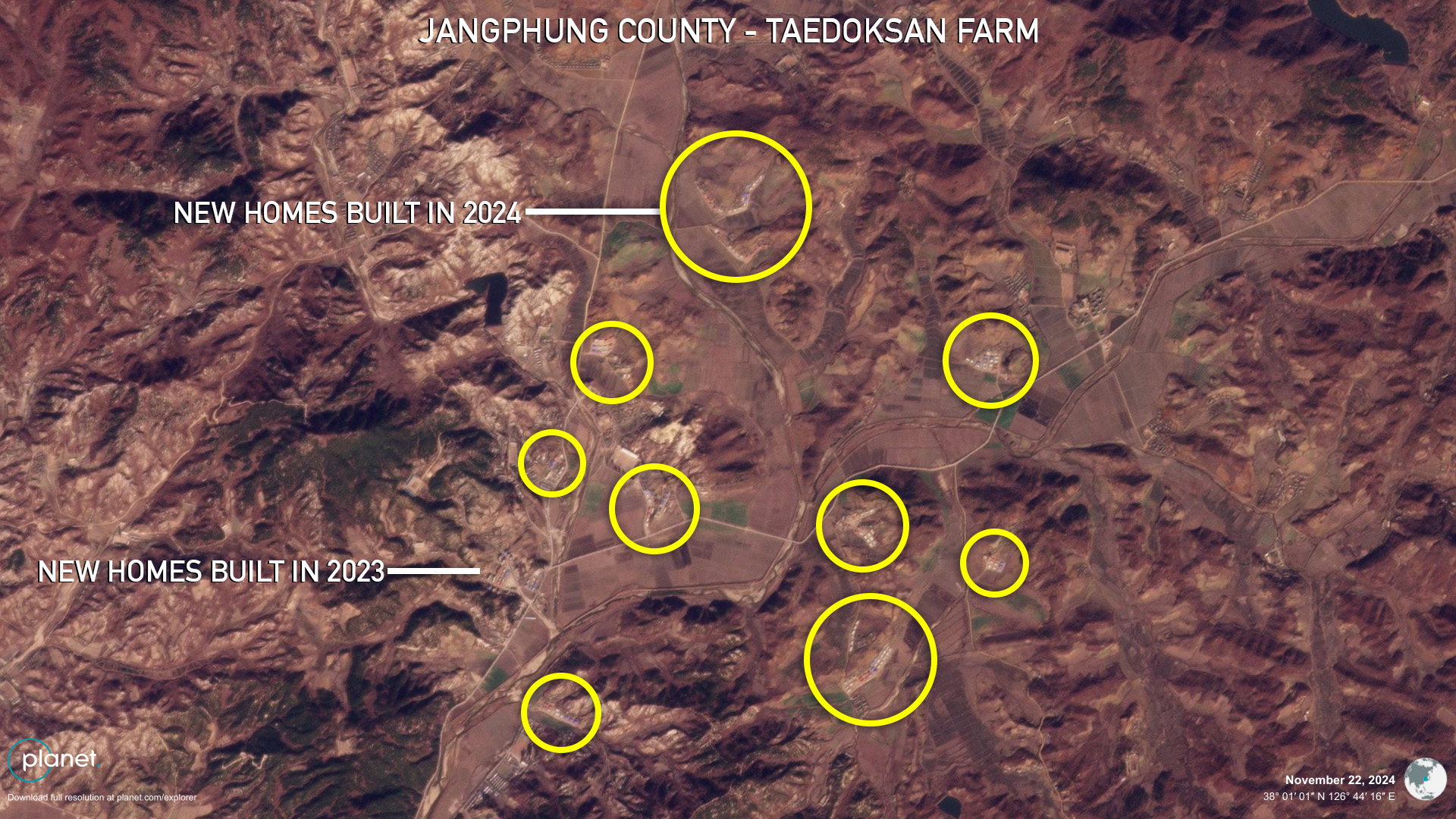
This example from Taedoksan Farm in Jangphung County shows how small clusters of homes were built across a wide area apparently belonging to one farm. The total number of duplexes built in 2024, indicated in the yellow circles, appears to be over 100, for likely over 200 households, over the average of 120 often claimed by state media. | Image: Planet Labs (Nov. 22, 2024), edited by NK Pro
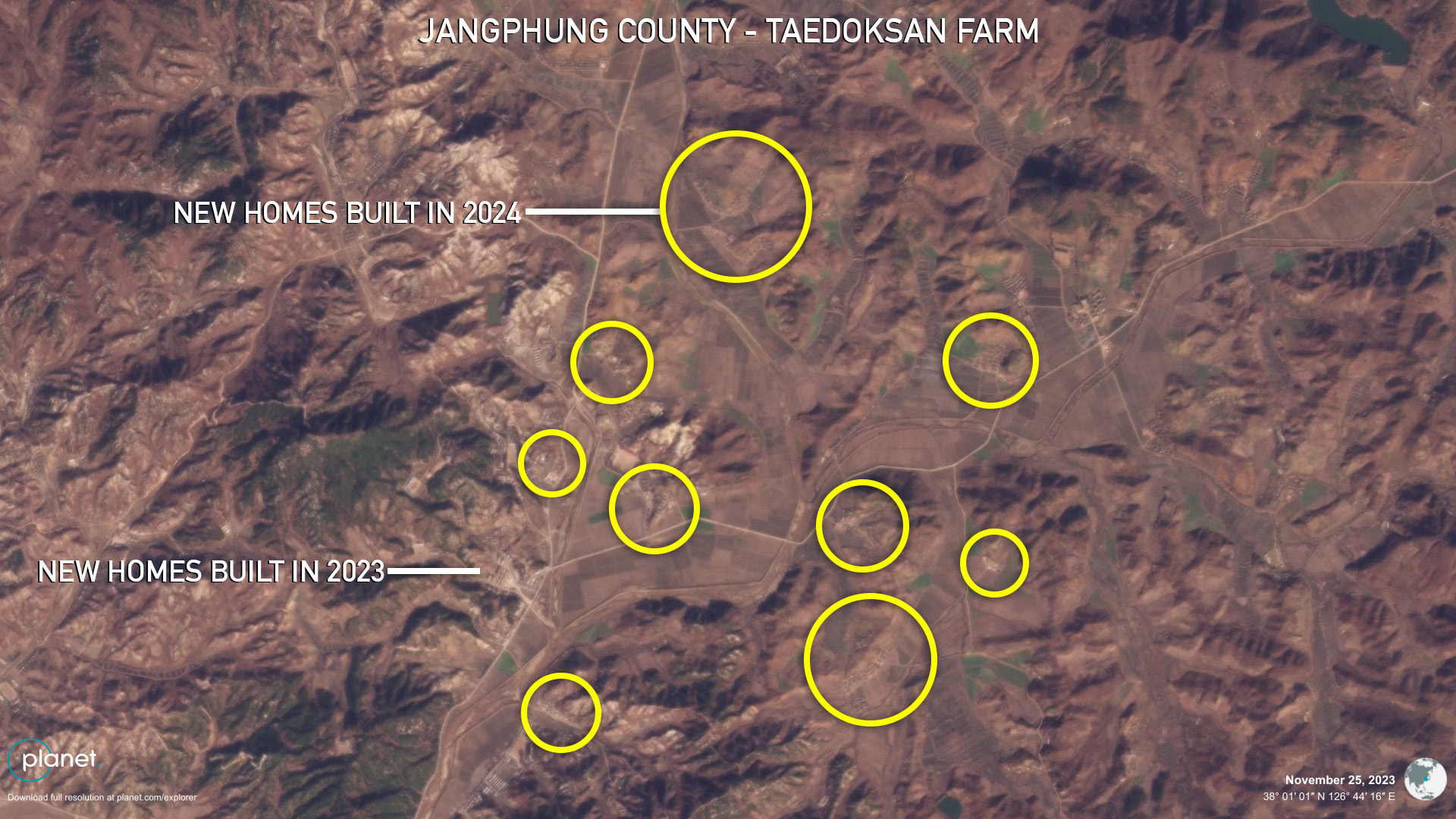
This example from Taedoksan Farm in Jangphung County shows how small clusters of homes were built across a wide area apparently belonging to one farm. The total number of duplexes built in 2024, indicated in the yellow circles, appears to be over 100, for likely over 200 households, over the average of 120 often claimed by state media. | Image: Planet Labs (Nov. 25, 2023), edited by NK Pro
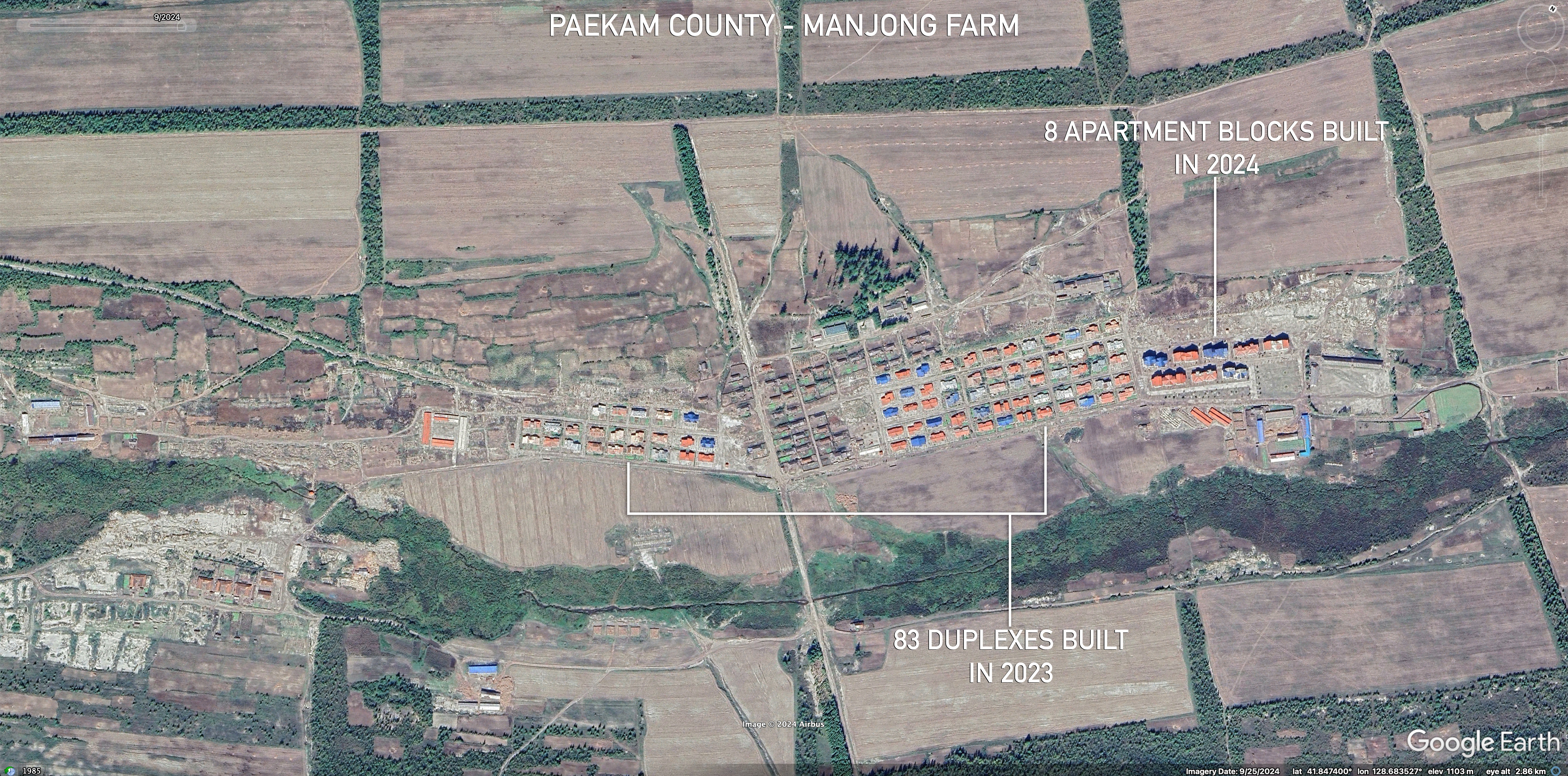
In this example from Manjong Farm in Paekam County in a remote plateau region of northern Ryanggang Province, only a small group of eight apartment buildings and seven duplexes were built in 2024, likely containing around 90 to 120 households. This is close to the average of 120 often claimed by state media in the past. From 2022 to 2023, 83 duplexes or up to 166 households were built next door. | Image: Google Earth (Sept. 25, 2024), edited by NK Pro
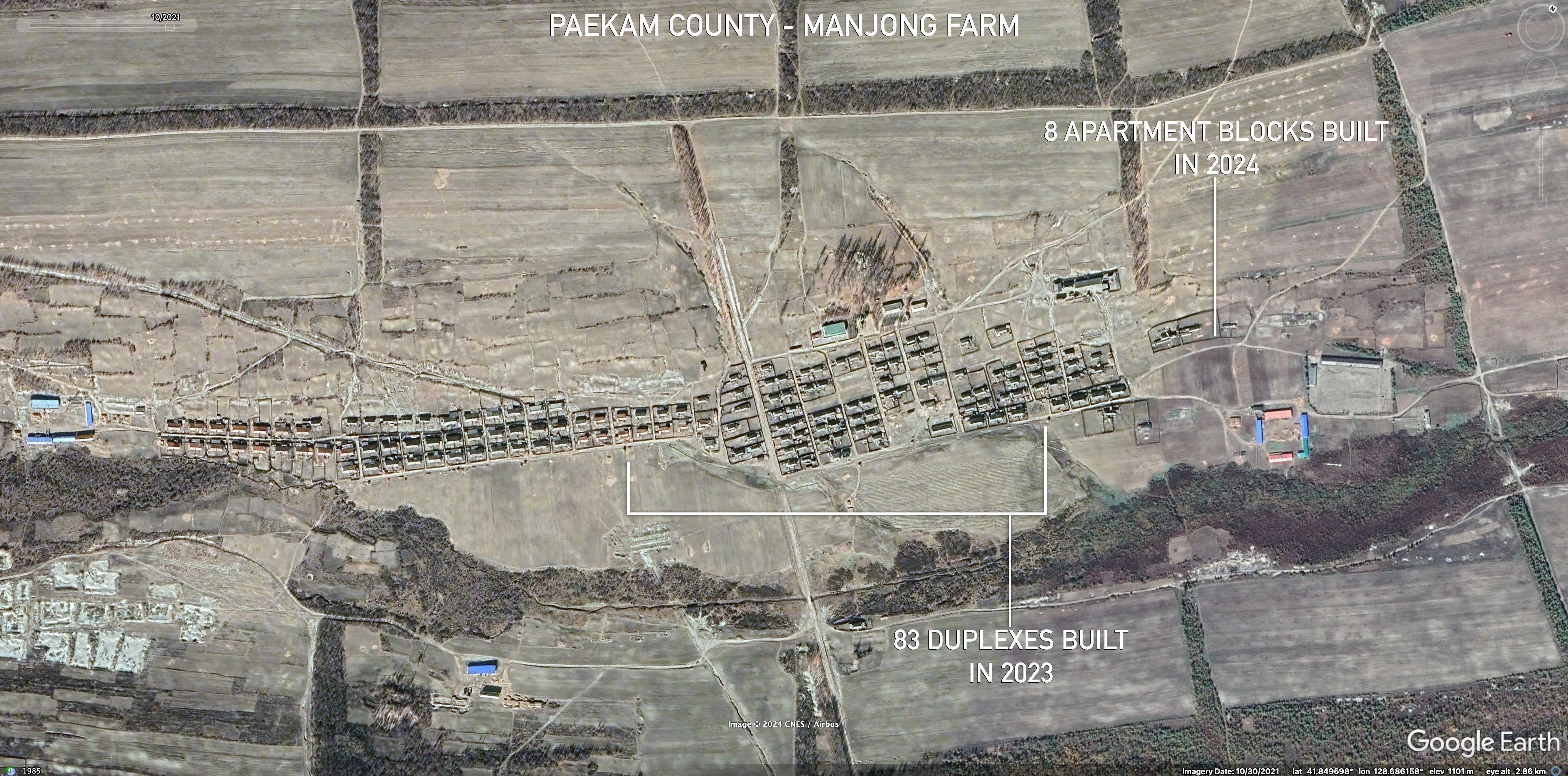
In this example from Manjong Farm in Paekam County in a remote plateau region of northern Ryanggang Province, only a small group of eight apartment buildings and seven duplexes were built in 2024, likely containing around 90 to 120 households. This is close to the average of 120 often claimed by state media in the past. From 2022 to 2023, 83 duplexes or up to 166 households were built next door. | Image: Google Earth (Oct. 30, 2021), edited by NK Pro
Each apartment building at Manjong Farm of Paekam County appears to contain 10 to 20 households | Image: KCTV (Nov. 15, 2024)
New duplexes finished in 2024 under the rural housing project at Taedoksan Farm in Jangphung County | Image: KCTV (Dec. 23, 2024)
State media has yet to make its own claims about total numbers for 2024, but aRodong Sinmun report in early October said that 41,600 new homes had been built up to that point in 141 cities and counties.
The count of 141 is less than NK Pro’s count of 172 farms or villages named in state media between Feb. 10 and Oct. 4, but the DPRK’s total figure for new homes appears questionable. It would mean each project featured around 295 new homes, far more than the previous average of 120.
A claim in the Rodong Sinmun in late November that “more than 1,500 fairyland villages” were built over the last 3 years also appears inflated, likely counting separate clusters of homes at each of the 434 farms and villages where ceremonies took place.
In terms of the breakdown by province, South Hamgyong led the way by far with 34 moving-in ceremonies last year. In 2023, North Hwanghae Province led the way with 25.
There were 27 ceremonies in South Phyongan last year, 25 in South Hwanghae, 24 in North Hamgyong, 23 each in North Phyongan and North Hwanghae, 13 in Kangwon and 12 in Jagang.
Like in 2023, Ryanggang Province — the most remote and sparsest populated in the country — was again at the bottom of the list of provinces with just 5 ceremonies.
Modern duplex design in Munchon City | Image: KCTV (May 31, 2024)
New apartments finished in 2024 under the rural housing project at Juksang Farm in Pukchong County | Image: KCTV (May 24, 2024)
New duplexes and apartments finished in 2024 under the rural housing project at Kumdae Farm in Pyongyang | Image: KCTV (Nov. 13, 2024)
New duplexes and apartments finished in 2024 under the rural housing project in the Hamhung area | Image: KCTV (Dec. 4, 2024)
By specially administered city, 19 ceremonies took place in the capital Pyongyang and 10 in Nampho, while the smaller special cities of Rason and Kaesong saw 4 and 3, respectively.
The rural housing project construction in 2024 was in addition to “thousands” of homes built in North Phyongan, Jagang and Ryanggang provinces to replace those destroyed in late-July flooding.
“Thousands” more were built as part of the Komdok mining town revival project, requiring construction of 25,000 homes between 2021 and 2025. Another 10,000 homes were also built in larger skyscrapers and apartment blocks in the Hwasong District of Pyongyang under a plan to build 50,000 in the capital in the same five-year period, but they are not expected to be completed until spring.
Kim Jong Un has not attached a long-term deadline or specific geographical goal to the rural housing project, but at a Dec. 2021 party plenum, he called for solving food shortages “phase by phase” until 2031.
The “20×10” project aims to build two to three light industry factories, a hospital or clinic, a cultural center and grain management center in every city or county seat by the end of 2033.
Below is a full list of new home ceremonies reported in state media in 2024:
Colin Zwirko is a Senior Analytic Correspondent for NK News based in Seoul. He joined the company in 2018 after receiving a master's degree in international security and foreign policy from South Korea's Yonsei University. Follow him on Bluesky / Twitter.








 SHARE
SHARE COPY LINK
 X
X MASTODON