  
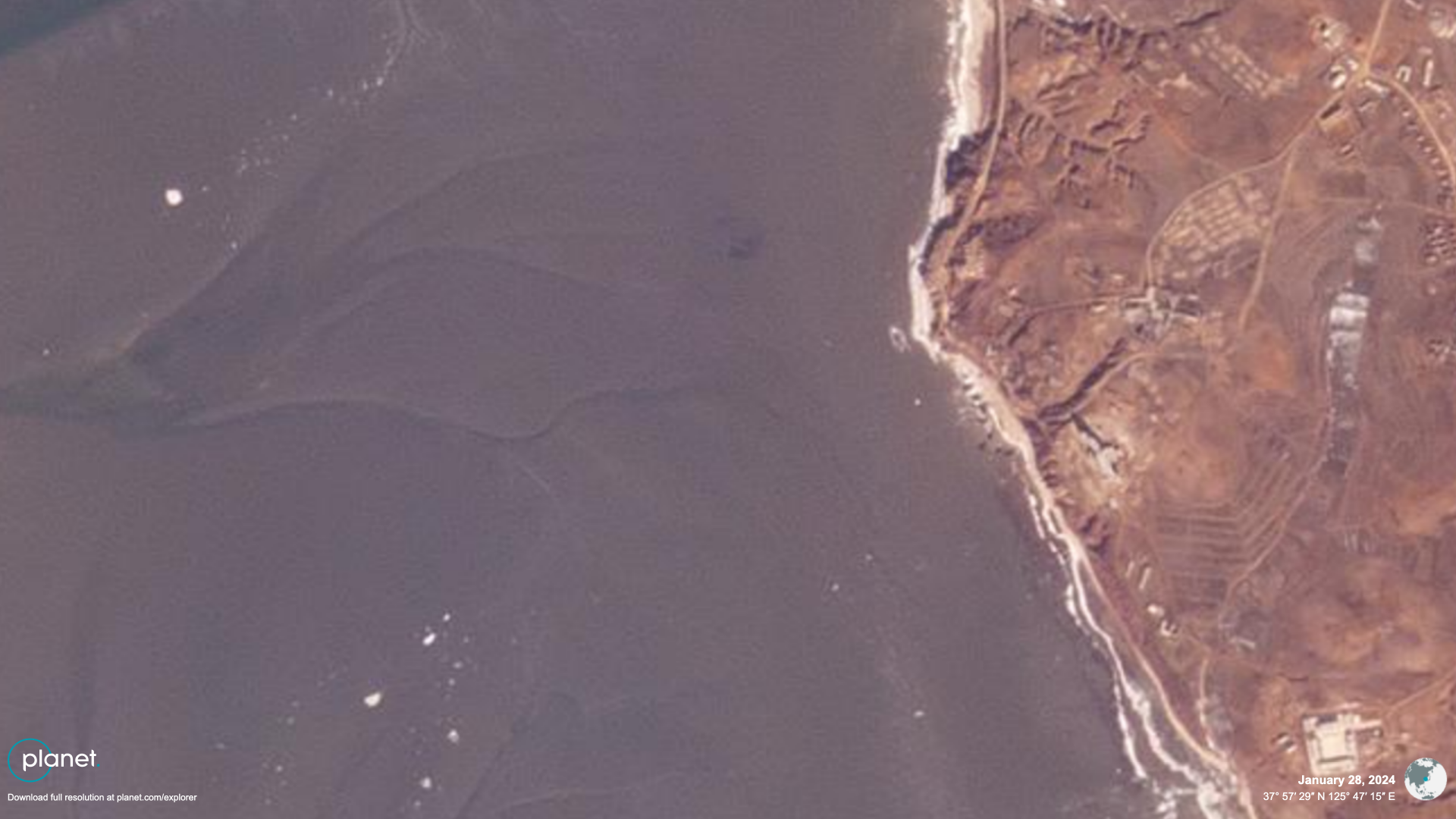
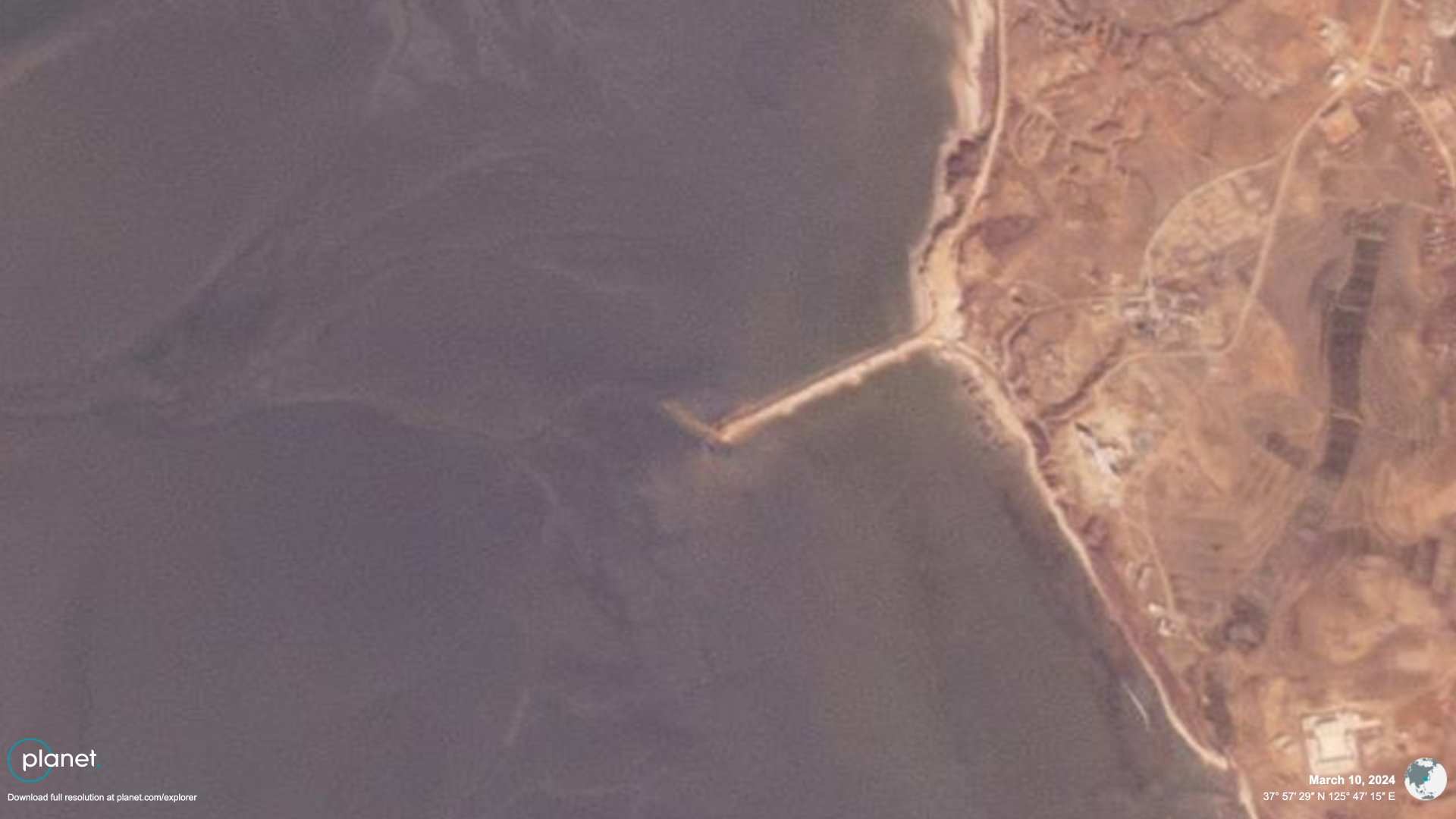
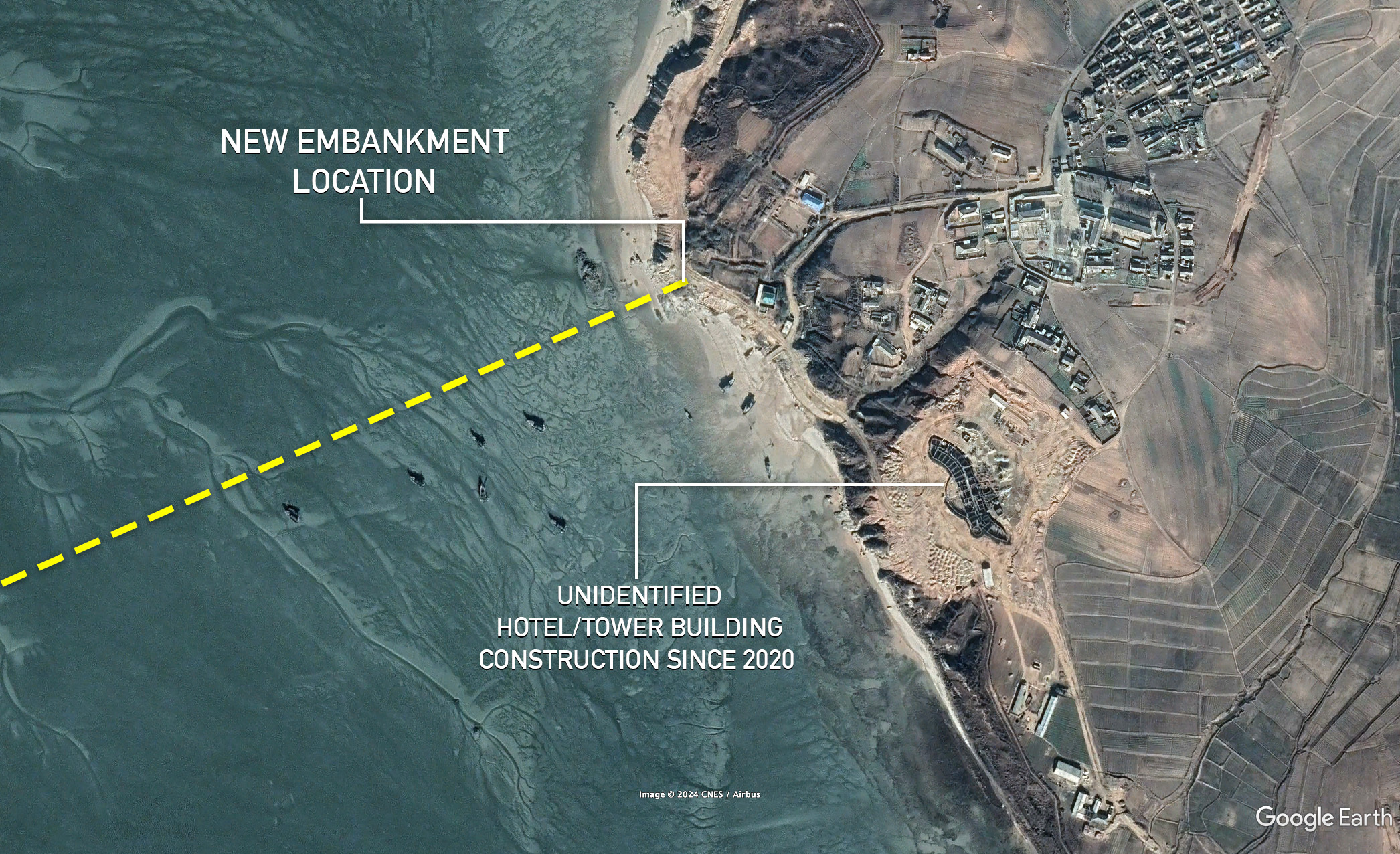
News North Korea appears to start work on major tidal power station on west coastConstruction in Haeju Bay may be for long-planned tidal plant that Kim Jong Un said could help solve power shortages 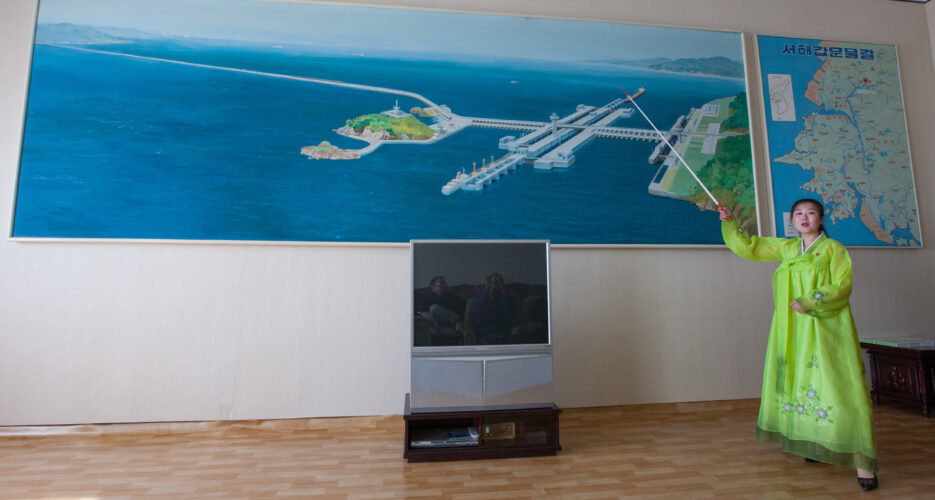 North Korea appears to have taken the first step toward constructing a long-planned tidal power station that could become the world’s largest once built, according to NK Pro analysis of satellite imagery, weeks after leader Kim Jong Un said such a project could help solve “power shortages.” Planet Labs imagery shows construction crews started building a new embankment in late January across Haeju Bay, located on the southwest coast near the inter-Korean maritime border. The project appears to be in the early stages and has so far been limited to artificial embankment work — reaching a length of almost 3,000 feet (820 meters) by April 9 — but the location of the work matches a tidal power station design from the Pyongyang University of Architecture that DPRK leader Kim Jong Un approved in 2020. The current path of the seawall also lines up with the exact location across Haeju Bay that South Korea’s Daewoo Engineering & Construction has proposed as an ideal spot for tidal power generation. 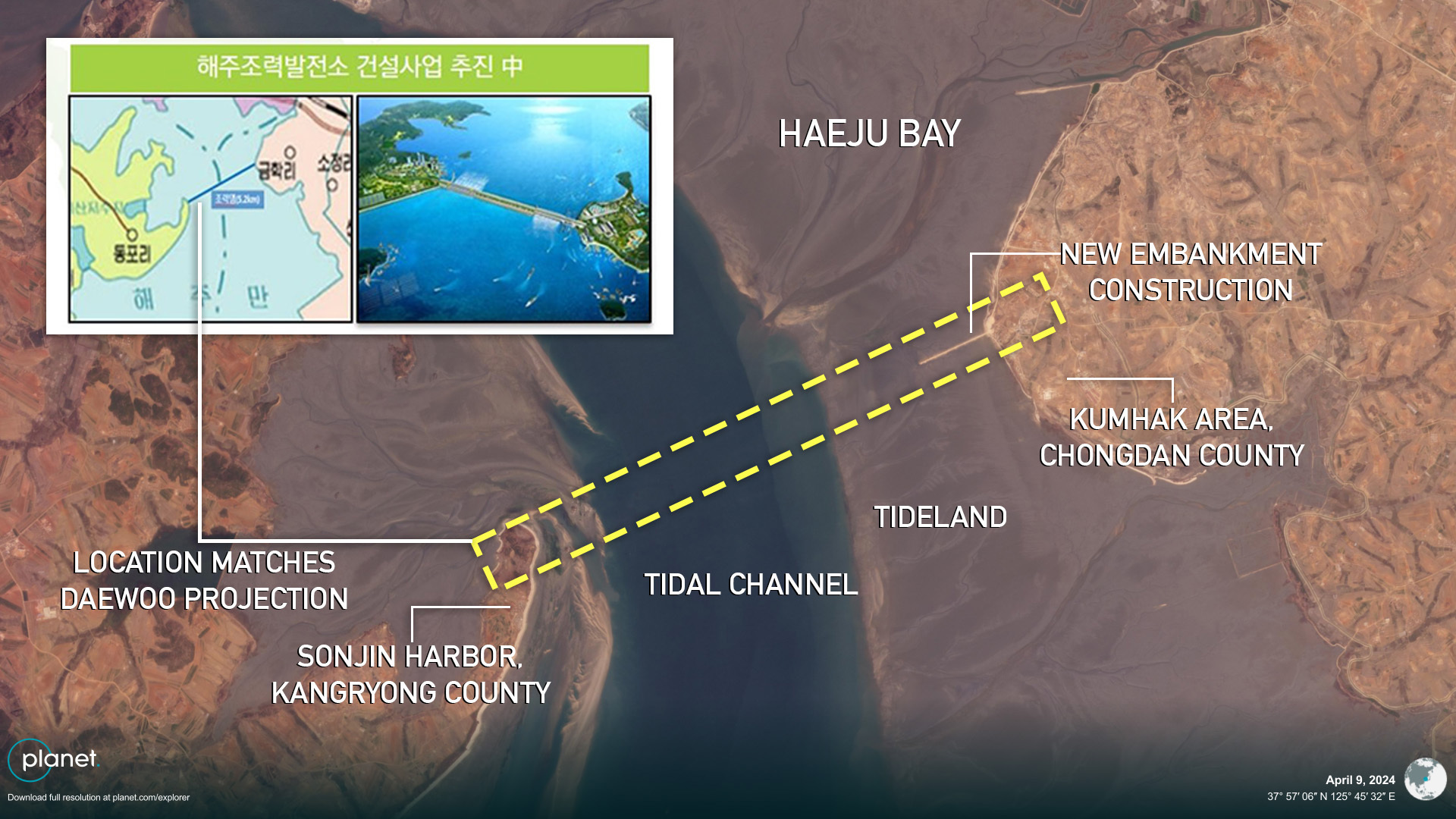
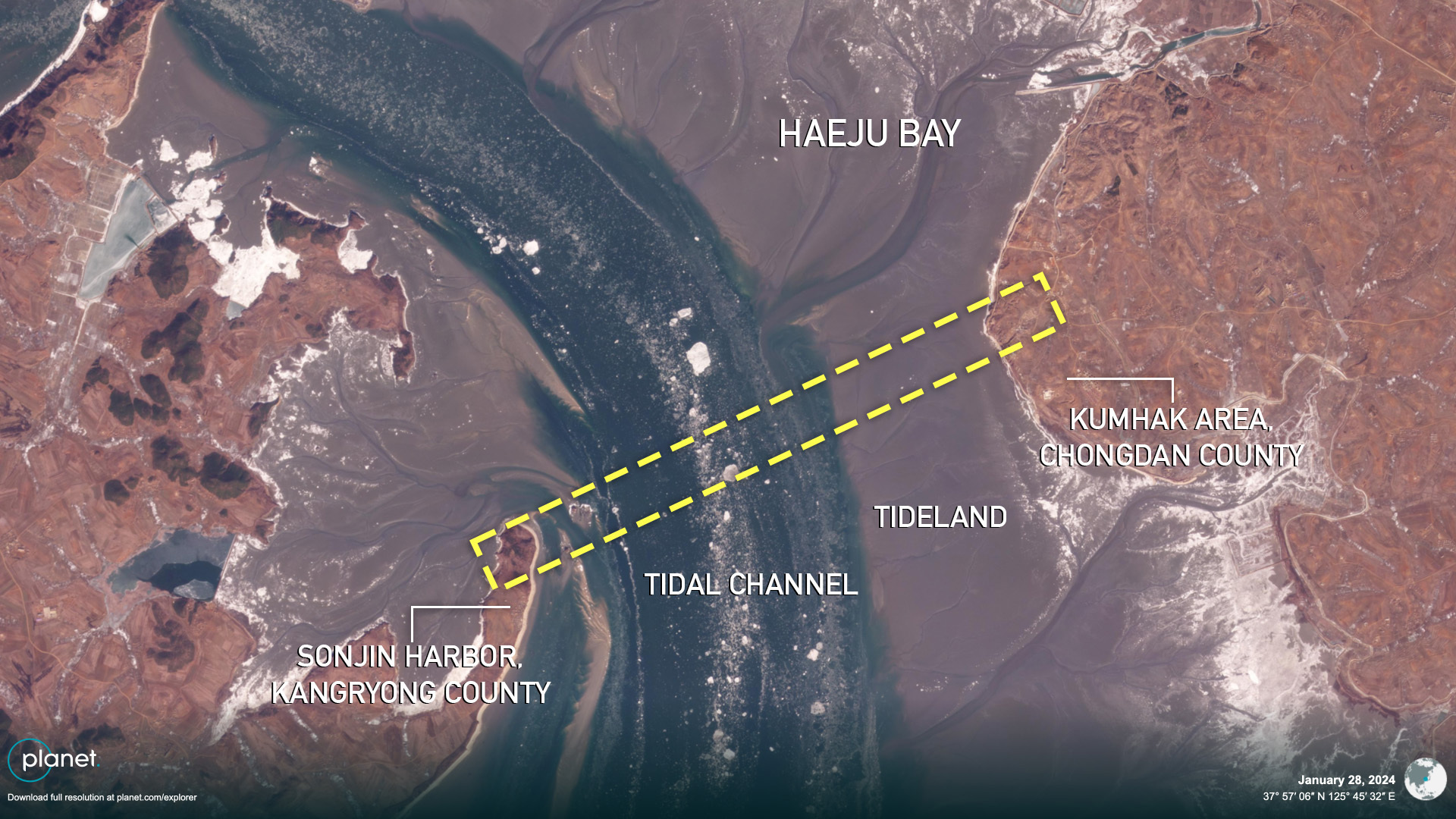
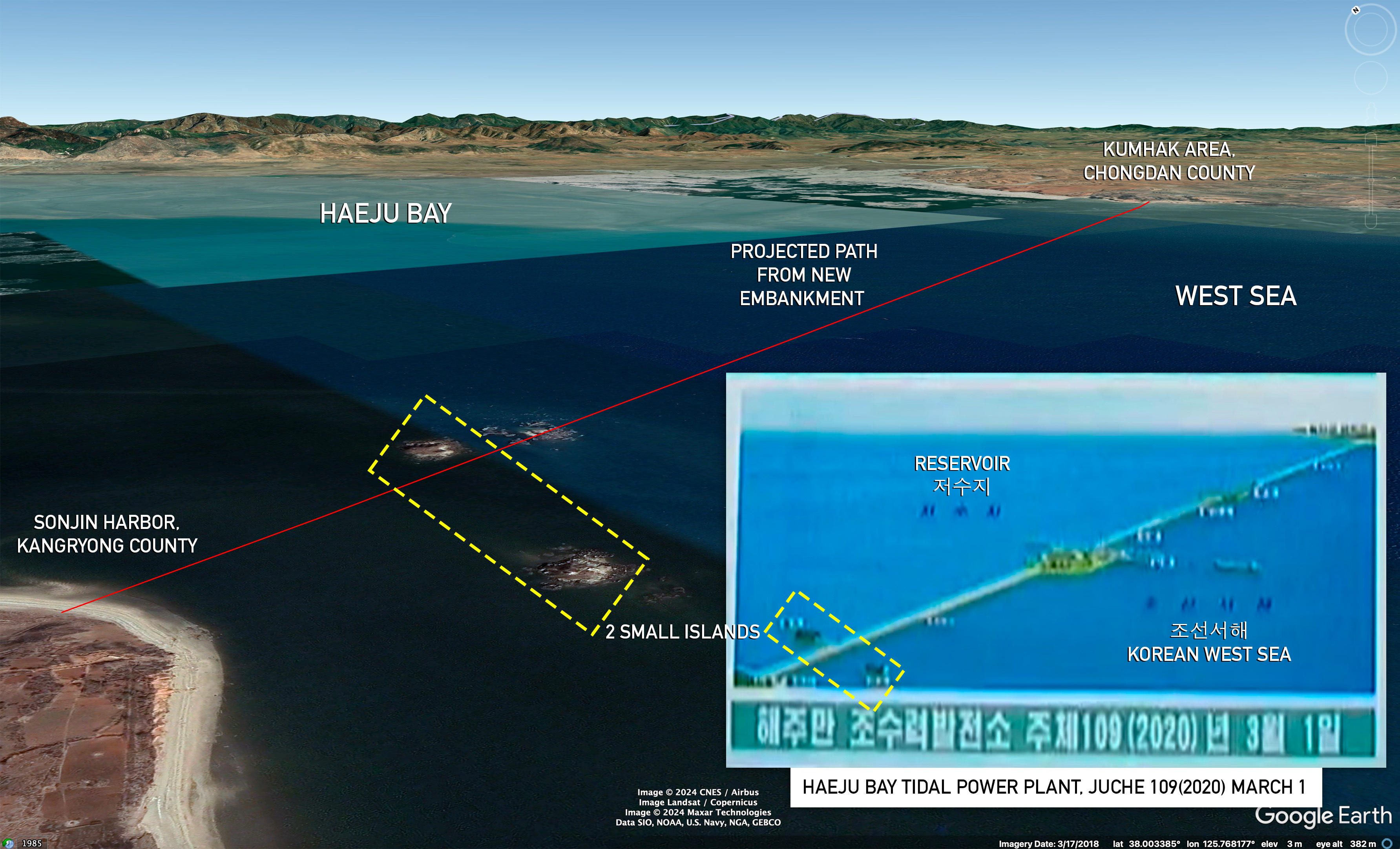 If the embankment construction continues at its current pace, it will likely reach the boundary of the tidal channel in a few months. However, it will be difficult to confirm if the work is part of a tidal power project and not merely a seawall until later stages. It would be around 3.4 miles long (5.5 km) if constructed in a straight line. The recently built embankment is around 115 feet wide (35 meters), extending west from the Kumhak area of Chongdan County on the east side of Haeju Bay and projected to link with the Sonjin Harbor in Kangryong County on the west side. State TV only briefly showed the plan Kim Jong Un approved and in low picture quality, making it difficult to determine detailed design elements, but the seawall would likely have to feature a lock gate to allow ships to reach Haeju Port. Daewoo was in talks to help North Korea carry out a tidal power project in this location in the late 2000s, and reportedly revived interest during a brief period of inter-Korean detente in 2018. The Seoul National University Institute for Peace and Unification Studies released a report in 2022 attempting to measure tidal currents and found that “Haeju Bay’s tidal power resources are thoroughly abundant.” The study cited research by Daewoo E&C in 2008 showing a proposed power station with a slightly different embankment location on the east side of the bay could have a capacity of 508 megawatts. If achieved, it would become the highest-capacity tidal power station in the world. 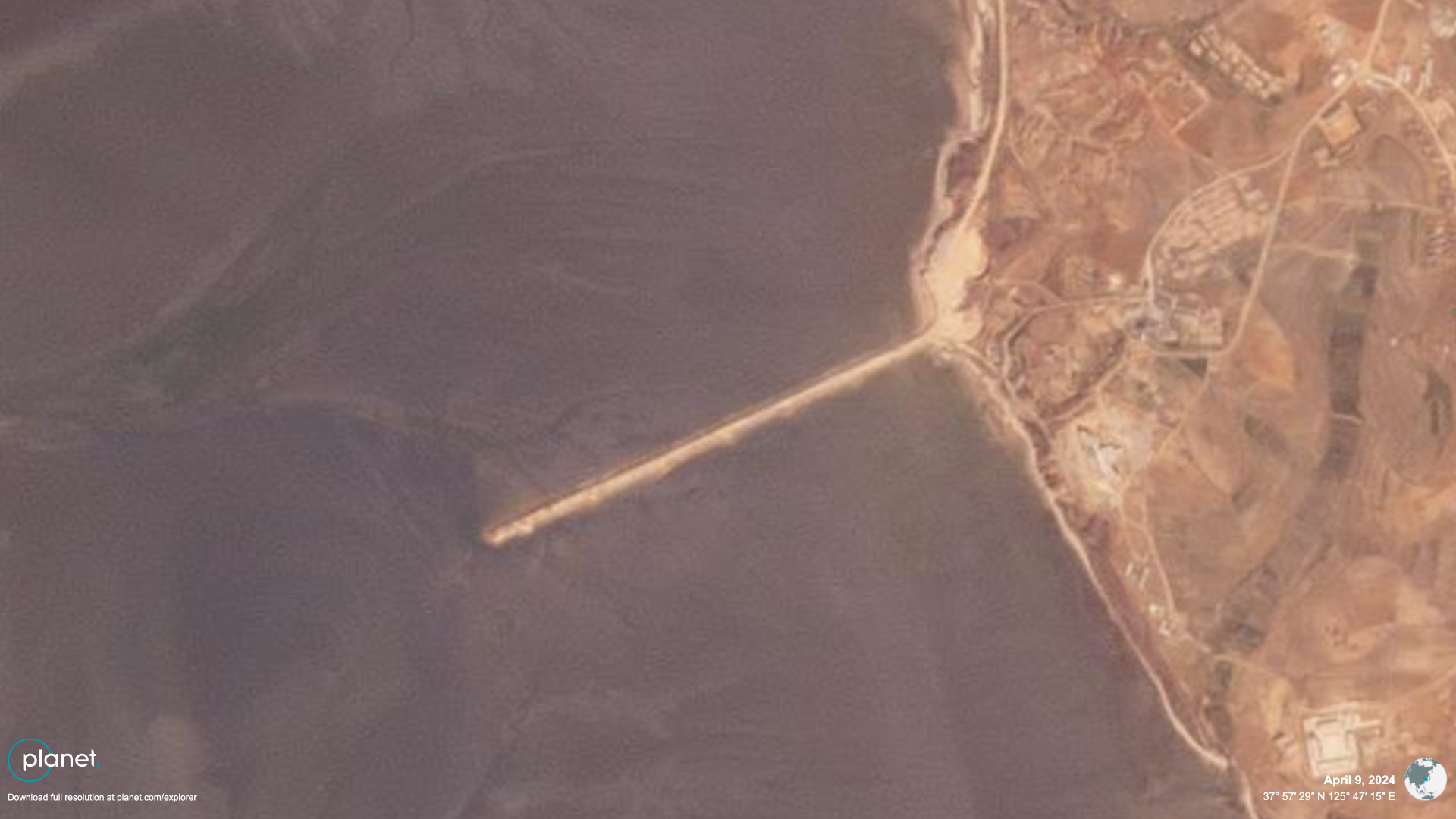
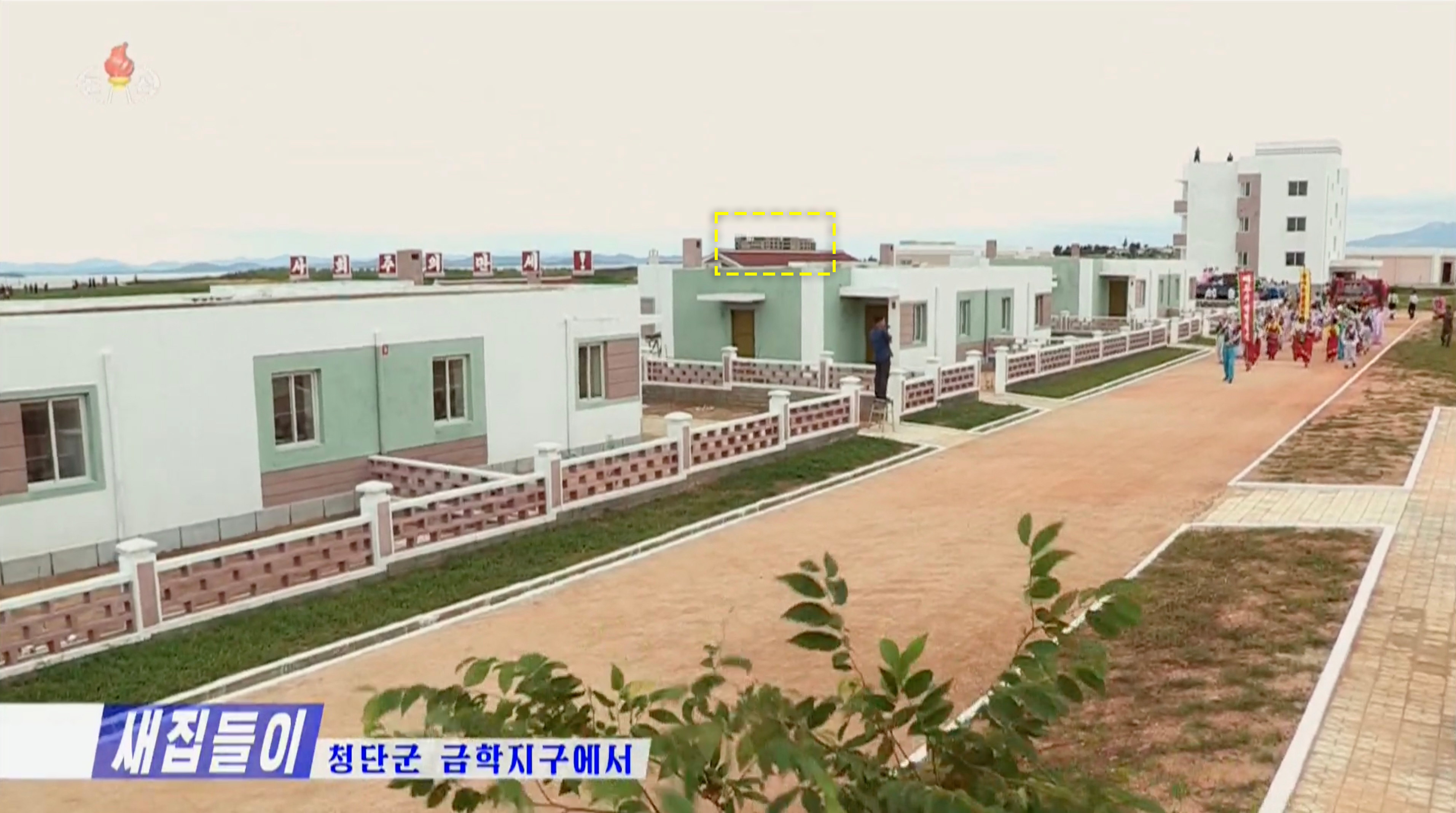
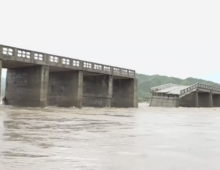
North Korea’s last large-scale tidal power plant project was the West Sea Barrage up the coast at Nampho in the mid-1980s, what state media recently suggested was a mere “test” of the technology. 38 North reported that Pyongyang does not publicize its power generation data and generally doesn’t promote this aspect of the Nampho megaproject, but that it’s “estimated to be a 500-kilowatt unit (0.5 megawatts).” The facility with the highest capacity in the world at present is the Sihwa Lake Tidal Power Station built in 2011 with the help of Daewoo, located just down the coast in South Korea. The Sihwa power station utilizes 10 turbines to achieve power capacity of 254 megawatts — just over half of what the Haeju project is reportedly capable of supporting. This is “equivalent to about one-fourth of a typical nuclear power plant” and enough to power a city with a population of 500,000 people, according to Sihwa operator K-Water. State media does not appear to have reported on the latest construction, though in July 2019, KCNA reported that then-Cabinet premier Kim Jae Ryong “learned about the preparations for building a major power station in Haeju Bay.” Kim Jong Un had called for creating “a capacity for generating tidal, wind and atomic power under a far-reaching plan” in his 2019 New Year Address, and reiterated “plans for concentrating the efforts of the state on the construction of tidal power stations under long-term and medium-term strategies” at the Eighth Party Congress in early 2021. He also said North Korea would “operate atomic and tidal power stations in the future” to solve power shortages in a policy speech in January this year. The Rodong Sinmun has reported in recent years that the DPRK’s west coast is “first in the world” in tidal power potential and that scientists and relevant industry workers were carrying out party orders to “develop our country’s abundant tidal power resources.” Edited by Bryan Betts © Korea Risk Group. All rights reserved.

|

September 17, 2026Sep 17, 2026

The ultimate resources for professionals working on North Korea
 SHARE
SHARE COPY LINK
 X
X MASTODON