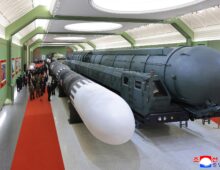
  Investigations North Korea appears to ramp up military satellite plans with another engine testSatellite imagery reveals signs of test at Sohae space launch complex in July  North Korea appeared to test a rocket engine at the country’s main space launch complex in recent weeks, according to NK Pro analysis of satellite imagery, likely as part of preparations to resume launching military satellites. The latest rocket engine test appears to be at least the second in two months at the Sohae Satellite Launching Ground’s vertical engine test stand, which is used for static firing liquid-fuel motors for satellite launch vehicles (SLVs) and long-range nuclear missiles. Planet Labs imagery shows a wide area of vegetation die-off between June 30 and July 15 across from the flame trench of the vertical stand, likely caused by the high heat from a rocket engine burning for an extended time. 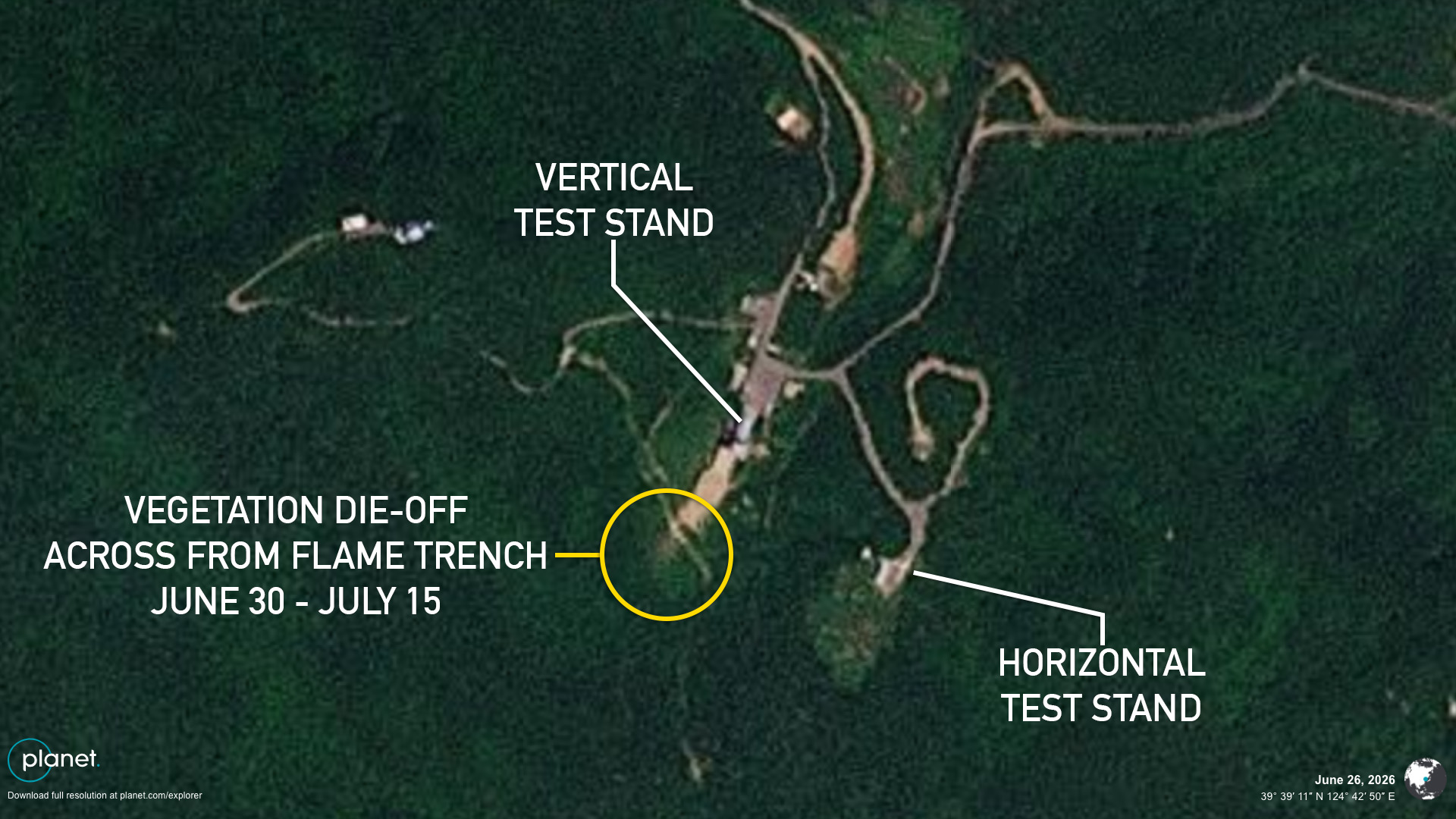
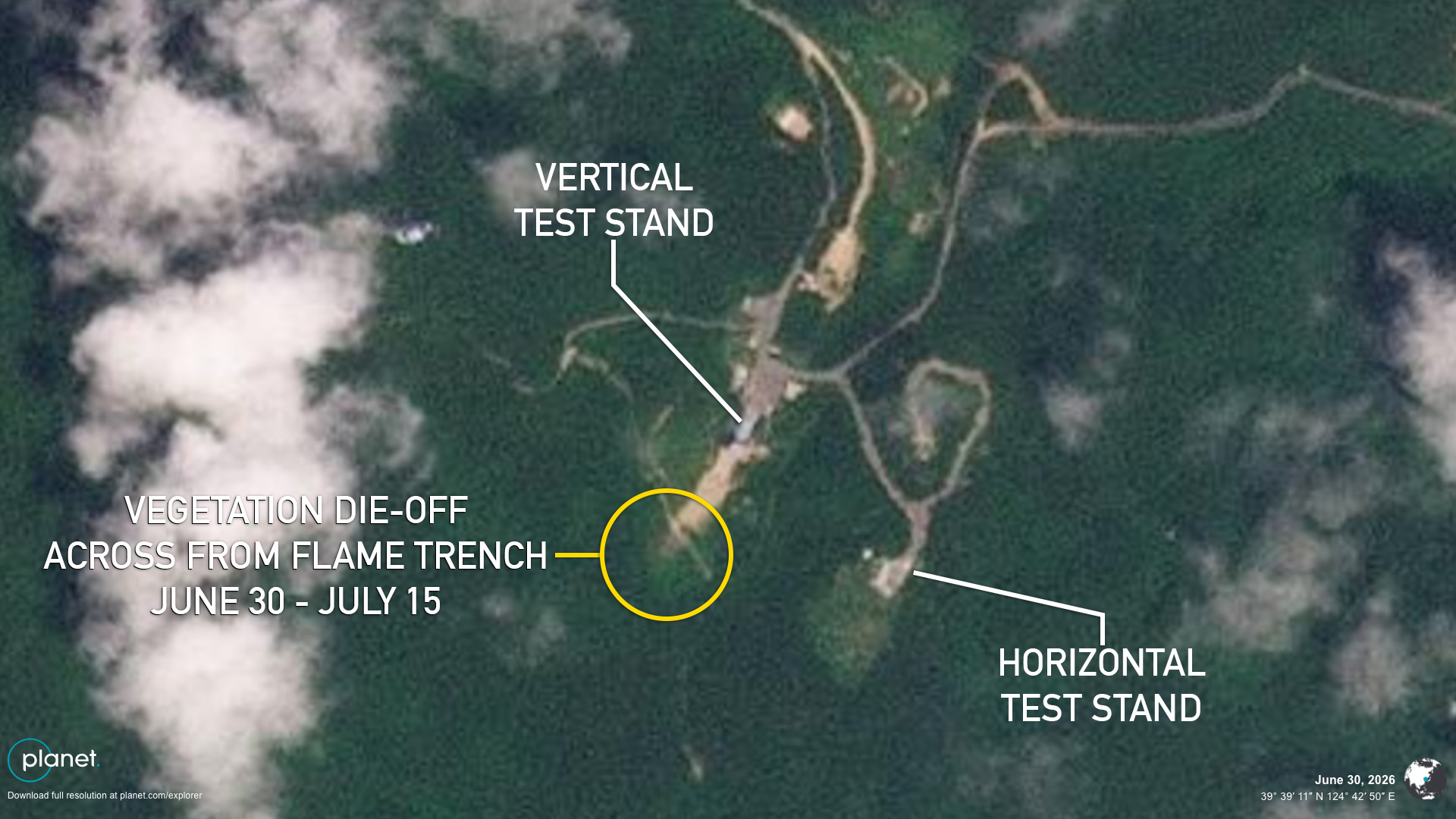
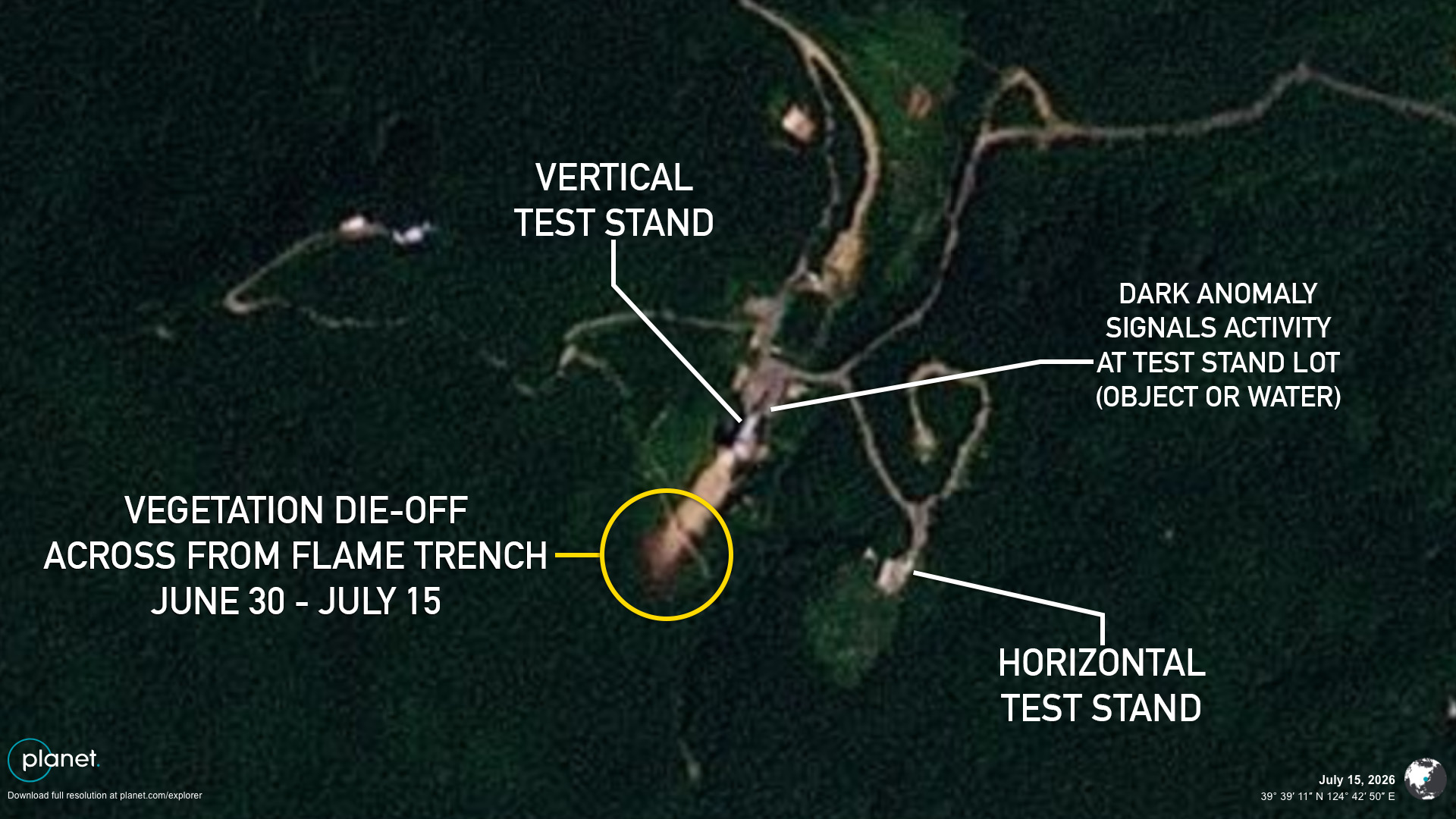
Similar evidence of dead vegetation in the same spot appeared between May 12 and 14, as well as in June 2025. It’s possible more tests occurred during the winter, though detecting these is more difficult due to the lack of healthy vegetation in the area to compare them with. In a move possibly related to an upcoming launch, recent satellite imagery shows efforts to finish construction of what appears to be a VIP observation facility across from Sohae’s coastal launchpad, after construction started in September. It is still unclear when North Korea will attempt the first satellite launch of its new five-year military plan. An engine test at Sohae has closely preceded launches in the past, but not in recent years. Pyongyang has also given shorter warning periods on its planned launches. It sent notices about rocket stage drop zones to the International Maritime Organization, alerting ships just hours before the last SLV takeoff at Sohae in May 2024. DPRK leader Kim Jong Un called for developing “further evolved reconnaissance satellites” at the Ninth Party Congress in February, but without mentioning a specific target. He first announced plans to develop a military reconnaissance satellite program at the Eighth Party Congress in Jan. 2021. The National Aerospace Technology Administration (NATA) successfully launched one into orbit in Nov. 2023 after two failures in the months prior. Another failed launch in May 2024 derailed Kim’s demands to achieve four orbiting satellites by the end of year. Pyongyang previously indicated it was switching from using hydrazine engines for its SLVs to kerosene-based liquid-fuel engines, likely with Russian assistance. But the failed launch two years ago appears to have prompted a much deeper rework of the program, leading to a long silence from state media. While North Korea also tested liquid-fuel engines used in intercontinental ballistic missiles (ICBM) at the vertical stand in the past, it has shifted to solid-fuel engines for long-range missiles in recent years. A separate horizontal test stand was built at Sohae for solid-fuel motors and used for a test attended by Kim as recently as March. Edited by David Choi © Korea Risk Group. All rights reserved. |

October 28, 2026Oct 28, 2026

The ultimate resources for professionals working on North Korea
 SHARE
SHARE COPY LINK
 X
X MASTODON