  Analysis Lightning strikes twice as Pyongyang acquires 2nd ship via Busan: InvestigationNorth Korea likely pulled same strings to purchase both ships, one of which appears to have delivered sanctioned cargo 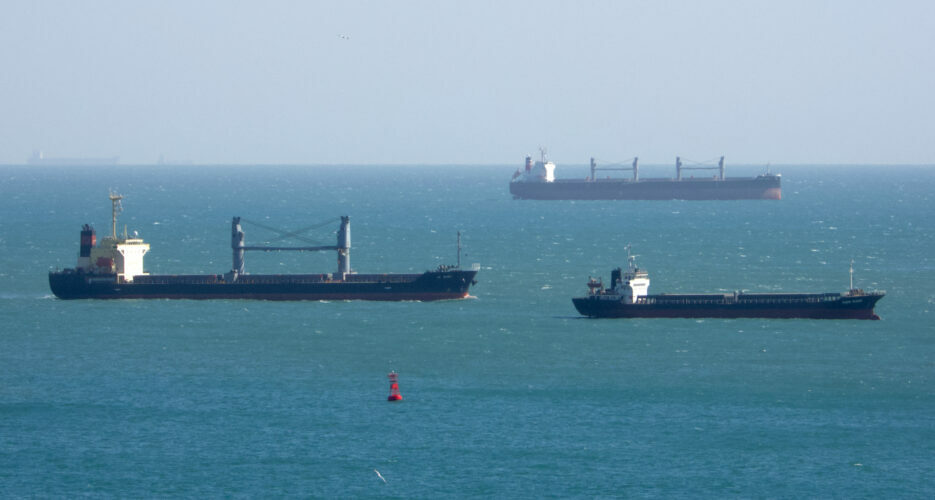 A North Korean cargo ship that sailed from Busan to Nampho earlier this year likely delivered heavy machinery in violation of U.N. sanctions, while Pyongyang appears to have tapped the same network it used to purchase the vessel to acquire a second ship for its merchant fleet, according to a joint investigation by NK Pro and the Royal United Services Institute (RUSI). The findings shed new light on the An Hai 6’s (IMO 8355786) rare voyage directly from South to North Korea and reveal how the Anni (IMO 8356584) repeated that journey just weeks later — with both vessels since hoisting the DPRK flag. High-resolution satellite imagery from late August shows that the An Hai 6 likely delivered cargo to Nampho after departing the South Korean port of Busan in May. According to RUSI analysts, the cargo resembles heavy land excavators. If confirmed, the delivery could represent a violation of U.N. Security Council Resolution 2397, which bans member states from exporting excavators and various types of machinery to North Korea. It also appears to contradict earlier statements by Niue Ship Registry Pte Ltd that the tiny island nation had permitted the An Hai 6 to fly its colors on the condition that it “carried no cargo.” The apparent delivery comes after a joint investigation between NK Pro and RUSI found that the An Hai 6 had likely been transferred to North Korea through companies in Singapore and the Marshall Islands. Earlier this month, the An Hai 6 began transmitting as the DPRK-flagged Rak Won 1, according to MarineTraffic. 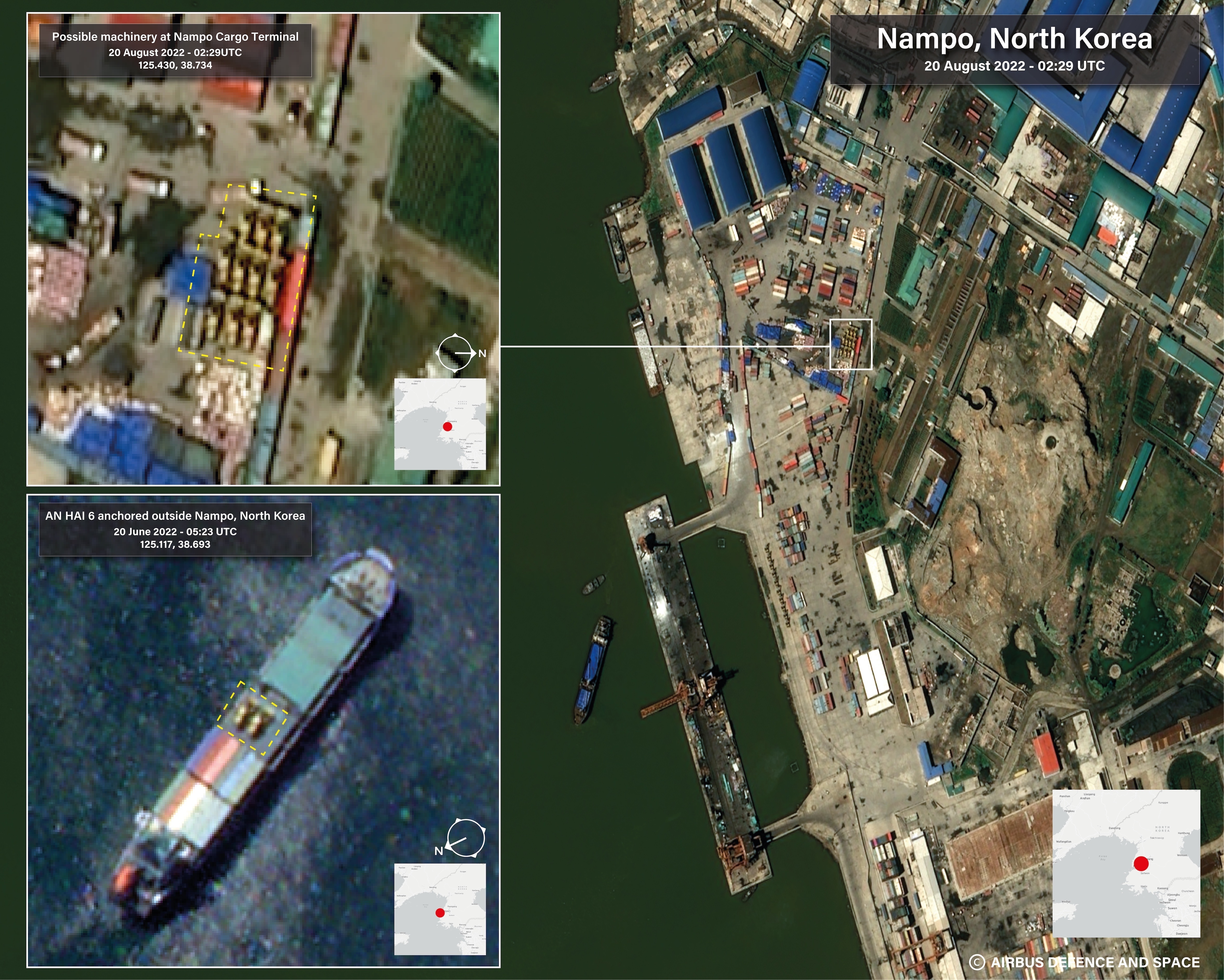 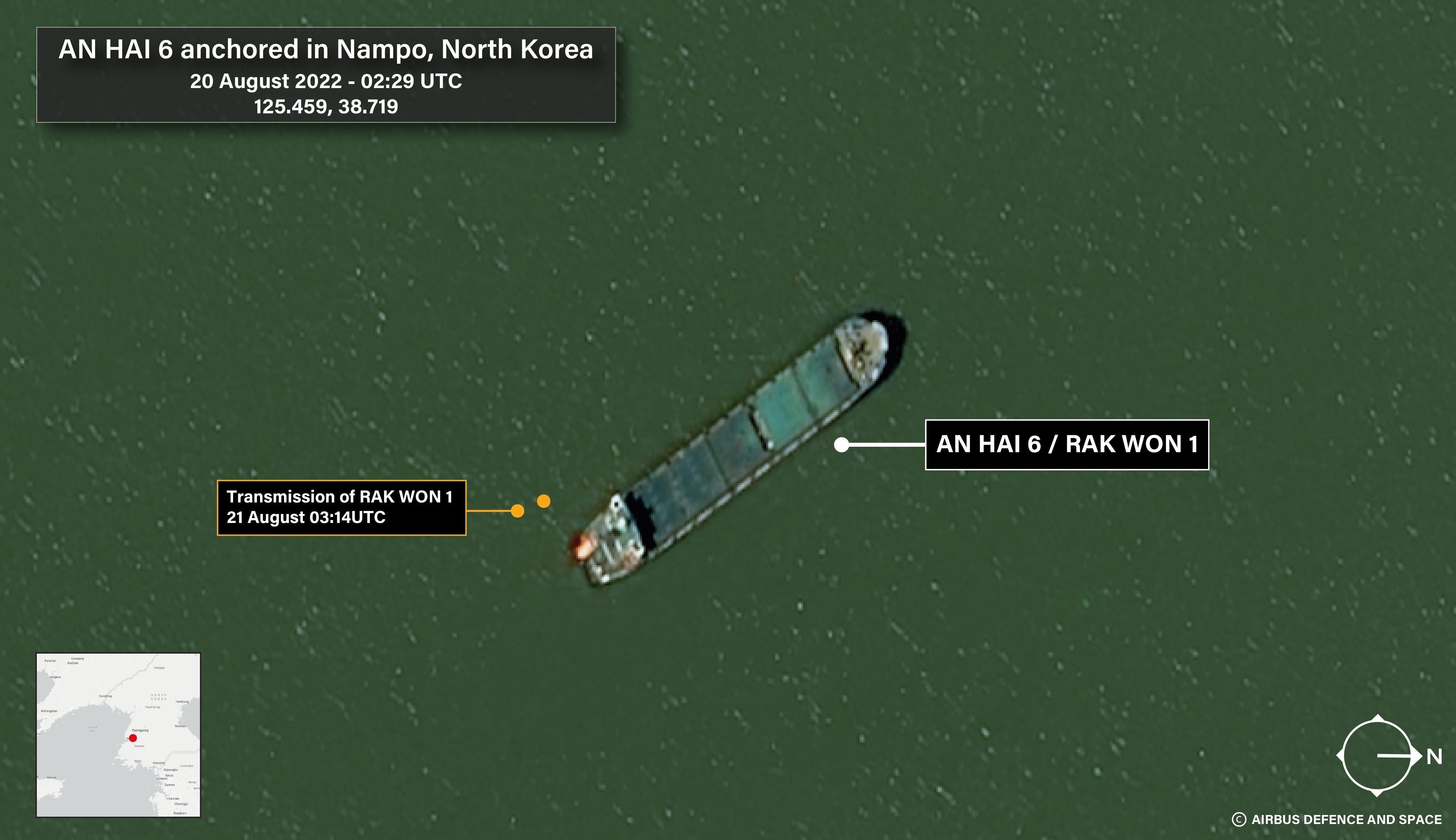 LIGHTNING STRIKES TWICE The joint investigation found that the second ship, the Anni, moved through a nearly identical corporate structure as the An Hai 6 to join the DPRK’s merchant fleet. According to ship-tracking records, the Anni set sail from Busan on June 25 for North Korea’s Nampho, just as the An Hai 6 had in mid-May. It then disappeared from ship-tracking systems, reappearing only in early August outside Nampho. Manipulating automatic identification system (AIS) signals is a common sanctions-evasion tactic. In the case of the Anni and An Hai 6, both vessels switched off their trackers before entering North Korean waters. Like the An Hai 6, the Anni passed through a freshly minted, Marshall Islands-based company known as Wuzhou Shipping Co Ltd shortly before its voyage to North Korea. Moreover, Wuzhou Shipping was registered in the Marshall islands on April 7, 2022 — just one day after the An Hai 6’s owner, Pearl Marine Shipping Co Ltd, was created in the same jurisdiction. Their registration in the Marshall Islands at the same time and similar voyage patterns may point to coordinated efforts to acquire the two ships. Both vessels also flew the flag of Niue, a small island nation in Polynesia, before arriving in North Korea. The choice to sail under Niue colors likely stems from the country’s lack of restrictions on owner and crew nationality, a fact the island boasts on its website. In late August, MarineTraffic data shows the Anni began transmitting as the DPRK-flagged Kyong Song 3, all but confirming its transfer to North Korea’s merchant fleet. Satellite imagery from Aug. 27 shows the Anni anchored outside the North Korean port of Nampho. Niue Ship Registry did not reply to multiple NK Pro requests for comment. 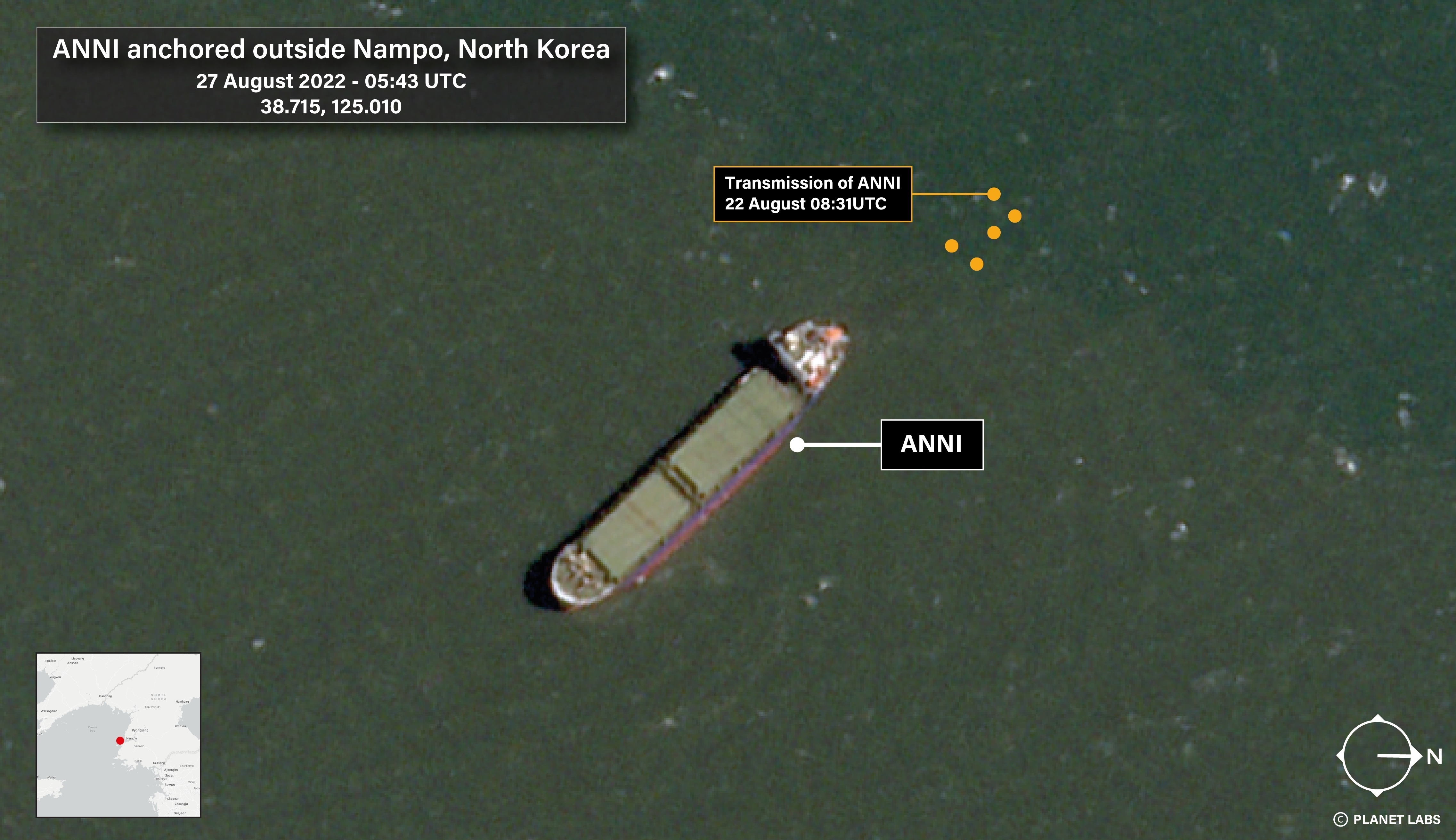 BOAT TO BUSAN Port records reviewed by NK Pro reveal that the Anni used the same shipping agent as the An Hai 6 when passing through Busan: JPL Shipping Co Ltd. NK Pro and RUSI’s initial investigation uncovered the shipping agent’s connection to the An Hai 6, but three companies in the region shared the name and all denied any involvement. However, South Korean authorities have since confirmed the identity of the correct JPL Shipping after NK Pro filed a freedom of information request. Authorities also confirmed that Chinese nationals accounted for all the crew members on both ships when they visited the South Korean port, but they declined to share more about crew members’ identities or the cargo aboard the An Hai 6 and Anni. When presented with the South Korean government’s statement, JPL Shipping told NK Pro that it had indeed handled both ships, but that the vessels claimed to be bound for Japan, not North Korea. “This was the first time I’ve seen a ship redirect to North Korea in my 20 years in the shipping industry,” said Jeon Eung-bae, director of JPL Shipping. According to Jeon, another South Korean company had asked JPL Shipping to handle the vessels while they changed crews in Busan, but he declined to share the name of that company due to a non-disclosure agreement, which Jeon said was standard for the industry. NK Pro was unable to independently identify the other South Korean company or confirm its presence in the ROK. Ifang Bremer contributed to this report. Edited by Bryan Betts © Korea Risk Group. All rights reserved. |

October 06, 2026Oct 06, 2026

The ultimate resources for professionals working on North Korea
 SHARE
SHARE COPY LINK
 X
X MASTODON