  Analysis Kim Jong Un isn’t proud of his fake ICBM milestone, and it showsThe lack of a stone monument at the launch site is one major departure from post-ICBM launch procedures in 2017 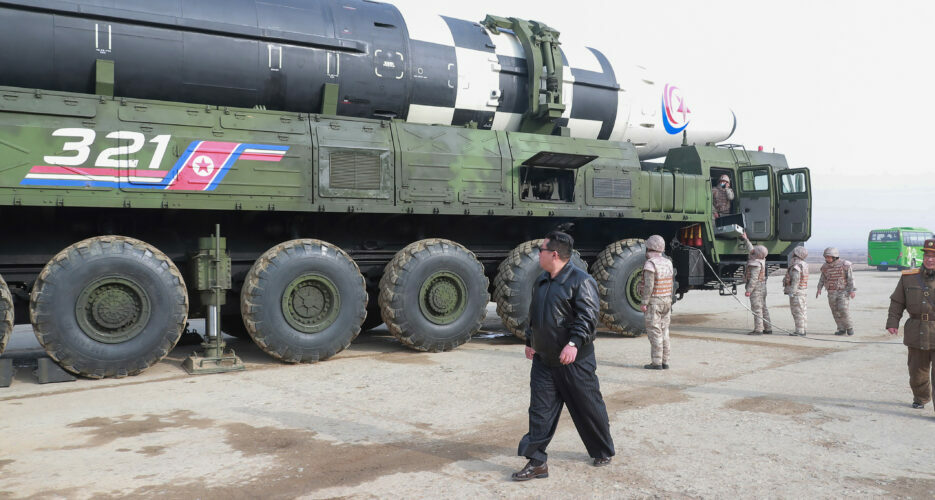 Over three months after North Korea’s newest and biggest nuclear-capable missile exploded over Pyongyang and Kim Jong Un attempted to pass the failed test off as a success, satellite imagery suggests the DPRK leader is not ready to memorialize the fake achievement with a requisite monument at the launch site. North Korea previously worked quickly to build large monuments at the launch sites of milestone tests of the country’s first intercontinental ballistic missile (ICBM), the Hwasong-14, and the larger Hwasong-15 ICBM within three months of their July and Nov. 2017 launches respectively. But Planet Labs satellite imagery shows work has yet to begin on a similar monument for the Hwasong-17 ICBM at its launch site next to Pyongyang International Airport. A likely reason is that Kim does not want to set the lie of the successful launch in stone or push the story more than necessary, and has no interest in expending resources on such a false monument.  WHAT HAPPENED IN MARCH The South Korean military reported a failed DPRK missile test on March 16. North Korea, as expected, did not release any information about it. Around a week later on March 24, the ROK military announced details of a successful ICBM test and Pyongyang claimed the next day it was the first-ever launch of the country’s newest ICBM, the Hwasong-17. NK Pro revealed hours later that state TV footage of the Hwasong-17 launch did not appear to have been shot on March 24 and instead appeared to be of the failed March 16 launch before the missile exploded high in the sky over Pyongyang. The South Korean military later assessed the North successfully launched a Hwasong-15 ICBM on March 24 and used that flight data as a basis for recycling images and footage of the March 16 launch of the Hwasong-17.  FISHY POST-LAUNCH CELEBRATIONS North Korean state media has heavily pushed the lie of a successful Hwasong-17 launch, but on-the-ground celebrations appear to be a different story. The lack of a stone monument at the launch site is one major departure from post-ICBM launch procedures in 2017. Since the launch site is located near highly secure areas where those already aware of the lie might travel on a regular basis — between the Pyongyang airport runway and a military facility used to fuel and store ICBMs before launch — perhaps Kim thought these workers don’t need a daily reminder of the failure and coverup, even if they were willing to go along with the lie they saw in state media for propaganda purposes. 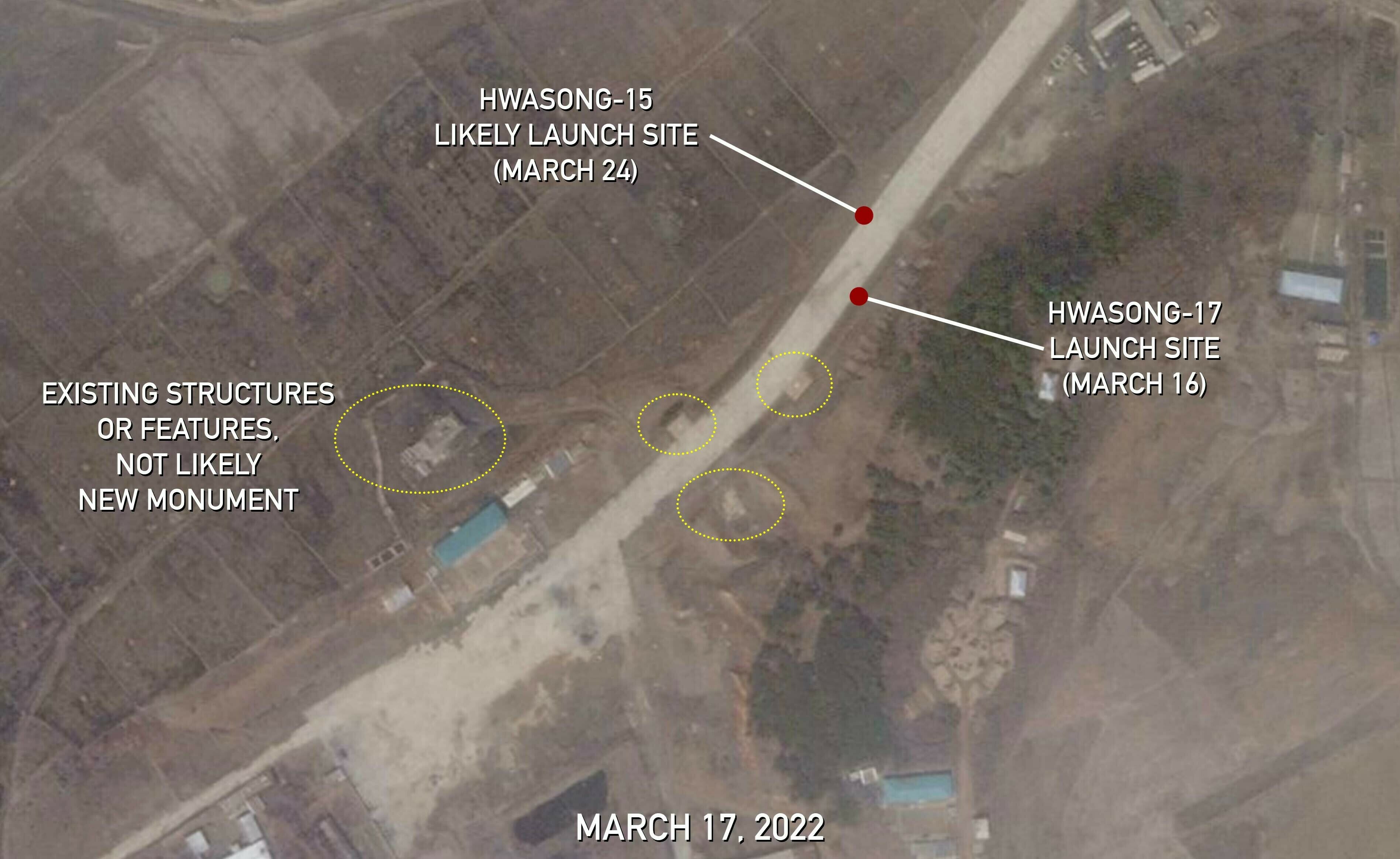 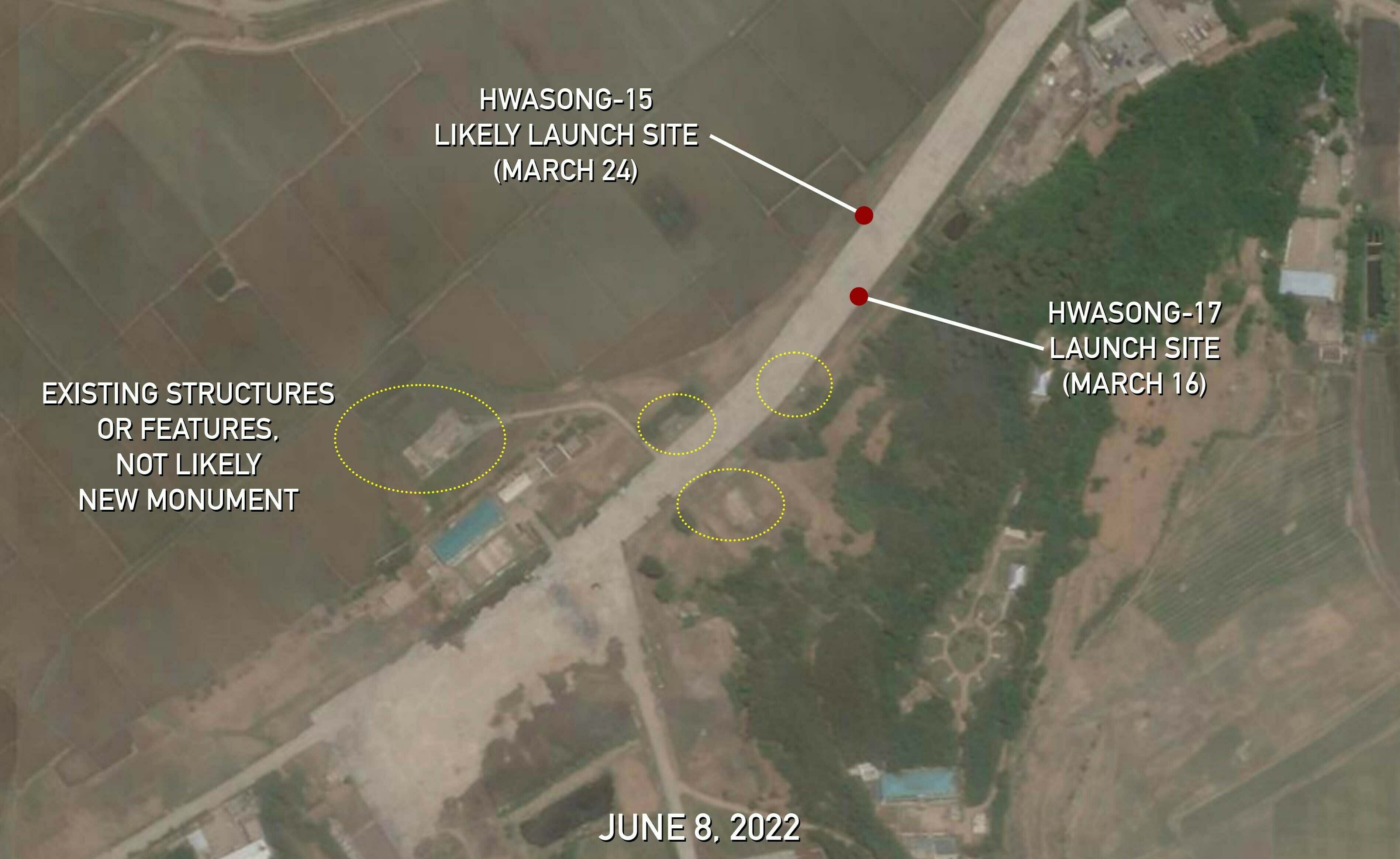 This comparison of high-resolution satellite imagery of the Hwasong-17 launch site taken a day after its failed launch and three months later highlights objects which are not likely to be part of any monument construction, and shows there are no signs of a monument appearing near the launch site | Images: Planet Labs PBH, edited by NK Pro 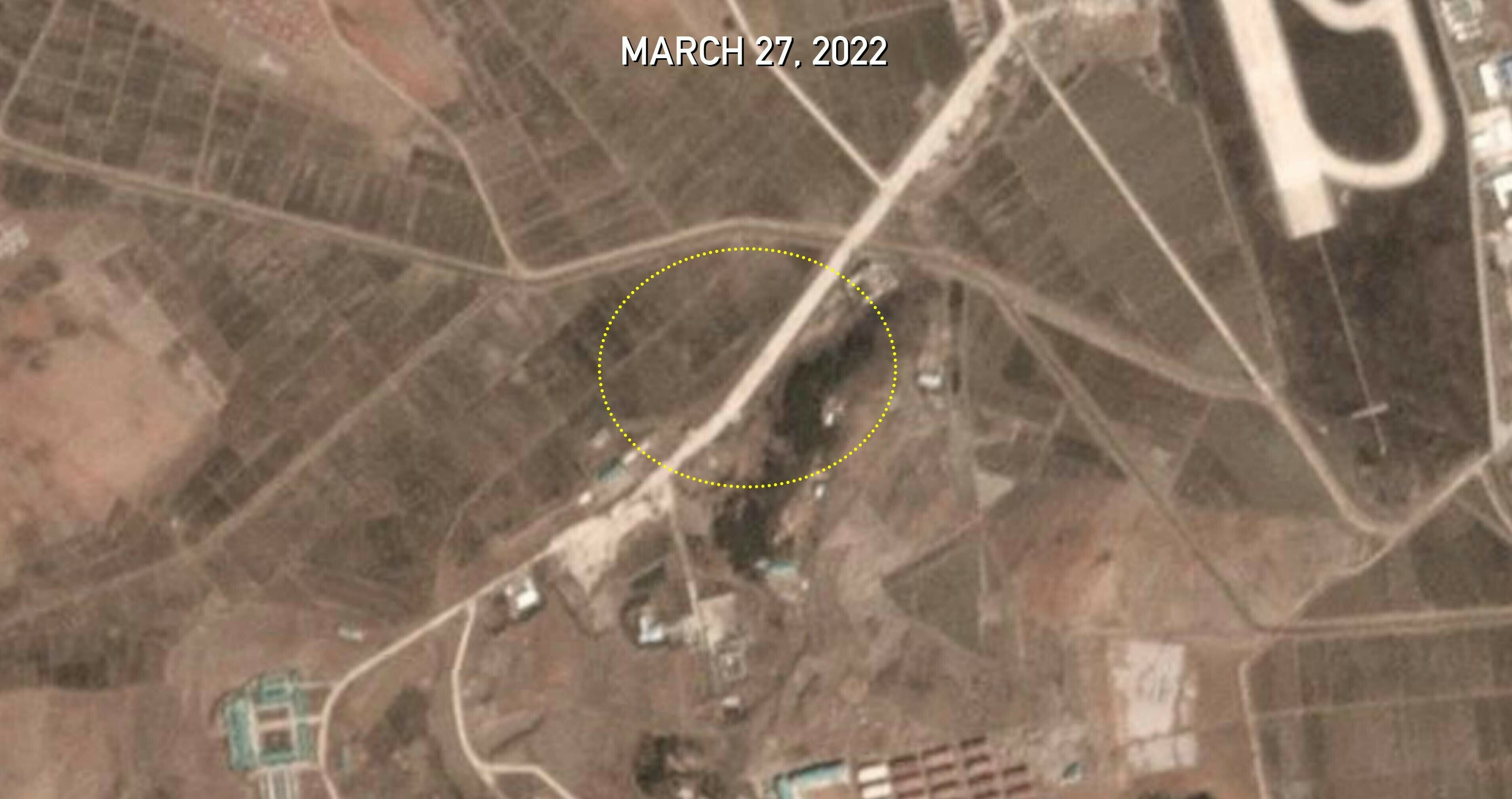 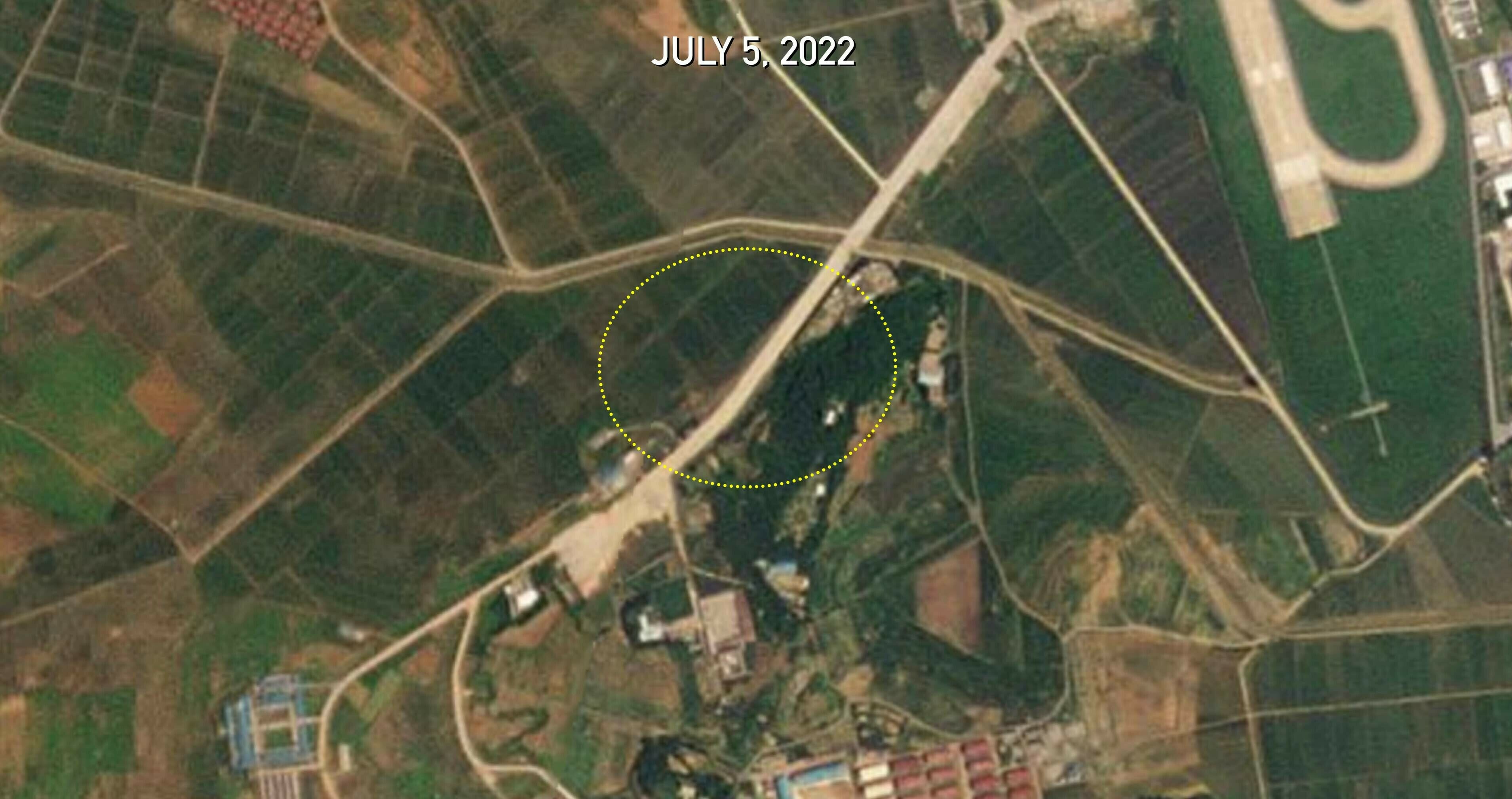 More recent medium-resolution imagery taken this week also shows no signs of monument construction around the launch site | Images: Planet Labs PBH, edited by NK Pro This includes dozens if not hundreds of soldiers, officials and workers who are involved in the missile program or who were present both when the Hwasong-17 exploded after launch and when a Hwasong-15 ICBM was reportedly launched a week later. Many of these people were present for a banquet reportedly held after the second test, but state media only released one photo of the event, a closely cropped group photo with Kim Jong Un. This was a significant change from reports on banquets held after the Hwasong-14 and Hwasong-15 launches in 2017, which showed wide shots of the same reception hall decorated with large replicas of the ICBMs they were celebrating around the room. It is possible that more images were not released of this banquet because those present were actually celebrating a successful Hwasong-15 launch and there were replica Hwasong-15 missiles in the room.   Notably, state media never reported on a concert being held to celebrate the Hwasong-17, another requisite feature of the program of celebrations after previous ICBM launches. Satellite imagery shows dozens of buses outside the Mansudae People’s Theater on March 29, where the past post-launch concerts were held, suggesting a concert may have been held for the March 24 launch. But again, it may have been celebrating the successful Hwasong-15 test and not the failed Hwasong-17 test, making it difficult to report in state media.  In the end, it cannot be ruled out that the reason a Hwasong-17 monument hasn’t been built yet is due to other factors including a simple change in preference by Kim for ordering such monuments at all, regardless of success or failure. But with solid evidence pointing to a faked narrative of success and odd state media behavior surrounding post-test banquets and concerts, all signs point to Kim Jong Un having a less than full commitment to the lie. Edited by Arius Derr © Korea Risk Group. All rights reserved. |

October 21, 2026Oct 21, 2026

The ultimate resources for professionals working on North Korea
 SHARE
SHARE COPY LINK
 X
X MASTODON