  Analysis Increased activity at Pyongyang airport likely due to farming, not missilesNorth Korea has used site as agricultural center for years, a trend that appears to be continuing this planting season 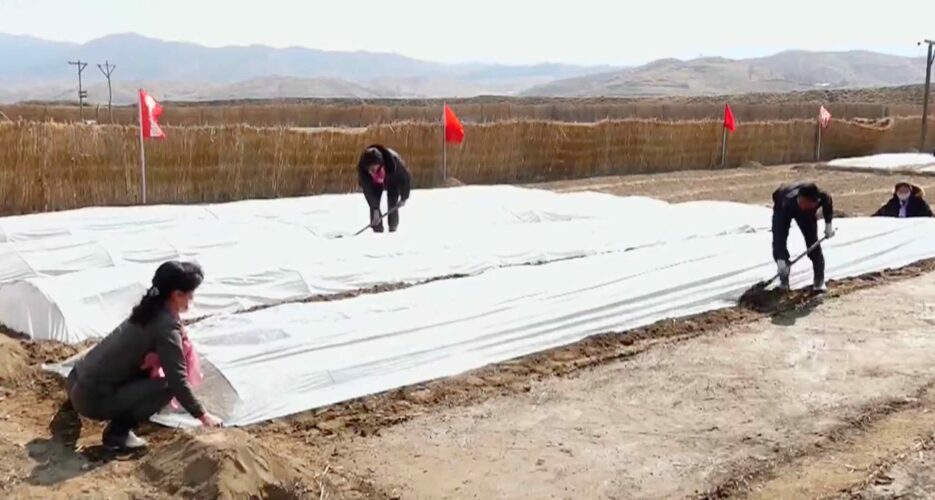 North Korea appears to be actively carrying out farming operations at the Sunan Airport in Pyongyang amid a national seed-planting drive, casting doubt on several reports that such activity there is related to recent missile tests. On March 17, a day after the South Korean military said the North conducted a failed missile test from the “Sunan area,” 38 North asserted that dozens of trucks appearing on the airport’s northern runway were “likely … involved in post-test clean-up efforts, such as clearing contaminated brush from the infield.” However, NK Pro analysis has found no evidence connecting the missile test to the activity of trucks around an agricultural field situated in the center of the runway. The activity on March 17 closely resembles activity observed in the same spot last summer when no missile tests took place. Further, agricultural work appeared ongoing at the field since March 10, almost a week before the latest missile test. There is also no evidence that extensive cleanup of the runway would be necessary, as NK News has seen photos confirming the rocket was high in the sky above Pyongyang before failing and falling to the ground as debris.  No marks clearly indicative of a fresh launch or catastrophic failure requiring a major cleanup effort appeared on the airport’s runways in a hazy high-resolution Planet Labs image taken on March 16 just hours after the reported launch, nor in a clearer image on March 17. One mark appeared on the runway around a kilometer to the south of the agricultural field, but it is unclear if this was created by the March 5 launch, the March 16 launch or something else. 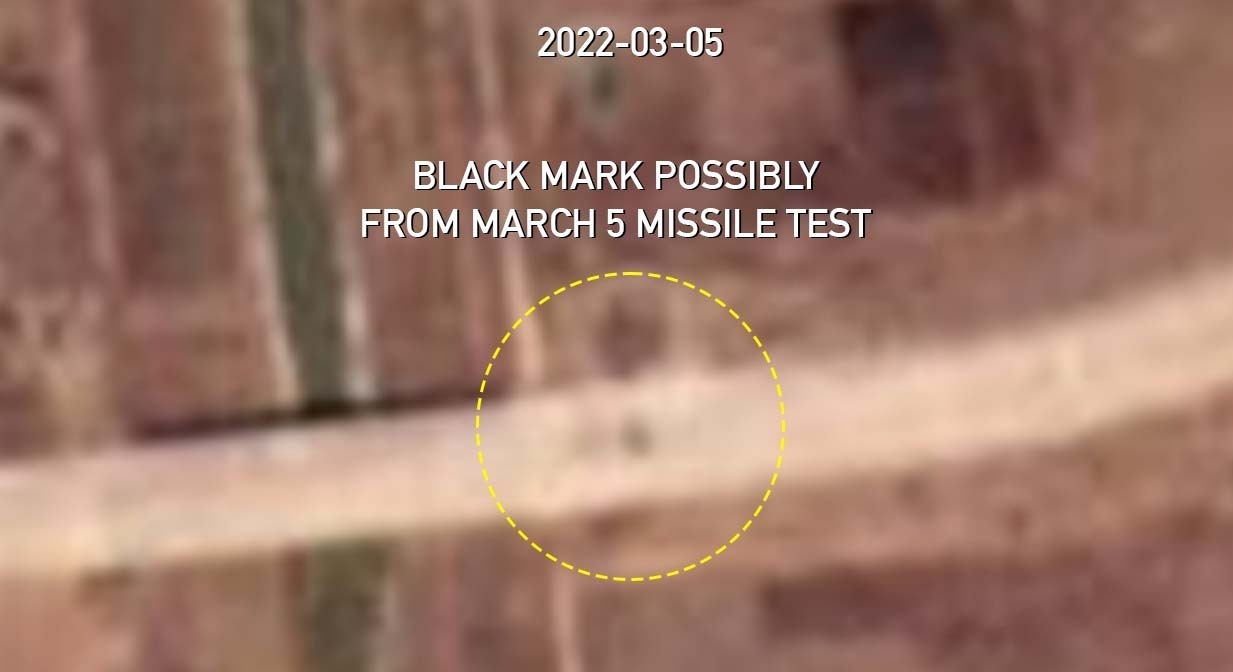 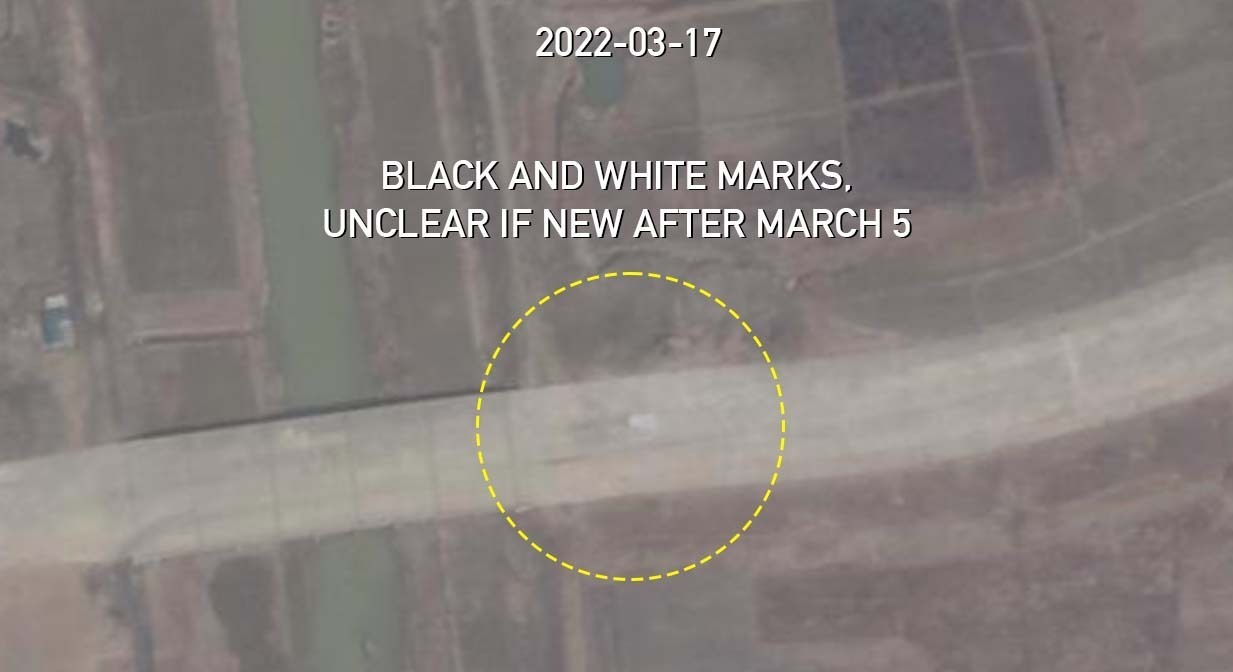  Historical satellite imagery shows that North Koreans have farmed the same field on the northern runway for years, and conducted a large-scale project from May to Aug. 2021 to organize around nine hectares (22 acres) of it into four neat rows, likely for more refined agricultural use. High-resolution images taken at the time show groups of materials and trucks surrounding the field as it was reorganized, and in late August it appeared to be covered in strips of white tarp. In the latest images taken this week as well, white strips appeared to be applied to the field as early as March 10 and removed within a few days — an activity seen in imagery all across North Korea during planting season. State media is also currently promoting a mass drive to improve seed planting techniques with the use of such tarps to protect treated dirt or freshly-planted seeds. Voice of America (VOA) erroneously reported Tuesday that this activity was the construction of “concrete pads” that “appeared to be installed for use during a missile launch.” South Korea’s Yonhap News Agency, the country’s top news outlet, boosted the piece and created a graphic visualizing how a North Korean missile launcher was expected to use the “pads.” North Korea indeed attempted to launch a missile a day after the report, but the agricultural field did not appear to serve as a launchpad. The U.S. claimed Pyongyang test-launched an intercontinental ballistic missile (ICBM) system from a mobile launcher on Feb. 27 and March 5, and that the March 16 failed test was a “ballistic missile.” The South Korean military said all three tests occurred in the Sunan area, but did not confirm the airport as the precise location. North Korean state media did not report on the failed test, but said the previous two launches were of an unspecified rocket system carrying military reconnaissance satellite equipment for testing. Edited by Arius Derr © Korea Risk Group. All rights reserved. |

October 25, 2026Oct 25, 2026

The ultimate resources for professionals working on North Korea
 SHARE
SHARE COPY LINK
 X
X MASTODON