  Analysis How the UN could help address China’s forced repatriation of North KoreansThe General Assembly has avoided calling out Beijing, but there may be diplomatic solutions to the human rights crisis 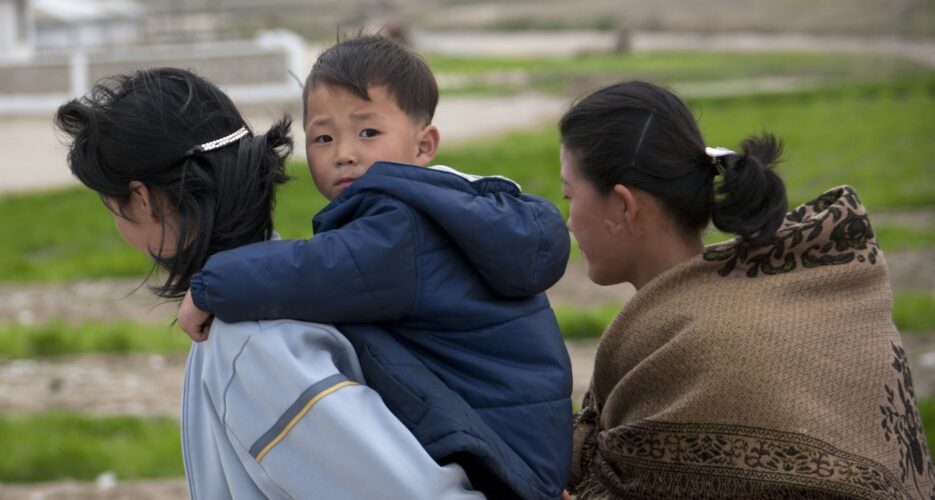 Over the past two decades, China has forcibly repatriated tens of thousands of North Korean refugees, who then face brutal punishment at the hands of DPRK authorities. But while U.N. General Assembly (UNGA) resolutions have repeatedly expressed “very serious concern” about “the expulsion or return” of these “refugees and asylum seekers” to the DPRK, they make no reference to China by name. Instead, they call on “all” states to respect the right of non-refoulement. The omission is especially glaring this year because China is reported to have detained as many as 2,000 North Korean escapees, and South Korea has confirmed that Beijing has already sent back hundreds now that Pyongyang has eased its pandemic border restrictions. These detainees include those who have fled their country to reach South Korea, workers sent to China who fled their workplaces and women trafficked and married to Chinese men, with children from whom they will be separated. Thus far, China has appeared unresponsive to appeals from governments, U.N. officials or experts to refrain from repatriating DPRK nationals, even though international human rights and refugee law is clear that North Koreans have the right to leave their country and seek and enjoy asylum abroad from persecution. However, despite Beijing’s stonewalling, a close review of the situation at the UNGA shows that opportunities may exist to press China to take action to address the human rights crisis that DPRK escapees face.  CHINA’S ROLE The U.N. has often danced around China’s repatriation of North Korean defectors, but special rapporteurs and treaty bodies have been forthright in calling out Beijing’s practices and demanding changes, showing that it can be done. In a report to the UNGA this year, U.N. Secretary-General Antonio Guterres highlighted their plight but kept with the U.N. practice of omitting China’s name. He instead called on the entire “international community” to “extend protection” to North Koreans “who have crossed international borders irregularly” and “escaped from overseas labor deployments.” Similarly, the U.N. High Commissioner for Human Rights Volker Turk spoke to the Security Council about the “thousands of North Koreans who may be repatriated involuntarily and subjected to serious human rights violations,” but made no reference to China. Nor did the governments of the U.S., U.K., Albania and South Korea who spoke on the issue at the Security Council, pointing instead to “third countries,” “other” countries and “all states.” China is not the only country that has forcibly repatriated North Koreans, but it is the country in which the vast majority of North Koreans seek refuge, and from which they are routinely pushed out. Beijing’s practices have also influenced other states to forcibly return North Koreans, making it even more essential to hold it to account. Its collusion with North Korea is well documented. The 2014 U.N. Commission of Inquiry (COI) report on human rights in the DPRK found that “many” of the North Koreans crossing the border to China are either fleeing political persecution or are refugees sur place. The COI concluded that China, which claims that all the North Koreans are “illegal migrants”:
China’s practices can “causally enable or facilitate subsequent human rights violations in the DPRK” or are “the immediate consequence of human rights violations that take place in the DPRK,” the COI concluded. This argument has encouraged the last two U.N. special rapporteurs on human rights in the DPRK — Tomas Ojea Quintana and Elizabeth Salmón — to mention China by name in their reports to the U.N. Human Rights Council and General Assembly. They also added Russia because it too has more routinely turned back North Koreans in recent years. Both rapporteurs recommended that “member States, in particular China and Russia, apply the principle of non-refoulement to individuals from the DPRK, who are at risk of serious human rights violations upon return.” U.N. treaty bodies have also called on China to halt forced repatriations. Composed of independent experts that monitor compliance with human rights agreements, these bodies make recommendations about specific states. In reviewing China’s record, the Committee against Torture (CAT) called on Beijing to:
The Committee on the Rights of the Child, when reviewing China, called on it to “ensure that no accompanied, unaccompanied or separated child” is “returned to a country where there are substantial grounds for believing that she or he will suffer irreparable harm, and that this principle applies to all children and their families.”  THE UNGA RESOLUTION Every year, the UNGA adopts a resolution on human rights in North Korea, but UNGA resolutions usually avoid critical mention of the five permanent Security Council members, and in the case of the DPRK, there is fear that any such reference might jeopardize the consensus vote on the resolution. Nonetheless, the precarious situation now facing North Korean refugees raises the need to strengthen the language in the text. One way would be to expand the resolution’s paragraph on non-refoulement and add recommendations from the U.N. treaty bodies to make the text more specific. Another would be to refer to the North Koreans currently detained abroad and the risks they are facing, as described by Special Rapporteur Salmón. The resolution could also call on “neighboring” countries in addition to “all states” to fulfill their obligations under the 1951 refugee convention — a formulation former U.N. Secretary-General Ban Ki-moon used. The resolution could further call on countries in the region, especially members of the UNHCR’s Executive Committee like China and Russia, to make sure the non-refoulement provisions of the refugee convention are upheld. Another strategy is for the resolution’s cosponsors, numbering some 50, to raise China’s return of North Koreans to situations of danger from the floor. The U.N. Office of the High Commissioner for Human Rights (OHCHR) could also consider circulating (without names) the more than 100 testimonies that the COI collected from North Koreans who were forcibly repatriated, along with the testimonies of returned women that the OHCHR collected. Finally, governments and NGOs could organize press events at the UNGA with North Koreans who were repatriated in the past.  IS DIPLOMACY POSSIBLE? All of these measures would help draw attention to North Korean refugees and put pressure on China to act. But they will do little to change the situation unless Beijing can be brought on board, underlining the need to find ways to work with China on the issue. China is now the second-largest contributor to the U.N. after the U.S., and it provides extensive loans and construction projects to developing countries, which it can then call on to vote in support of China’s positions at the U.N. At the Human Rights Council in 2022, China successfully blocked discussion of an OHCHR report on its treatment of its Uyghur population after Xi Jinping reportedly telephoned four heads of state. However, China recently failed to prevent the first Security Council meeting on DPRK human rights in five years from convening, during which members raised the forced repatriation issue and largely agreed that North Korean human rights transgressions constituted threats to international peace and security. Chinese officials have frequently said constructive dialogue should be the way to address human rights differences, so the UNGA resolution on North Korean human rights could serve as a vehicle to steer the situation to a diplomatic solution. The resolution might mention the good offices of the Secretary-General. Guterres has already appealed for international protection for the North Koreans at risk and could now be encouraged to devise strategies to implement this call. For example, his office could informally create a contact group of states prepared to take in North Koreans on a temporary basis while their status is being determined, and those with the credentials to work out a possible solution with China. The group could also help move the conversation away from China’s overblown fears that North Koreans’ right to leave the country would destabilize the regime, steering it toward China’s aspiration to become a more active player in the refugee and humanitarian arena by observing international standards. On occasion, China has allowed small numbers of North Koreans to depart, especially when the South Korean government or other states interceded. This has included some high-level defectors and former officials with ties to China who left for South Korea, as well as North Koreans hiding in foreign embassies and protected by the UNHCR’s Beijing office. This year, for reasons unknown, it allowed a family of four it was holding in detention to travel to Seoul. Over the years, unknown numbers of Chinese officials have also looked the other way as North Koreans have secretly transited through their country. More than 33,000 escapees have managed to resettle in South Korea over the past two decades. If a diplomatic approach is suggested, the U.N. secretary-general could call on UNHCR and OHCHR to assist. Just ten years ago, UNHCR officials announced that they wanted to be more proactive in helping North Koreans, calling it “unacceptable” to forcibly repatriate people to conditions where their life or physical integrity may be in danger. The High Commissioner tried to come up with creative solutions in response to the fact that China barred the agency from access to North Koreans in the border region since the late 1990s and North Koreans from going to the UNHCR office in Beijing since 2008. Yet three years later, the UNHCR’s new high commissioner visited China and focused on what the agency apparently considered a more compelling concern — encouraging the Chinese government to invest funds from its Belt and Road Initiative in countries hosting large numbers of refugees. China has pledged hundreds of millions of dollars for development programs in refugee hosting countries, some of it going through the UNHCR. Although a worthy objective, one of the consequences appears to be that the UNHCR has stopped serving as the international community’s main advocate for the non-refoulement of North Koreans. In Russia, UNHCR staff on the ground have reportedly helped North Koreans to gain safe passage, but the UNHCR’s China website does not even mention North Koreans as persons of concern. North Koreans, although often described as voiceless, are actually taking a strong and courageous stand by leaving their country. And it’s clear that the international community could do far more to lend them support. Edited by Bryan Betts © Korea Risk Group. All rights reserved. |

October 21, 2026Oct 21, 2026

The ultimate resources for professionals working on North Korea
 SHARE
SHARE COPY LINK
 X
X MASTODON