  Border Controls Container traffic returns to North Korea’s Nampho port after coronavirus slumpQuarantine of arriving cargo also apparent in latest satellite imagery 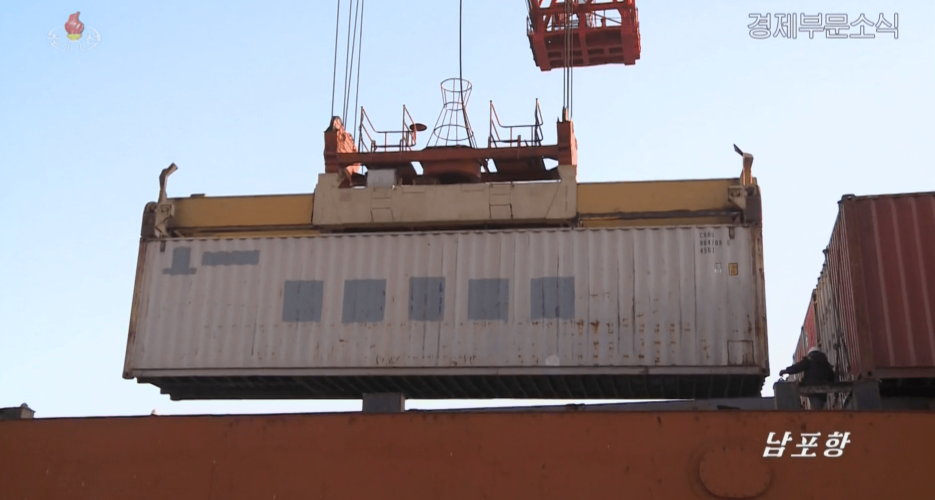 North Korea’s largest container port located in the west-coast city of Nampho has seen a return of regular traffic since the second week of March, new satellite imagery reveals, following over a month of abnormally low activity under strict coronavirus (COVID-19) prevention measures. The renewed activity in the form of hundreds of cargo containers parked at the port appeared between March 11-13 — the first time since the first days of February — and continued through the latest imagery on March 22. Different from the normal activity at the port prior to February, however, the new shipments arriving in March appear to be quarantined in place for days at a time before moving. This may be part of a North Korean government policy promoted heavily in recent weeks of quarantining imports “for 10 days isolated from one another in their natural state.” Container port activity As NK Pro reported earlier this month, North Korea’s Nampho port appeared to experience a near-complete halt in container traffic between February 3 and March 8. During that time, only a handful of cargo ships appeared docked at the port in the available medium-resolution satellite imagery (though with some days missing from the imagery), and a line of containers appeared like a wall across the yard. This represented a major departure from the same period in the previous year, and appeared to suggest, along with similar imagery of a near shutdown at the largest trade crossing with China at Dandong-Sinuiju, that the country’s trade dropped considerably under the COVID-19 measures. February 3 – March 22 timelapse of the Nampho container port (right-hand side), coal port (middle-left), and rail-linked bulk port (left-hand side) | Images: Planet Labs But according to the latest Planet Labs imagery, NK Pro has found that the traffic picked up starting with a large arrival of containers parked in the yard between March 11-13 following another ship arriving between March 8-11. Two more rows of containers then appeared in the yard by March 14 as the previous cargo ship left and another was seen coming into port. Part of the first row of containers disappeared by March 15, but the rest of the three new rows did not show any signs of reshuffling or moving until March 17, when a fourth row of containers also showed up. In the March 18 image, a fifth row appeared while only some of the first batch of containers disappeared, and by March 20 more containers were either moved or shipped out. As of the latest imagery taken on March 22, more reshuffling of containers was apparent but some rows of containers arriving between March 14-17 had yet to be moved. By comparison, reshuffling of containers across the yard appeared to occur on a daily basis before February. It is unclear if the stated 10-day quarantine policy is still being carried out after containers are moved, possibly keeping them isolated elsewhere, but the satellite imagery shows the containers in the yard at least are not consistently being held for the entire period.  In a March 17-dated high-resolution image captured by EOS Landviewer and obtained by NK Pro, hundreds of full and half-size containers were seen parked in the port along with around 20 in the truck pickup staging area. A cargo ship measuring around 100 meters long and 16 meters wide with stacks of dozens of containers on board was visible docked at the port on that day. Containers only began to be placed at the pickup area that day on March 17, according to the daily Planet Labs imagery, from where they have been quickly picked up or otherwise moved in subsequent days. Also visible in the high-res image is a new floor track container stacking crane installed at the port, which, according to Planet Labs daily imagery, first appeared between January 30 and February 3, just before traffic largely stopped. The floor tracks first appeared late last September. Other Nampho terminals Just to the west of the container port, the daily satellite imagery shows no significant activity in March at coal terminals previously linked to trade in violation of UN sanctions. To the west of that at a rail-linked bulk cargo port, however, another large but unidentified bulk carrier appeared to be loading cargo between March 14 and the latest March 22-dated imagery.  This followed similar activity during the slowdown period in February as well, where a couple of slightly smaller ships were seen coming in and out of the same terminal. At the oil terminals further to the west, a large tanker (around 113 meters long and 20 meters wide) arrived between March 12-14 before leaving between March 18-19. Two smaller tankers arrived on March 12 and remained there as of March 22.  But as there was also similar traffic at the oil terminals throughout February, their presence does not represent a shift in COVID-19 related policy. © Korea Risk Group. All rights reserved. |

October 08, 2026Oct 08, 2026

The ultimate resources for professionals working on North Korea
 SHARE
SHARE COPY LINK
 X
X MASTODON