
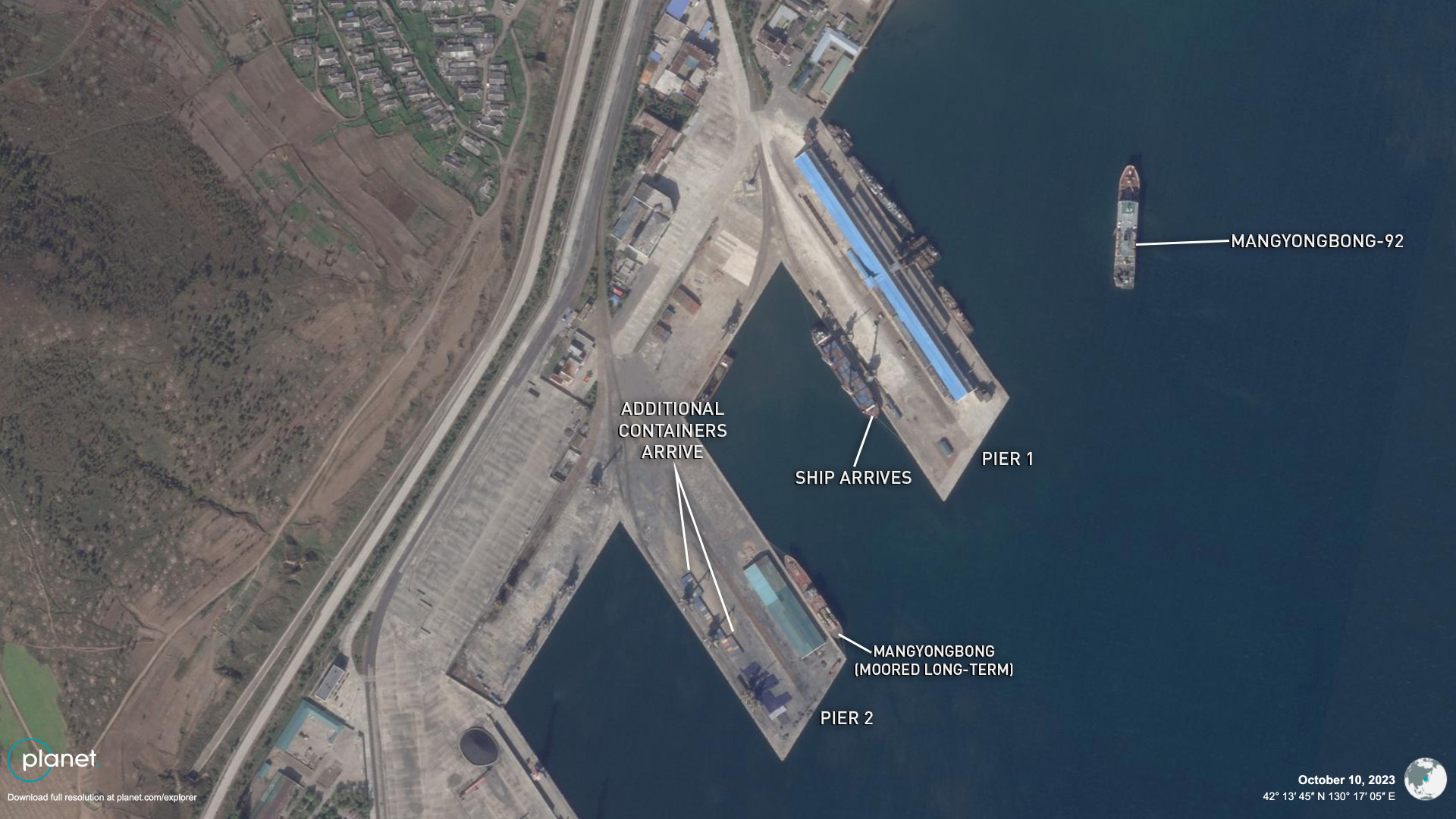
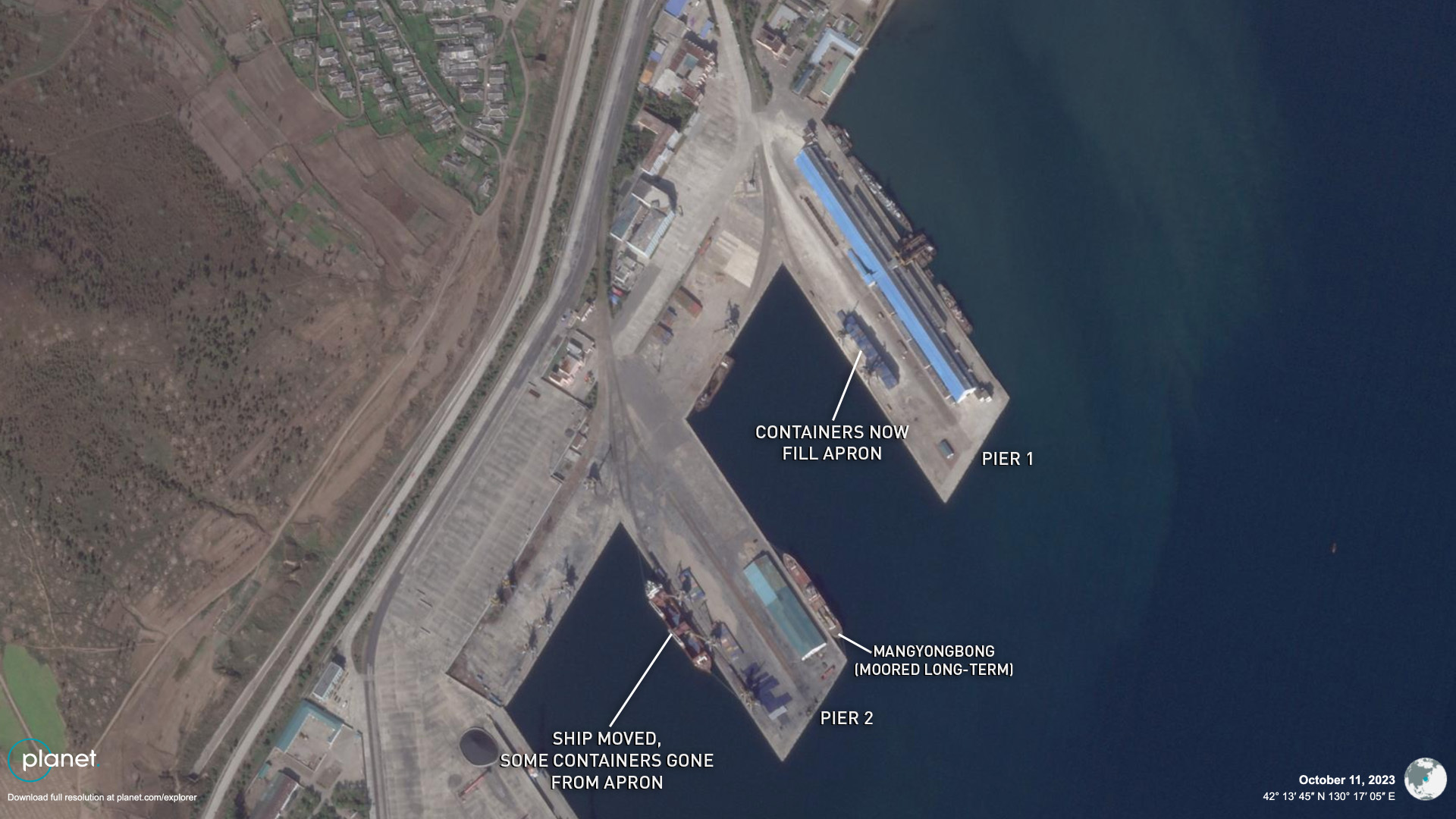
  Analysis Container shipping restarts at North Korea’s Rason Port as infamous ferry docksTrade at Rason SEZ on rise with first container shipping in 5 years, while Mangyongbong-92 in for possible upgrades 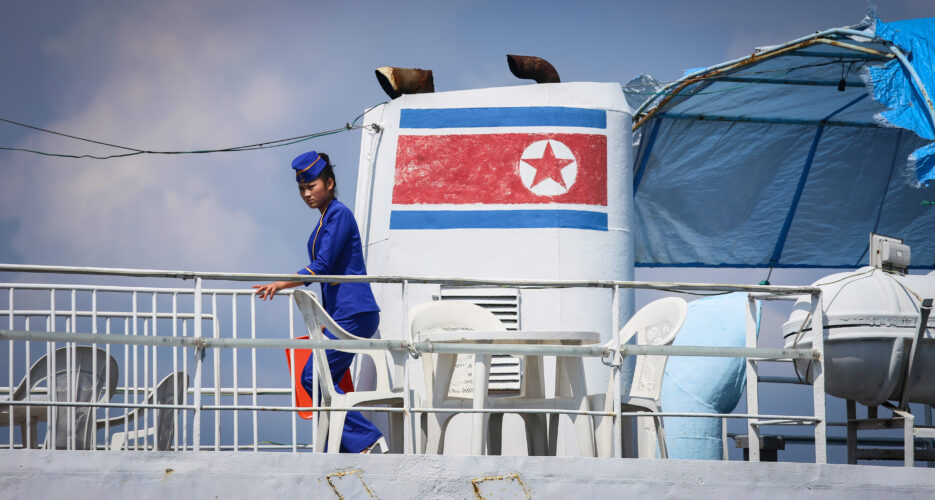 A North Korean sea port near the border with Russia and China has restarted container shipping for the first time in over 5 years while an infamous DPRK cruise ship has entered a nearby repair dock, according to NK Pro analysis of satellite imagery. Rason Port has appeared busy since late August, with imagery showing shipping containers being transferred to and from large freighters, possibly from foreign countries. Container shipping was halted at the port in 2018 after the imposition of strict U.N. sanctions. North Korea’s infamous Mangyongbong-92 ferry, which has drawn accusations of being involved in illegal shipping activities in the past, also arrived at a drydock in Rason for what could be its first major repairs or upgrades in a decade or more. SEA PORT ACTIVITY The Rason economic and trade zone (라선경제무역지대) has been touted for decades as a potential hub for business with its investor-friendly laws and for facilitating transshipments from bordering Russia and China through its ice-free Rason Port. However, with expanding U.N. sanctions in the last decade and then self-imposed trade restrictions during the COVID-19 pandemic, the port has languished. Even a Russian-owned operation to transship coal from Pier 3 (the southernmost of three piers) has stopped despite having secured a U.N. sanctions carveout. That is until recently: Planet Labs satellite imagery shows Pier 1 (north) and Pier 2 (middle) starting to handle shipping containers and receive large cargo ships as early as Aug. 26. For example this week, a freighter measuring around 365 feet long (111 meters) appeared between Oct. 9 and 10 at Pier 1. On Oct. 11, it appeared at Pier 2 while dozens of containers it held the previous day were on the apron of Pier 1. By Oct. 12, trains appeared to have come down Pier 1 to pick up some containers to move inland while those on the apron of Pier 2 — which had been moved by train to the pier in the days before — appeared to be moved onto the freighter for outgoing shipment. 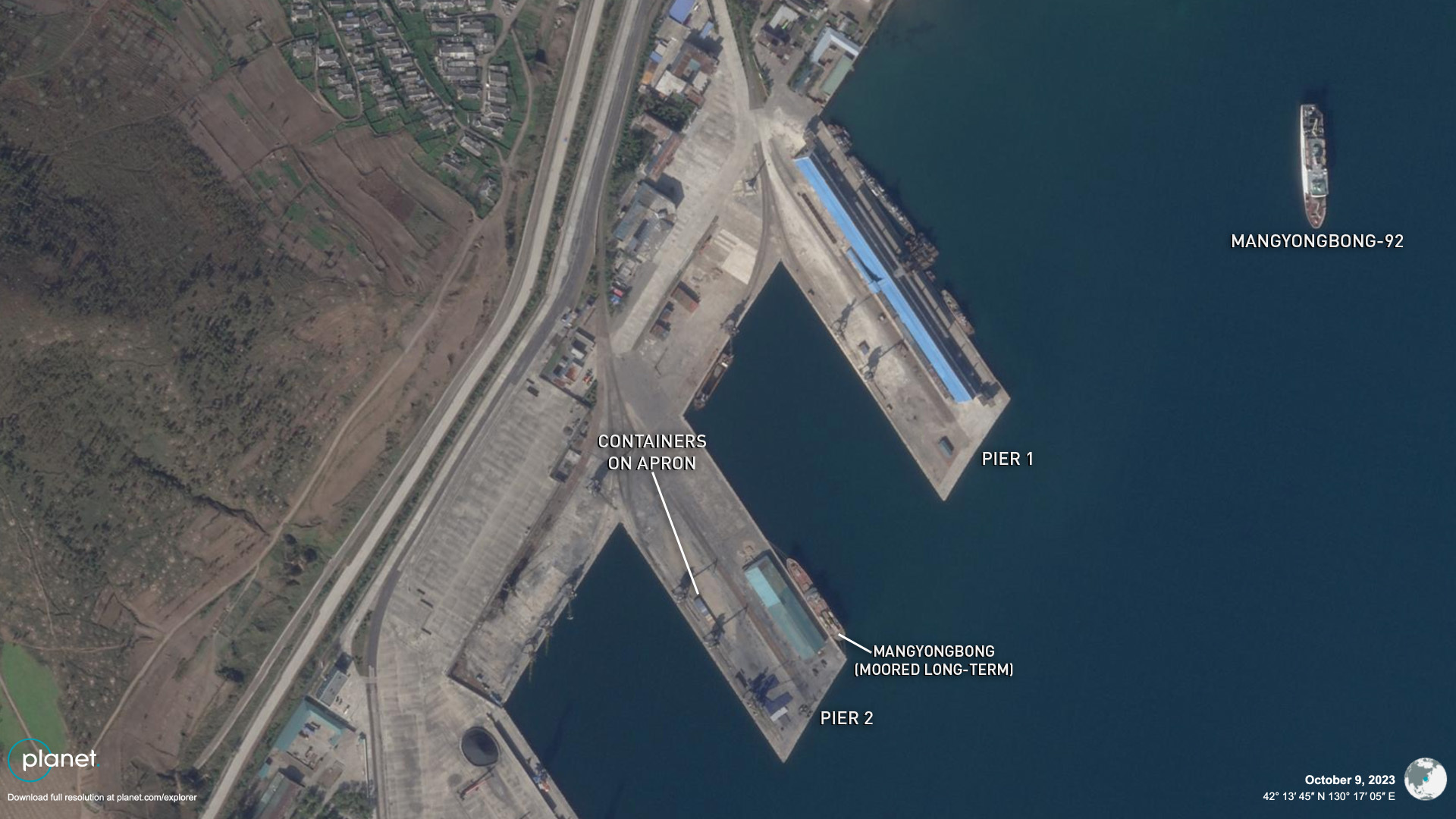
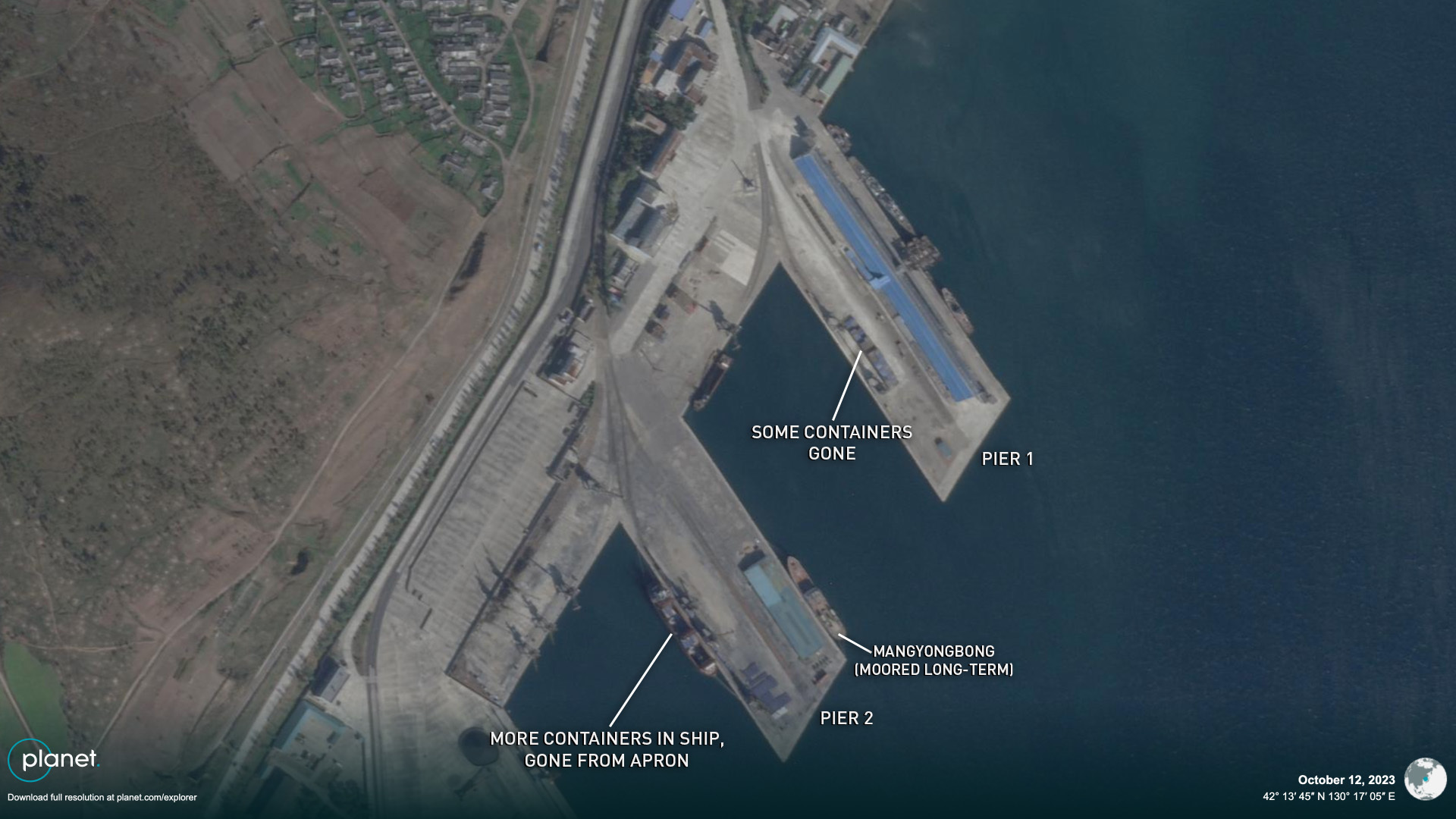
None of the ships at Rason Port have broadcasted using the standard automatic identification system (AIS) since August, making it difficult to identify them and the places they traveled before and after Rason. It is unclear why, but the containers on the piers arriving from ships do not appear to be required to stay in place and quarantine for more than a day if at all, while imported goods from China are still required to quarantine at a facility on the opposite end of the border in the west. It is possible that the new activity is part of a transshipment arrangement with China since Beijing was rumored to have secured rights over piers 1 and 2 prior to China agreeing on stricter sanctions against North Korea in 2017. China has also been sending containers by truck across the Quanhe-Wonjong border bridge located just to the north of Rason, though North Korea appears to have required those containers to be disinfected and quarantined outdoors at the border. The activity could also be a domestic shipping operation that has opened amid loosening pandemic restrictions, or new shipments of domestic goods to other countries. Piers one and two handled container shipments until 2017, before Pier 2 became a coal port until late 2021, according to Google Earth satellite imagery. Planet Labs imagery shows that Pier 1 remained active throughout the pandemic period handling bulk goods but not container shipments, and usually receiving smaller ships than those seen in the last month and a half. A disinfection and quarantine rail station at the narrow Russia-DPRK border nearby has also grown busier lately, according to a report from CSIS Beyond Parallel, indicating overall foreign trade with Rason is on the rise. CSIS described stacks of tarp-covered goods outdoors at the station as “probable” weapons shipments from North Korea to Russia, but NK Pro on-the-ground photos of the facility show that the warehouses surrounding the tarp-covered goods are for “disinfection,” meaning it is more likely that the goods are imports from Russia. Nampho Port on the west coast — located across from multiple high-volume Chinese ports — is still North Korea’s busiest trade hub, while the Dandong-Sinuiju border in the northwest is the busiest China-DPRK overland port. MANGYONGBONG-92 Another large ship, the DPRK’s Mangyongbong-92 cruise and cargo ship, also mysteriously showed up near Rason Port late last month and has now gone in for repairs or upgrades at a drydock next door, NK Pro has found. Aside from a special trip to bring participants to the South Korean east coast for the 2018 Pyeongchang Winter Olympics, the Mangyongbong-92 has rarely been used in the last decade, according to NK Pro analysis of Google Earth and Planet Labs imagery. 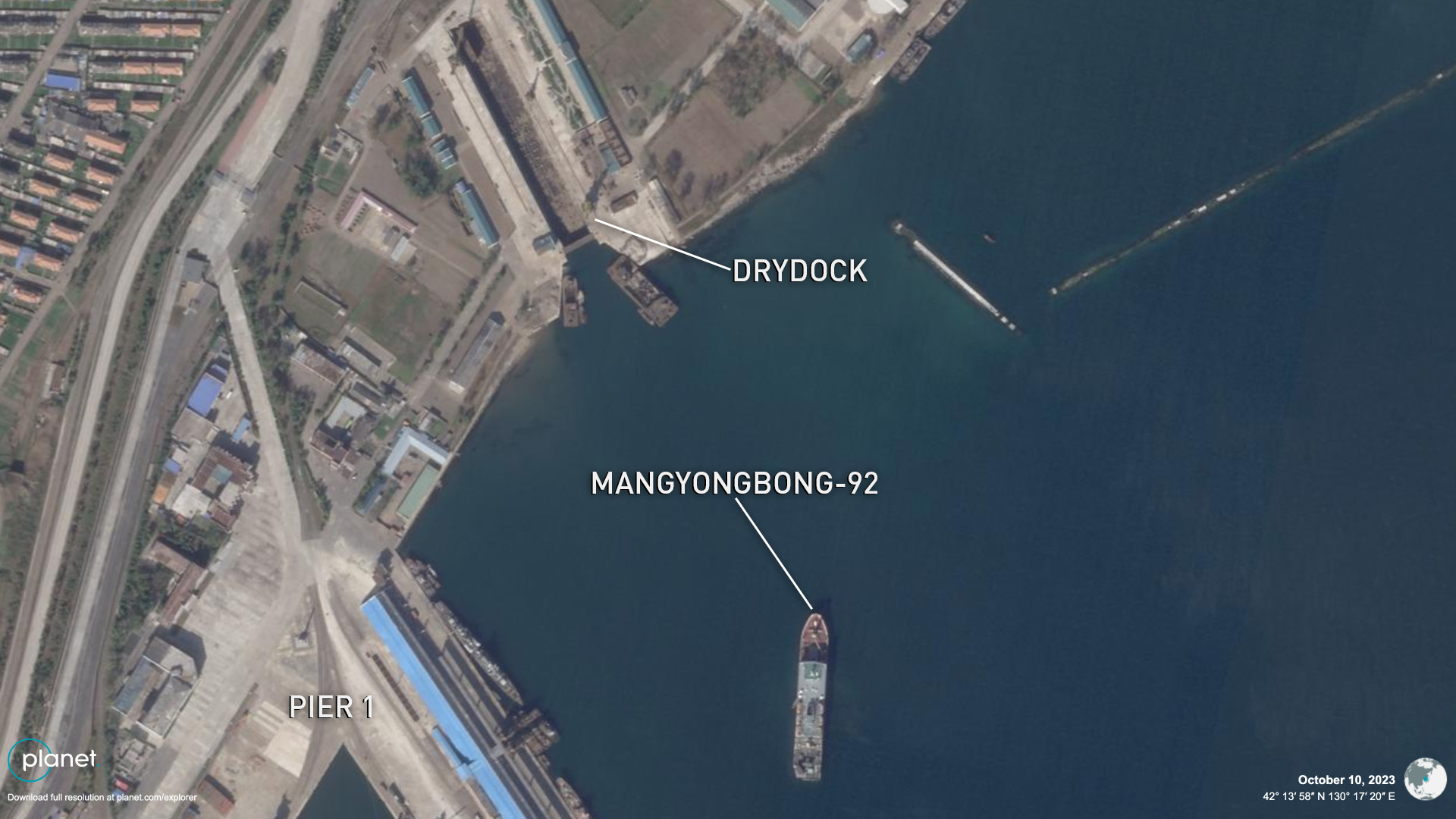
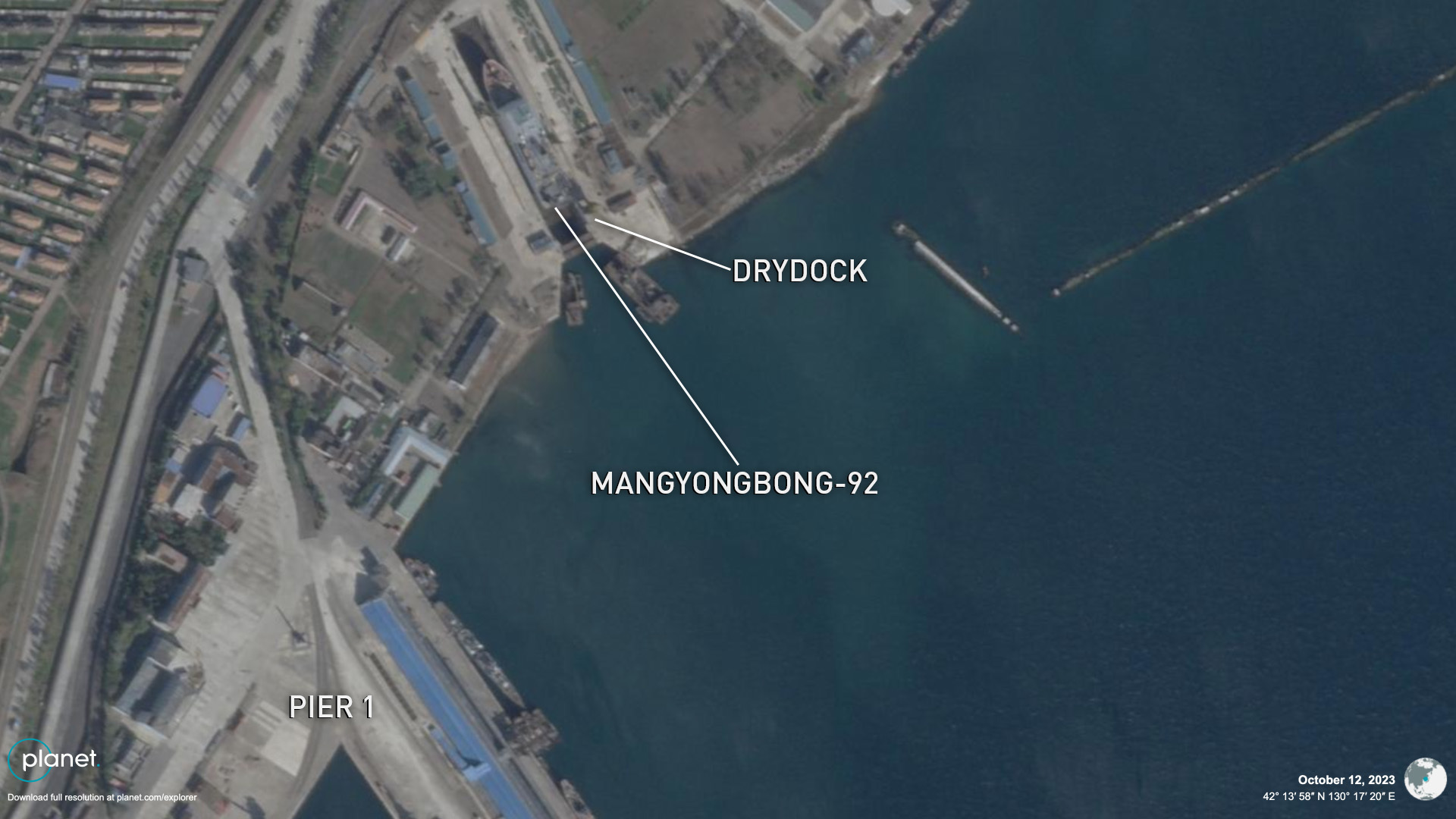
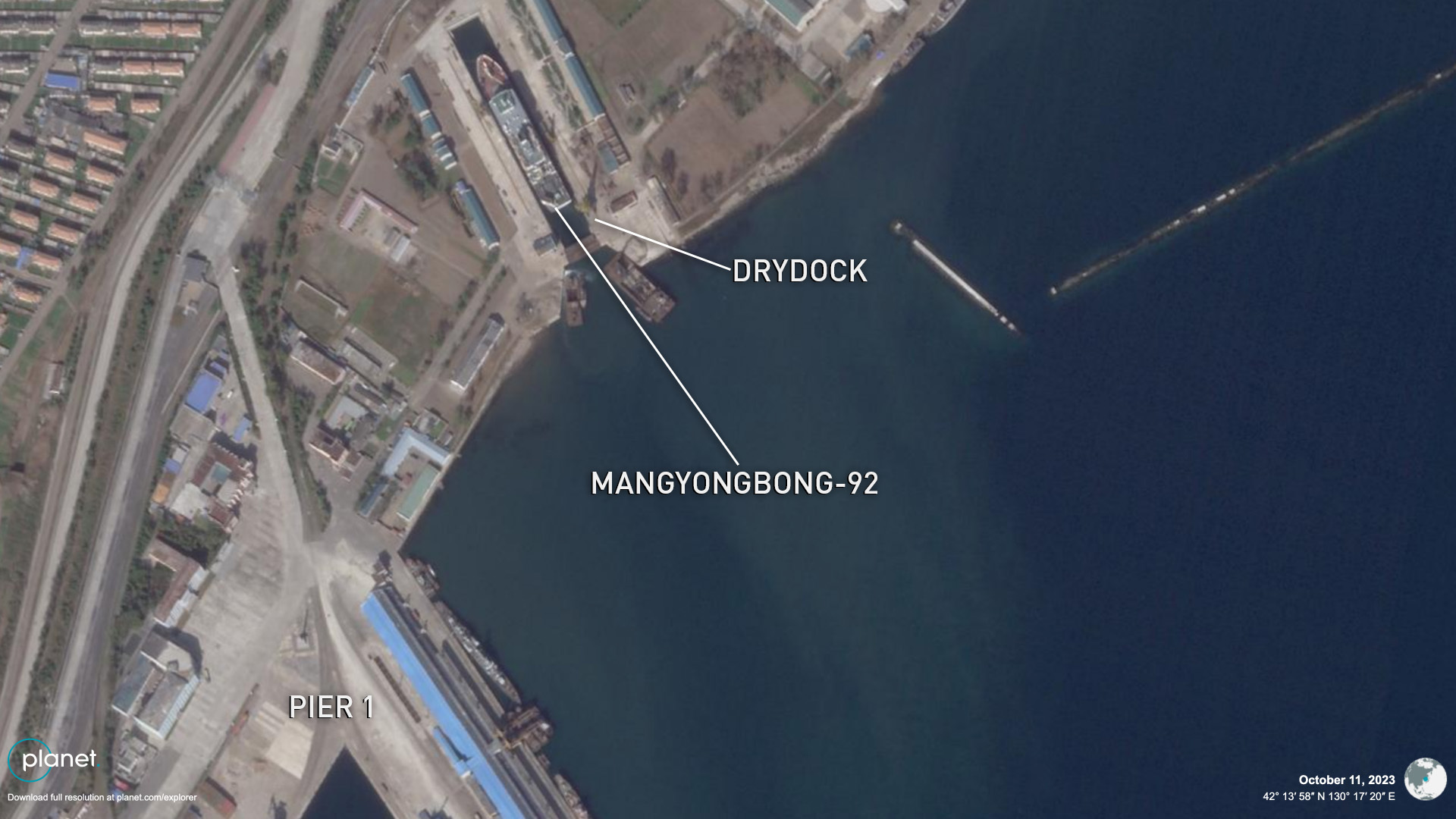
The ship was used to regularly ferry passengers, as well as allegedly drugs and weapons program-related equipment, between North Korea and Japan between 1992 and 2006, before Tokyo banned it from entering the country’s ports. Planet Labs imagery shows it entered a drydock next to Rason Port between Oct. 10 and 11. It was still there on Oct. 12 and work did not appear to have started on it. It is possible that the work will involve significant construction to upgrade or transform the ship and not be simple maintenance, since that could feasibly be done in Wonsan where it has been moored long term over 250 miles away (415 km) down the coast. If it is only for maintenance, it would likely be ahead of restarting tourism based out of Rason and targeting Chinese and Russian customers in the border area. It’s not likely to be used primarily for shipping since North Korea has reportedly been acquiring many vessels in the last year to take care of that kind of activity. The Mangyongbong-92 is sometimes confused with the Mangyongbong, an older and slightly smaller ship that is based out of Rason. That ship was involved in ferrying Chinese tourists between Rason and the Mount Kumgang resort area down the coast a decade ago, and served as a cargo ship connecting Rason and Vladivostok, though Russian authorities refused its last entry attempt in Feb. 2018. Edited by Alannah Hill © Korea Risk Group. All rights reserved. |

October 24, 2026Oct 24, 2026

The ultimate resources for professionals working on North Korea
 SHARE
SHARE COPY LINK
 X
X MASTODON