  Analysis China’s ‘largest’ customs port on North Korean border not ready despite ceremonySatellite imagery shows construction still unfinished on long-delayed facility, as DPRK maintains COVID border controls 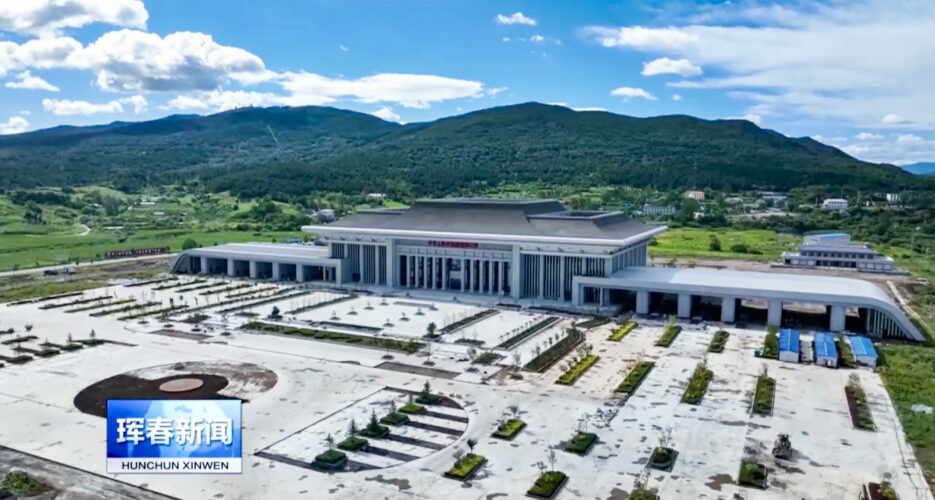 Chinese officials held a ceremony at the country’s “largest” and newest customs facility on the border with North Korea earlier this month, promising to boost the local economy by over $2 billion, but NK Pro analysis of satellite imagery shows construction on the facility remains unfinished. The Sept. 1 ceremony at the imposing $52 million Quanhe Port project — located at the easternmost edge of the DPRK-China border — was part of local celebrations for the 70th anniversary of Yanbian Korean autonomous prefecture, according to local media reports. It appeared to be a symbolic celebration and not a grand opening ceremony, since organizers only claimed to have finished work on the Joint Inspection Building and not the entire project. According to Planet Labs imagery, workers initiated minor cleaning efforts outdoors at the unfinished facilities and paved a new entrance road in the weeks leading up to the ceremony, while the project appeared mostly stalled over the previous year. Construction has been slow since beginning in early 2017. 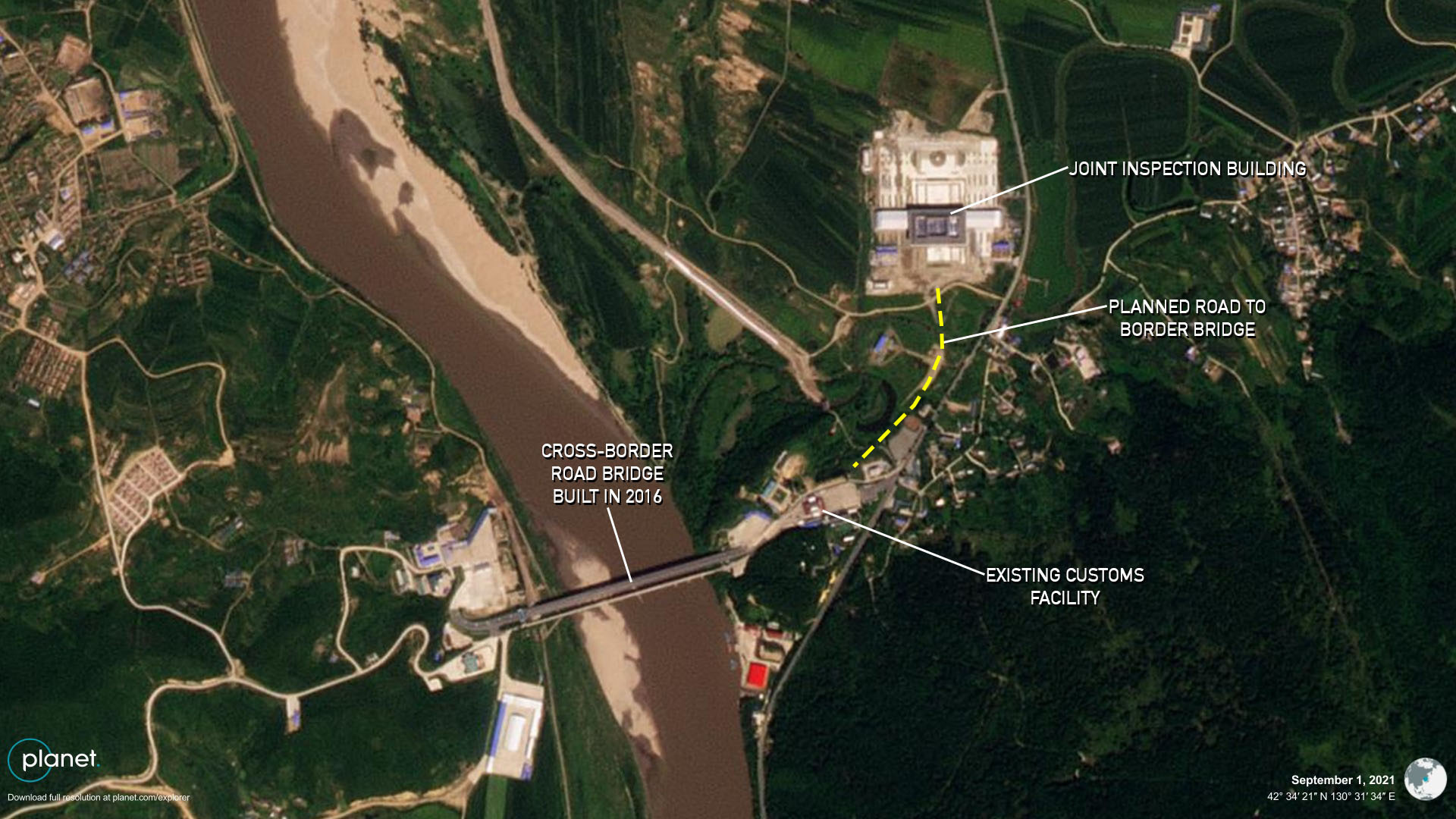 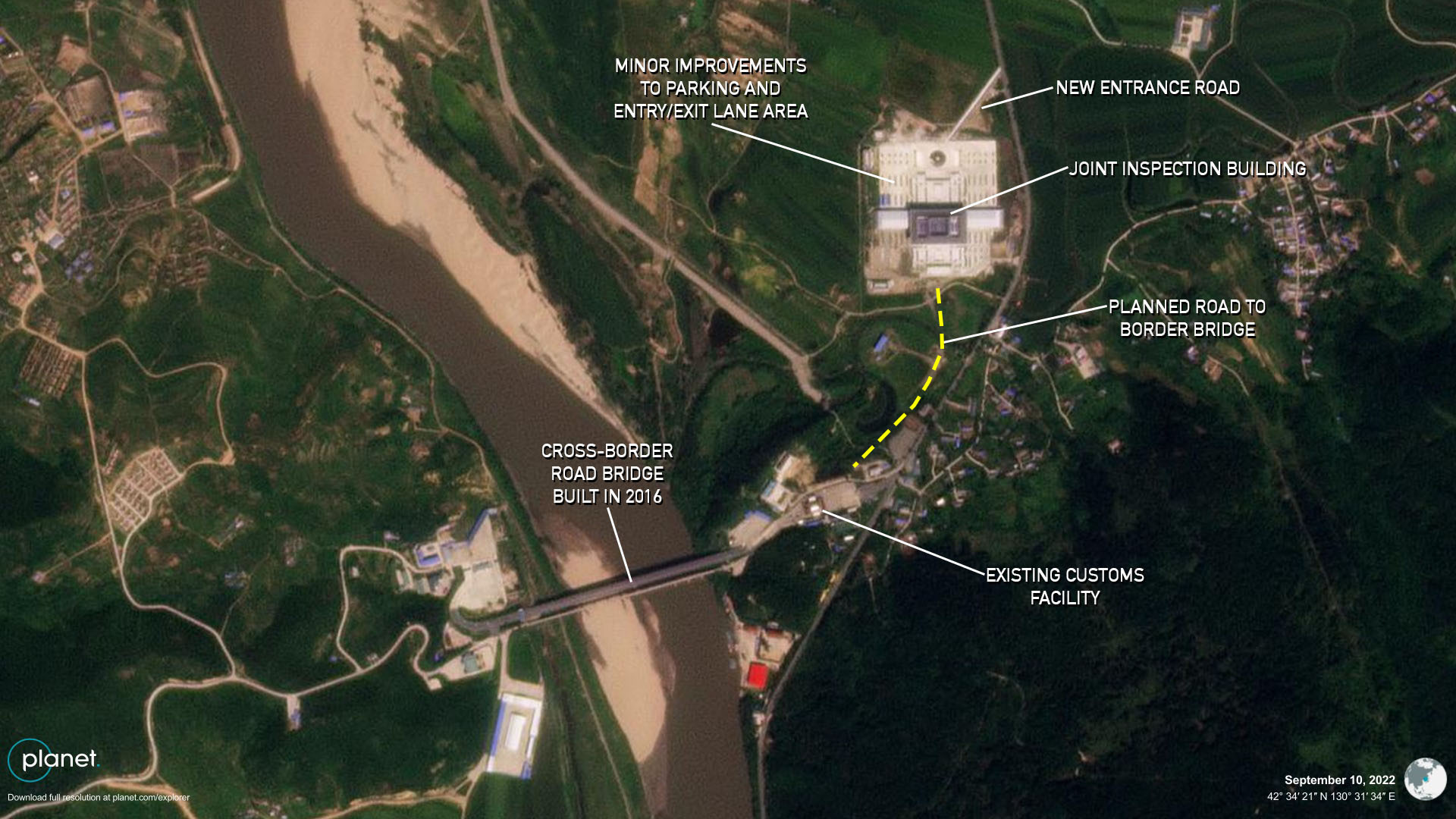 Only minor improvements appeared evident when comparing images of the Quanhe Port project taken one year apart in Sept. 2021 and 2022 | Images: Planet Labs PBH, edited by NK Pro 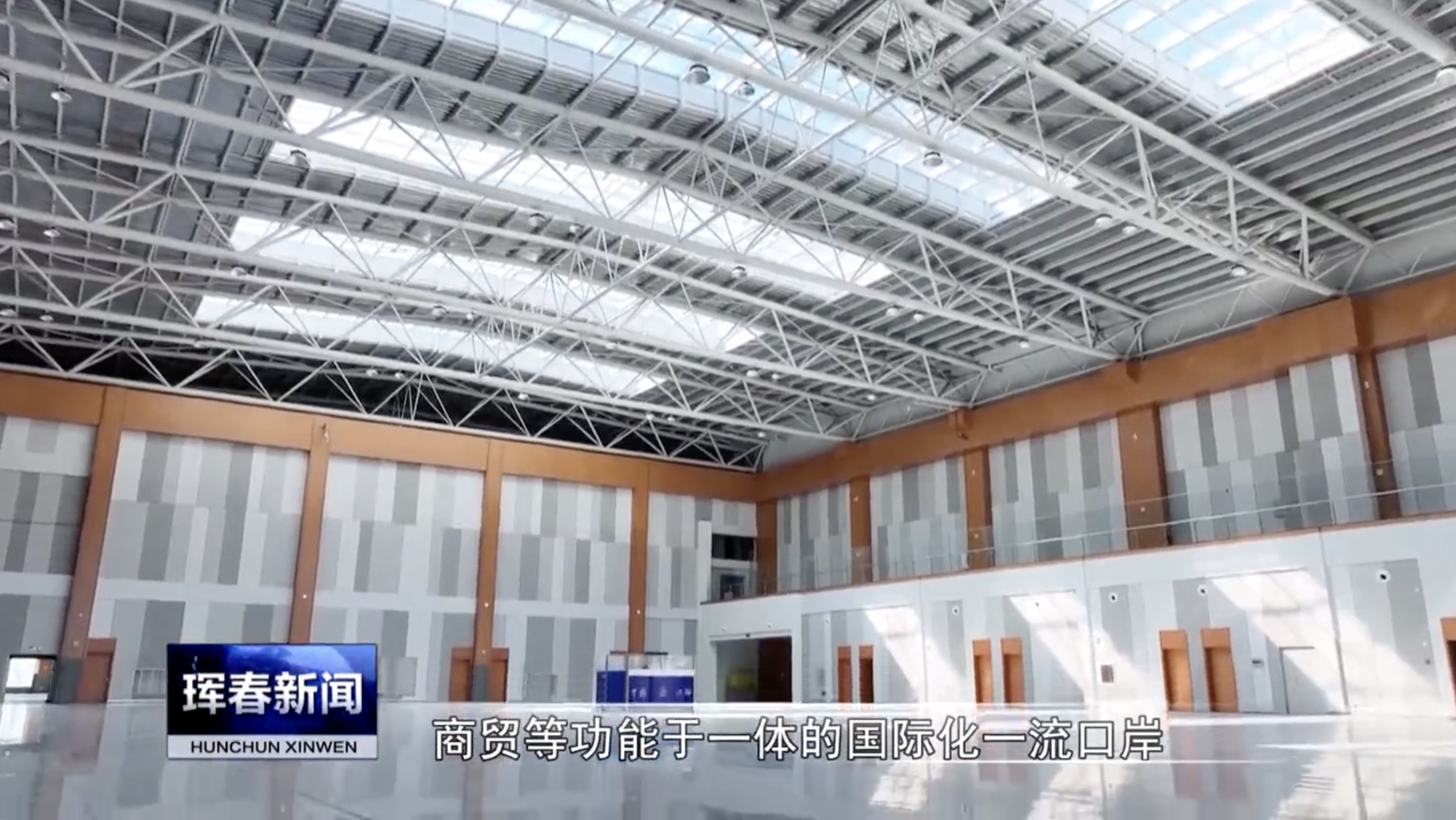 The interior of the large main building appears clean and finished but also completely empty in a video aired by local outlet Hunchun Xinwen, which a prominent Chinese businessman closely involved in DPRK trade posted to social media. The sprawling parking lot also looks disheveled in the video. Satellite imagery reveals that a planned exit road from the customs port to the border bridge has yet to be constructed as well, making it impossible to operate the new customs port under existing plans. The Yanbian Morning News reported on Sept. 1 that the large Joint Inspection Building will house shops and restaurants for truckers and travelers, similar to a train station or highway rest stop, and that there will be a 64,000-square-foot (6,000-square-meter) duty-free shopping area on the North Korean side of customs clearance. Jilin Daily reported the same day that local officials expect the building’s observation deck and shops to receive 1 million tourists per year — ambitious numbers for one of the more sparsely traveled regions for cross-border tourism. The report added it will become China’s “largest” border port with North Korea, and that a surge in trade facilitated by more efficient customs procedures there will inject 15 billion yuan ($2.1 billion USD) into the economy. 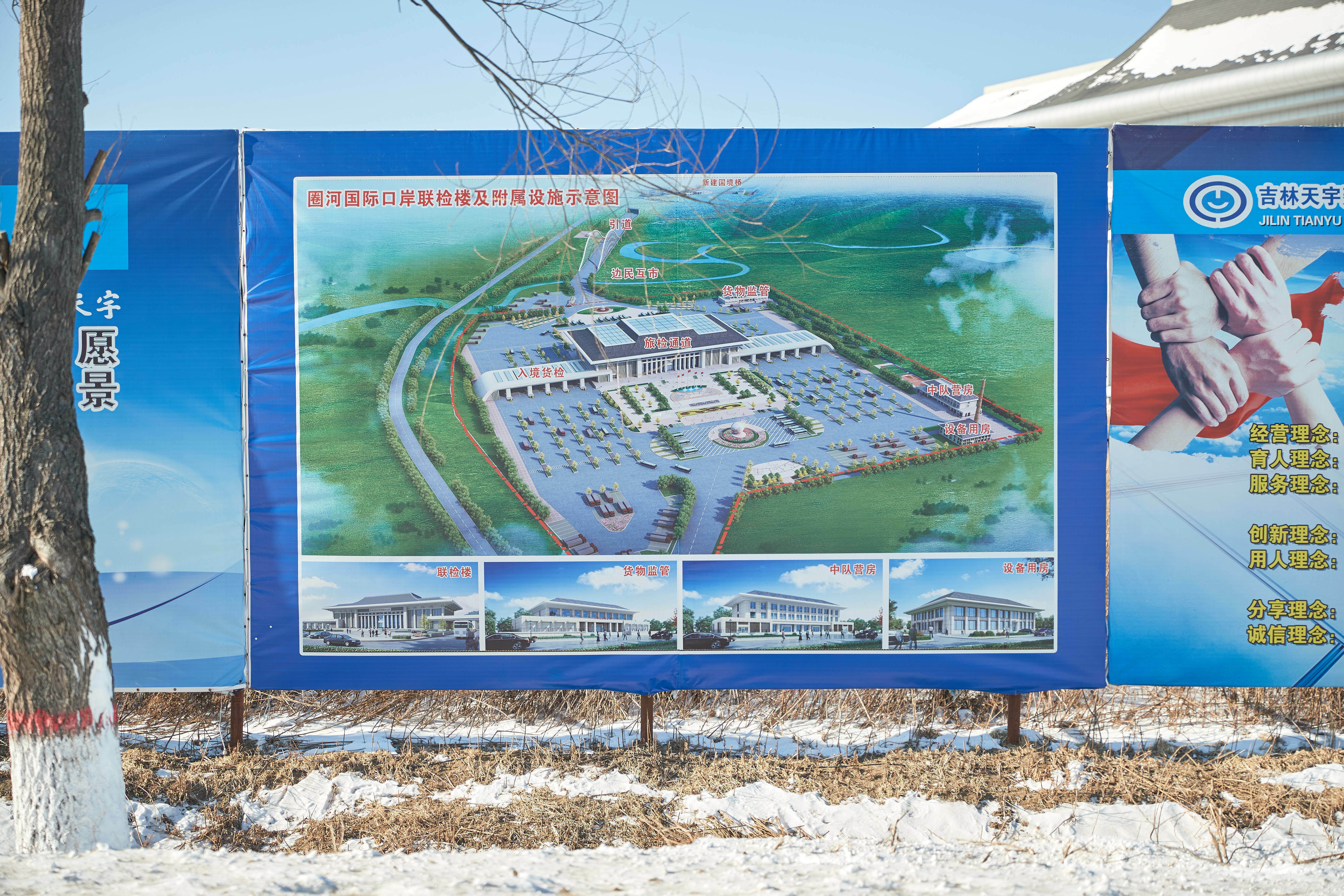 The closest Chinese city to the Quanhe Port is Hunchun, boasting a population of just under 250,000, while the large customs operation is meant to facilitate trade primarily with the Rason Economic and Trade Zone across the border. Sheng Xiaoru, a Hunchun official in charge of leading trade with North Korea’s Rason zone in seafood (currently illegal under U.N. sanctions) and other areas, reportedly attended a related ceremony elsewhere in the city on Sept. 1. North Korea offered standard sightseeing tours to the Rason zone prior to the pandemic, with tourists typically bussed around to factories and to restaurants to eat local seafood. The city also has a casino that catered mostly to Chinese and Russian tourists. For its part, North Korea has not shown signs of allowing traffic across the road bridge near the Quanhe Port. Pyongyang has only allowed regular traffic over a single land crossing with China since early 2020, when it closed its borders to prevent the spread of COVID-19, and that was only for a period of a few months earlier this year. 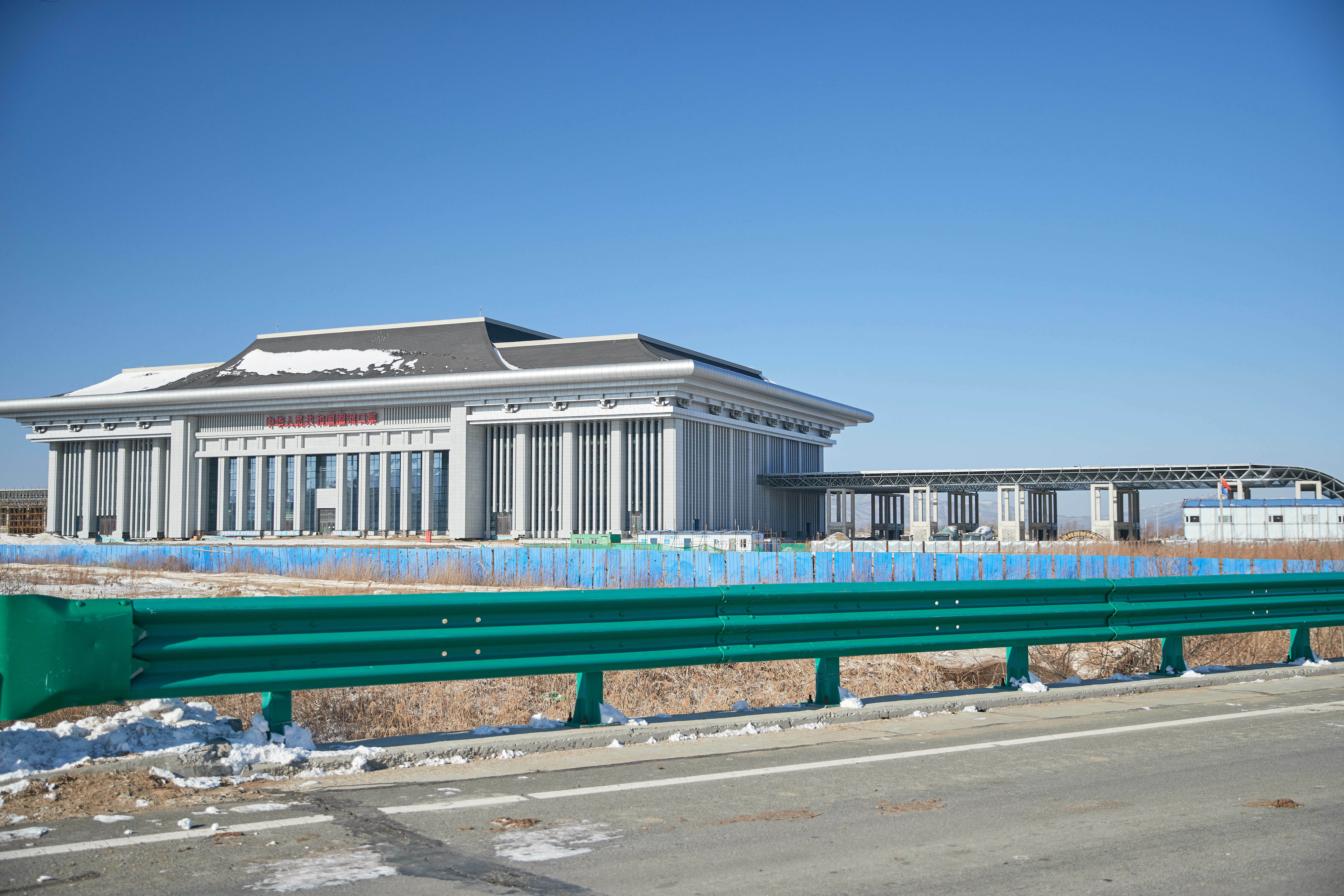 Importantly, the crossing was a rail bridge between Dandong and Sinuiju in the west — meaning a single operator could fully control large shipments on a single path between the border and an airport-sized disinfection and quarantine facility, which the DPRK took months to build. Allowing individual truck operators to cross a road bridge, on the other hand, would introduce a range of new variables and challenges to Pyongyang’s paranoid pandemic policies. North Korea does not appear to have built disinfection and quarantine facilities in Rason across from the Quanhe Port, according to NK Pro review of satellite imagery, meaning authorities are only likely to open to trade if Pyongyang drastically changes its virus-related policies. Meanwhile, local media has reported that the city of Hunchun also celebrated new cross-border trade projects with Russia on Sept. 1 that are actually being put into motion. Workers demonstrated a new scheme to transfer shipping containers trucked in from Dalian seaport onto trains headed for Moscow, and separately accepted natural gas train shipments from Russia to be distributed from Hunchun into China. Neither new scheme appears related to North Korea. However, North Korea and Russia have separately agreed to reopen their cross-border rail bridge this month just to the east of Quanhe Port, after Rason authorities appeared to build a secure disinfection and quarantine facility near the border. Edited by Bryan Betts © Korea Risk Group. All rights reserved. |

October 25, 2026Oct 25, 2026

The ultimate resources for professionals working on North Korea
 SHARE
SHARE COPY LINK
 X
X MASTODON