  Analysis China-North Korea trade picks up at two key border crossings: ImageryImports continue to go through quarantine procedures on DPRK side, as authorities maintain COVID controls 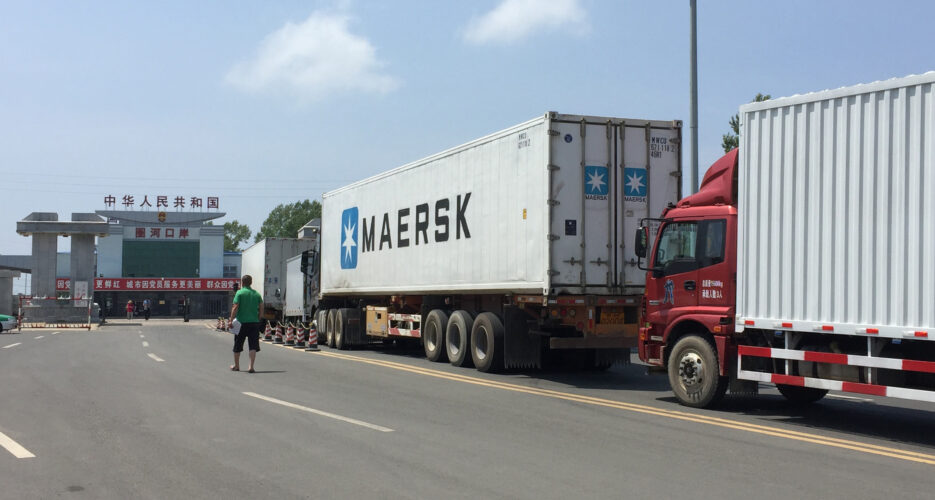 North Korea appears to have increased imports from China at two key border crossings in the last month, according to NK Pro analysis of satellite imagery, following construction of a likely new disinfection facility at one crossing and a pause in activity at the other. The developments come as Chinese trade data has shown a recovery in bilateral trade to the highest levels since the start of the pandemic. Pyongyang has yet to eliminate its virus-related travel and quarantine rules, but an expert previously told NK Pro that the trade uptick points to a partial relaxation of restrictions on imports. TOP BORDER CROSSING RECOVERS Planet Labs imagery shows that the runway of North Korea’s Uiju Airport began to fill up with stacks of goods likely imported by train from China in late April, after clearing out over the previous six weeks. North Korea converted the airport into a massive COVID-19 disinfection and quarantine center in late 2021. It started operating in Jan. 2022 but shut down due to virus outbreaks in both countries the following April, before resuming again in September. 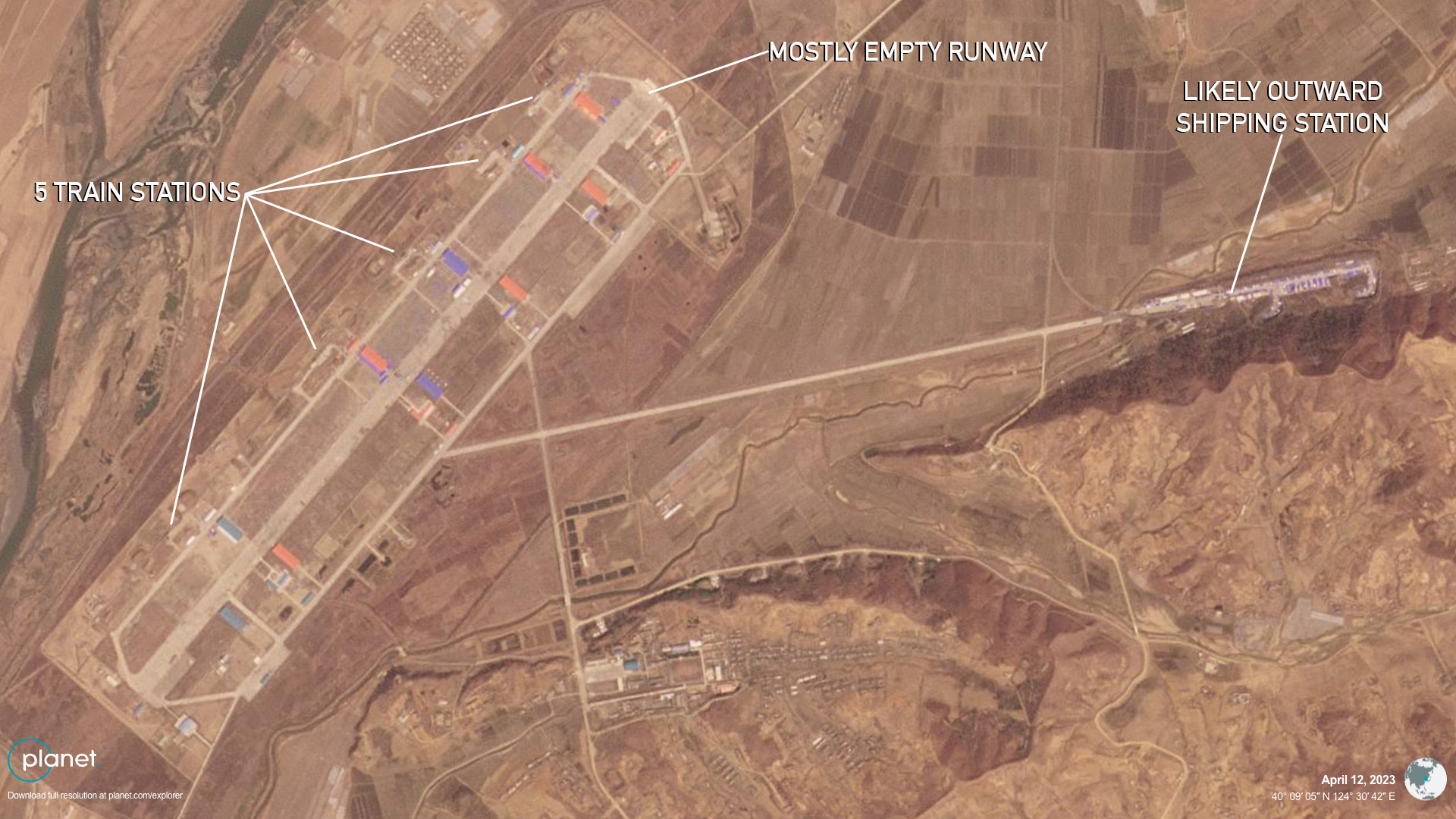 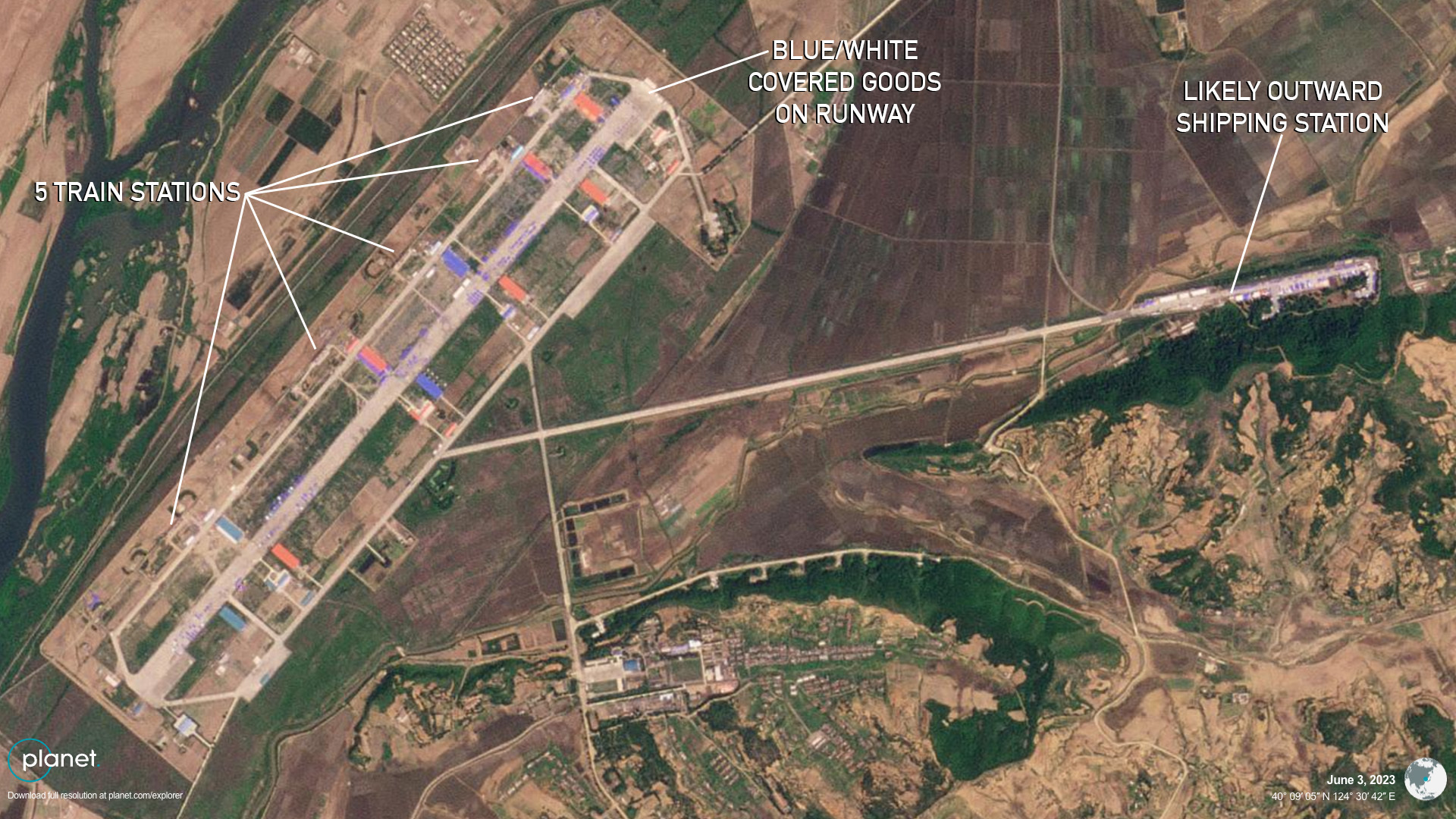 Slide to compare images of the Uiju Airport disinfection and quarantine center taken in mid-April, when the runway was mostly empty and just before it started to fill up with goods again, and in early June when it was back to being active. (Please refresh page if images do not load.) | Images: Planet Labs; edited by NK Pro Trains from China appeared at five offloading stations running parallel to the runway in most available Planet Labs images from September to the first week of March this year, but trains did not appear in images taken between March 7 and April 7. Goods began to accumulate again on the runway around mid-April, and some blue and white-covered stacks of goods have shifted position or been cleared for shipping out within one week of arrival, while others have remained stationary for longer. This tracks with patterns seen since late last year suggesting Pyongyang reduced the quarantine period for goods from a high of up to three months. The reason for the disappearance of trains from stations and goods from outdoor quarantine areas in March and April is unclear. Possible explanations include monetary and logistical trade issues as well as a local virus scare or outbreak on one or both sides of the border. North Korea did not appear to institute a nationwide blockade like it did previously during the pandemic period, as imagery shows ships continuing to enter trade ports at Nampho between March and June, as well as constant changes in the appearance of containers and other goods outside at the ports. There is still no evidence of trucks resuming operations over either the old or new cross-border road bridges on the western border despite rumors about a restart. NEW HOTSPOT EMERGES IN EAST Shipping containers likely brought over on trucks from China have begun to appear at a new probable disinfection and quarantine facility on the eastern end of the China-DPRK border, recent satellite imagery and Chinese social media posts show. Containers bearing the names of foreign logistics companies K Line and Maersk have appeared in photos posted by Weibo users stacked outside the facility, formerly called the Wonjong International Market (원정국제시장), since late April. This does not necessarily mean those companies are actively involved. 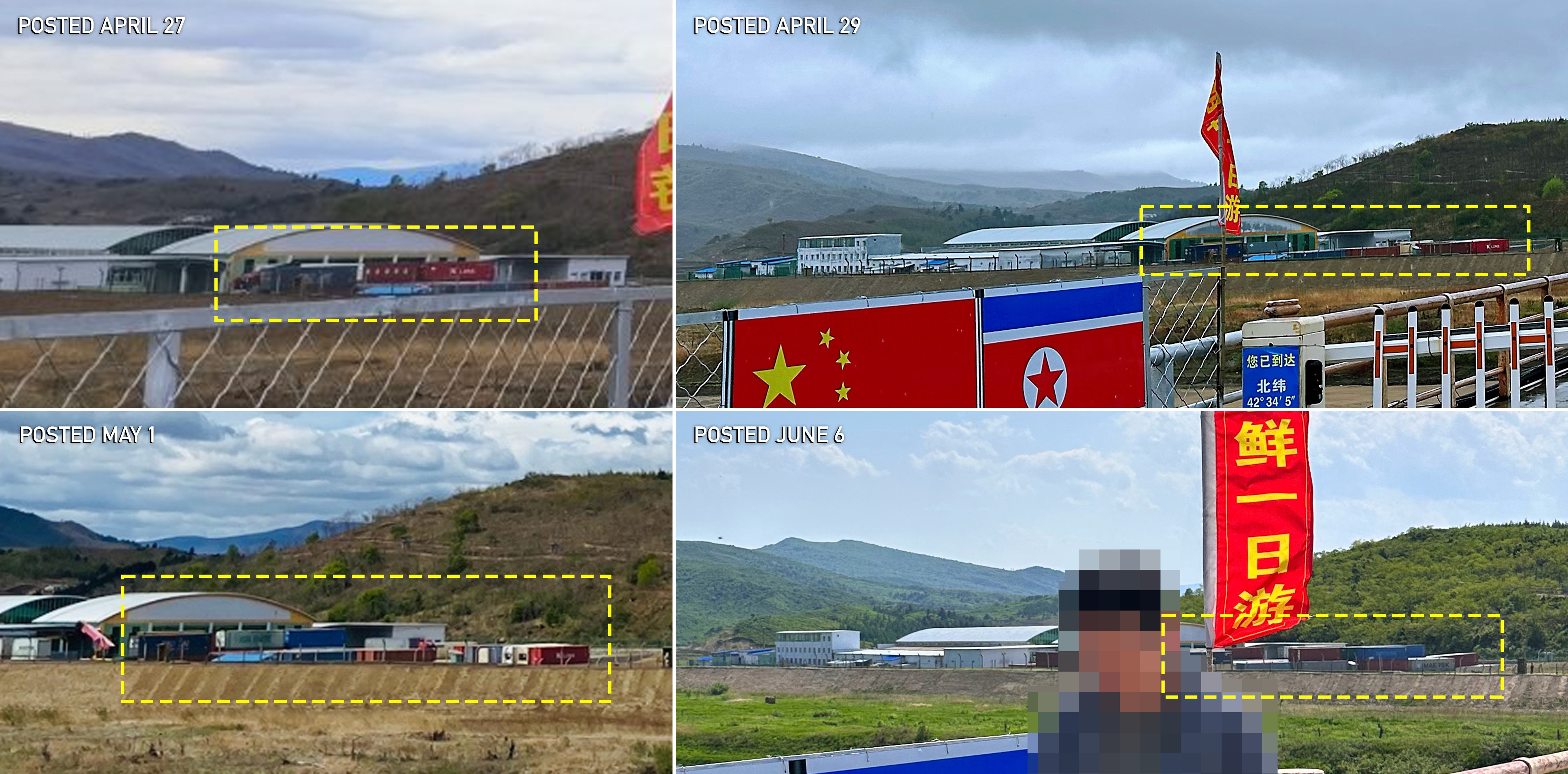 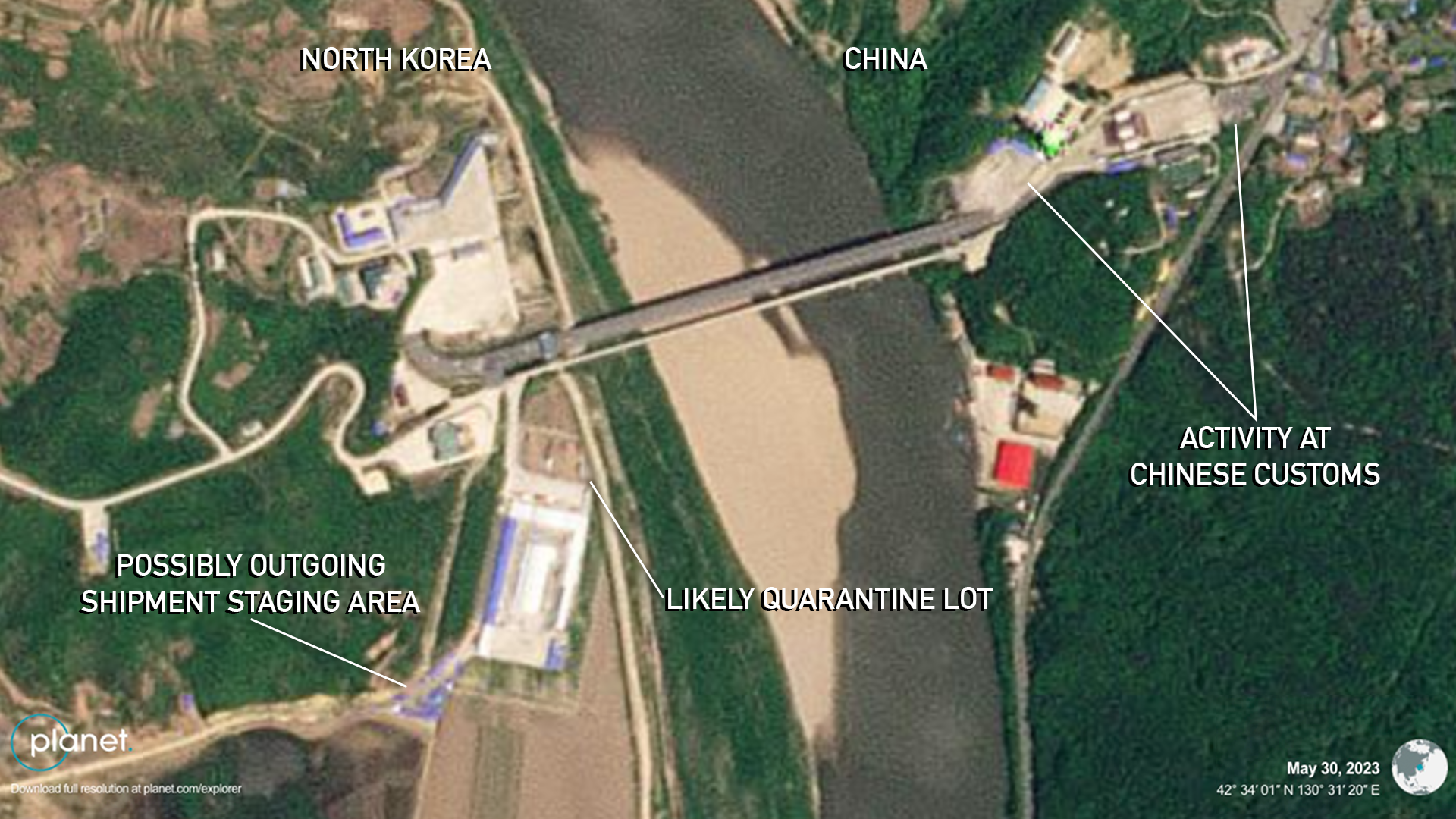 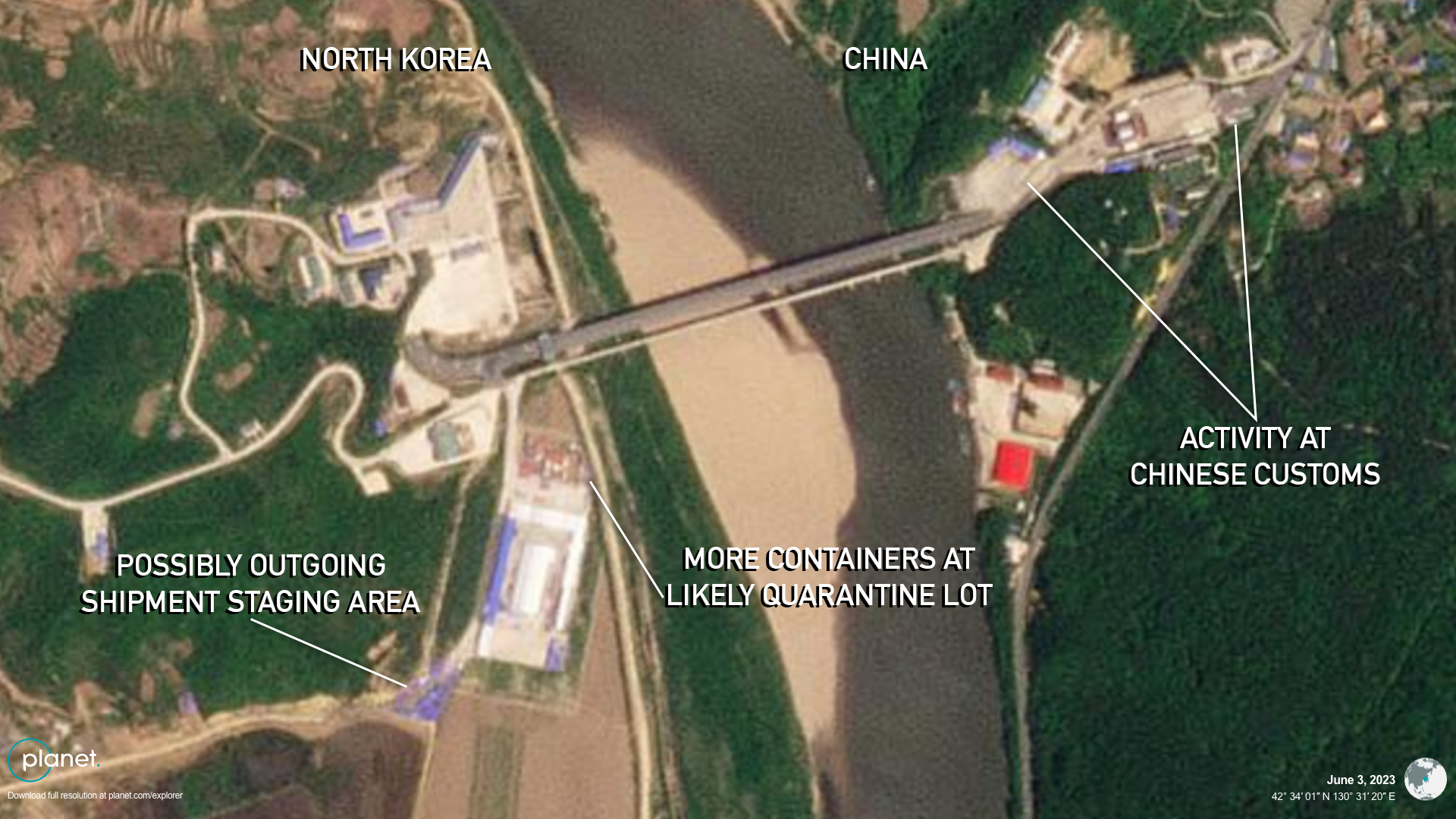 This comparison of images taken on May 30 and June 3 suggests a new shipment arrived at the Wonjong facility during that time | Images: Planet Labs; edited by NK Pro The facility is located at the foot of a road bridge across the Amnok River from China’s Quanhe Port, connecting North Korea’s Rason special economic zone with the Chinese city of Hunchun. Planet Labs imagery shows constant activity at the facility since early February, including the movement of large containers or other stacks of goods from the front parking lot to an open area in the back. A large shipment appears to have been made between June 1 and 3, as the largest number of containers appeared in front of the facility during this time. A Weibo user image posted on June 6 shows over a dozen containers double-stacked at the site. It is possible that items are being quarantined in the front parking lot for under a week before being set aside for outgoing shipments at the back of the facility — similar to the process at Uiju Airport. NK Pro previously reported that the facility appeared to have been converted into a virus-related processing center when it was fitted with a new security fence late last year. Imagery also shows vehicles using the Chinese customs gate on the other side of the bridge since February, though the image resolution is not sufficient to identify vehicle types. There is still no indication that China has completed construction of a giant new customs complex on its side. Meanwhile, China has made little progress on another new border customs facility it recently started building in a remote forest near Mount Paektu, Planet Labs imagery suggests. And despite North Korean workers finally installing roofing in late February on a possible trade-related building in Manpho — across from one of China’s largest existing border customs complexes — Weibo user photos show that the building remains largely unfinished. Satellite imagery also suggests the crossing remains inactive. 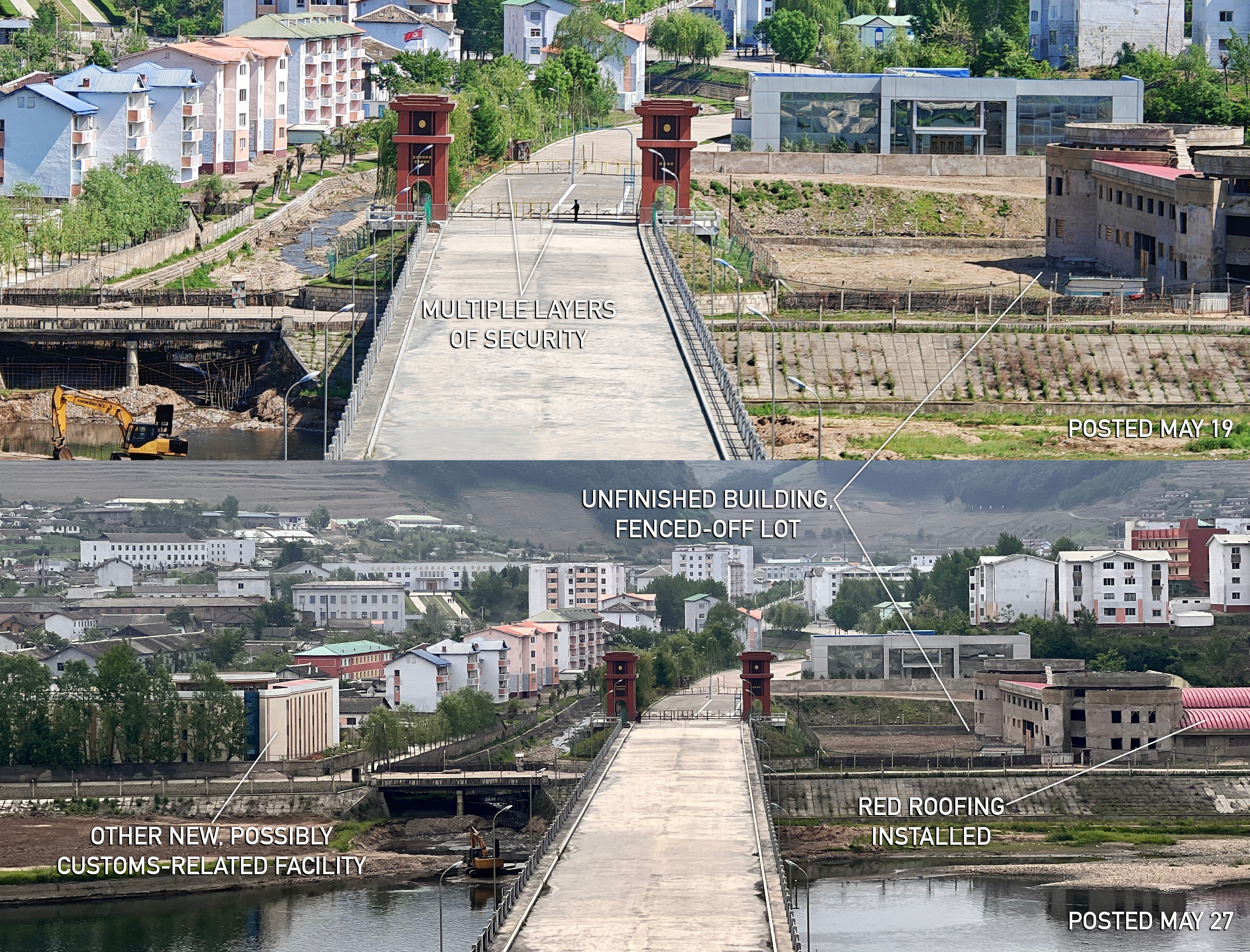 Edited by Bryan Betts © Korea Risk Group. All rights reserved. |

October 24, 2026Oct 24, 2026

The ultimate resources for professionals working on North Korea
 SHARE
SHARE COPY LINK
 X
X MASTODON