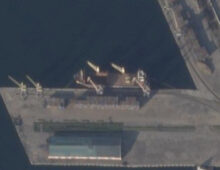
  News Cargo ship docks at Russian coal terminal in North Korea for first time in yearsVessel’s visit to Rason port appears to mark first known coal transshipment under joint project since before pandemic 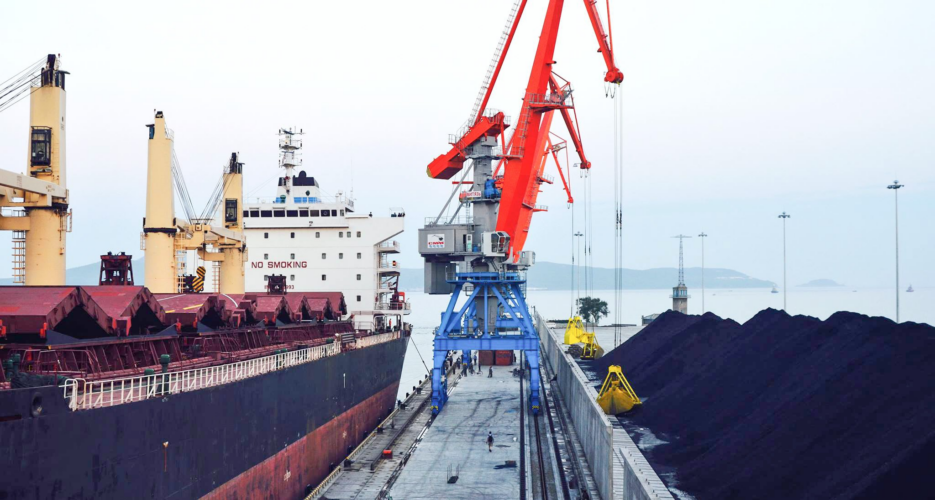 A cargo ship has docked at a Russia-operated coal terminal in the North Korean port of Rason for the first known time since before the pandemic, NK Pro analysis of satellite imagery shows, appearing to mark the resumption of coal transshipment through the port. Planet Labs and Sentinel-2 imagery shows a cargo vessel berthed at Rason’s southern pier (Pier 3) — run by the Russian state-owned RasonConTrans — on June 2. The ship (roughly 623 feet long and 105 feet wide) has five clearly visible holds and sailed to the port without transmitting its geolocation signal, according to the vessel tracking website MarineTraffic. Notably, the vessel’s appearance at Rason comes nearly two months after NK Pro found that coal started piling up on the RasonConTrans-controlled pier in mid-April, pointing to the revival of the coal shipping project following its formal suspension at the start of the pandemic. 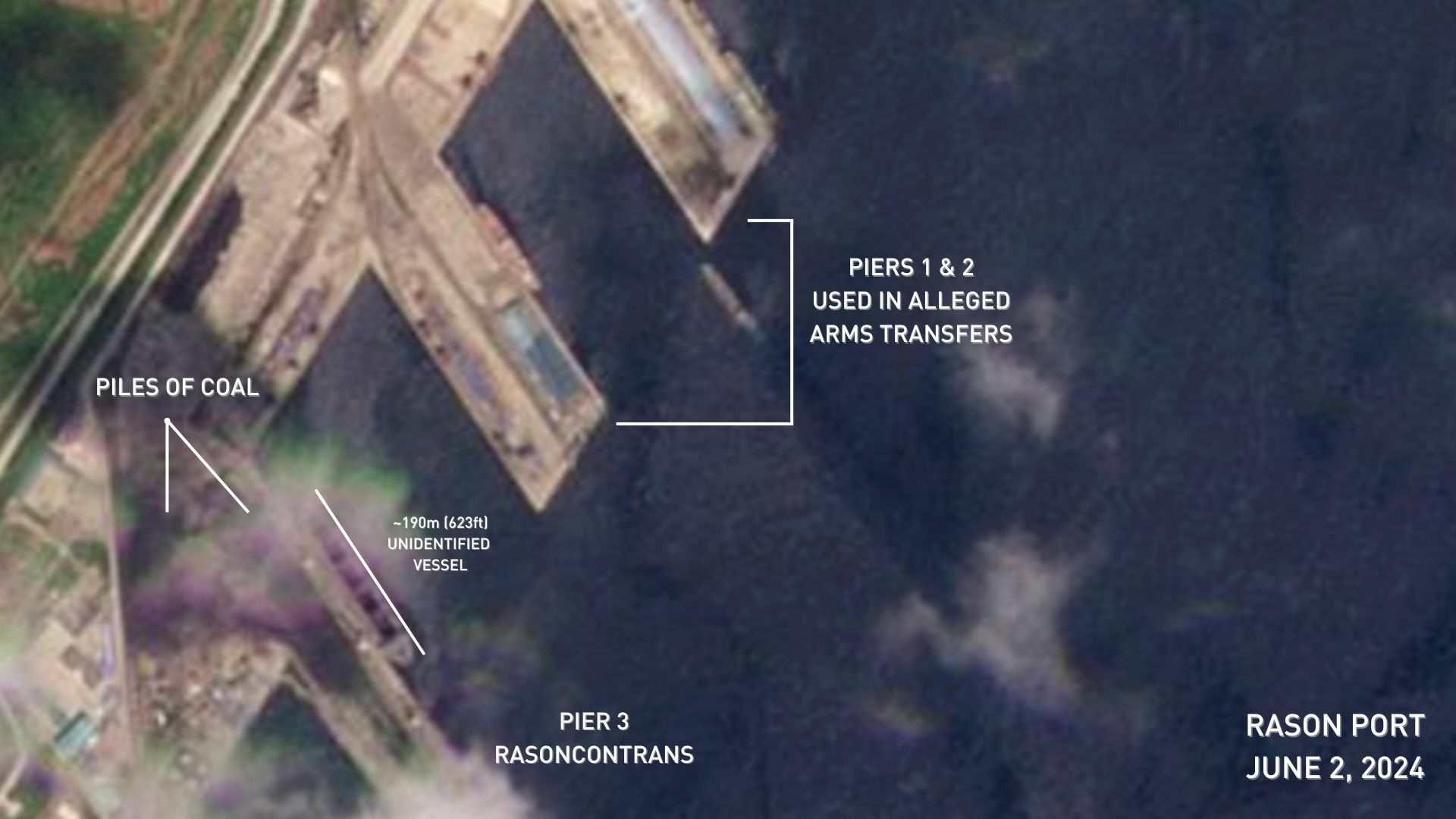
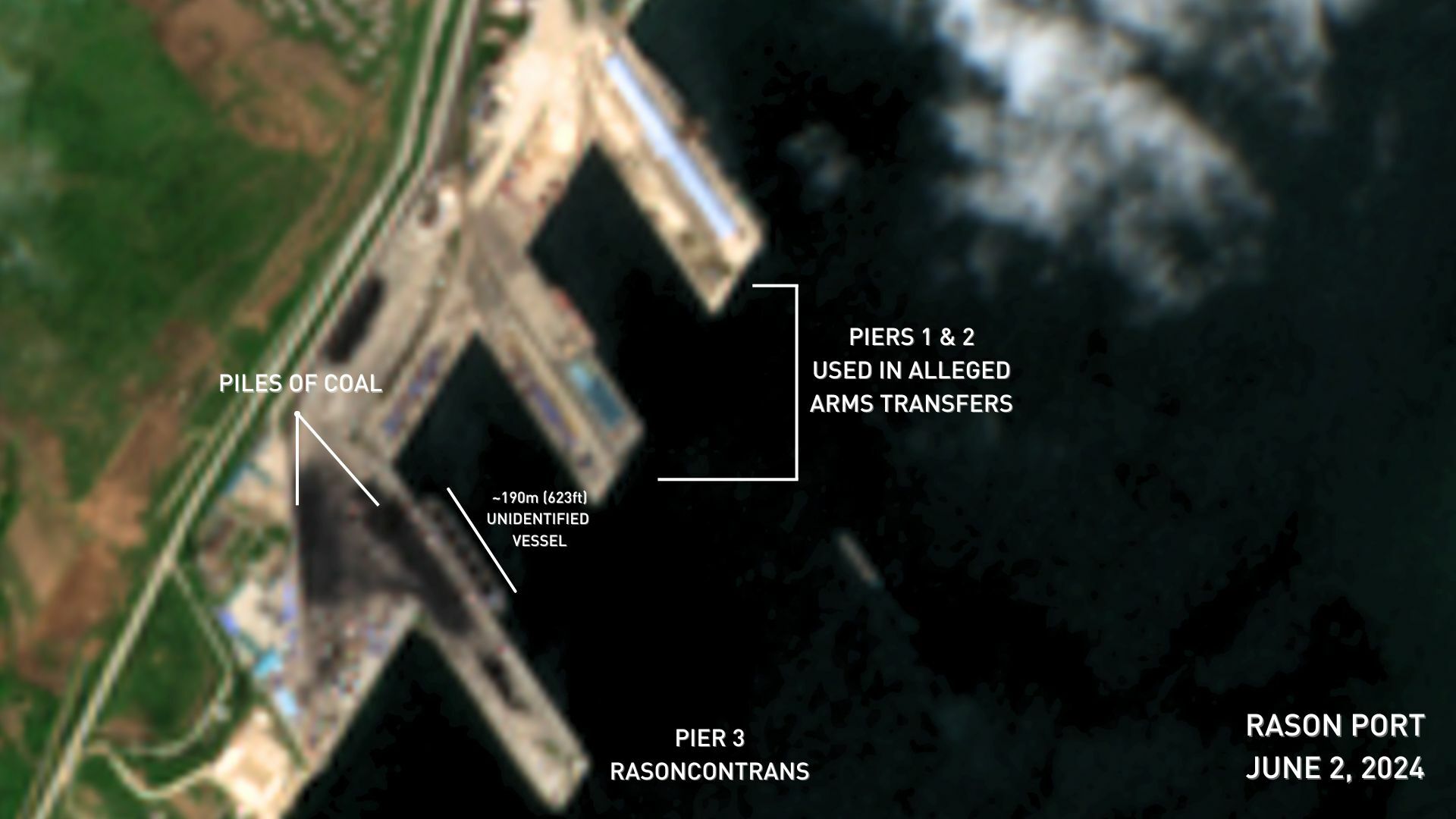
Cargo vessels were last spotted docked at the terminal in Oct. 2017, according to NK Pro analysis of Planet Labs satellite imagery, with no known port calls until this week. RasonConTrans was founded in 2008 as part of the joint Khasan-Rajin logistical project connecting the Russian Far East and the DPRK’s northeast by a railway bridge. The company has been operating Pier 3 for nearly a decade since it rebuilt the rail infrastructure and modernized the terminal in 2013-2014. The company is exempt from U.N. Security Council (UNSC) Resolution 2371, which bans North Korea from exporting its coal overseas, with UNSC Resolution 2375 allowing it to use the terminal only to export coal that originated in Russia. Katsu Furukawa, a former member of the U.N. Panel of Experts, told NK Pro that the observed vessel “appears to be loading coal at the Russia-controlled pier,” adding that the suspected transshipment could “constitute a violation of U.N. sanctions” if the transported coal did not originate in Russia. Neil Watts, another former U.N. expert, agreed that Russia may have violated sanctions if it allowed its coal to be mixed with DPRK-produced anthracites for the purpose of concealing its true origin. North Korea has proved versatile at “laundering” coal by shuttling it to Russian Far Eastern ports before transhipping it elsewhere to avoid triggering alarms among sanctions monitors. Furukawa stressed that Russia is required to notify the UNSC’s 1718 committee overseeing DPRK sanctions of plans to use Pier 3 for coal transshipment under Resolution 2371, stating that failing to do so would constitute a “clear violation” of the resolution. The expert noted that the bulker spotted at Pier 3 on Sunday was not transmitting over its automatic identification system, which likely indicates that it was switched off to “conceal illegal activities at that pier.” Russia bears the responsibility to clarify the circumstances of its voyage, he said, adding that Moscow may invoke the sanctions exemption clause to claim that the shipment was legal. RasonConTrans did not respond to an NK News request for comment. 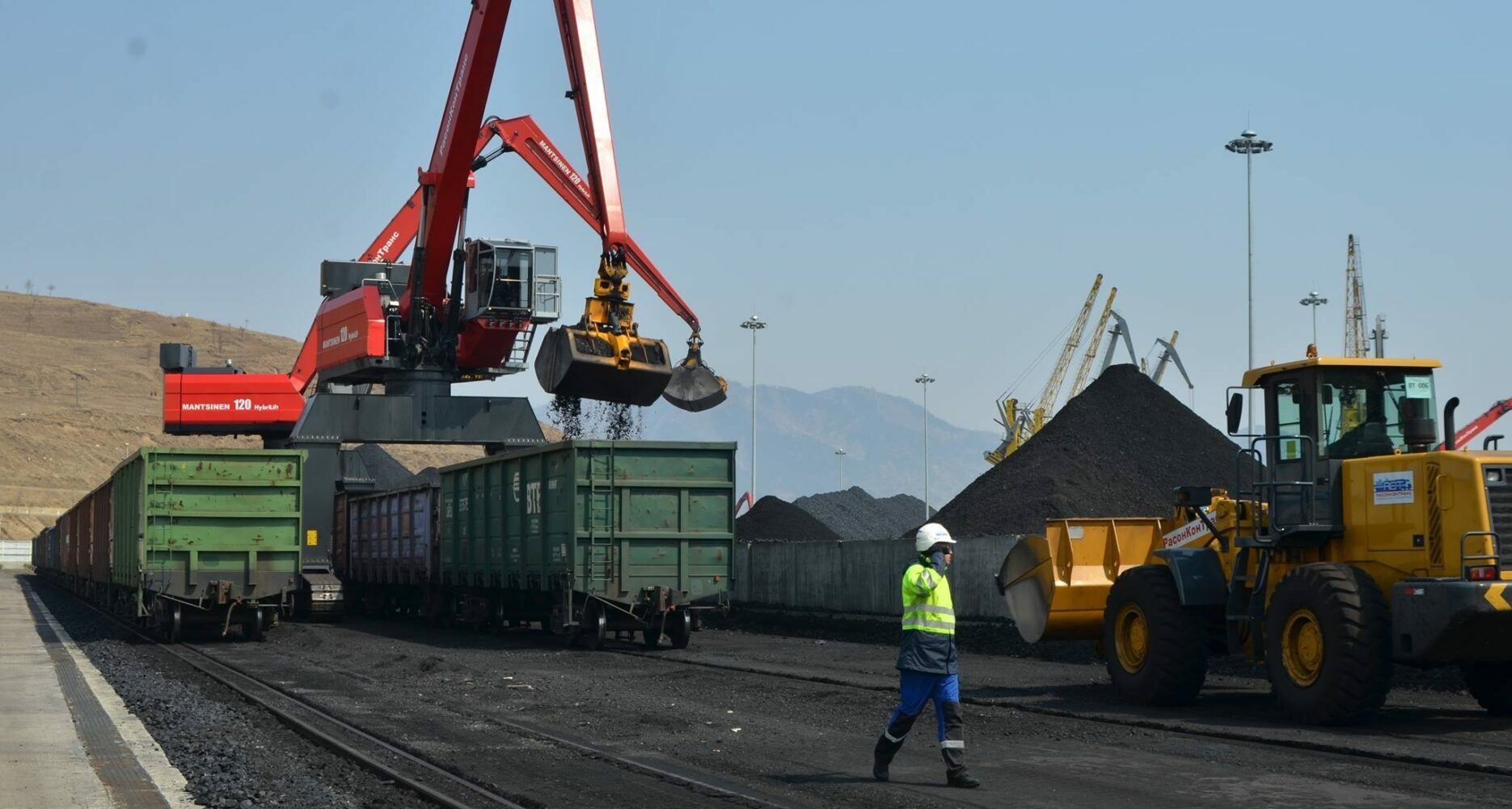 While the identity of the bulk carrier is unclear, Chinese vessels frequently picked up coal at Pier 3 when the transshipment operation was in full swing. Chinese freighters such as Yin Hao, Yin Fu, Xin Hong Bao Shi and Yin Nian — all with dimensions comparable to the recently observed vessel — frequented Pier 3 at Rason and shuttled coal to South Korea in 2014 and 2015. U.N. sanctions do not restrict the final destination of Russian coal processed through Rason, Furukawa said, adding that it could end up in any country. Rason represents a convenient transportation hub, allowing ships year-round access since it doesn’t freeze over in winter, Furukawa explained. Other experts have pointed out that Rason used to offer lower shipping rates, making it financially more attractive than other Russian Far East ports. Transshipment at Rason started in 2014, and the project retained its special status despite the introduction of new U.N. sanctions on North Korea’s nuclear program in 2016 to 2017, thanks to carveouts in UNSC Resolutions 2270, 2375 and 2397. The joint Russia-DPRK project faced financial headwinds in late 2017, and all coal transshipments came to a halt in 2020 due to North Korea’s pandemic-induced border closures, RasonConTrans told NK News at the time. The following year, the company said it hoped to get permission from the U.N. to process coal from China, Mongolia, Kazakhstan and other countries at Rason, but there have been no reports of progress on this front, and the project remained in limbo until this year. Rason has also played a major role in suspected arms trade between North Korea and Russia, facilitating alleged shipments of weapons to Russian ports for eventual use against Ukraine. Edited by Bryan Betts © Korea Risk Group. All rights reserved. |

October 09, 2026Oct 09, 2026

The ultimate resources for professionals working on North Korea
 SHARE
SHARE COPY LINK
 X
X MASTODON