  Investigations North Korea faked Nov. 4 cluster warhead test, used doctored photos from 2022NK Pro finds photos of explosions on air base runway unrelated to recent testing, casting doubt on DPRK's weapon claims 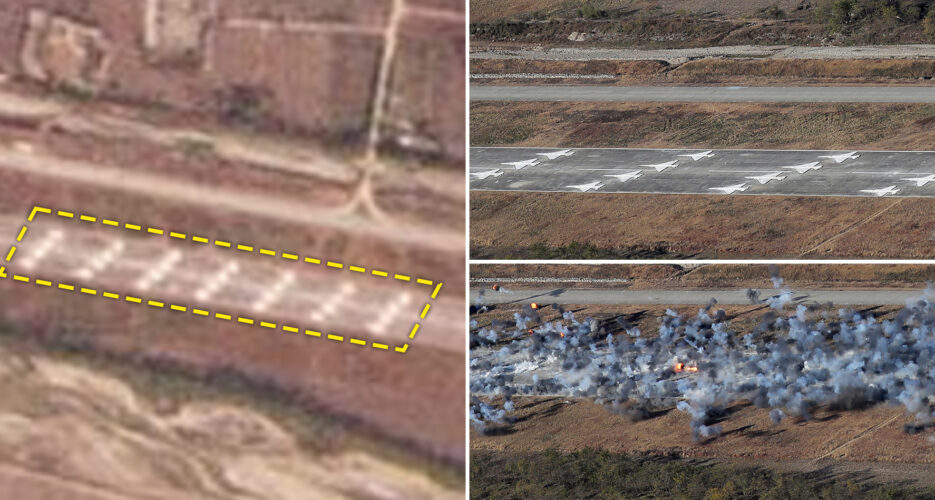 North Korea faked its report earlier this month on a cluster warhead test targeting an airport runway, according to NK Pro analysis of state media photos and satellite imagery. State media claimed that Kim Jong Sik, first vice director of the Party Munitions Industry Department, oversaw a “fire strike drill demonstration” of a “long-range strategic cruise missile” in the eastern part of the country on Nov. 4. However, NK Pro has found that the photos Korean Central News Agency (KCNA) published in its report on the test were not taken recently, instead likely dating back to Nov. 2022. North Korea also doctored a photo that appeared intended to demonstrate new cluster warhead capabilities to enemies or prospective clients for arms sales. Together, the deception and manipulation casts doubt on Pyongyang’s technical claims that its “middle-sized dispersal warhead” can turn “into ashes a target area of 5 to 6 hectares with its highest-density power.” KCNA published four photos of the test in its Nov. 5 report. They showed a Hwasal-series cruise missile shortly after launch, the missile flying low over a road, and an air base runway with 28 flat fighter jet-shaped targets laid out in seven diagonal rows. The targets appeared to be covered in dozens of explosions and smoke plumes in the fourth photo, but NK Pro found that the part of the photo showing the central area of the runway and the explosions was artificially blended on top of the previous photo. 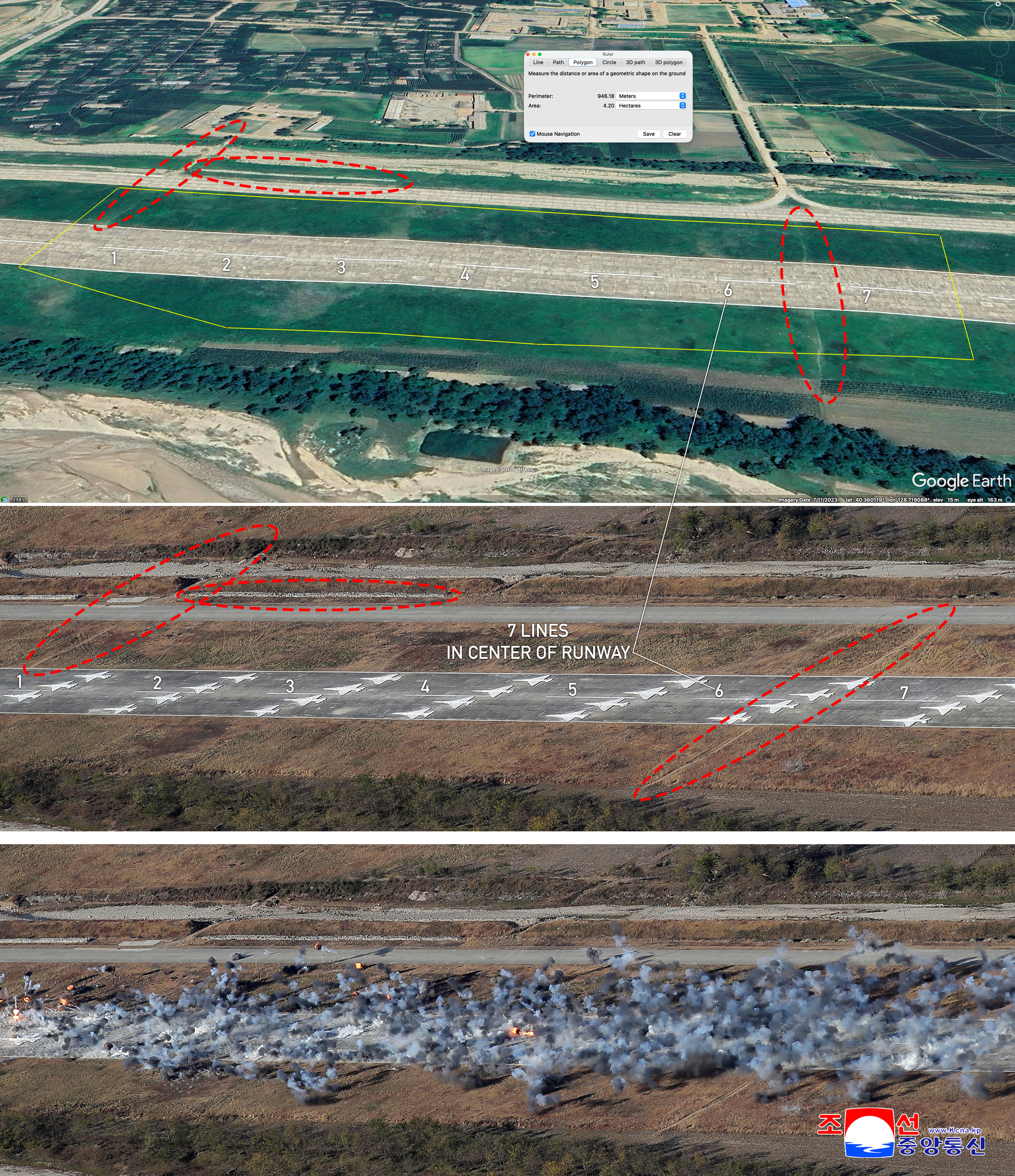 NK Pro identified the runway in the photos as Riwon Air base on the east coast, north of Sinpho, based on matching the runway paint and environmental features around it using high-resolution satellite imagery provided by Google Earth. Planet Labs medium-resolution satellite imagery shows no signs of the 28 targets on the runway in images taken on the morning of Nov. 4, the claimed date of the test, nor the next day or any other day since 2022. The size and direction of shadows in the photo suggests it was taken between 3 and 5 p.m. KST. Crucially, NK Pro found 28 targets were placed on the runway between Nov. 6 and 8, 2022 in the same locations as the KCNA photo. They were removed days later between Nov. 9 and 12. 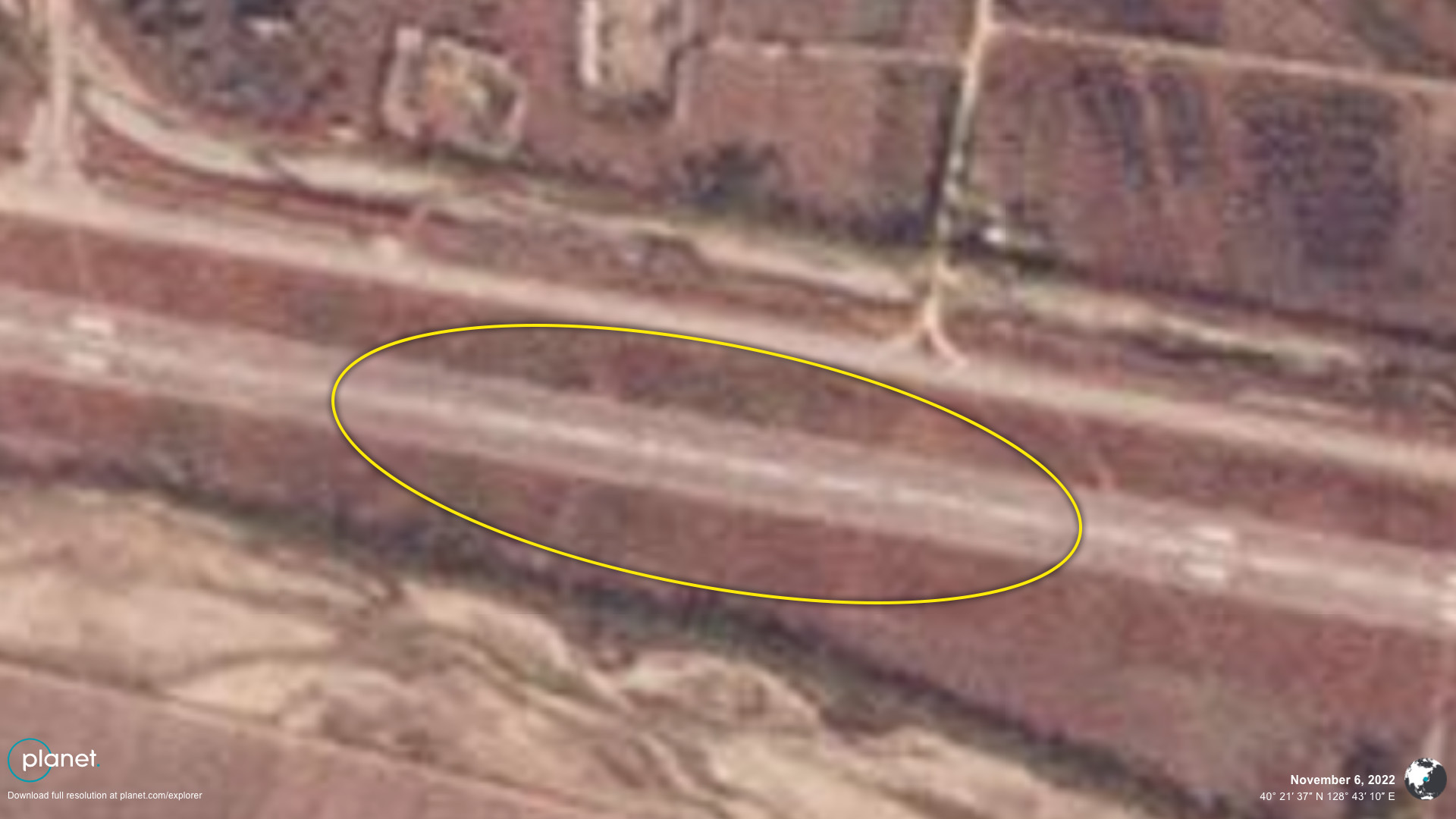
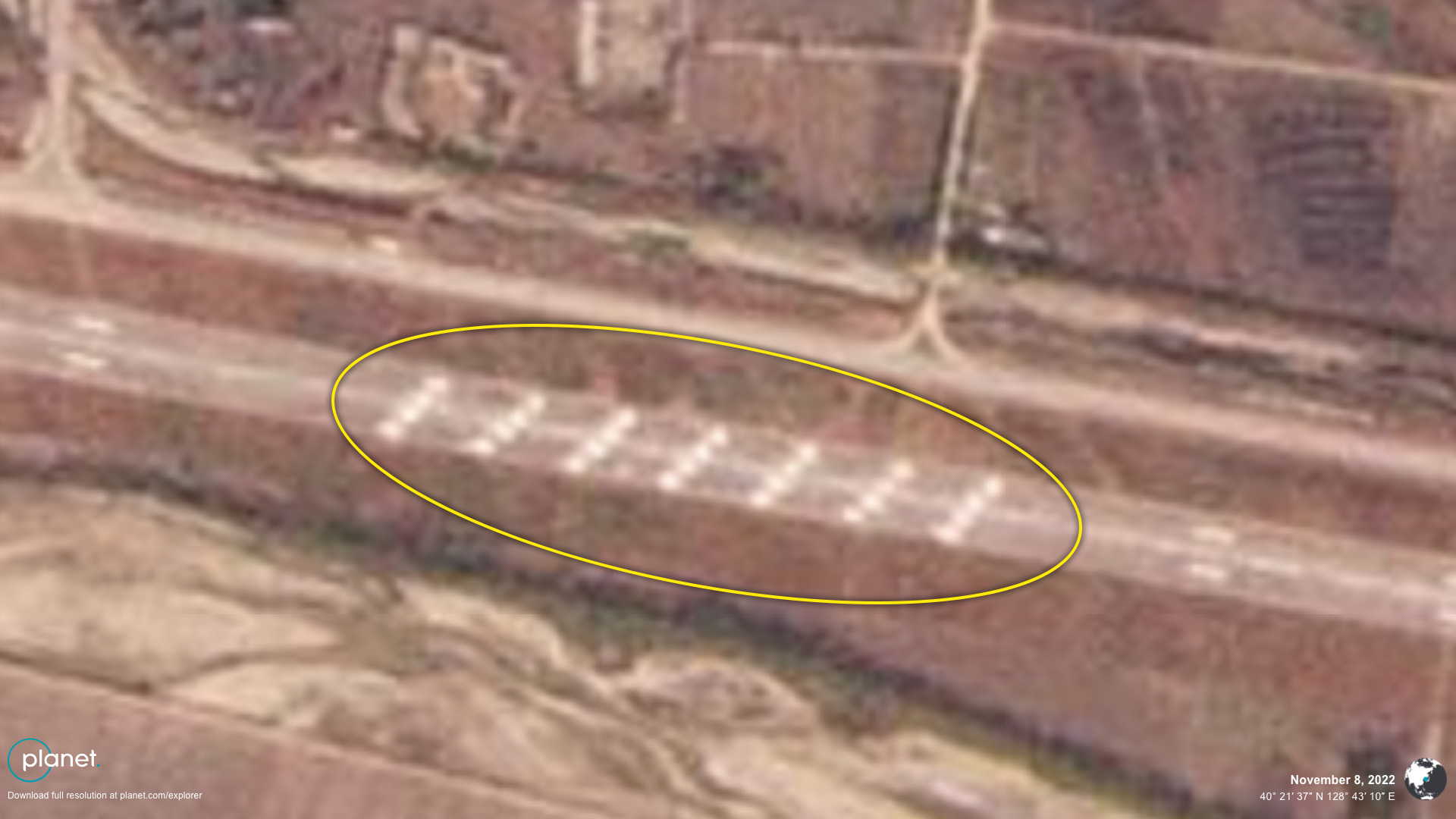
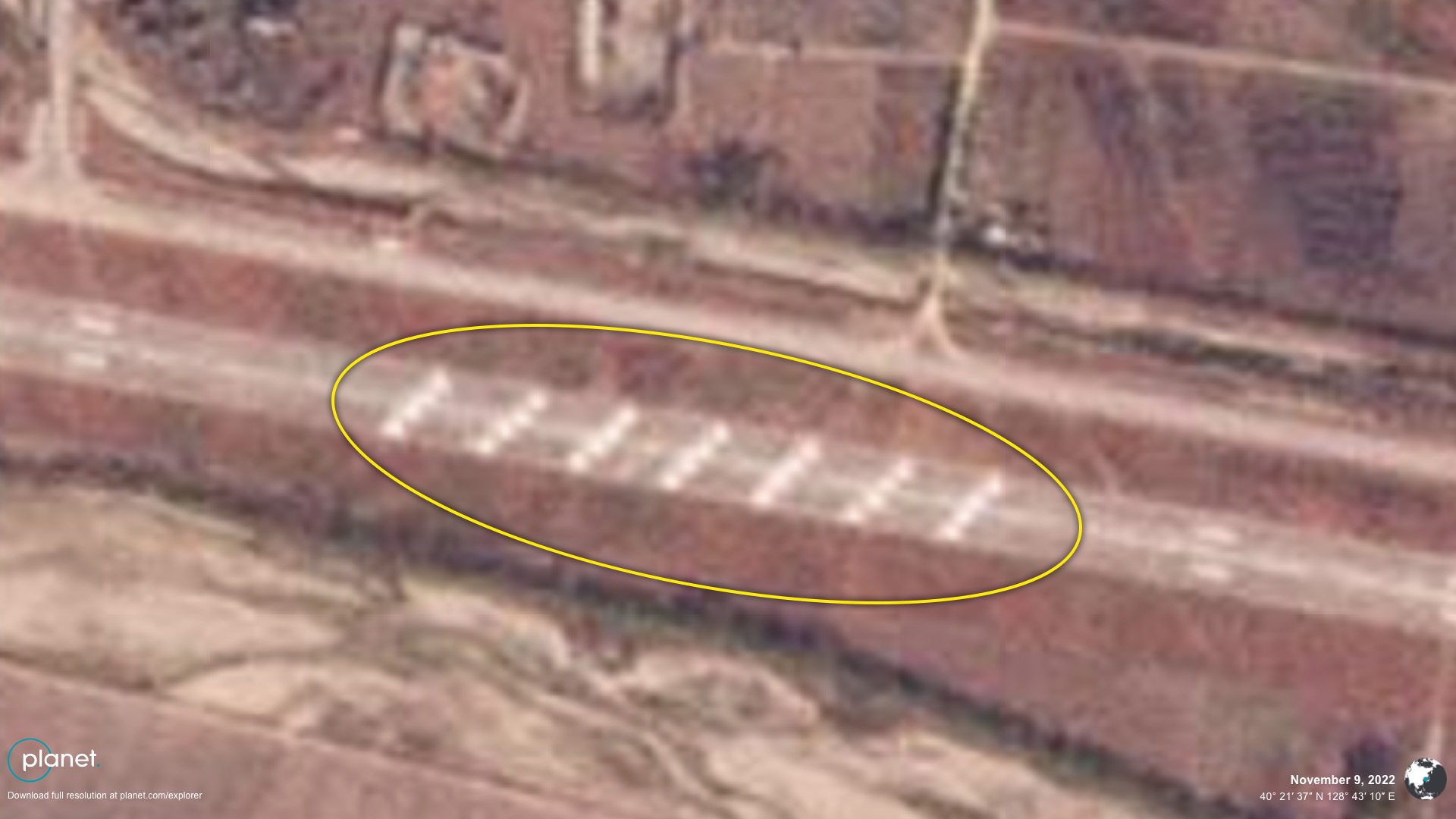
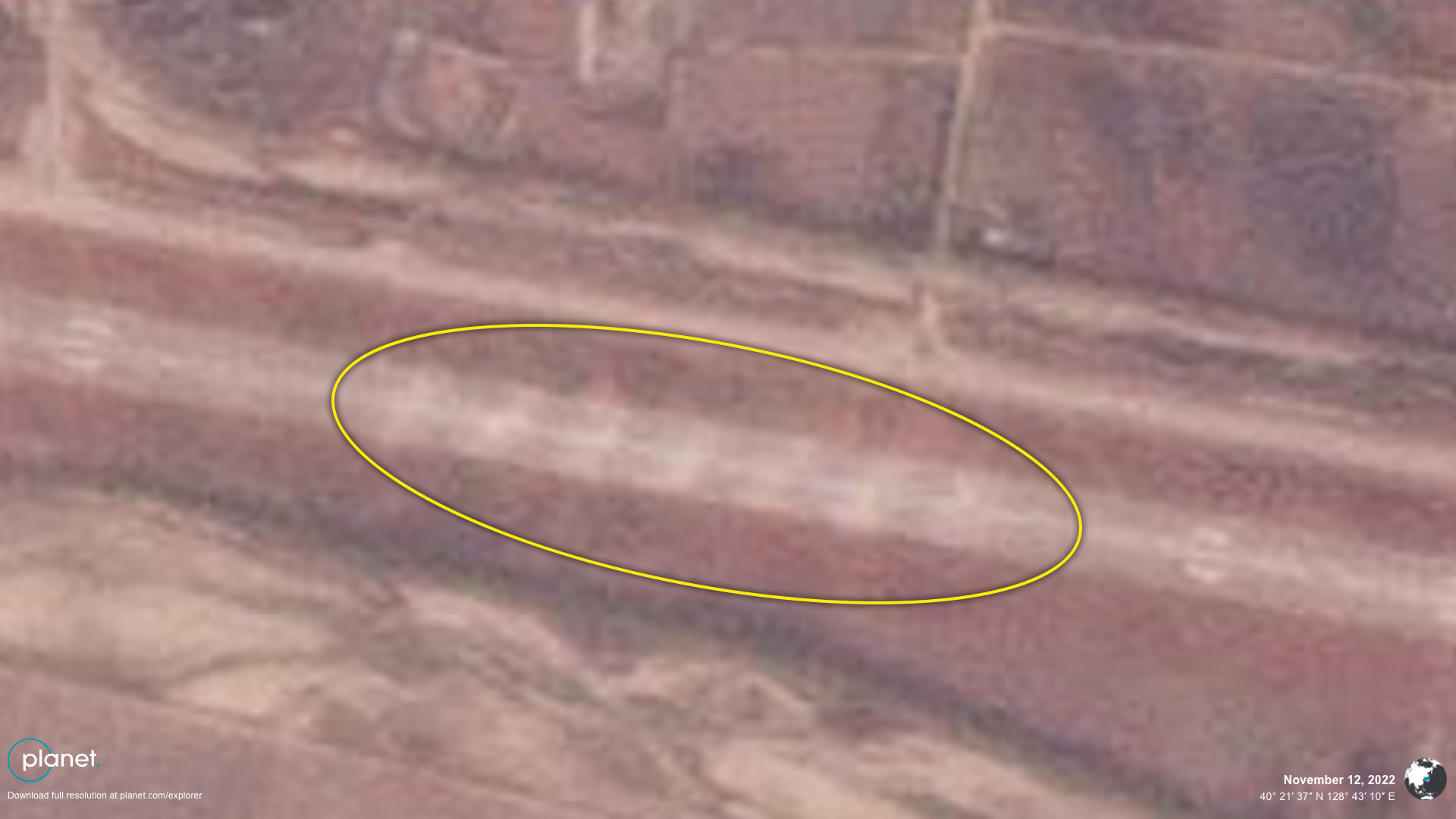
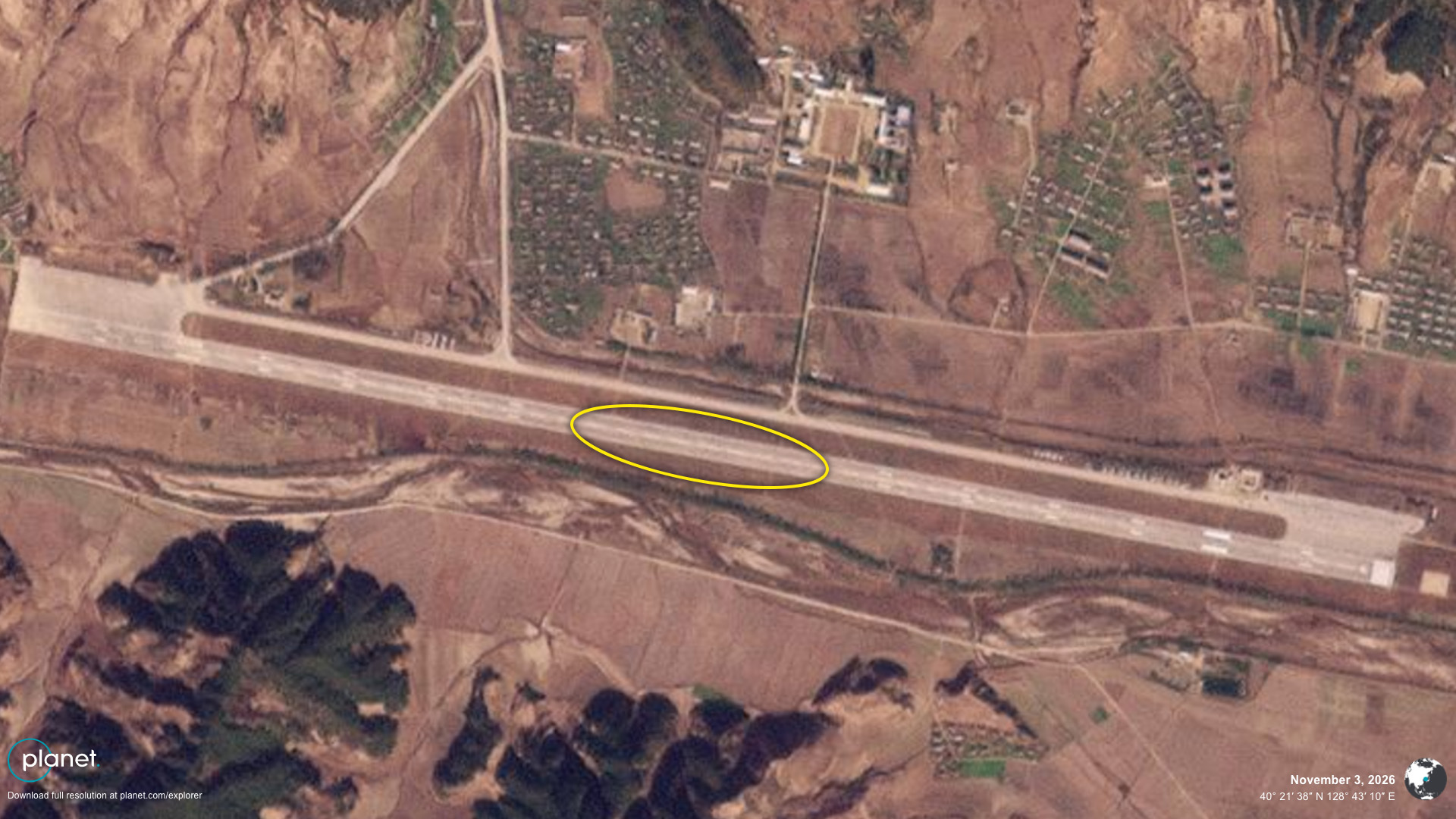
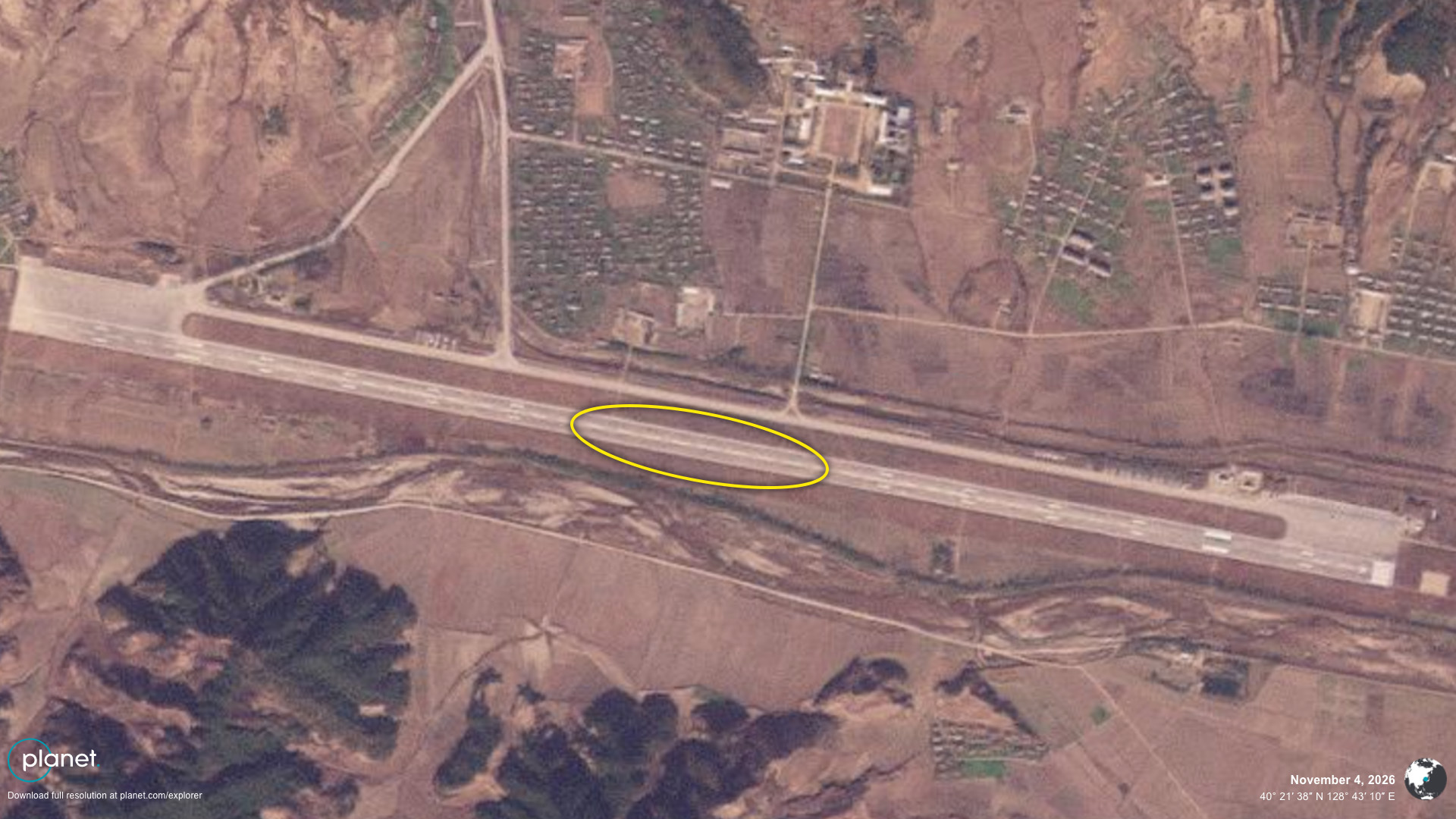
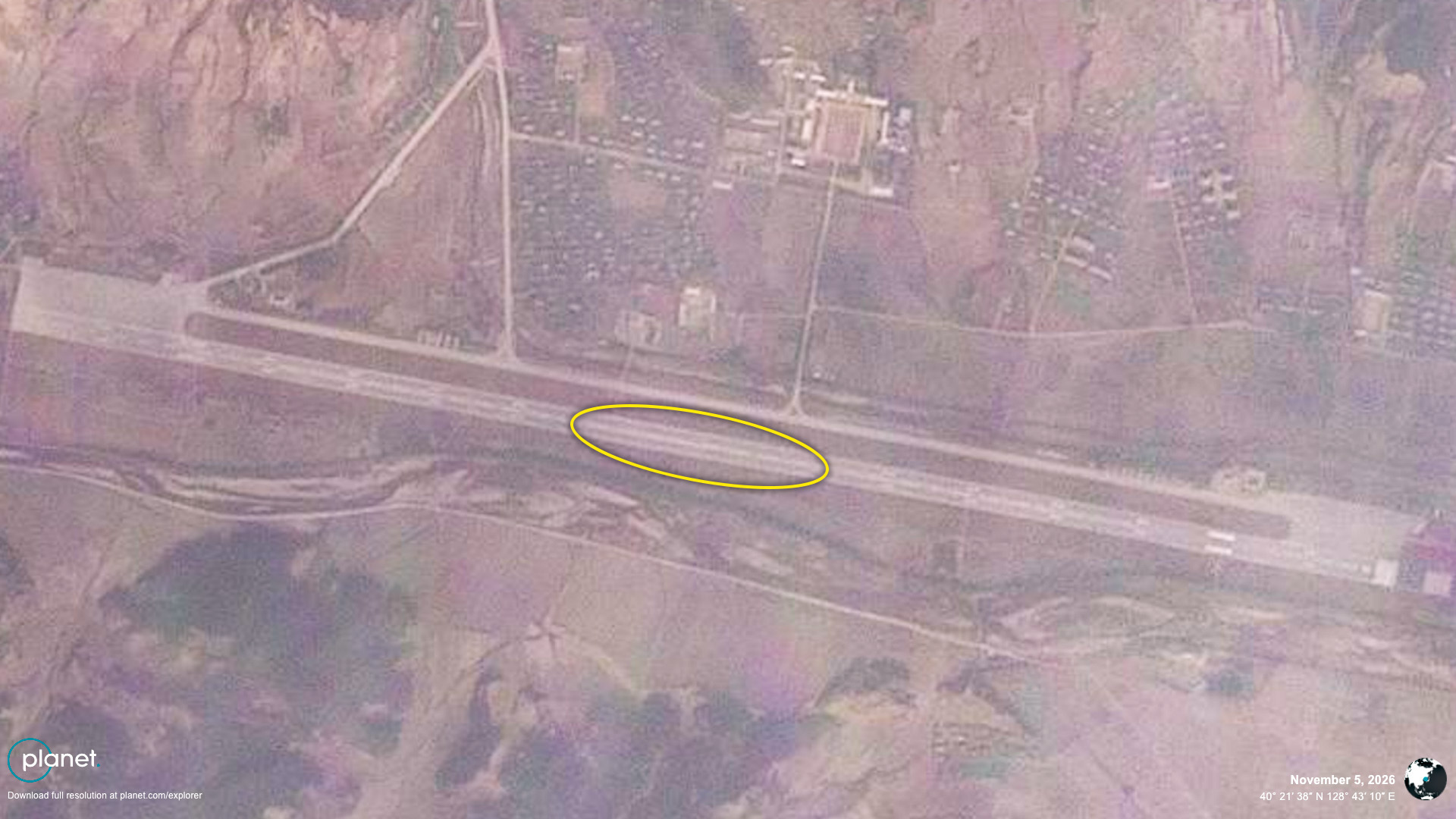
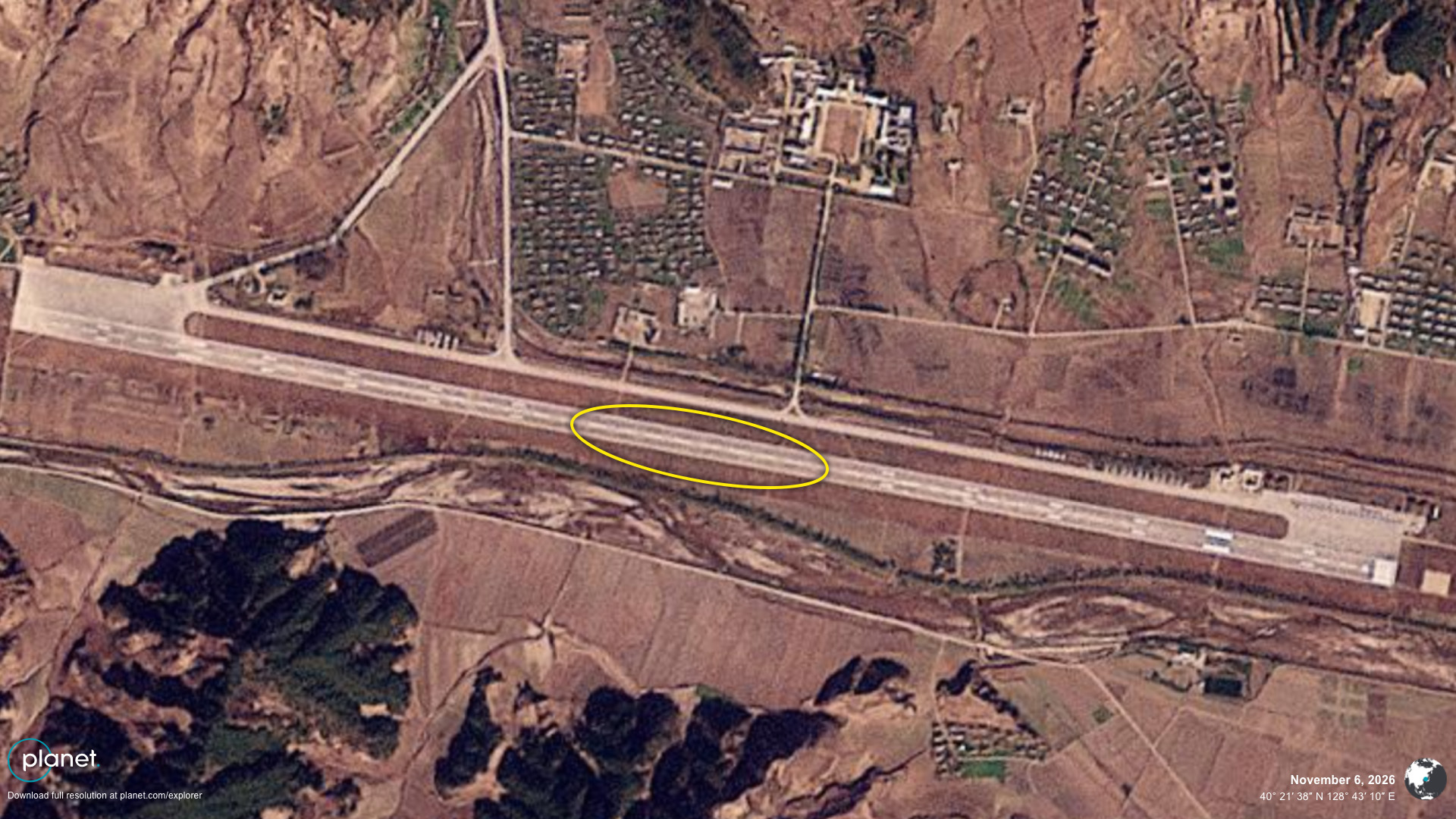
There are no obvious signs of large impacts or explosions, but there is also no commercially available high-resolution imagery for that November, making it difficult to determine if a kinetic test on the jet targets actually took place. If one did, it likely did not involve North Korea’s “new” cluster warhead fired from a cruise missile. The arrangement of targets was likely meant as a threat toward South Korea, which had just conducted an “elephant walk” of 28 F-35A fighter jets in a similar pattern on the Cheongju Air Base runway earlier in 2022. State media didn’t mention cluster warheads in its report on the Nov. 4, 2026 test, but the appearance of spread-out and simultaneous strikes on the runway in the photo strongly suggests Pyongyang intended observers to assume it was the second test of this kind of warhead, after reporting on the first test just days earlier. The report on the first test on Nov. 2 featured an image of simultaneous strikes across the surface of the ocean, making it difficult to estimate how large the area was. It appears that North Korea chose to use the photos it published because they were taken at the same time of year as their claimed test date, so the general appearance of grass and foliage appear correct to the undiscerning eye. 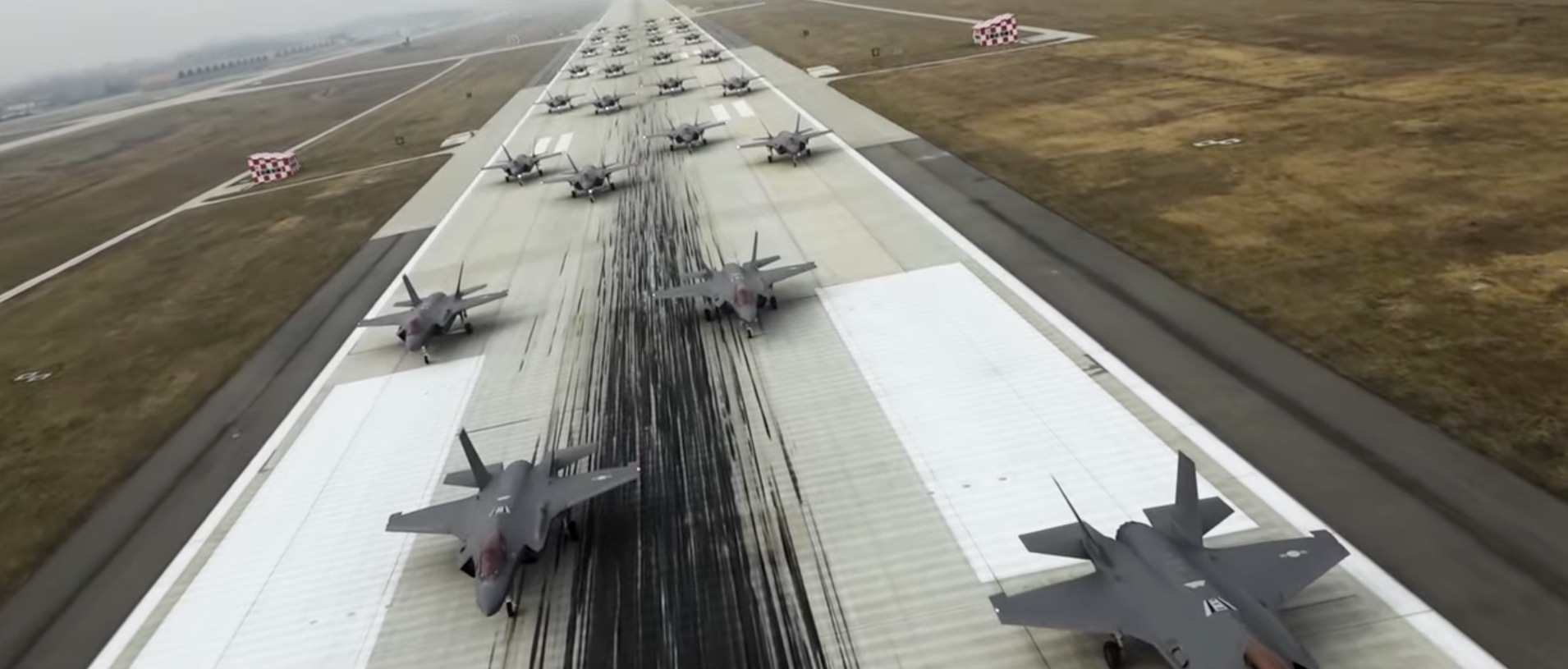 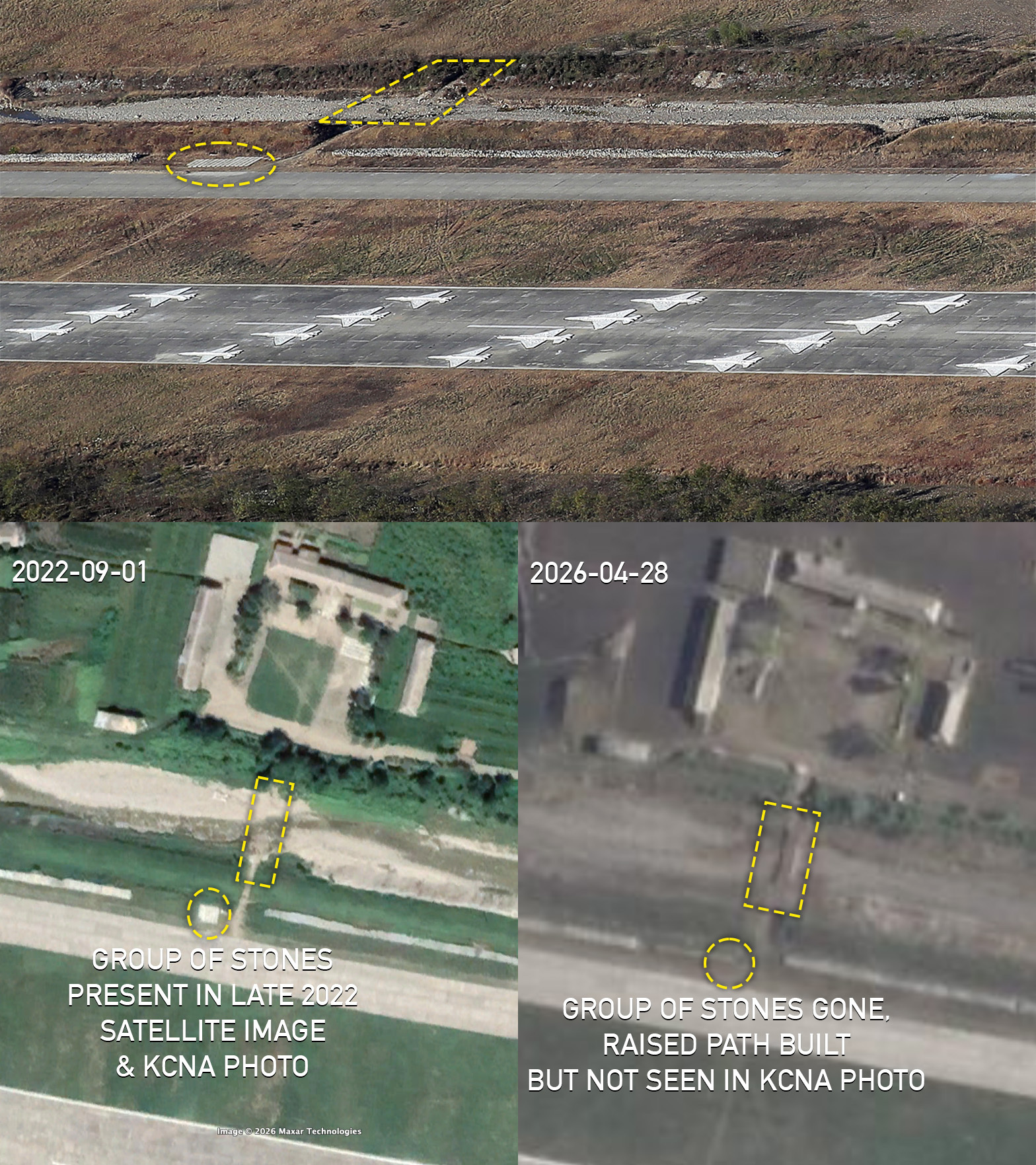 But additional details in the photo revealed that it was not taken recently, like the appearance of stones arranged next to the runway in the top left. These were placed there in 2022, but satellite imagery shows the stones were since used to create a raised path over the stream, which does not appear in the photo. This proves the photo is old, and that the military did not quickly lay out the targets again on the runway and remove them on Nov. 4 in the one-day interval between Planet Labs’ photos of the air base. State propagandists also appeared to remove and cover up a paved courtyard and at least one building at the far end of the cross-stream path in the top-left of the photo, replacing the area with an empty grass field. The alteration was likely made in an attempt to prevent observers from geolocating the air base. It could have been achieved using simple photo editing techniques or with artificial intelligence tools. North Korea has a long history of altering images of military events, with apparent intentions ranging from pushing false claims on capabilities, hiding politically sensitive subjects and preventing enemy snooping. 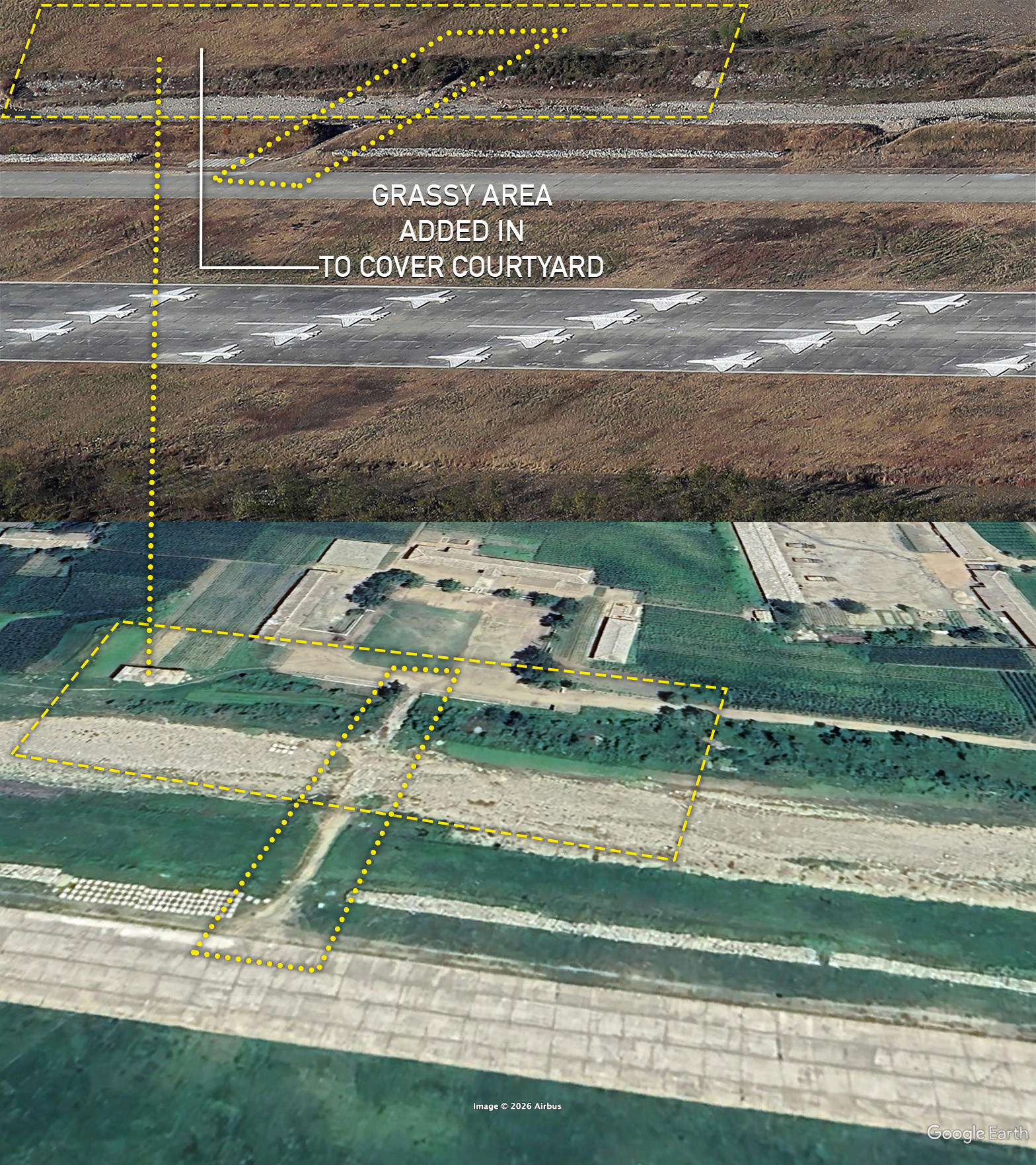 Edited by Bryan Betts © Korea Risk Group. All rights reserved. |

November 13, 2026Nov 13, 2026

The ultimate resources for professionals working on North Korea
 SHARE
 COPY LINK
 X
 MASTODON