  Investigations Uptick in North Korean ships at Russian port suggests coal smuggling schemeSuspicious activity near Nakhodka points to operation to conceal illicit shipments, as bigger vessels visit Far East 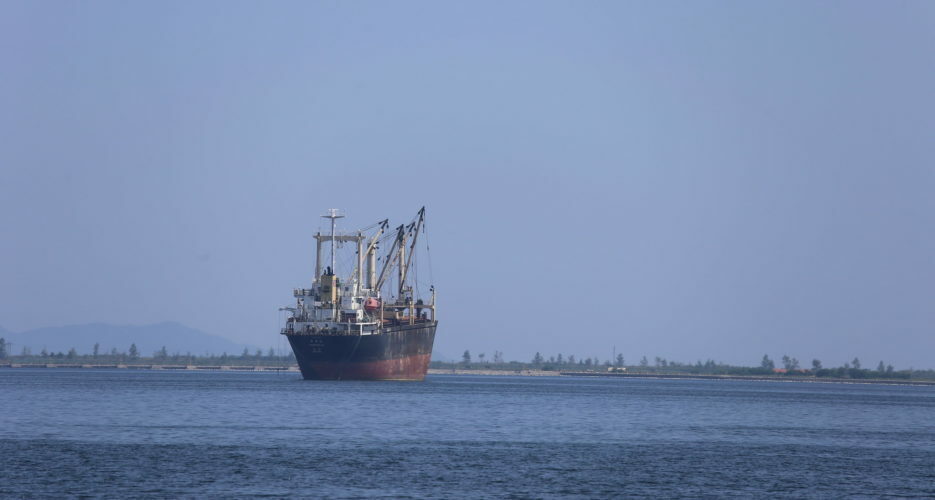 Multiple North Korean cargo ships have mysteriously sailed near a coal terminal in the Russian Far East over the past month, an NK Pro investigation has found, likely pointing to an illicit operation to conceal coal exports or other shipments. At least 13 DPRK-flagged vessels — including several subject to sanctions — broadcast their location from the Russian port of Nakhodka in October, according to ship-tracking data from MarineTraffic. NK Pro analysis suggests that at least one of the cargo ships engaged in geolocation spoofing to make it falsely appear at the port, while other suspicious activity raise the possibility that more North Korean ships are attempting to hide illegal trade. Experts said the evidence suggests the ships are circumventing U.N. sanctions by obscuring DPRK coal shipments to China as of Russian origin, or even delivering coal on behalf of Russia in exchange for other benefits. Additional data shows that, while the total number of reported North Korean voyages to Nakhobka have declined this year, the ships that visited have been able to carry significantly more cargo, potentially including weapons shipments for the war in Ukraine. SANCTIONED VISITORS MarineTraffic data shows that 17 North Korean vessels have broadcast from Nakhodka on 20 apparent visits this year, compared to the 33 voyages made by five DPRK ships in all of 2025. October alone saw 13 DPRK vessels make 14 visits to the port. The remaining six visits came in April, September and early November. North Korean broadcasts from the port were steadier in 2025, when MarineTraffic recorded an average of two or three DPRK voyages a month. At least three North Korea vessels that appeared to visit Nakhodka this year are under sanctions. The Puk Dae Bong (IMO 9020003) is subject to U.N. Security Council sanctions requiring member states to deny it port entry. The Tok Song (IMO 8360406) is sanctioned by South Korea, while the Kum Song 7 (IMO 8739396) is under U.S. Treasury Department restrictions. Several North Korean vessels that have broadcast from Nakhodka have been linked by the U.S. Treasury to illicit coal trade and ship-to-ship transfers, including the Un Bong 2 (IMO 8913186), Pho Phyong (IMO 8417962) and Myong Sin (IMO 9045182). The U.S. Coast Guard banned all three vessels from entering U.S. ports, along with other recent Nakhodka visitors such as the Hae Dong (IMO 9009061) and Puk Dae Chon (IMO 9133290). Washington also suspects the Taehae (IMO 8405220) and Thae Song 8 (IMO 9003653), both of which visited Nakhodka in October, of exporting North Korean coal. However, neither ship is sanctioned. The Nakhodka Marine Trade Port, which operates the coal terminal, didn’t respond to NK Pro inquiries about visits by ships linked to sanctions violations, like the Puk Dae Bong and Taehae. ‘RAMPANT SPOOFING’ Of the 13 DPRK-flagged vessels that broadcast from near Nakhodka last month, at least nine appeared near the port’s coal terminal, and suspicious activity during and after these visits suggests some ships may be broadcasting false AIS signals to obscure the purpose of their voyages to the Russian Far East and China. Among these, the Tok Hung (IMO 1119353) stands out. The North Korean cargo ship began broadcasting from Nakhodka port on Oct. 3, after years of sailing without its location transponder turned on. It then appeared to dock at the coal terminal from Oct. 14-15, and transmitted from the same pier again a week later before setting sail for China’s Dalian on Oct. 22. 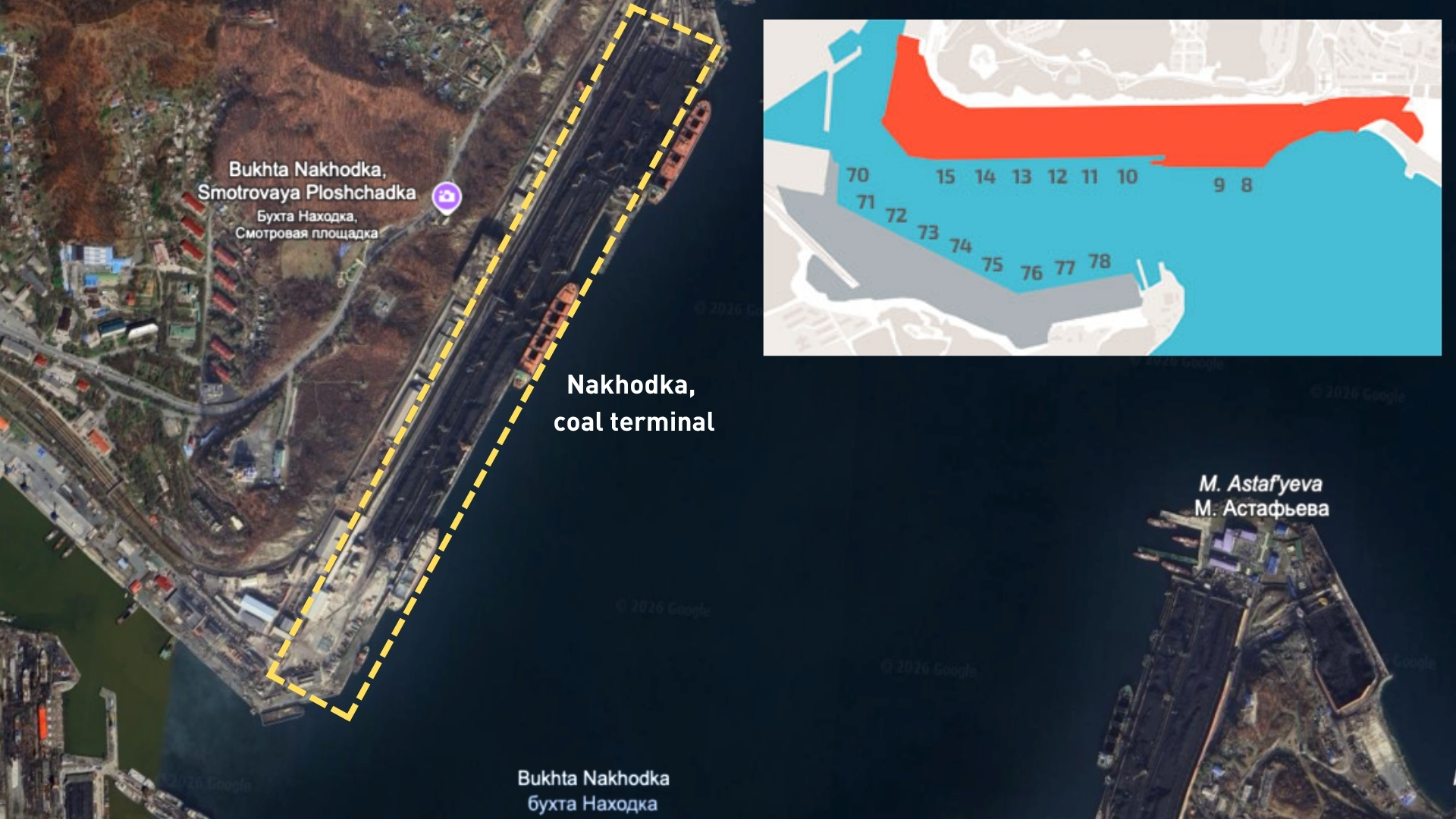
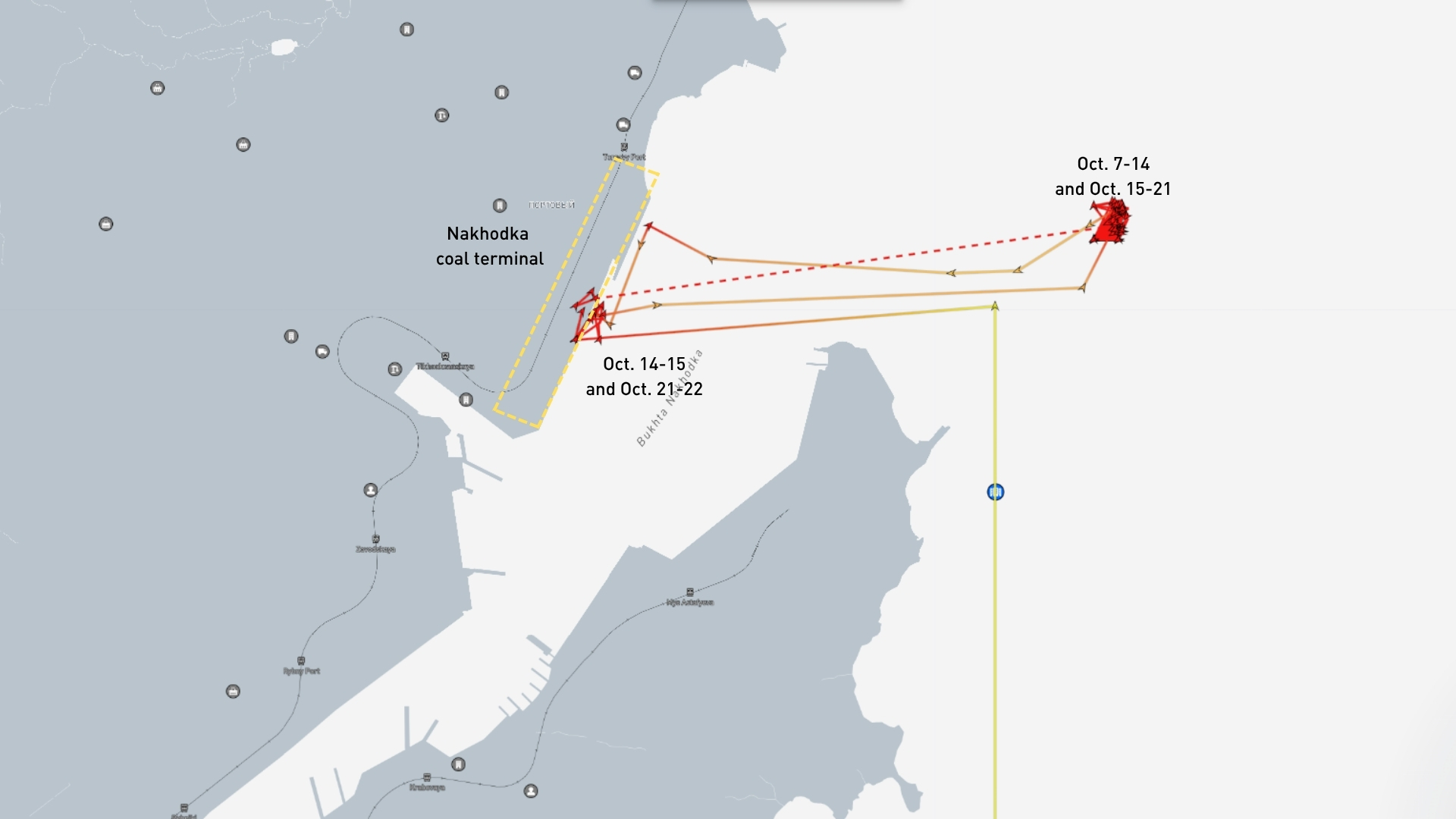
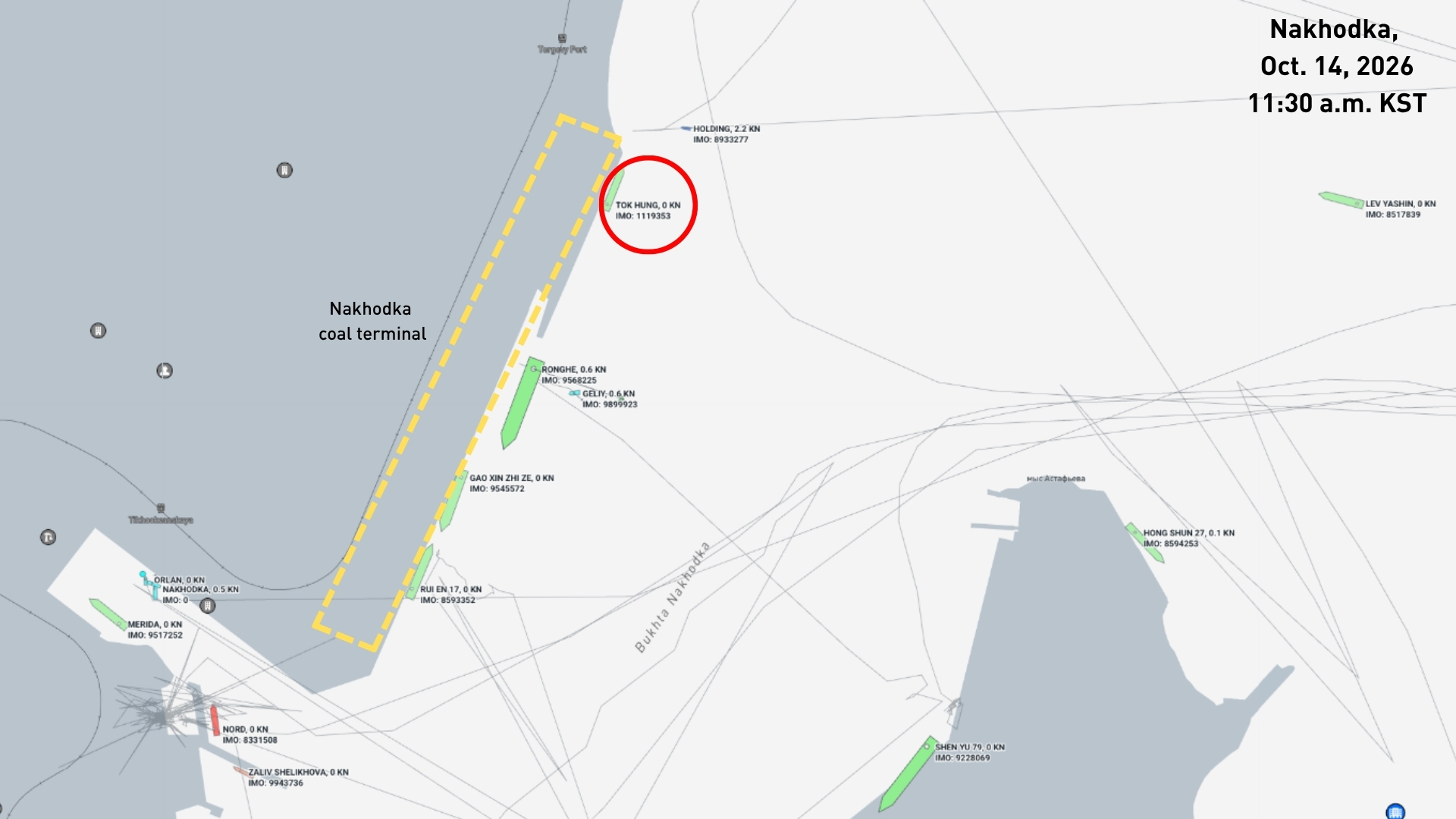
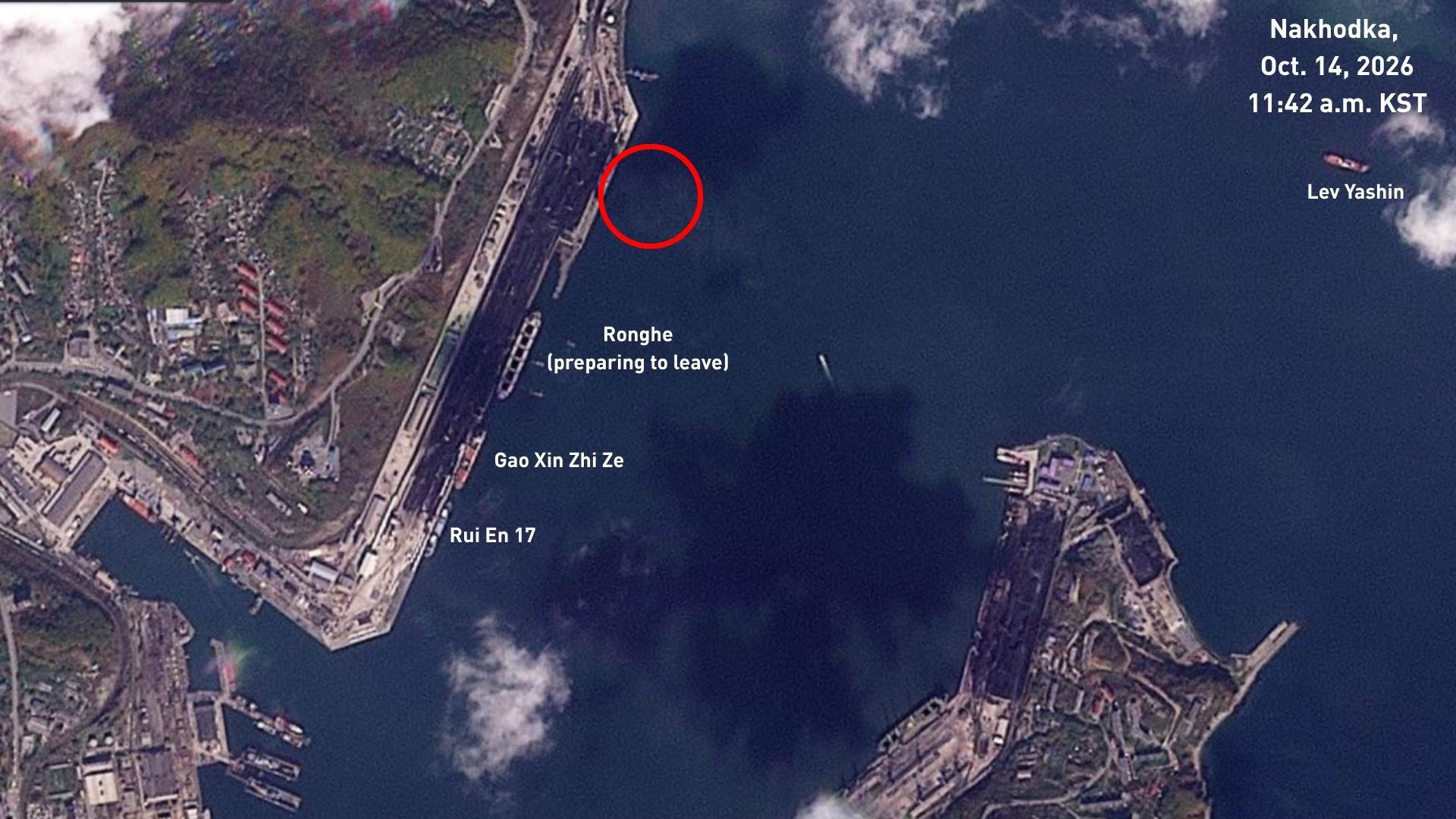
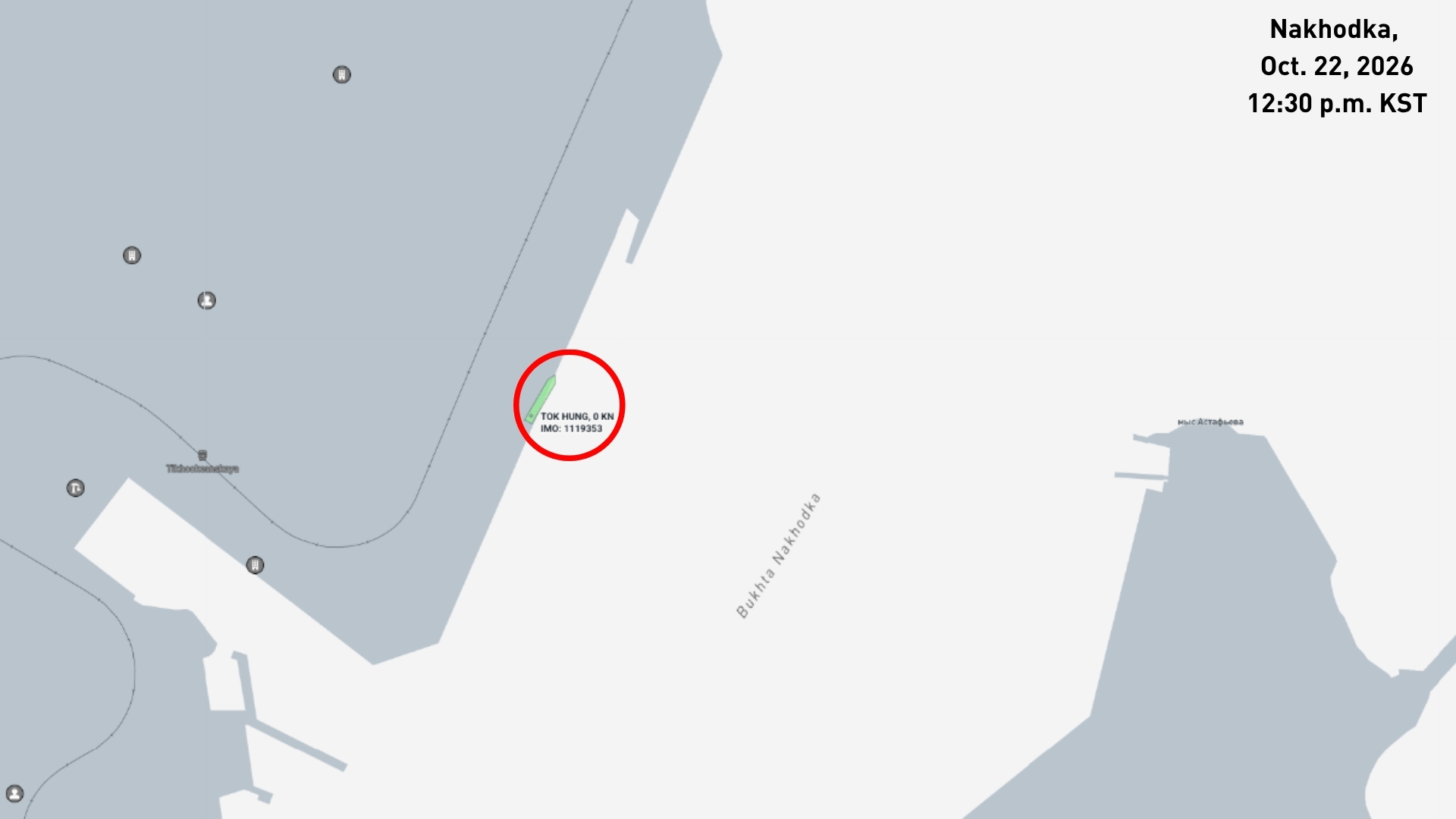
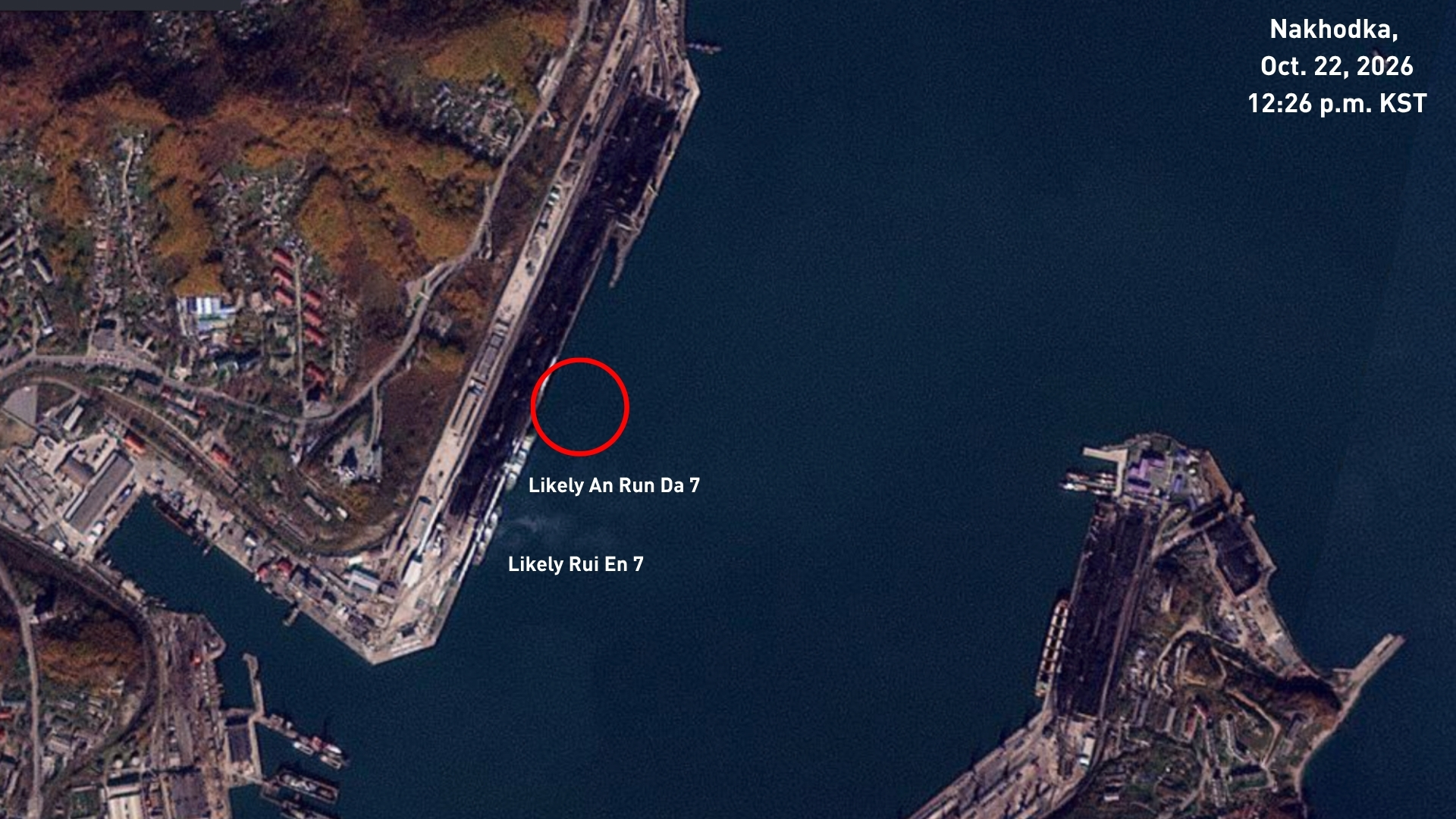
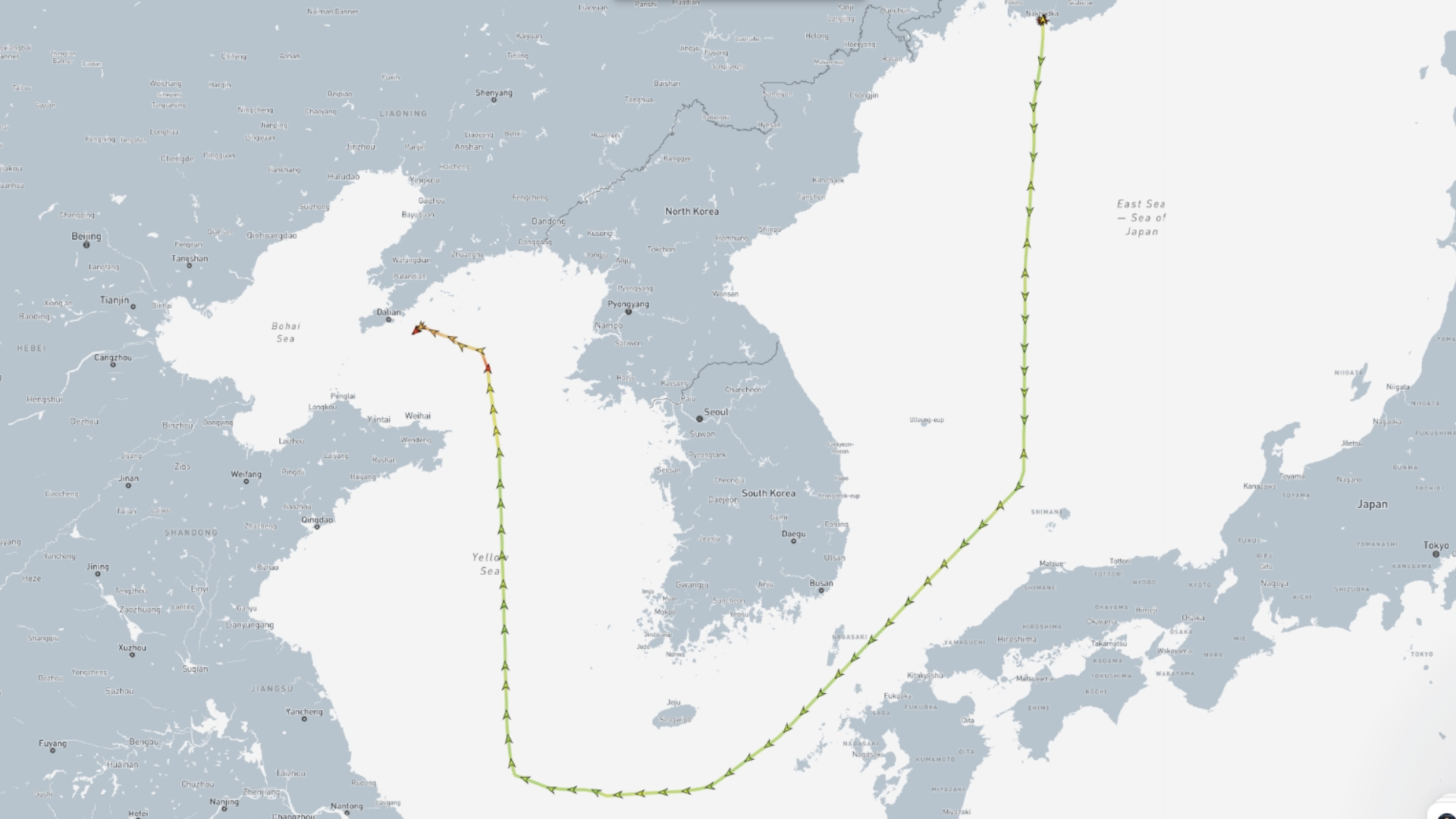
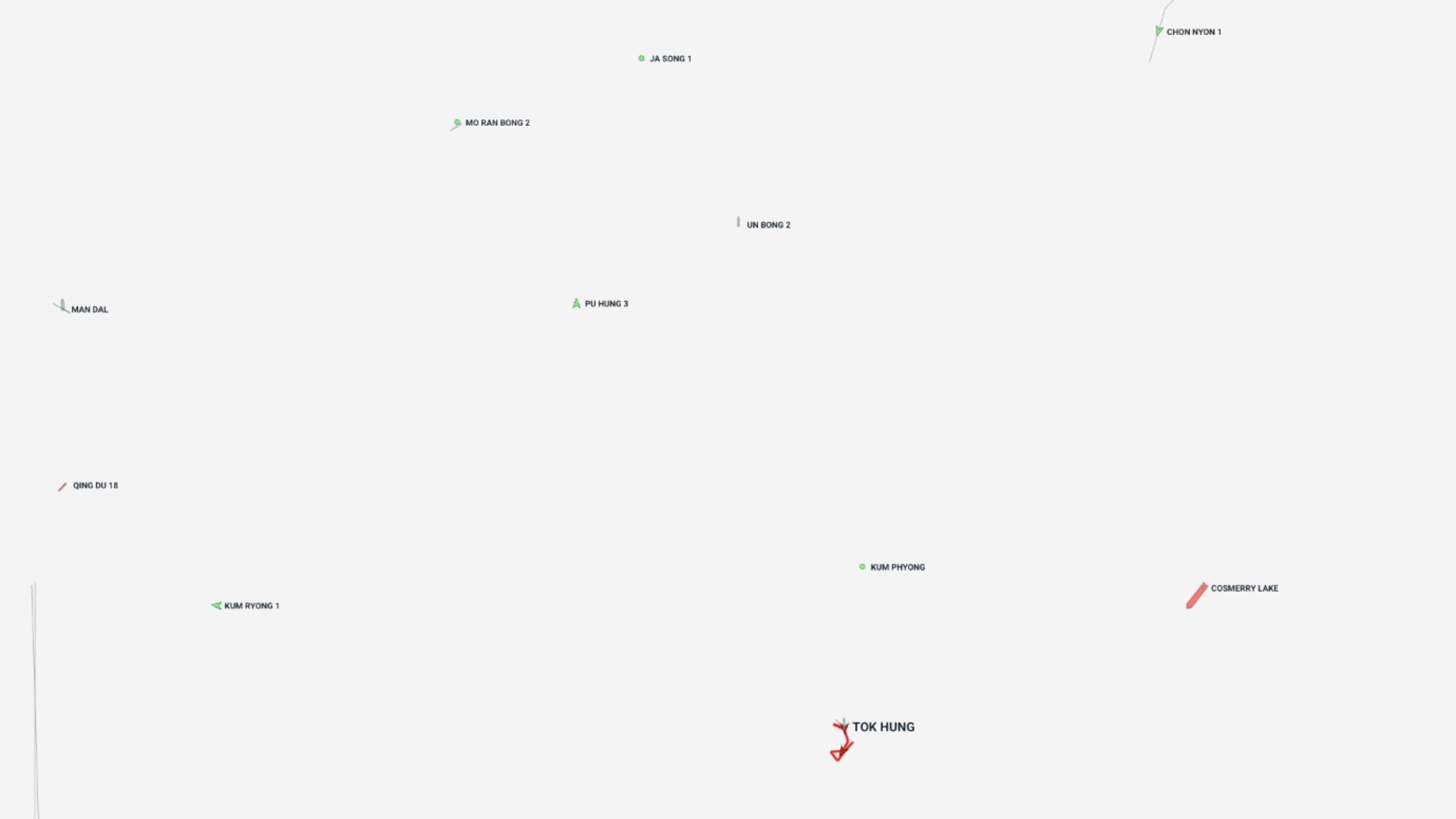
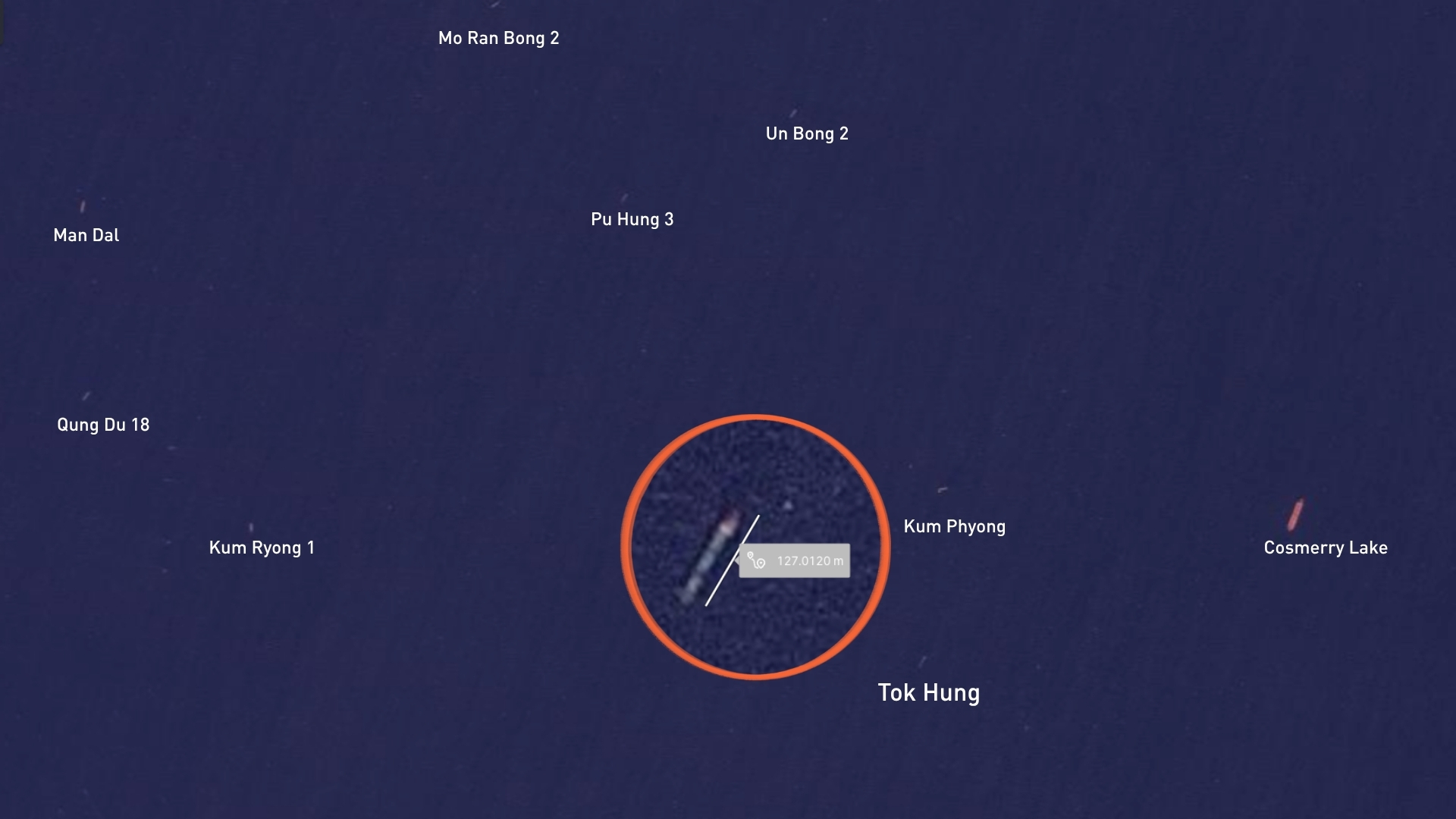
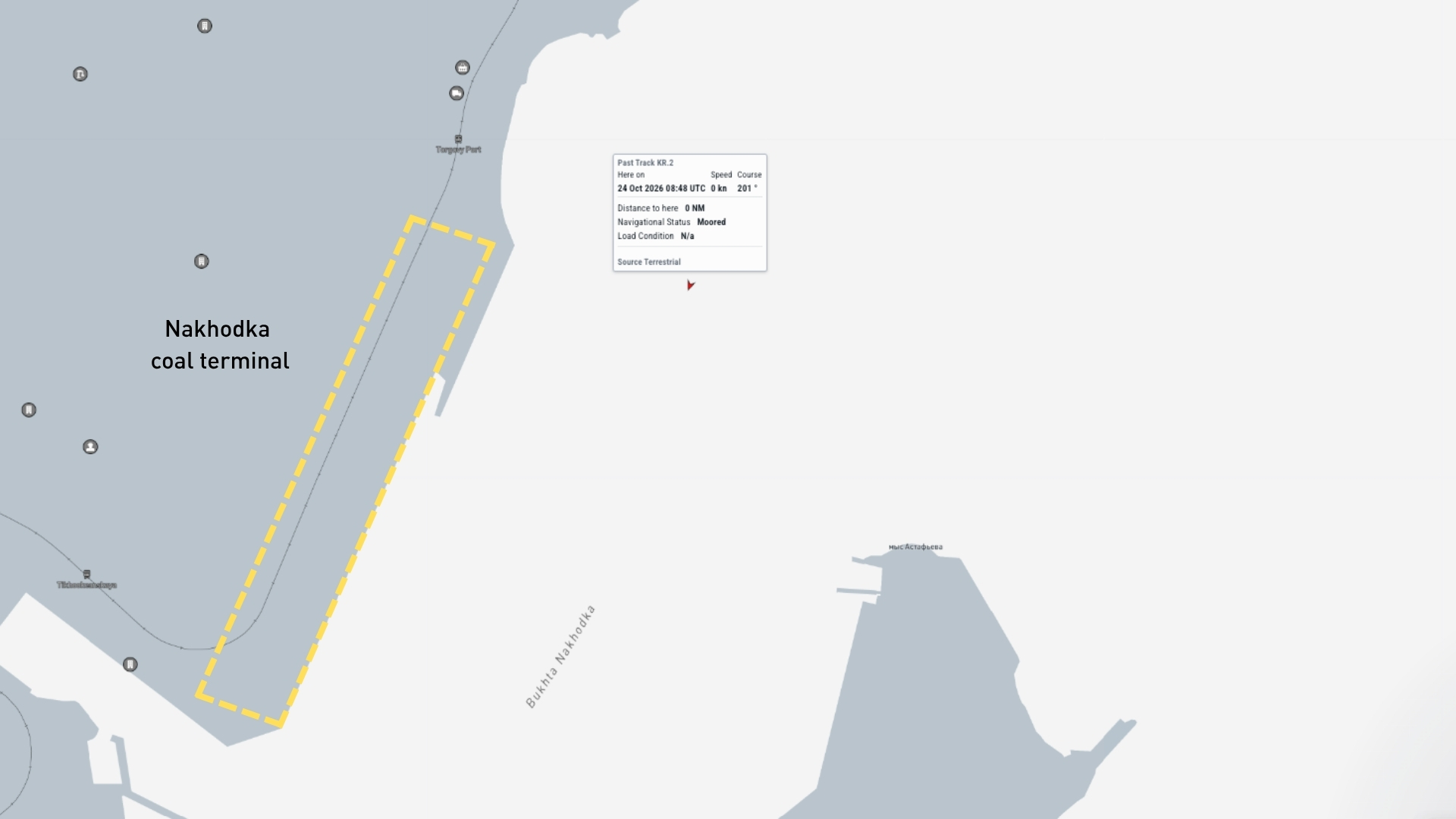
But despite broadcasting from the pier, the Tok Hung did not appear in low-resolution Planet Labs satellite imagery at that location, according to NK Pro analysis. The Nakhodka Marine Trade Port did not respond to NK Pro questions about whether the Tok Hung visited the coal terminal. As of Thursday, the Tok Hung was broadcasting alongside around a dozen DPRK vessels near Dalian, according to its AIS broadcasts via MarineTraffic. Planet Labs imagery of the spot from Oct. 30 shows a vessel some 127 meters in length at the location, broadly matching the Tok Hung’s hull parameters, though it’s difficult to definitively identify the observed boat. Another example of suspicious activity involves a vessel broadcast from Nakhodka as KR.2, a name that appears to be an attempt to obscure its real identity. The KR.2 hasn’t transmitted its IMO number, and its MMSI identifier (445680000) closely resembles that of the Hae Dang Hwa (445468000), another North Korean cargo ship that appeared to have visited Nakhodka in October. MarineTraffic carries no other particulars about the KR.2 and the IMO database contains no record of a vessel with its MMSI. 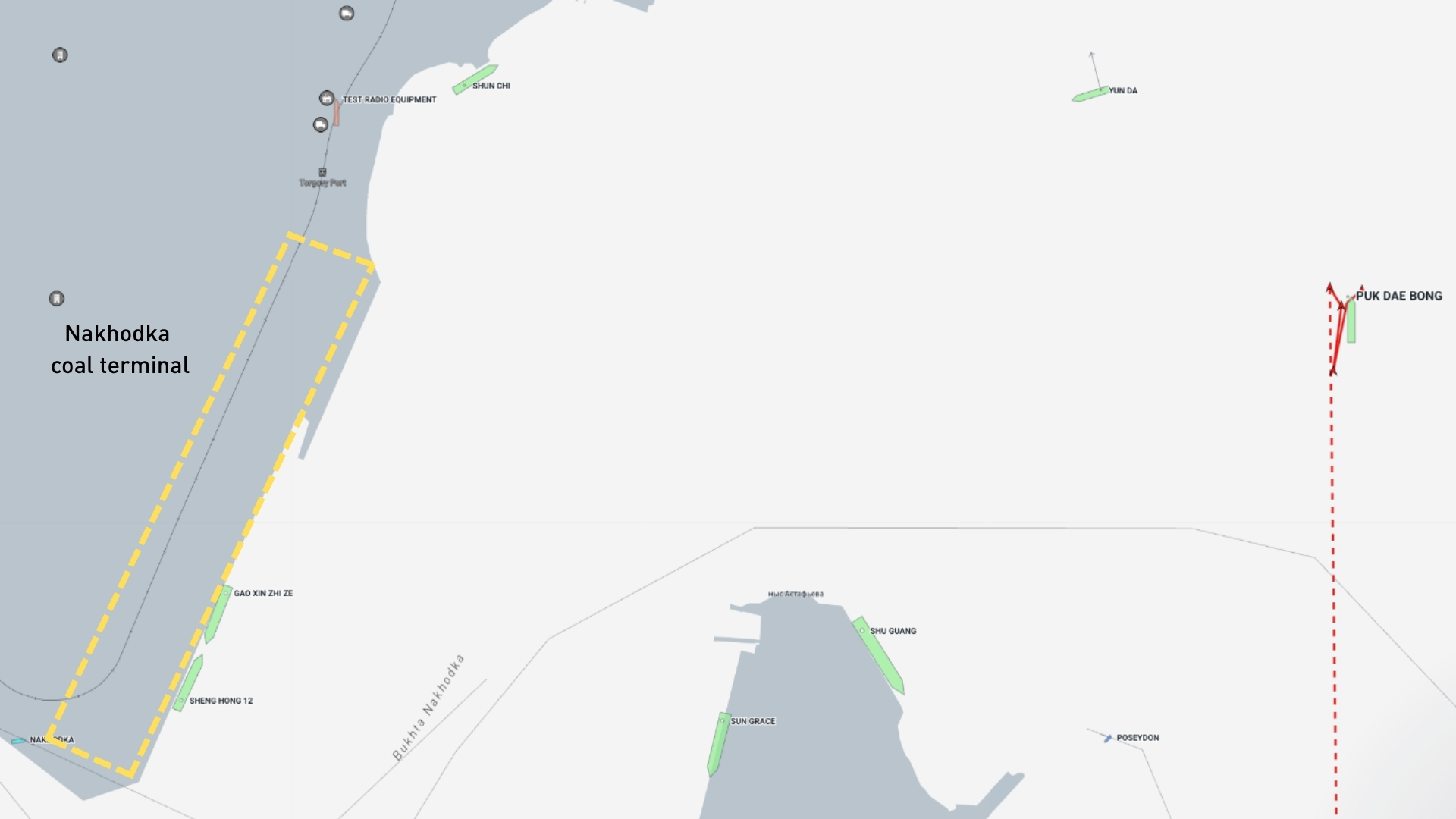
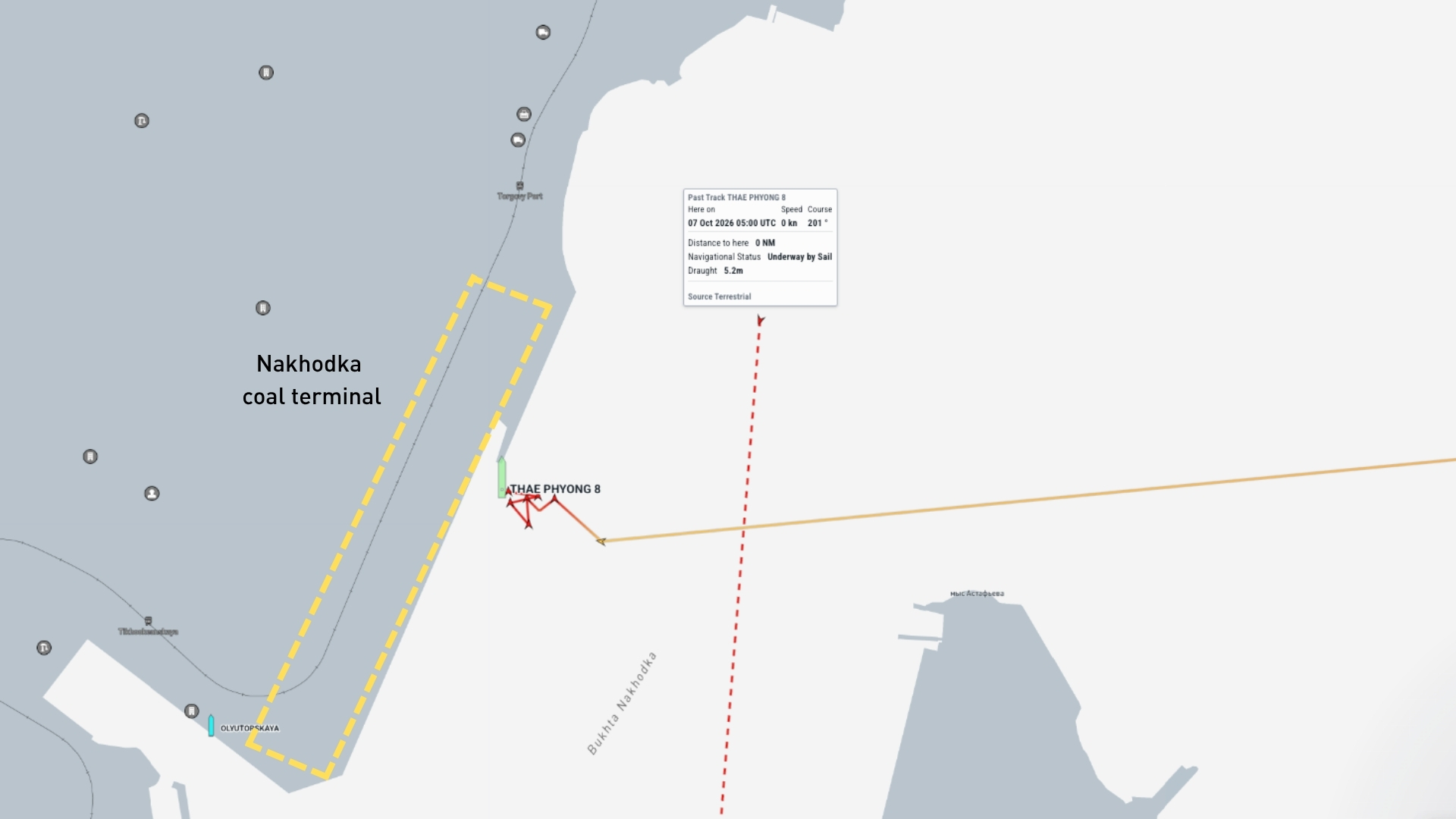
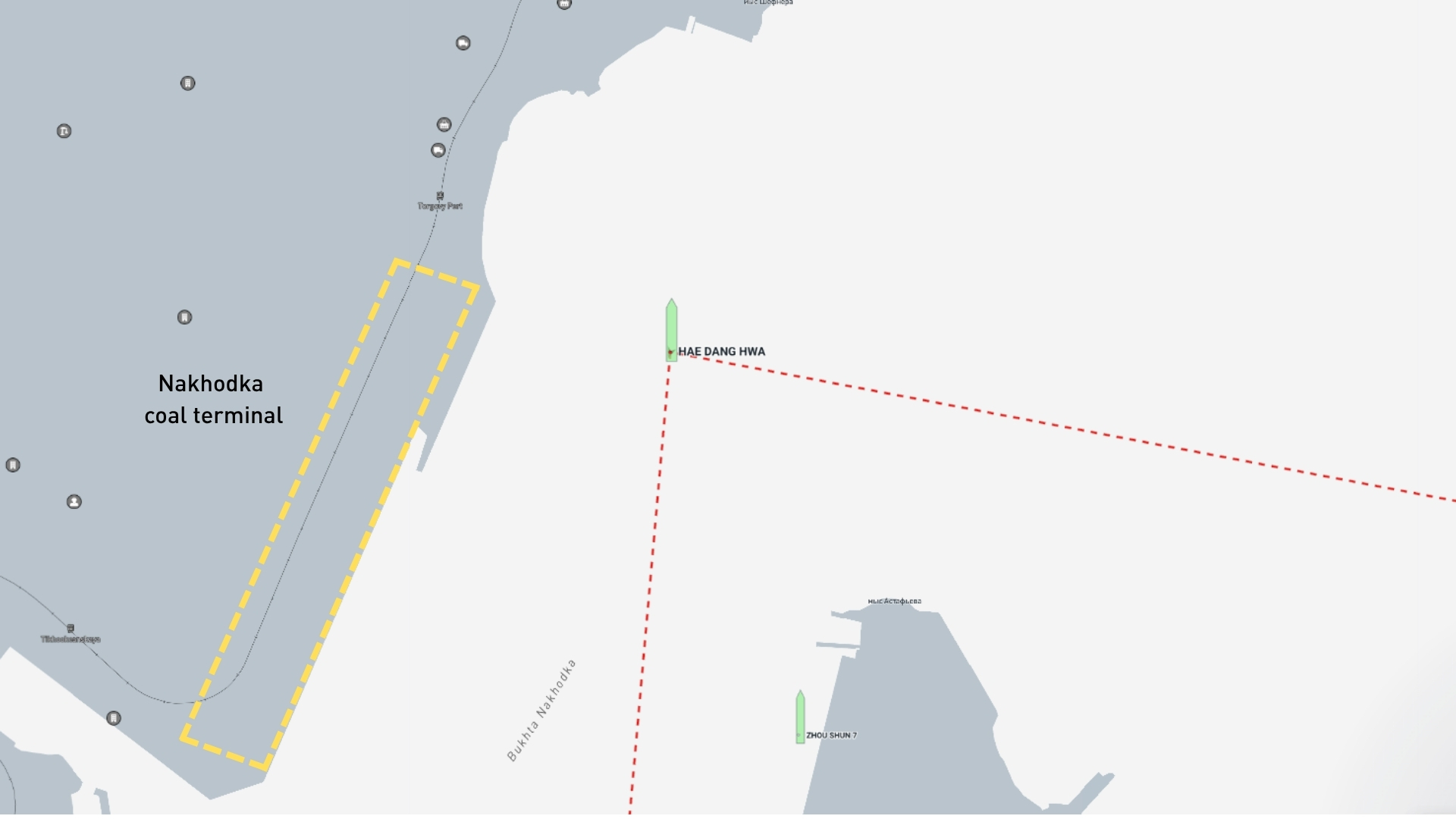
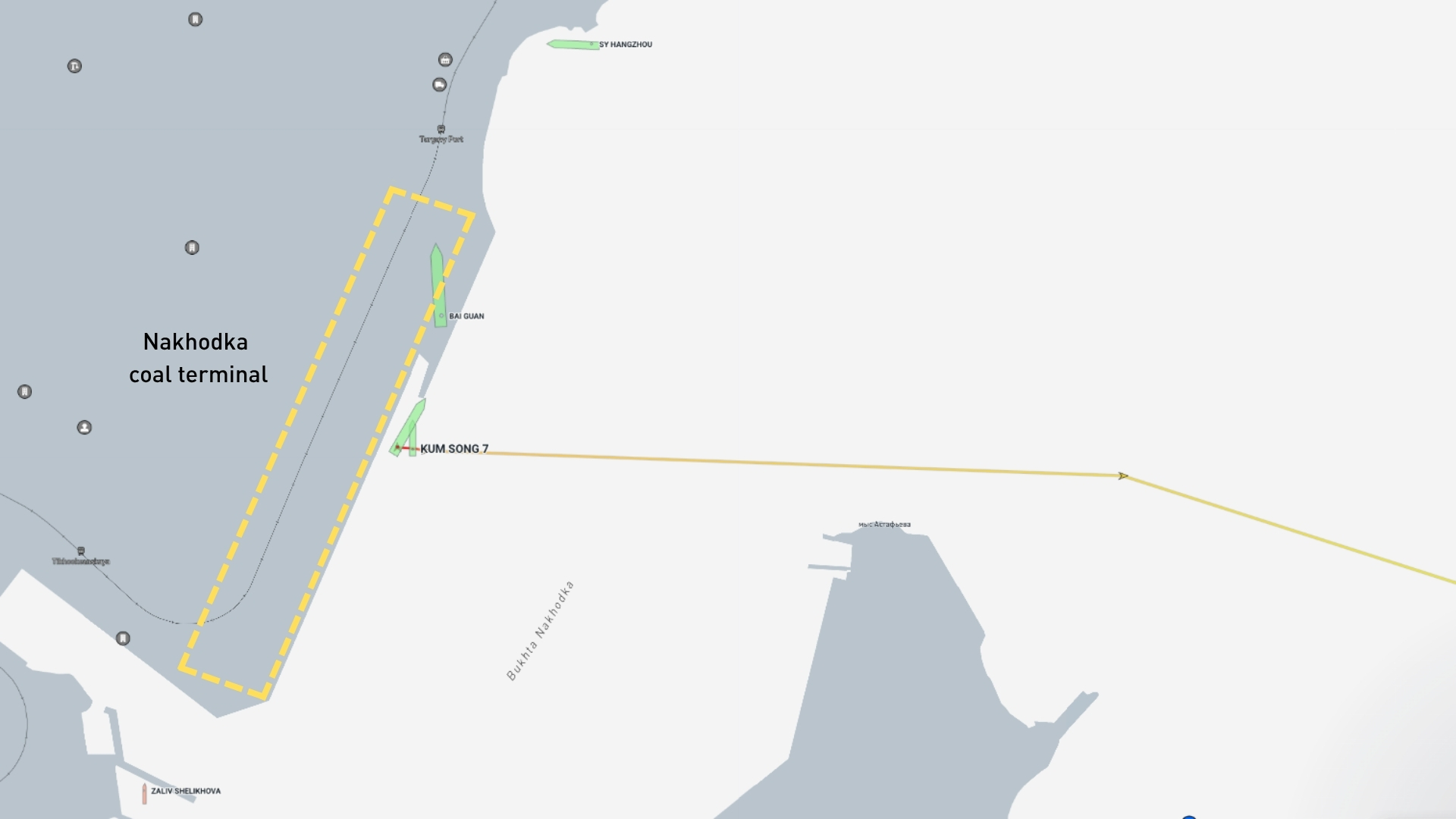
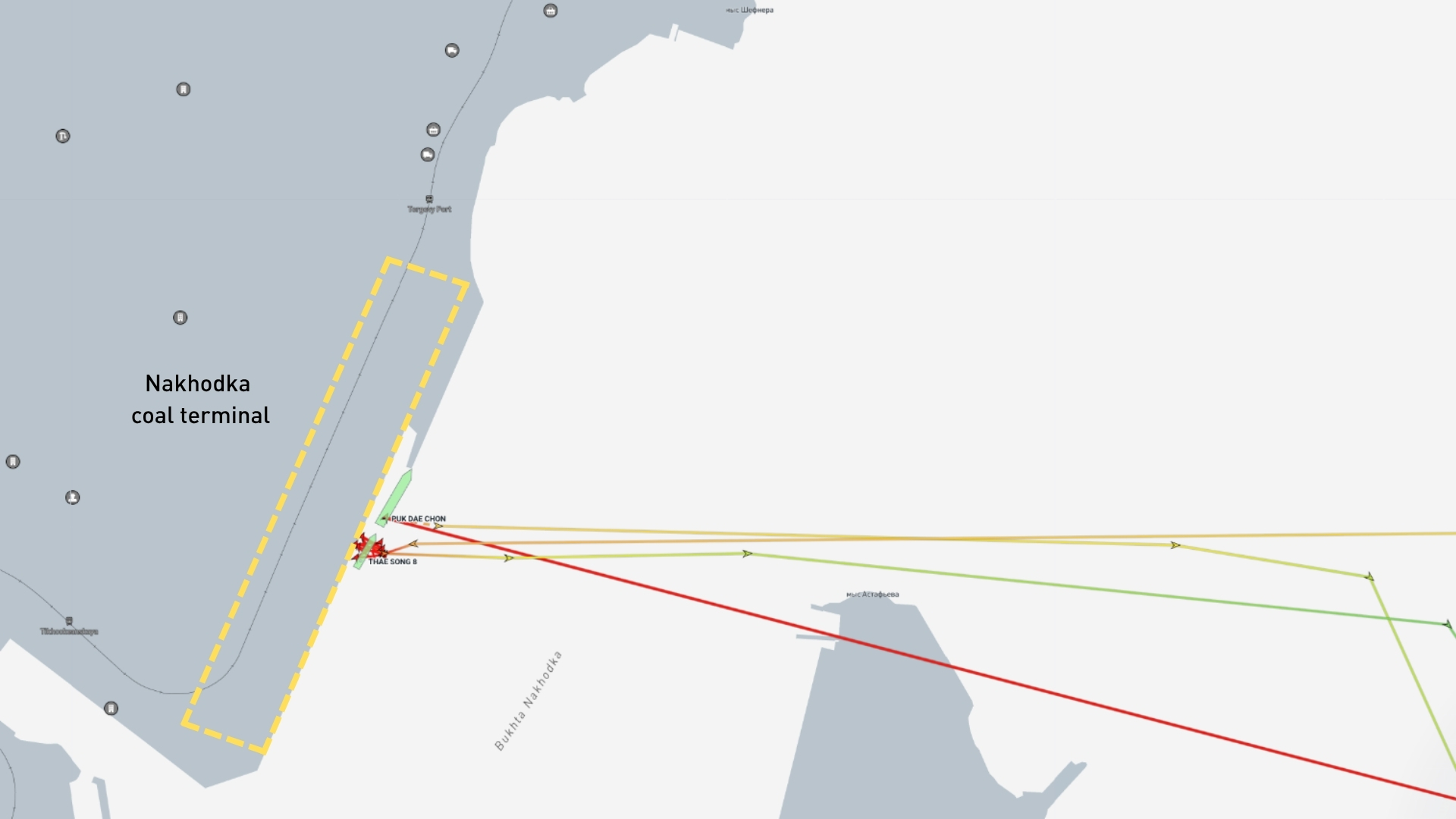
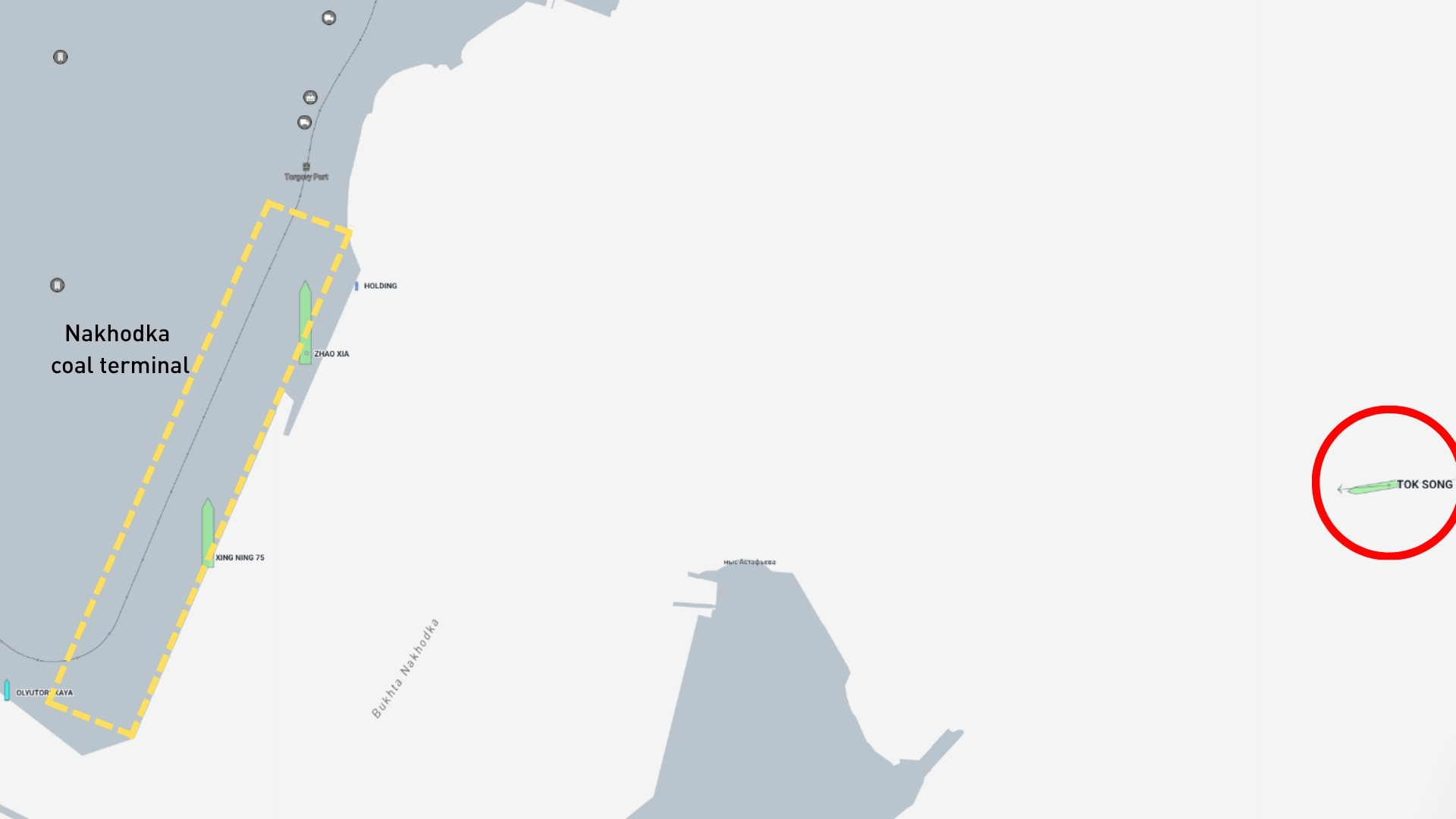
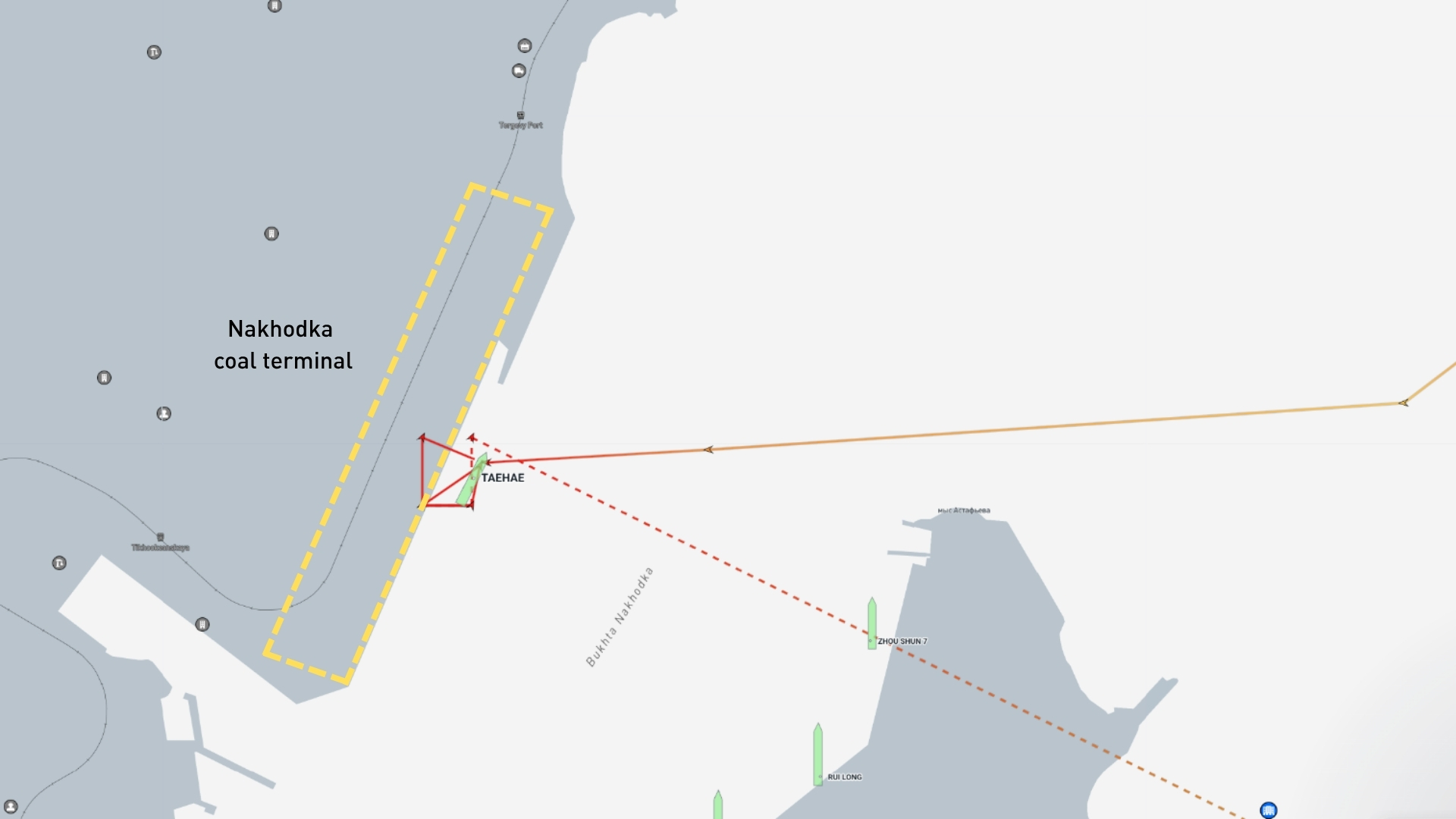
Neil Watts, a former member of the U.N. Panel of Experts monitoring DPRK sanctions, described the broadcasts from Nakhodka by vessels like the Tok Hung and KR.2 as “rampant spoofing,” or tampering with AIS signals to obscure a vessel’s true location. North Korea is a coal exporter so its vessels “should never be seen at another coal exporter’s terminal,” the expert told NK Pro, offering two theories for the DPRK vessels’ appearance at Nakhodka. First, it could be a “tactic to disguise the origin of their North Korean-sourced coal as Russian coal,” Watts said, noting that the DPRK had used Russian Far East ports for this purpose in the past, as well as to refuel before long voyages. Alternatively, North Korea could be “making money by exporting Russian coal or doing it as a barter trade for other benefits, such as grain or wheat, or even weapons they don’t produce,” the expert said. Peter Ward, a research fellow at the Sejong Institute, agreed that coal laundering is a plausible scenario. He suggested that the “sporadic nature of AIS broadcasts could easily reflect deliberate deception and attempts to conceal particularly sensitive trade between” Russia and North Korea. “China may be willing to purchase North Korean coal for its own account, but that doesn’t necessarily mean it wants to help launder North Korean coal for export to other countries,” he said. “At some point, North Korea may want to sell more coal elsewhere, and if China isn’t willing to facilitate that, Russia could provide an excellent alternative.” NK Pro analysis shows that several other North Korean vessels have appeared in Chinese waters after visiting Nakhodka in recent months. The Taehae and Un Bong 2 are currently transmitting from near Dalian, while the Myong Sin’s AIS signal places it near China’s Shidao. The Hae Dang Hwa, the vessel suspected to be the KR.2, similarly reached the vicinity of Dalian on Thursday, according to its broadcasts. The Pho Phyong sailed to Dalian after its late-September voyage to the Russian Far East, while the Thae Phyong 8 (IMO 9010058) returned to Nakhodka on Monday after an early October visit and a subsequent trip to Dalian. The South Korea-sanctioned Tok Song is currently transmitting from Nakhodka, following voyages to Dalian in October and September, when it also visited the Russian port. The sanctioned Kum Song 7 was broadcasting its destination as Dalian as it sailed through the Yellow Sea as of Thursday. GROWING TRADE? Aside from coal trade, the North Korean vessel broadcasts from Nakhodka may indicate growing commercial exchanges, as the ships that are visiting have a significantly higher cargo capacity than in the past. Deadweight tonnage (DWT) is the maximum weight a vessel can carry, including cargo, and the cumulative DWT for all the North Korean vessels that have visited the Russian port this year stands at over 204,065 metric tons (tonnes) through early November, far exceeding the total of 4,132 tonnes for last year, according to NK Pro analysis of maritime data. The vast difference reflects how the type of North Korean vessels visiting Nakhodka has changed from primarily small fishing schooners or reefers to larger bulk carriers. The DPRK ships that have visited this year have had an average DWT of 12,754 tonnes and length of 123 meters, compared to 826 tonnes and 59 meters last year. Chris Monday, a Russia researcher at Dongseo University, suggested that Russia and North Korea started using larger boats to accommodate increasing levels of trade. “They may be using bigger ships to transport different kinds of goods,” he said, noting that these could include everything from oil and grain to munitions for the war in Ukraine. But the expert said it is hard to know the exact composition of such trade because the two states engage in contacts “at many levels and in different sectors.” Ward of the Sejong Institute raised the possibility that there may have been “a sudden surge in demand for arms [from Russia] after a prolonged period of relatively weak demand.” North Korea has provided large quantities of artillery shells and even deployed troops to Russia to support its invasion of Ukraine. “But compared with what we saw last year, when larger numbers of smaller vessels were making more regular trips, the decline followed by this surge looks less sustainable and less consistent with a pattern of steadily expanding bilateral trade,” the expert said. Edited by Bryan Betts © Korea Risk Group. All rights reserved. |

November 05, 2026Nov 05, 2026

The ultimate resources for professionals working on North Korea
 SHARE
 COPY LINK
 X
 MASTODON