  
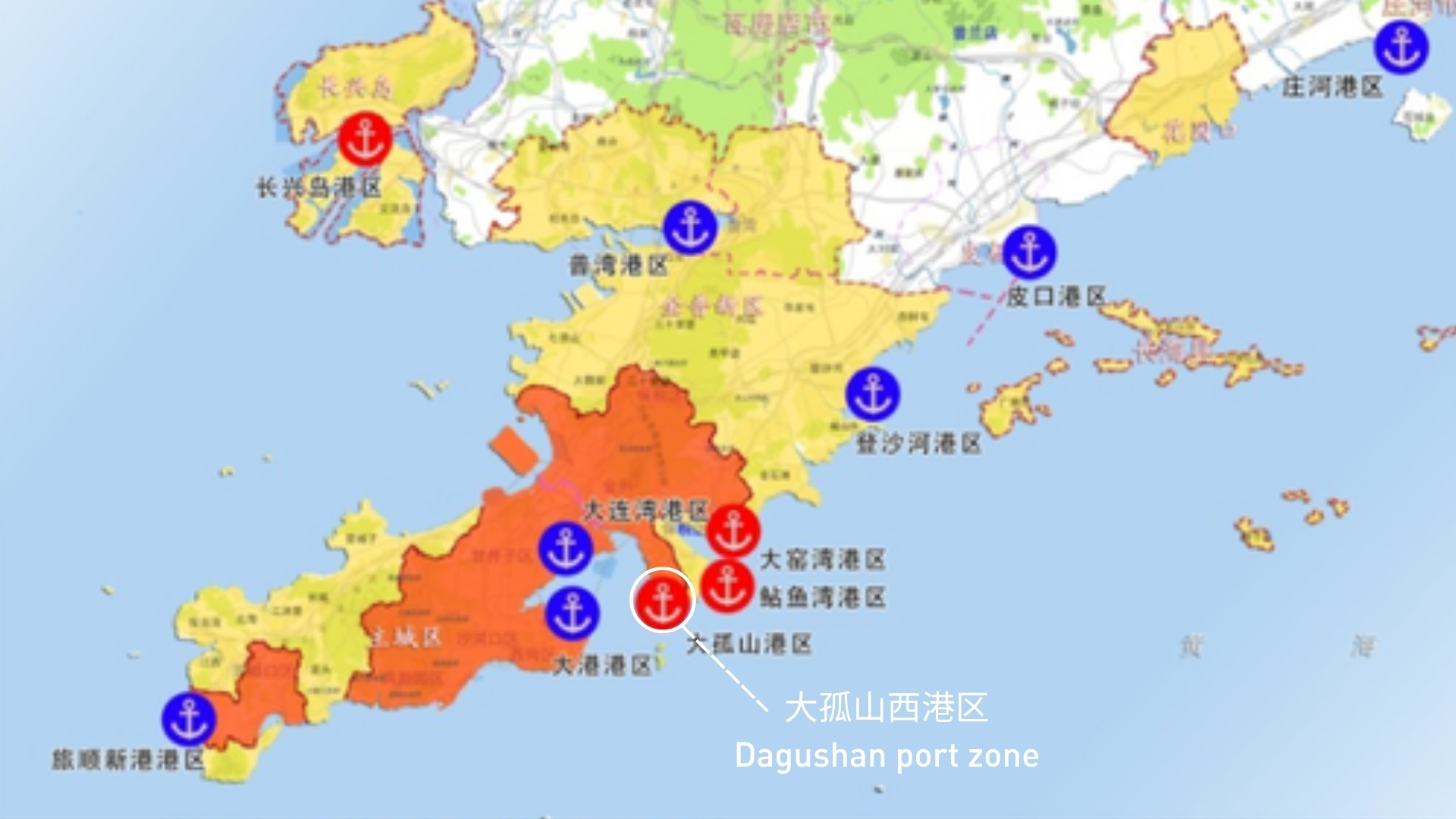
Investigations North Korean ships increasingly visit Chinese iron, coal hubs as ties boomChina’s Dalian port sees 60 DPRK cargo ships visit in June, the most in years, likely redirecting traffic from Longkou  An unusually large cluster of North Korean vessels appeared this week off Dalian, a major Chinese port handling iron ore and coal, NK Pro found, highlighting the DPRK’s growing mineral exports to China. More than 20 North Korean-flagged cargo ships were clustered near Dalian from Wednesday, most of them anchored outside the port while the remainder entered the harbor, according to Automatic Identification System (AIS) data from MarineTraffic. Only eight DPRK vessels were observed outside Dalian in June 2023, when North Korea was emerging from its pandemic-era border closures and bilateral trade was beginning to rebound. Sanctions monitors from the now disbanded U.N. Panel of Experts have previously identified Dalian as a destination and trading hub for DPRK coal and iron ore, while also serving as a return-leg port where North Korean ships would pick up daily goods, like rice, after dropping off coal at other Chinese ports. 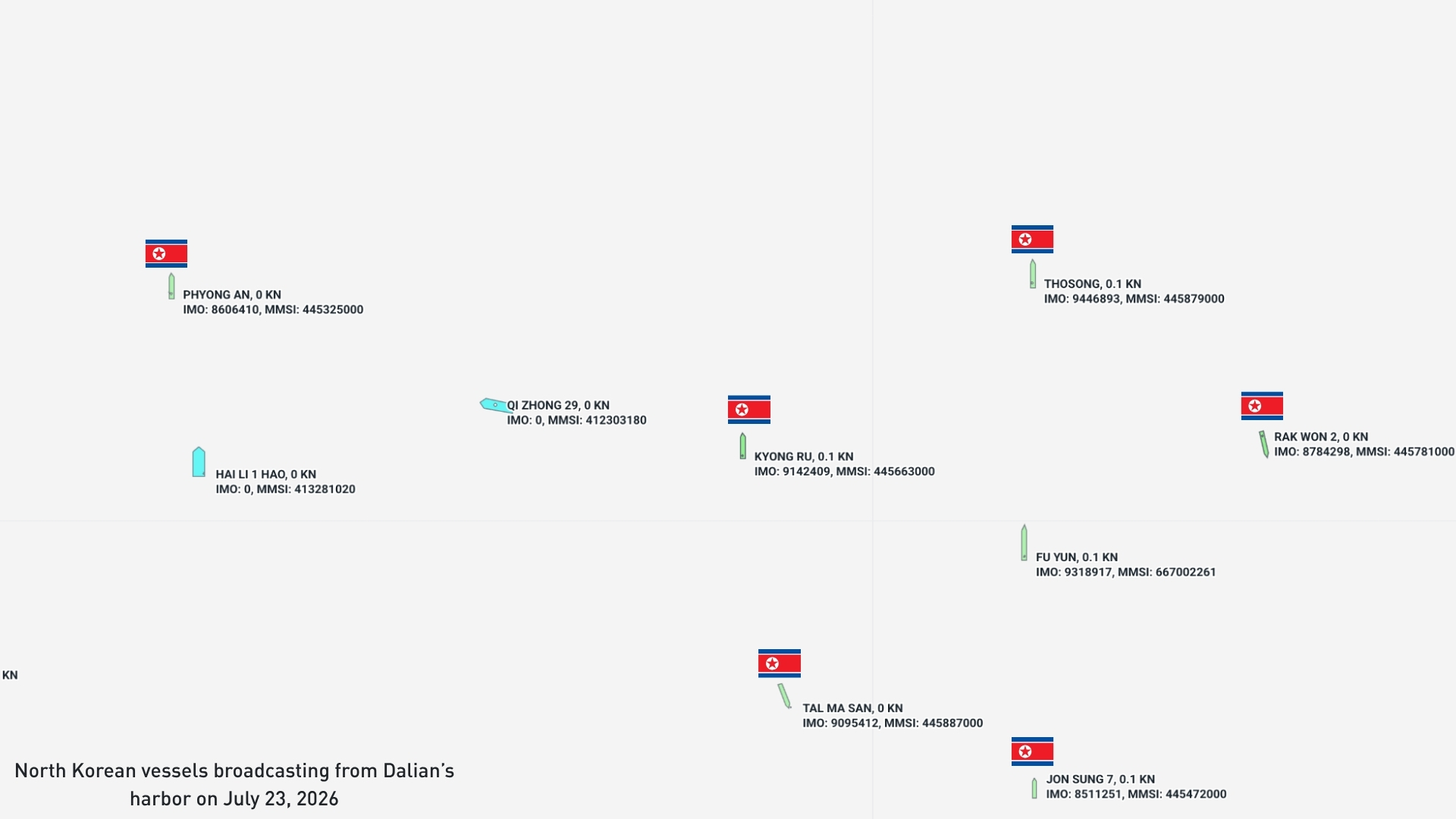 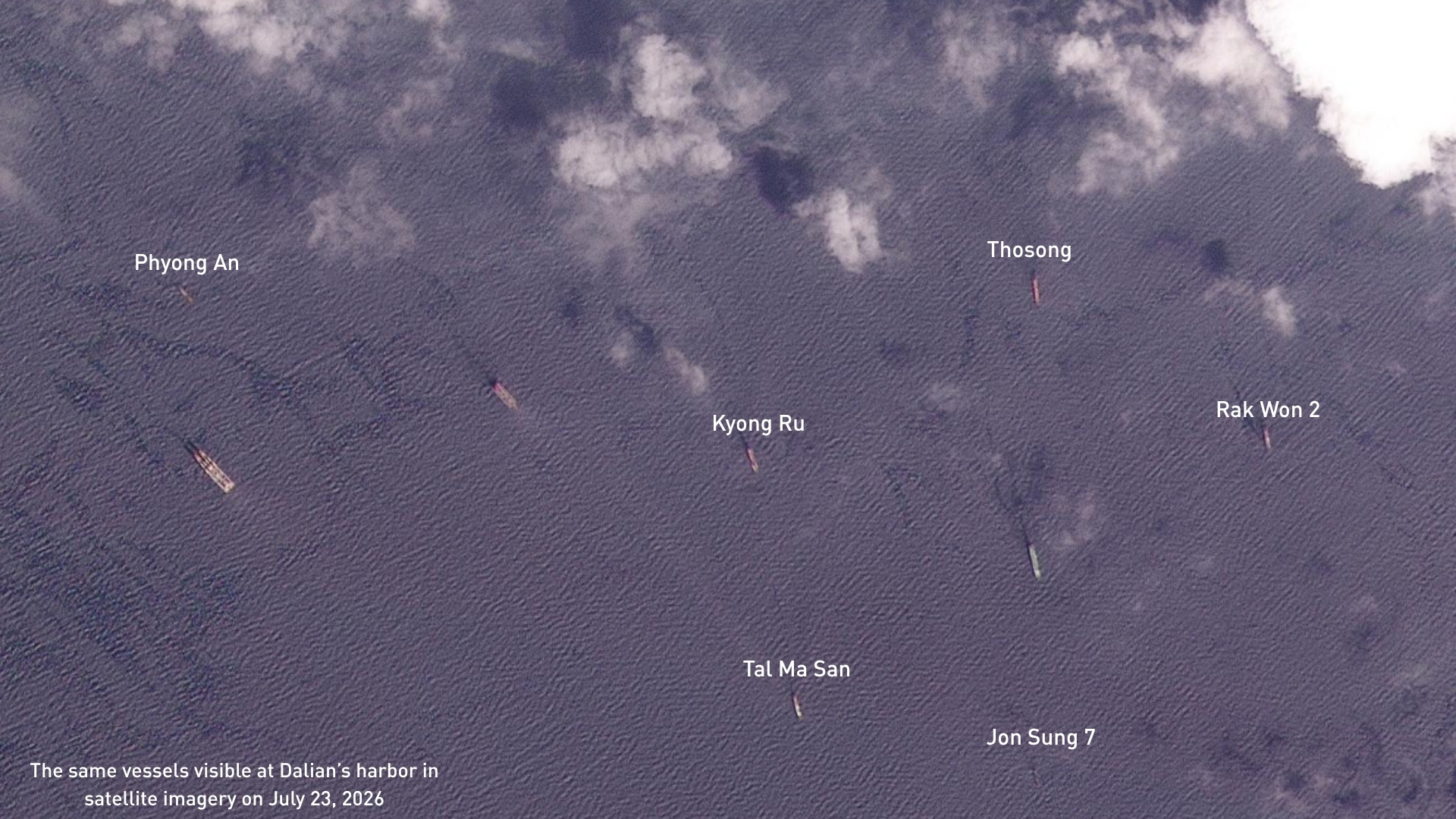 Planet Labs satellite imagery confirmed the presence of the vessels at Dalian’s anchorage on July 22-23, with many of the ships known to have frequently visited China. Not all entered the harbor, raising the possibility that some cargo was transferred at sea through prohibited ship-to-ship transfers, while others sailed to the port or berthed at its terminals. 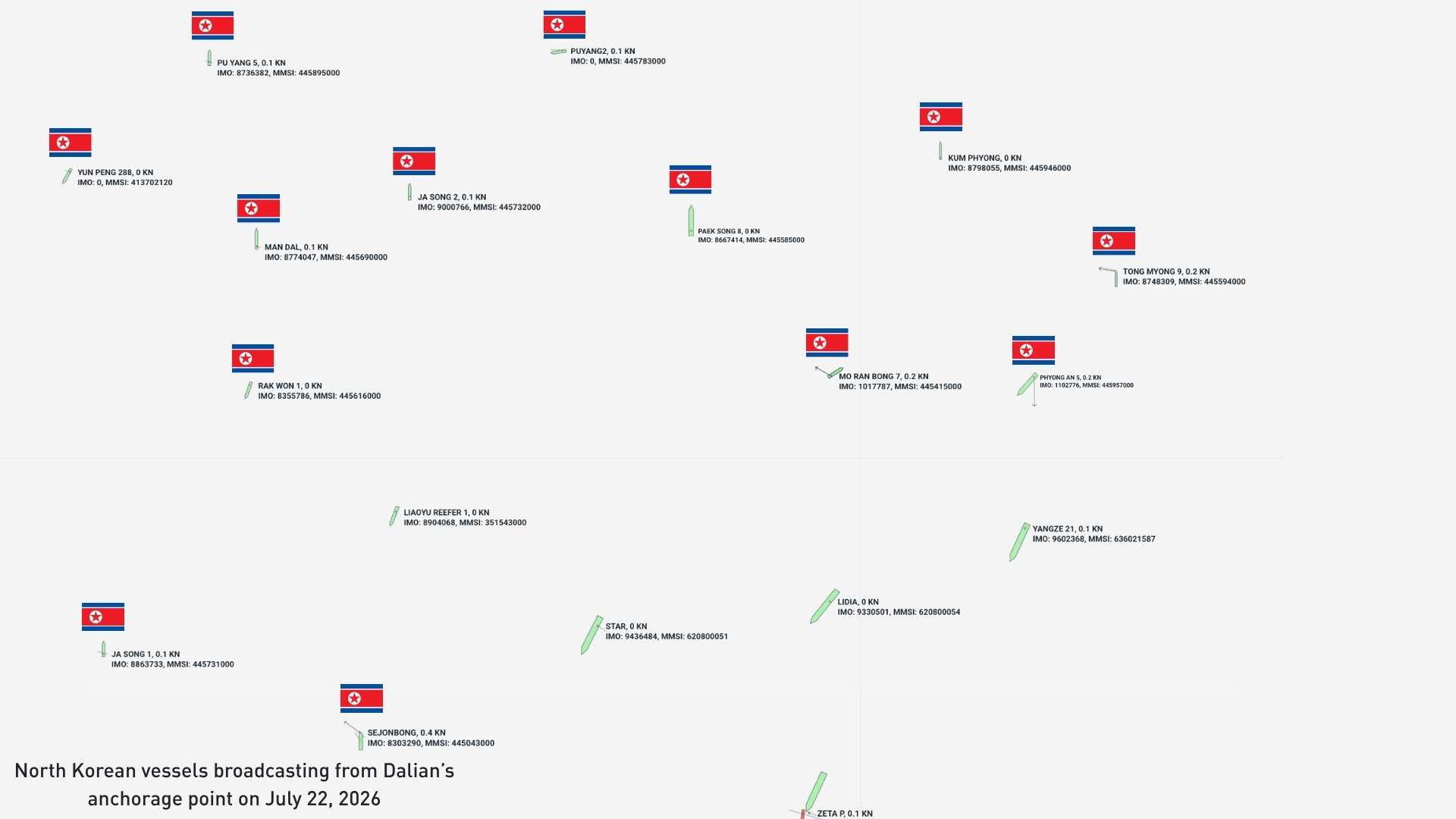 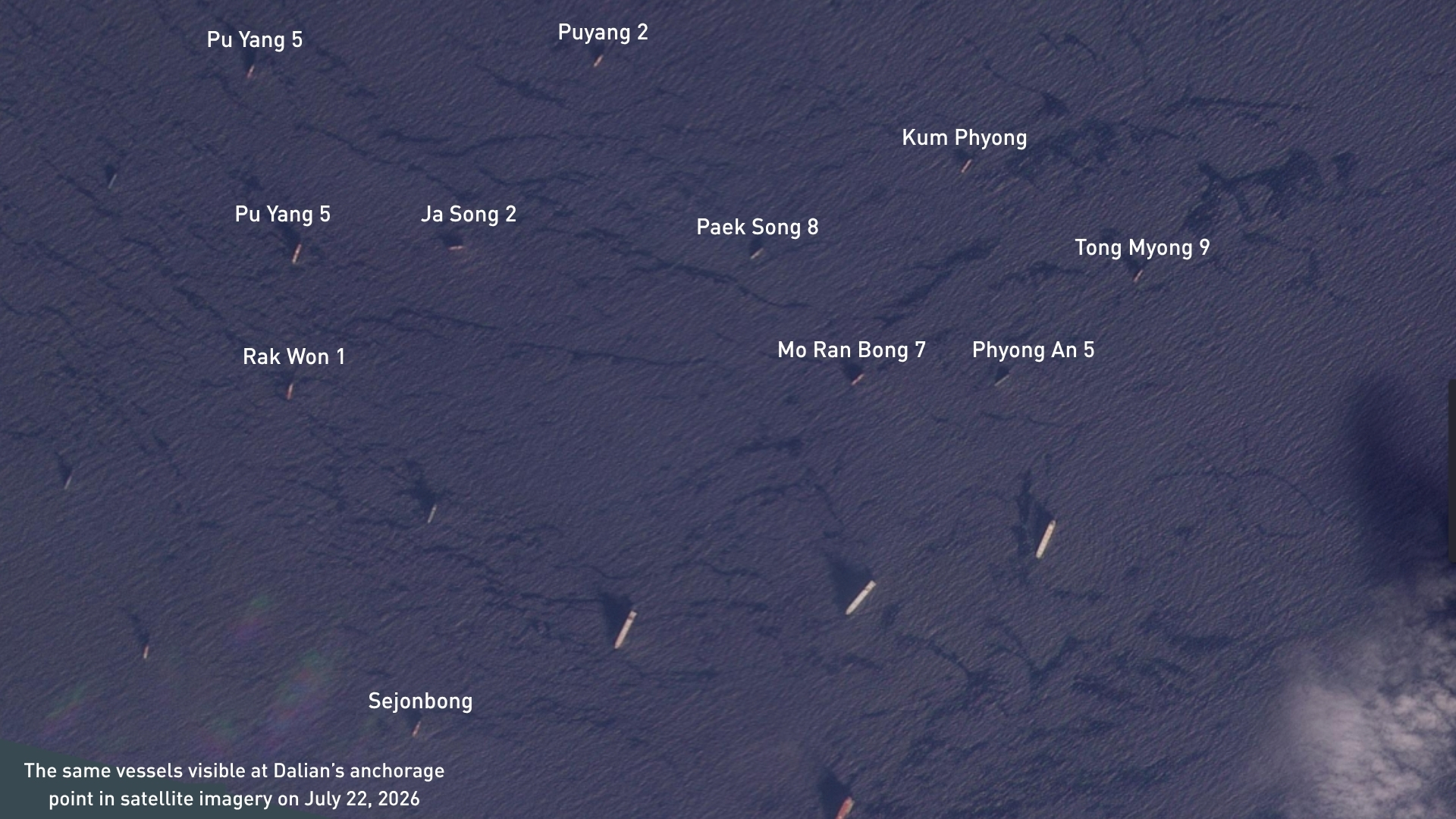 These included the Sa Hyang San 2 (IMO 8359031) and Tae Phyong (IMO 9018751), which docked Thursday at separate piers in Dalian’s Dagushan port zone, which handles bulk cargo like grain and iron ore. 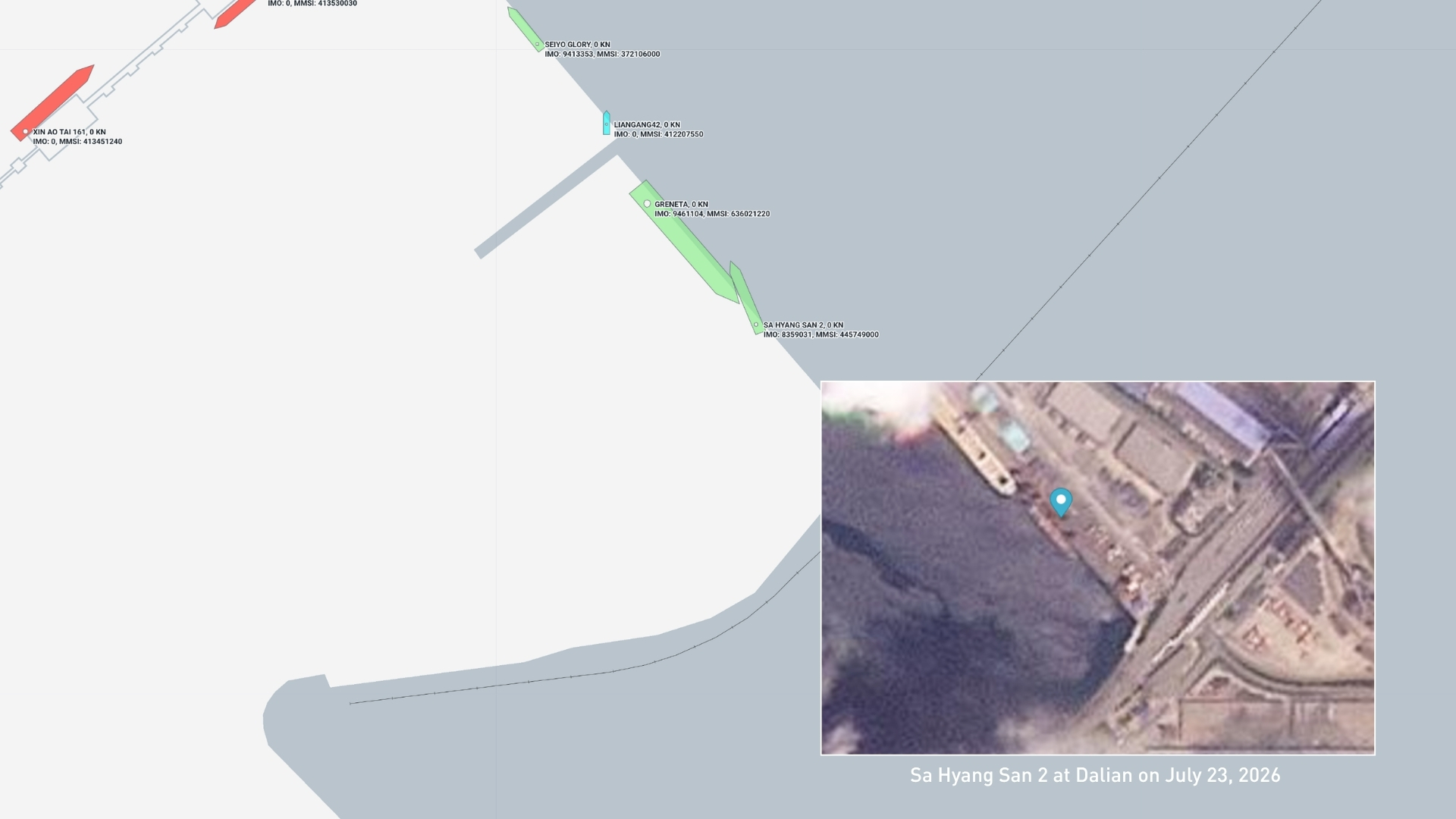
North Korea has large iron and coal deposits, but U.N. Security Council sanctions prohibit the country from exporting either commodity because the revenue could support Pyongyang’s nuclear and missile programs. The simultaneous appearance of openly broadcasting DPRK vessels aligns with NK Pro analysis of their AIS movements in recent years, which points to expanding mineral trade and deepening practical ties between Pyongyang and Beijing. JUNE UPTICK AIS data picked up by MarineTraffic shows that North Korean vessels have made nearly 2,000 voyages to Dalian since July 2021, when the service began collecting records. In the last month alone, 60 arrivals were detected, the highest monthly total since Dec. 2023, when 67 DPRK boats sailed to Dalian. Dalian recorded its largest annual total in 2023 with 558 arrivals, more than double the 248 recorded in 2022, according to NK Pro’s analysis of MarineTraffic data. Peter Ward, a research fellow at the Sejong Institute, said the 2023 peak may reflect a post-COVID rebound following North Korea’s resumption of overland trade with China in early 2022. “Train and boat were both severely stymied by COVID measures,” he told NK Pro. “And then later, when they reopen, you have a surge to deal with a huge backlog from 2022 and 2023.” The June uptick came as researchers documented a booming expansion in North Korea’s illicit coal exports to China since 2019, which was reflected in the growing number of vessels visiting Nampho, the DPRK’s largest port, and other harbors. As for Dalian, nine DPRK vessels arrived at the port on June 16 alone, the largest single-day total since Nov. 22, 2023, when eight North Korean ships entered the harbor or dropped anchor off the coast. Another 33 DPRK freighters arrived from July 1 to Thursday, bringing the total since the start of the year to 279, the highest figure for this period in four years. Since 2022, 60, 268, 266 and 241 vessels have been detected annually in the period of January and July. The Pu Yang 2 (IMO 8891297), which North Korea illicitly acquired in 2022, was the most frequent Dalian visitor over the full period, recording more than 100 arrivals between July 2022 and June 2026. It was followed by the Ja Song 1 (IMO 8863733), a known coal-carrier, with more than 90 visits. The Tal Ma San (IMO 9095412) leads the number of visits so far this year with 18 port calls, followed by the Ja Song 1 and Pu Yang 5 (IMO 8736382) with 14 each. OPEN BROADCASTS Ward said the increase in openly broadcasting vessels broadly aligns with the rapid growth of China-North Korea trade, which has brought more ships, individuals and companies into the business. “One explanation is that they don’t care anymore,” he said. “A more complicated one is that there is a lot more business.” When the trade involved fewer vessels, operators may have been more conscious of the need to conceal their movements, Ward explained. But as activity has expanded, some of those now involved may be less concerned about scrutiny or less aware of the importance of switching off their transponders. “Not every captain on every boat is well informed about the importance of turning transponders off,” he said. Busier Chinese ports following the post-pandemic reopening may have also encouraged North Korean vessels to broadcast their positions for navigational and logistical reasons, even while conducting sanctioned illicit trade. Ward added that the weakening of international sanctions oversight since the dissolution of the U.N. Panel of Experts in 2024 may have further diminished their need for concealment. Other institutions such as the Multilateral Sanctions Monitoring Team lack the Panel’s capacity to track maritime activity and document suspected violations on a regular basis, he added. But the growing number of detectable vessels does not mean AIS data captures the full scale of the trade, Ward noted, adding that other ships may still be conducting dark voyages with their transponders switched off. “I think it’s basically impossible to square the numbers the Chinese publish with the shipping flows uncovered in this vessel data,” he said. “It looks like there’s a lot more trade — a lot more stuff being exported by North Korea to China — than is in [Beijing’s] official trade numbers.” LONGKOU While North Korean vessels have overwhelmingly favored Dalian, they have also frequently visited Longkou, another Chinese port known for handling DPRK coal. North Korean ships have made 1,329 visits there since July 2021, according to MarineTraffic data. Like Dalian, Longkou saw a sharp increase in DPRK vessel traffic in 2023, with January recording 48 port calls, the highest monthly total to date. Visits stood at 40 in September and November, followed by 39 in December that year, but monthly traffic has generally remained more subdued since then. Longkou recorded 19 visits this month through Friday, up from 17 in June but well below the 28 in March and 29 in June 2025. Ward raised the possibility that North Korea and China have redirected some vessel traffic from Longkou toward Dalian in recent years. He suggested that Dalian’s proximity to the DPRK, North Korean officials’ established trading networks in northeastern China and access to major heavy-industry facilities and power plants make it a more desirable destination. “Those probably are customers who they have more developed relations with,” he said. Among individual vessels, the Mu Pho (IMO 8651178) recorded 96 visits to Longkou between Sept. 2021 and July 20, followed by the Hwa Phyong (IMO 8592774) with 81 arrivals. The Hwa Phyong was among 14 vessels North Korea illicitly acquired in 2023. The vessel data suggests that bilateral ties may have been strengthening in practical terms months before Beijing and Pyongyang began publicly emphasizing their renewed friendship. Ward said the broader rebound in maritime trade may have foreshadowed the more visible and recent improvement in China-North Korea relations, suggesting that commercial activity was “ahead of the curve” in the two sides’ public messaging. “What we have is improvements behind closed doors in the actual relationship diplomatically, followed by improvements in the trading relationship, followed by, last of all, what we actually see” in official media, he said. Edited by David Choi © Korea Risk Group. All rights reserved.

|

September 27, 2026Sep 27, 2026

The ultimate resources for professionals working on North Korea
 SHARE
SHARE COPY LINK
 X
X MASTODON