  
Analysis North Korea still running COVID import center despite easing border controlsContinued activity at pandemic-era facilities suggests authorities see political value in strong inspection regime 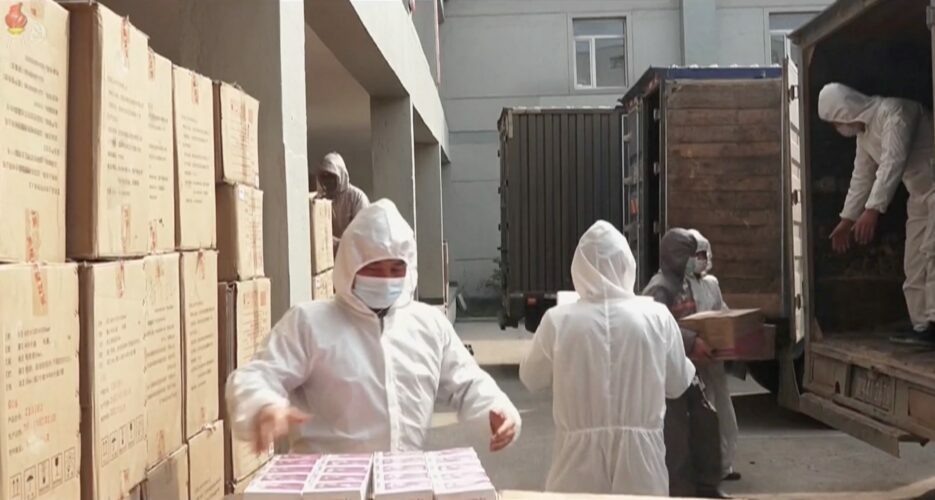 North Korea continues to use a large converted airport to process and possibly disinfect rail freight imports from China, despite significant easing of pandemic border restrictions in the last six months, according to NK Pro analysis of satellite imagery. The latest activity points to the possibility that Pyongyang wants to maintain state control of commerce and prevent the spread of politically dangerous media using facilities originally constructed to help keep out COVID-19. Planet Labs imagery shows the Uiju airport complex near Sinuiju, across from China’s Dandong on the northwest DPRK coast, has remained busy in recent months, with trains dropping off cargo from across the border numerous times per week. This means the facility is likely still creating a disruptive bottleneck in trade that did not exist prior to the DPRK shutting its borders and restricting trade flows in early 2020 in response to the spread of COVID-19. The U.S.-based think tank 38 North reported last month on apparent efforts to start removing large warehouses at the Uiju airport facility while noting that it was not yet clear whether it would lead to a complete dismantlement. Now, NK Pro has found that one of the two warehouses that was removed in January has started to be rebuilt, suggesting North Korea plans to keep using the complex for the foreseeable future. 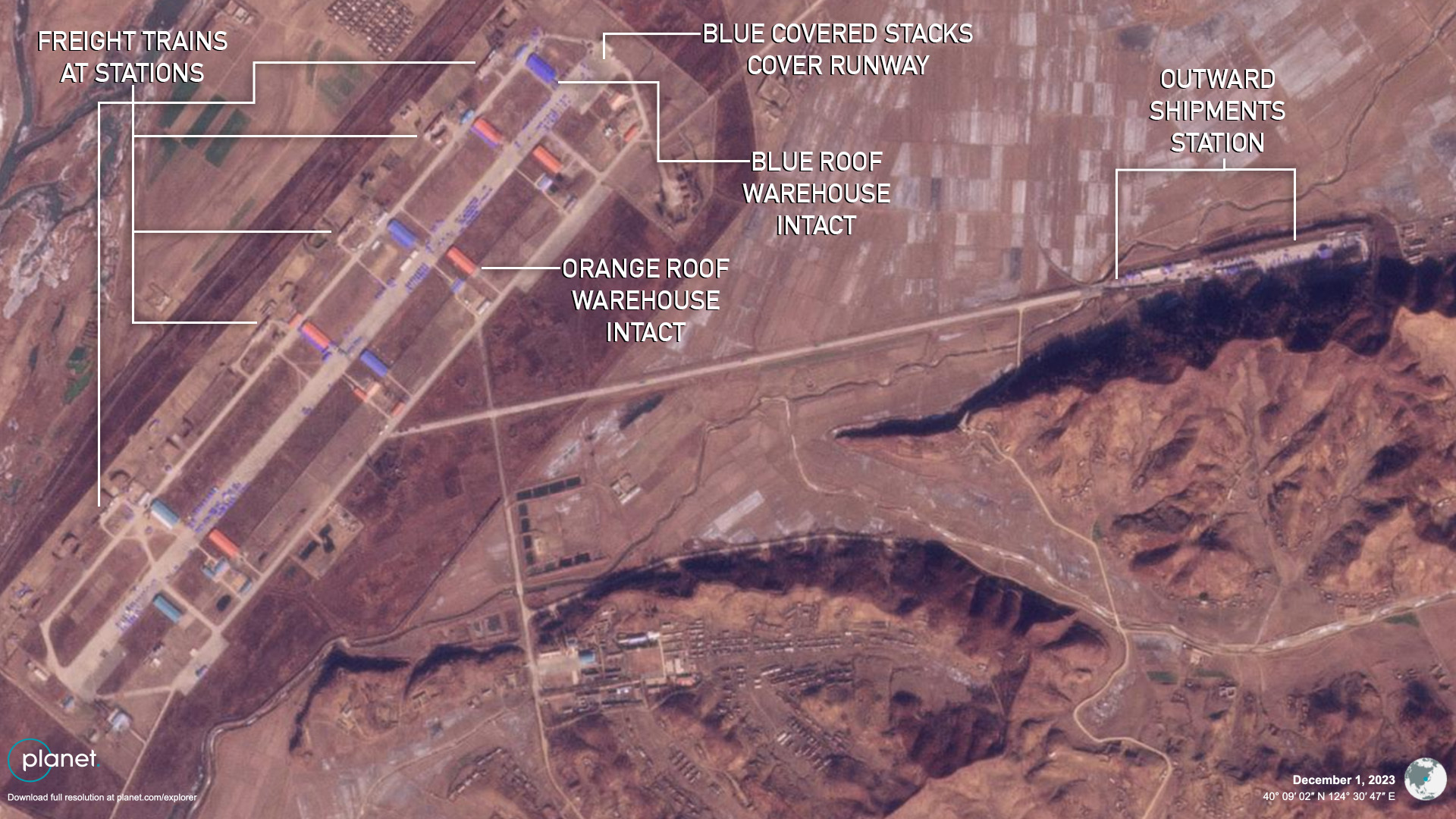
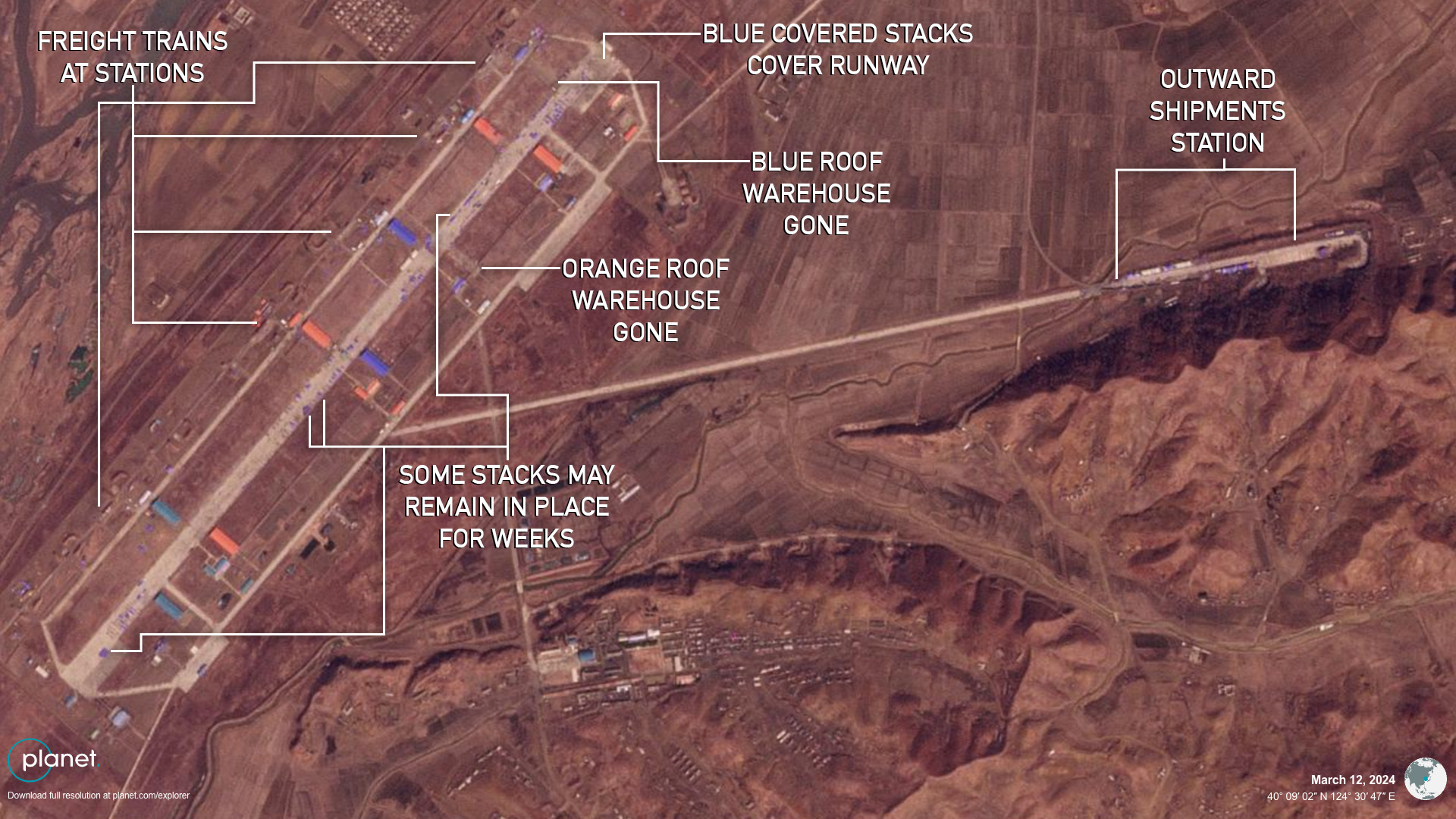
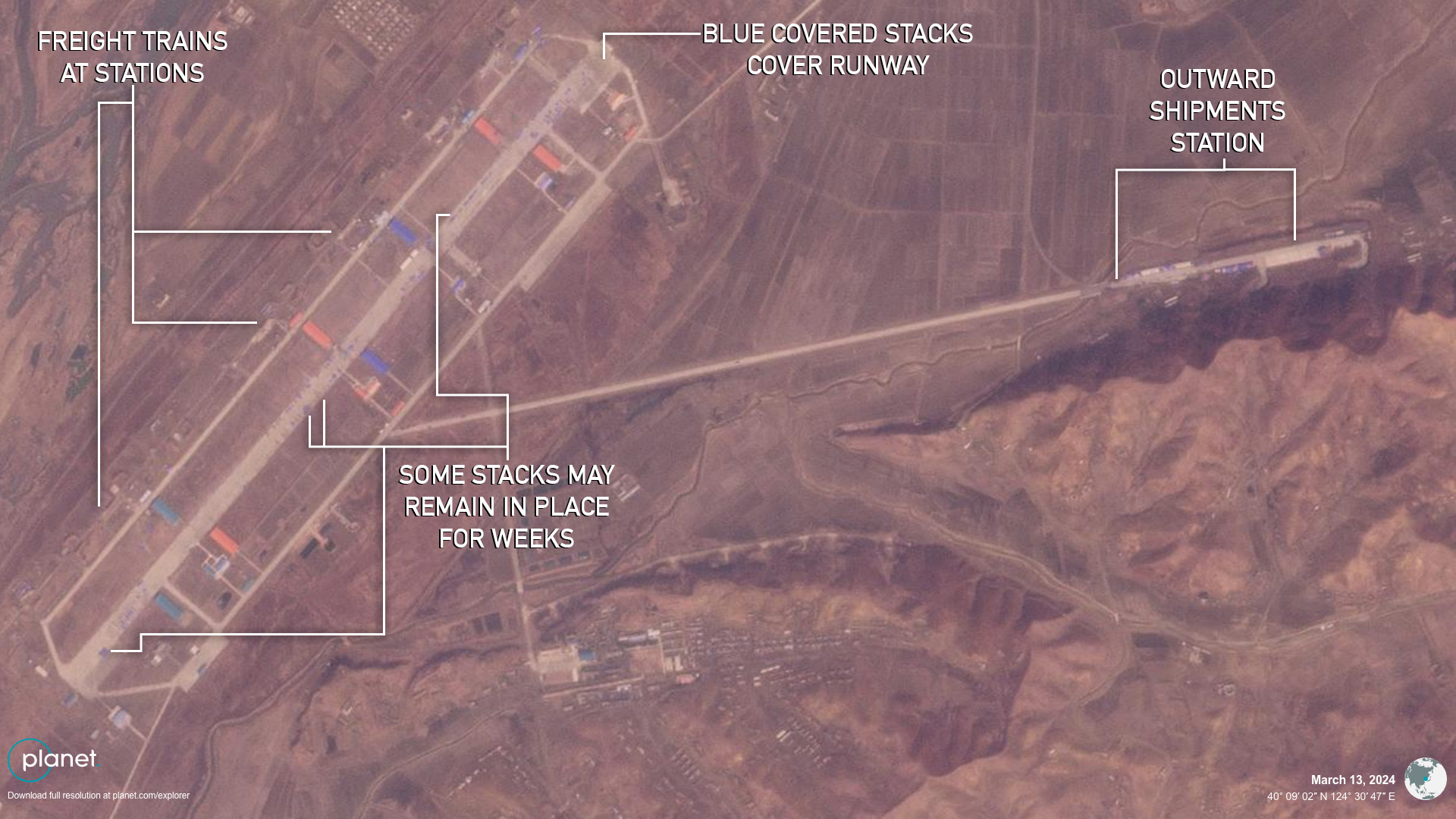
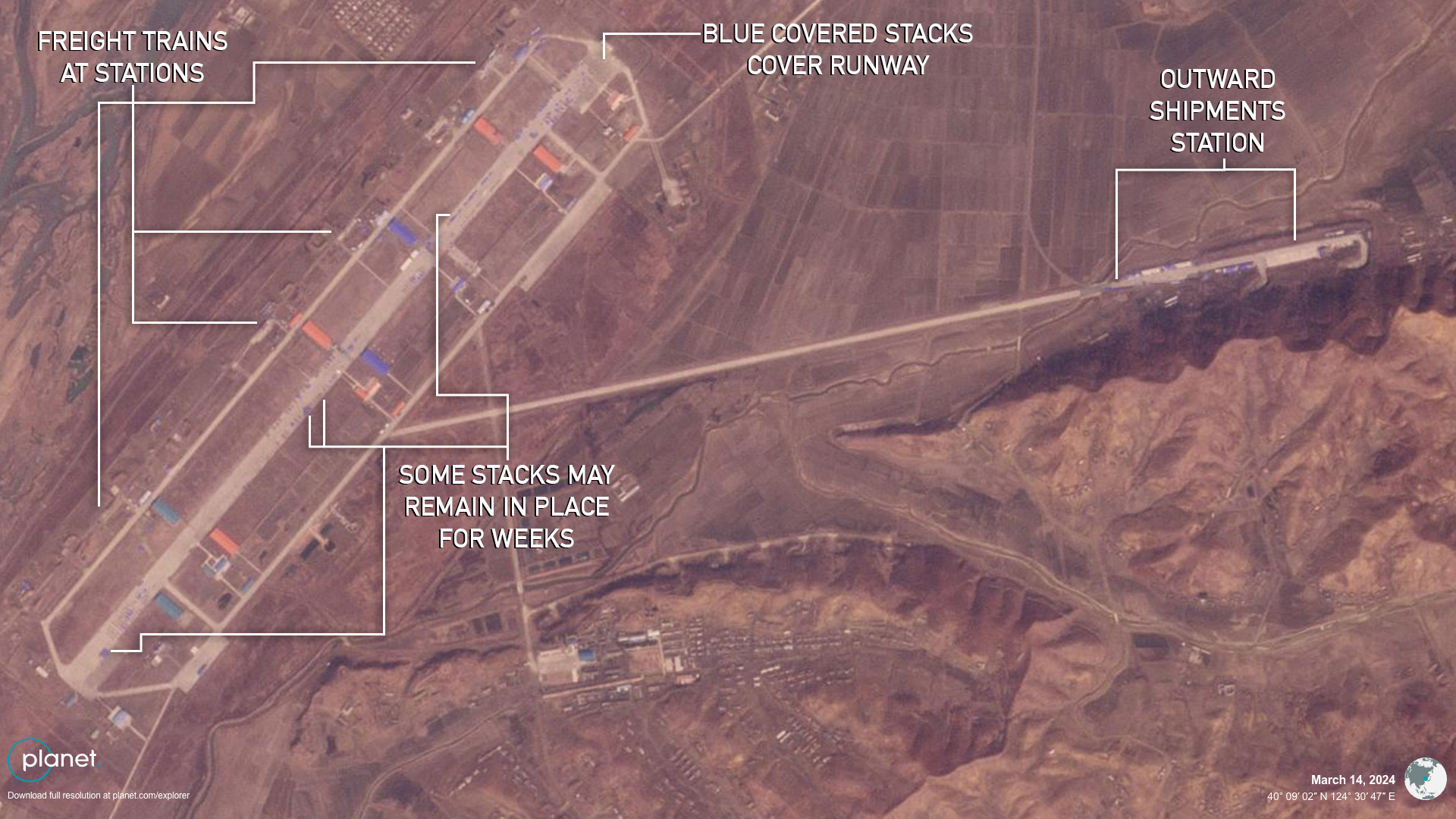
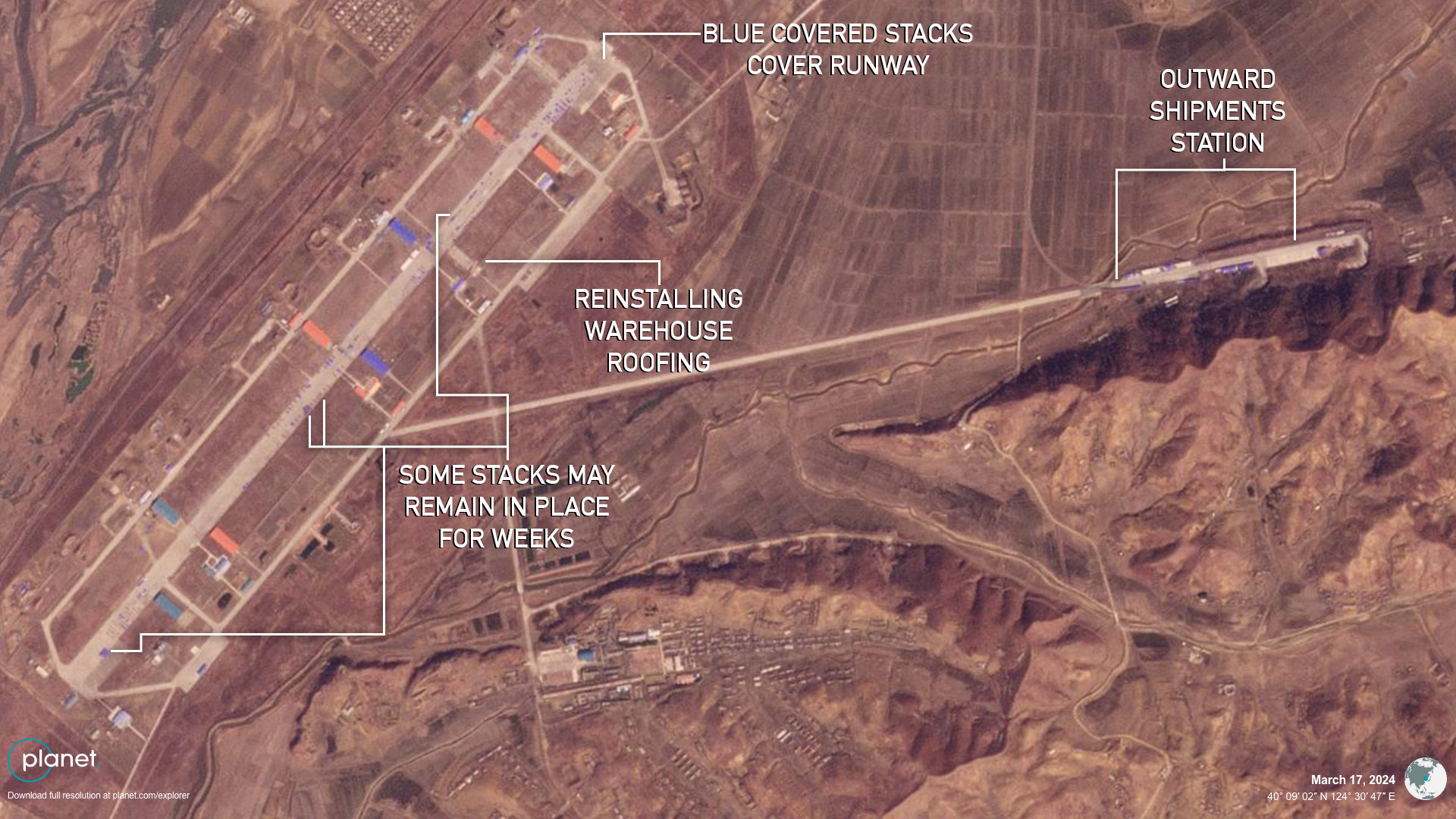
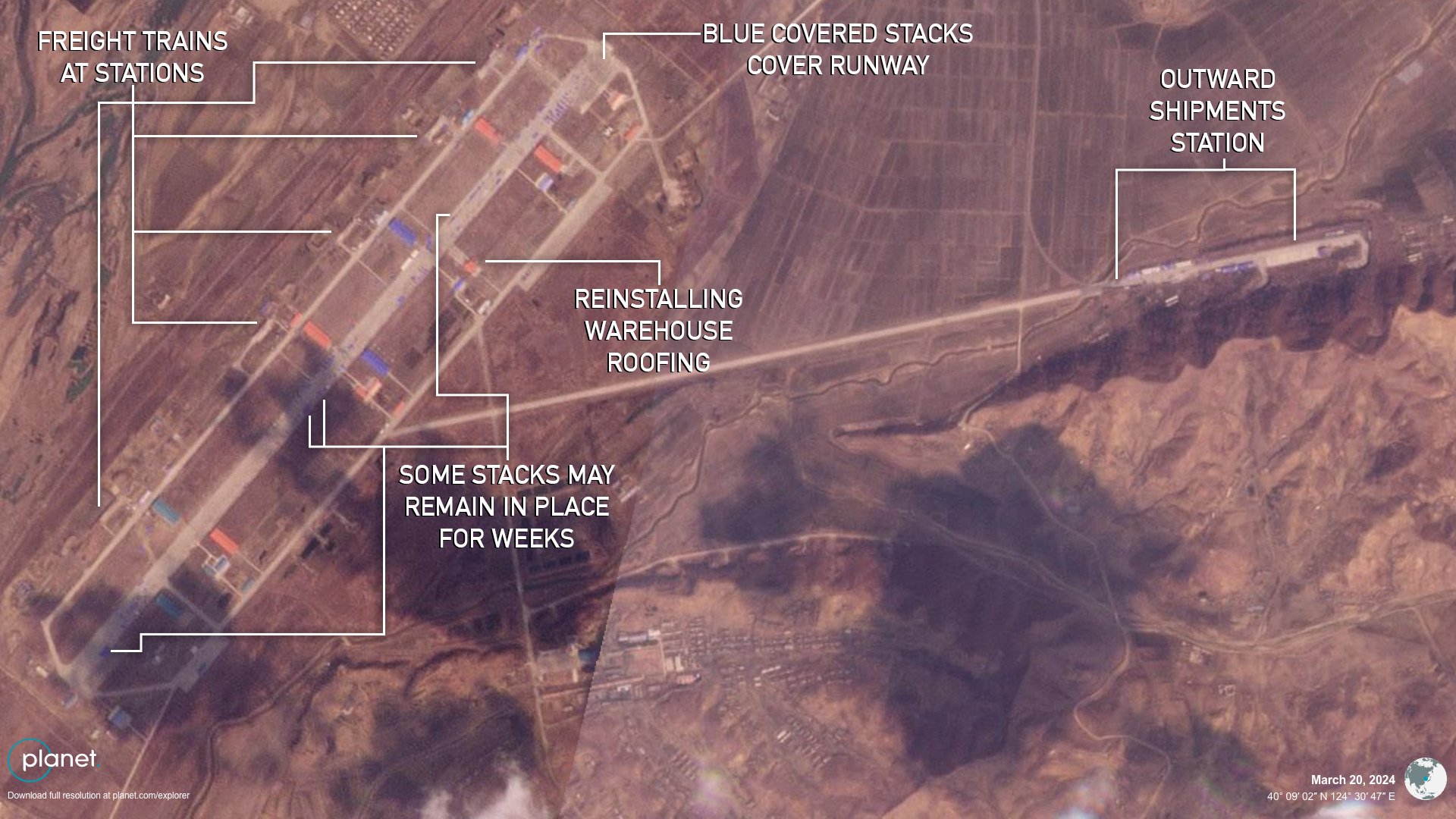
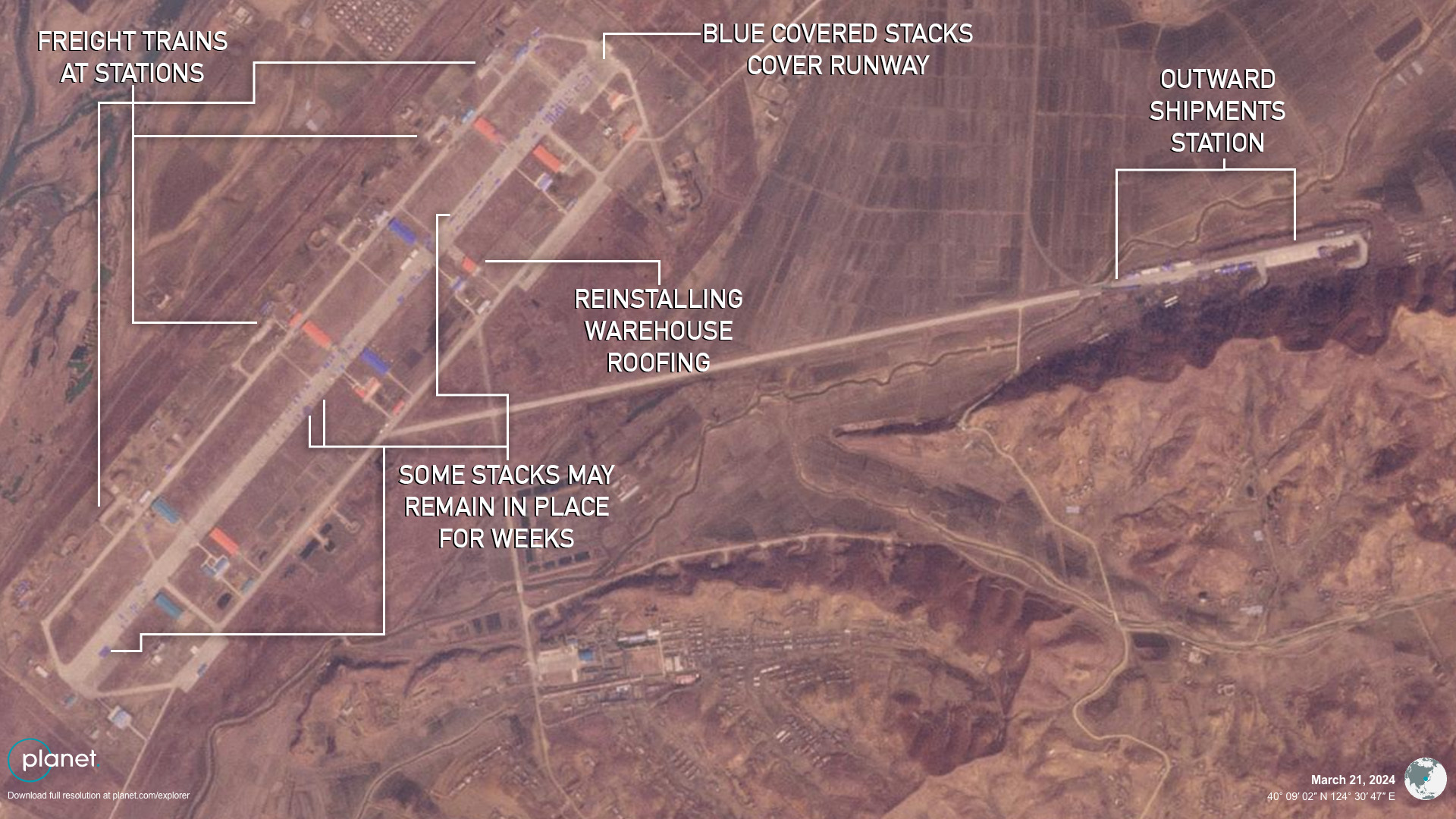
Planet Labs imagery shows that between March 17 and 21, about half of the orange-colored roofing of the 32,000 square foot (3,000 square meter) warehouse had been reinstalled over the concrete lot left bare by the previous demolition. Freight train cars appeared at the five offloading stations in recent days, while there were also changes between March 18 and 21 in the appearance of stacks of goods covered in blue material on the 1.5 mile-long (2.5 km) runway, showing the complex was actively receiving shipments. Most stacks have quickly appeared and disappeared in a matter of days since late last year, pointing to the possibility they are still being disinfected inside the large warehouses and briefly quarantined outside. It could also simply be due to wait times in shipment queues. The virus quarantine period for shipments processed at Uiju was up to three months at the height of the pandemic. But some stacks have still recently appeared to remain stationary for weeks. It is unclear if this is part of an enduring long quarantine policy for certain types of items or if it is related to logistical issues like delays in payments from domestic recipient companies or shipment schedules. The use of the facility in general appears curious considering that authorities have recently been allowing streams of foreigners into the country without quarantine or virus testing, demonstrating less fear about the consequences of a COVID-19 outbreak on their health system. One possible explanation is that DPRK leader Kim Jong Un values the facility and the bottleneck it creates as a means of instituting stronger inspections of imports and preventing the inflow of foreign “anti-socialist” media that he sees as a major threat to his rule. This is reinforced by the continued lack of large trade flows at most other border crossings, according to NK Pro analysis of satellite imagery. A large new Chinese customs complex still appears to be closed at the Manpho-Jian crossing to the east of Sinuiju-Dandong, for example, and a new road bridge and customs facilities at the Namyang-Tumen crossing in the east remain unused. Both North Korea and China have significantly improved border fencing during the pandemic as well, further reducing smuggling and funneling trade through only a few channels for inspection. The only other highly active border crossings are the easternmost China-DPRK road crossing at Quanhe and the DPRK-Russia rail crossing nearby, while smaller-scale trade has appeared to take place recently at the Musan-Nanping crossing further west. Recent satellite imagery of these locations, as well as North Korea’s busiest maritime container port at Nampho, suggests that quarantine policies are subsiding. At Wonjong across from China’s Quanhe, North Korean customs authorities appeared to keep shipping containers stacked outside at a newly converted disinfection facility for long periods until Dec. 2023, when they started to disappear more quickly. Imagery taken this month shows vehicles still frequently arriving to pick up goods. Nampho port on the west coast, the country’s busiest sea port, may have also recently eased pandemic-related restrictions. 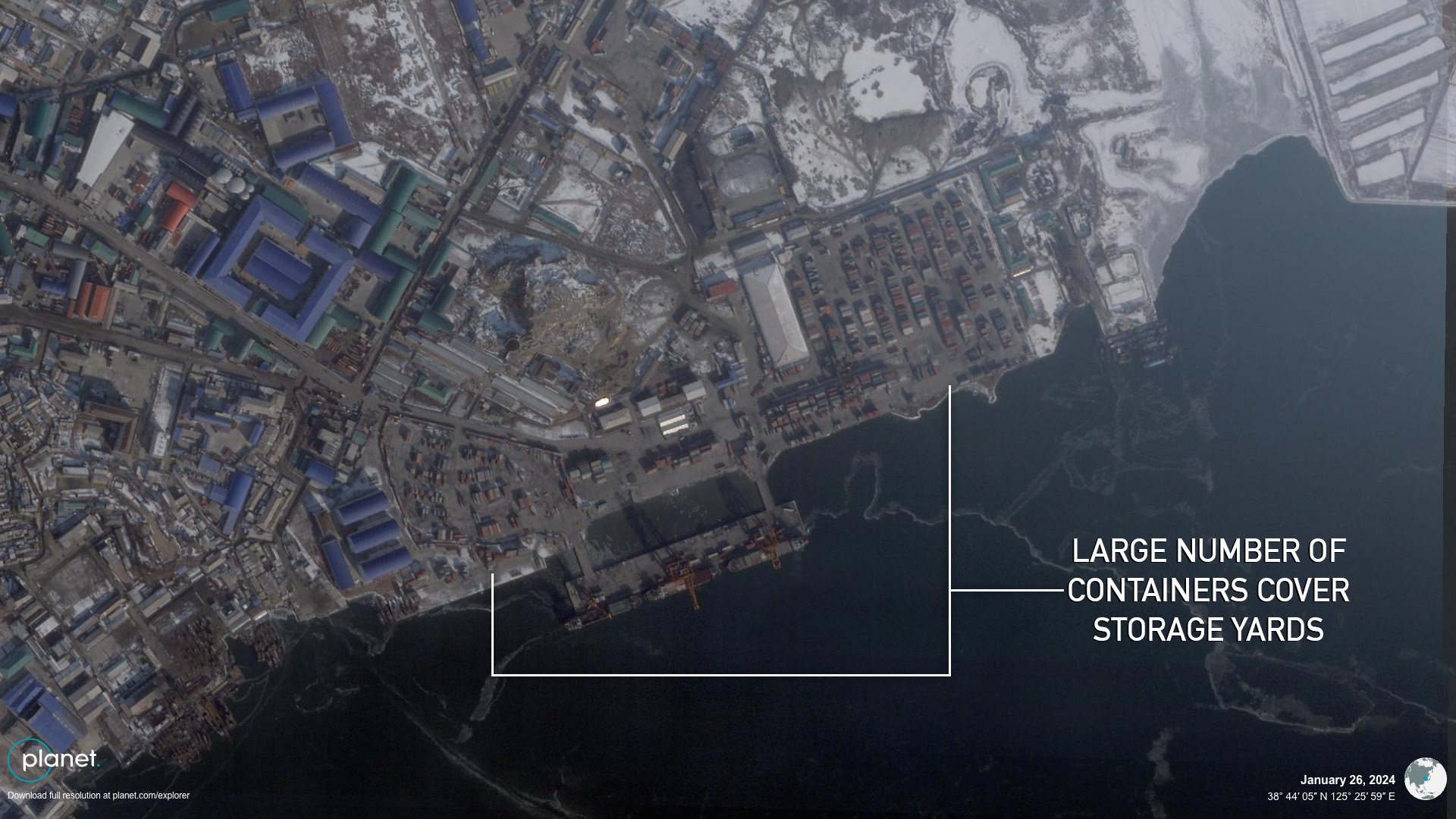
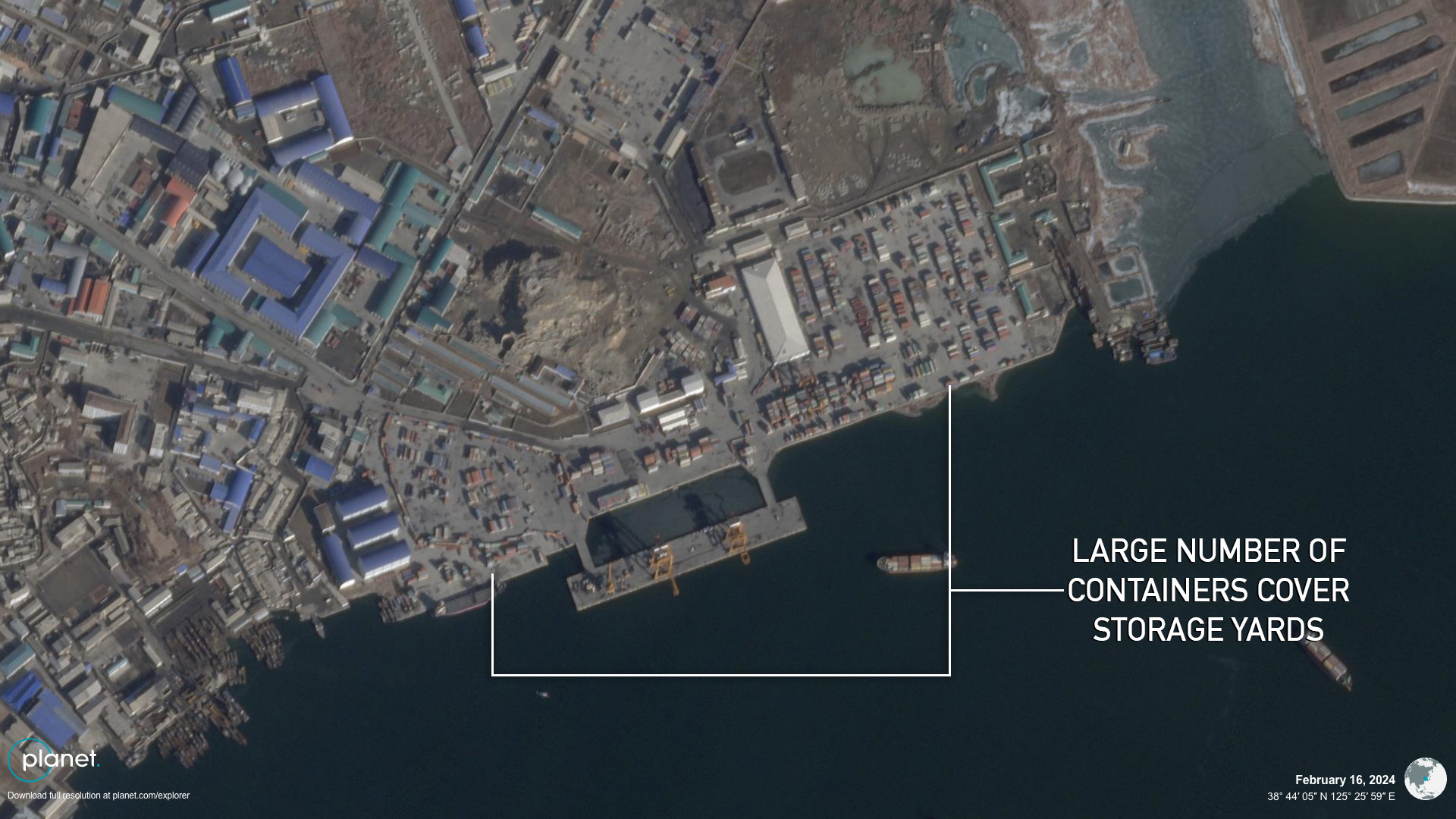
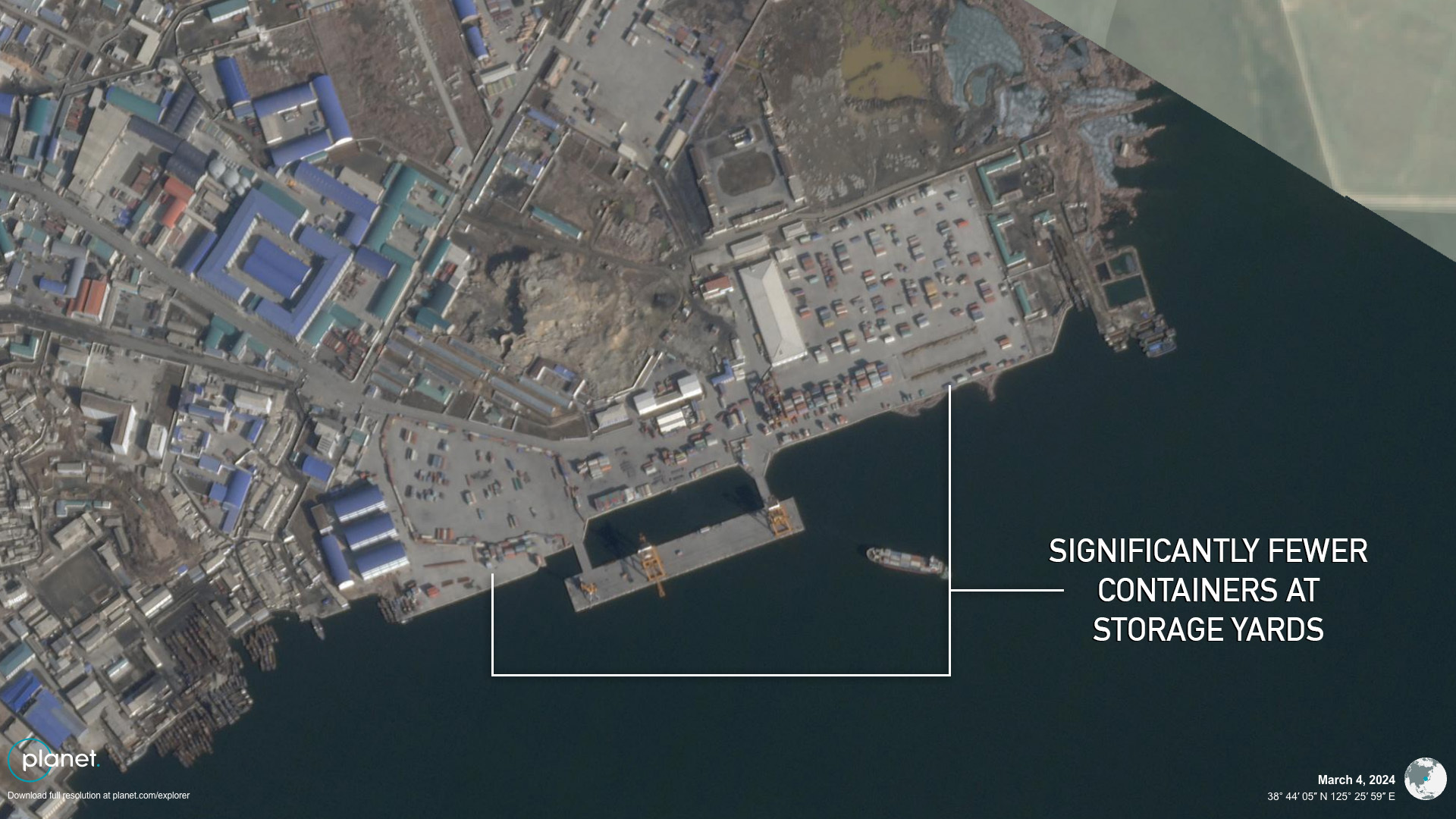
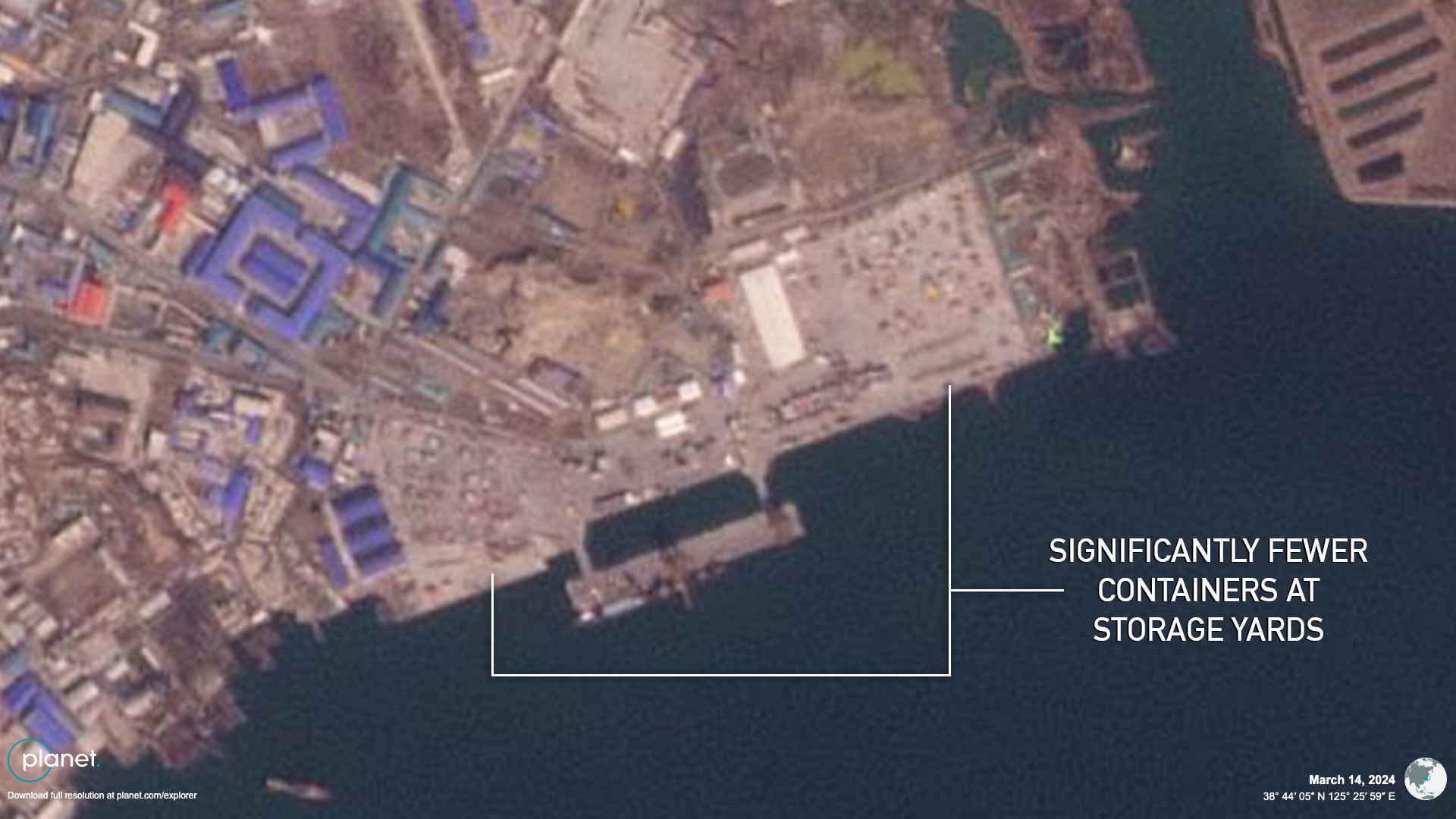
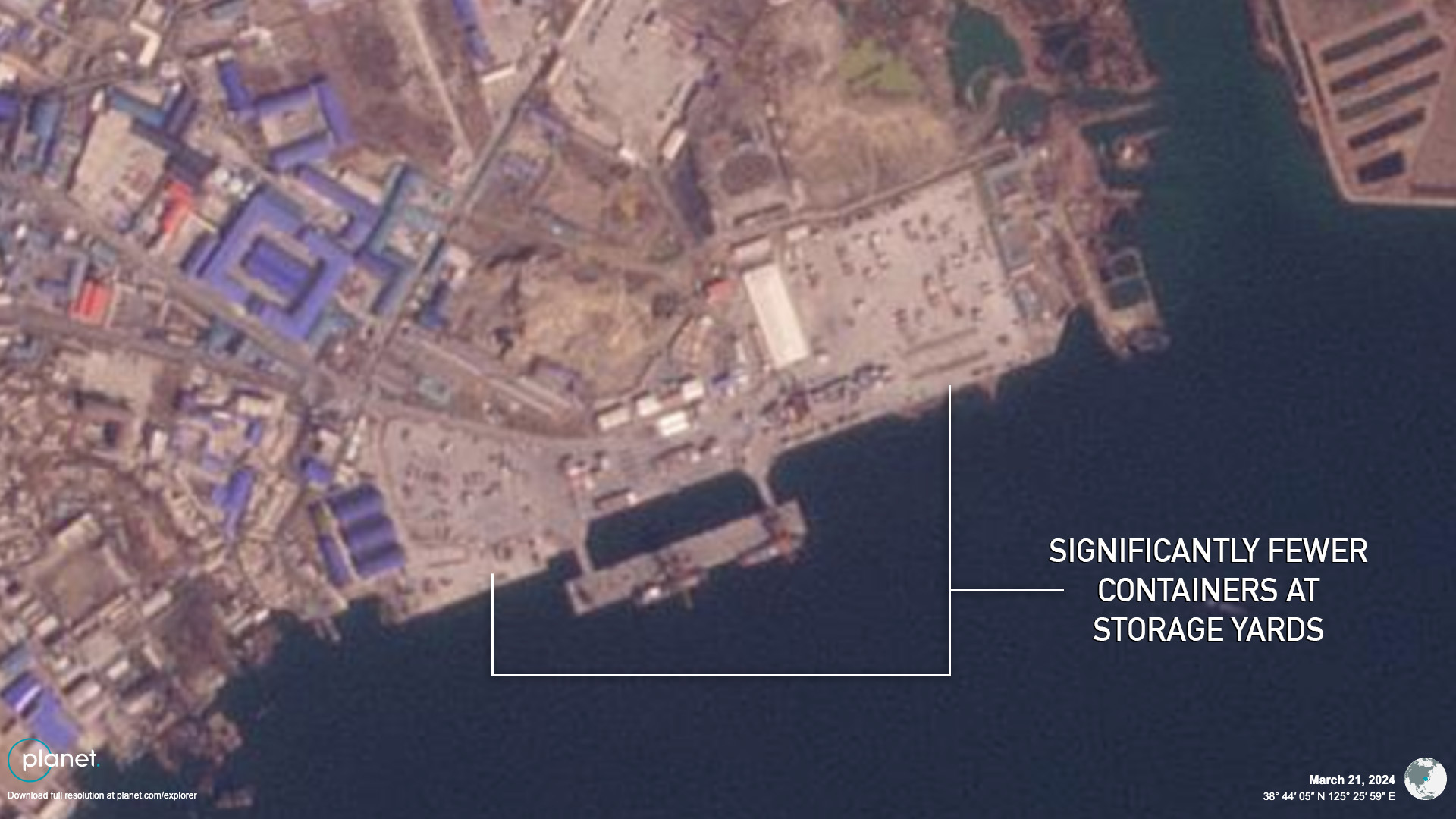
More containers than ever before have crowded the port since 2022 as trade picked up while quarantine policies remained in place, but this number appeared to significantly decrease from January to early March this year and even more after March 10. This is unlikely to be a sign of decreasing trade, since the comparatively high number of containers at the port in recent years has appeared to be a result of quarantine policies leading to a buildup that did not occur before the pandemic, when containers were shipped onward more quickly. Meanwhile, China-DPRK trade has been steadily rising since mid-2022 and North Korea and Russia have appeared to increase trade in weapons and other items in the last year, pointing to the overall decline in pandemic-related trade restrictions. Edited by Bryan Betts © Korea Risk Group. All rights reserved.

|

September 27, 2026Sep 27, 2026

The ultimate resources for professionals working on North Korea
 SHARE
SHARE COPY LINK
 X
X MASTODON