  
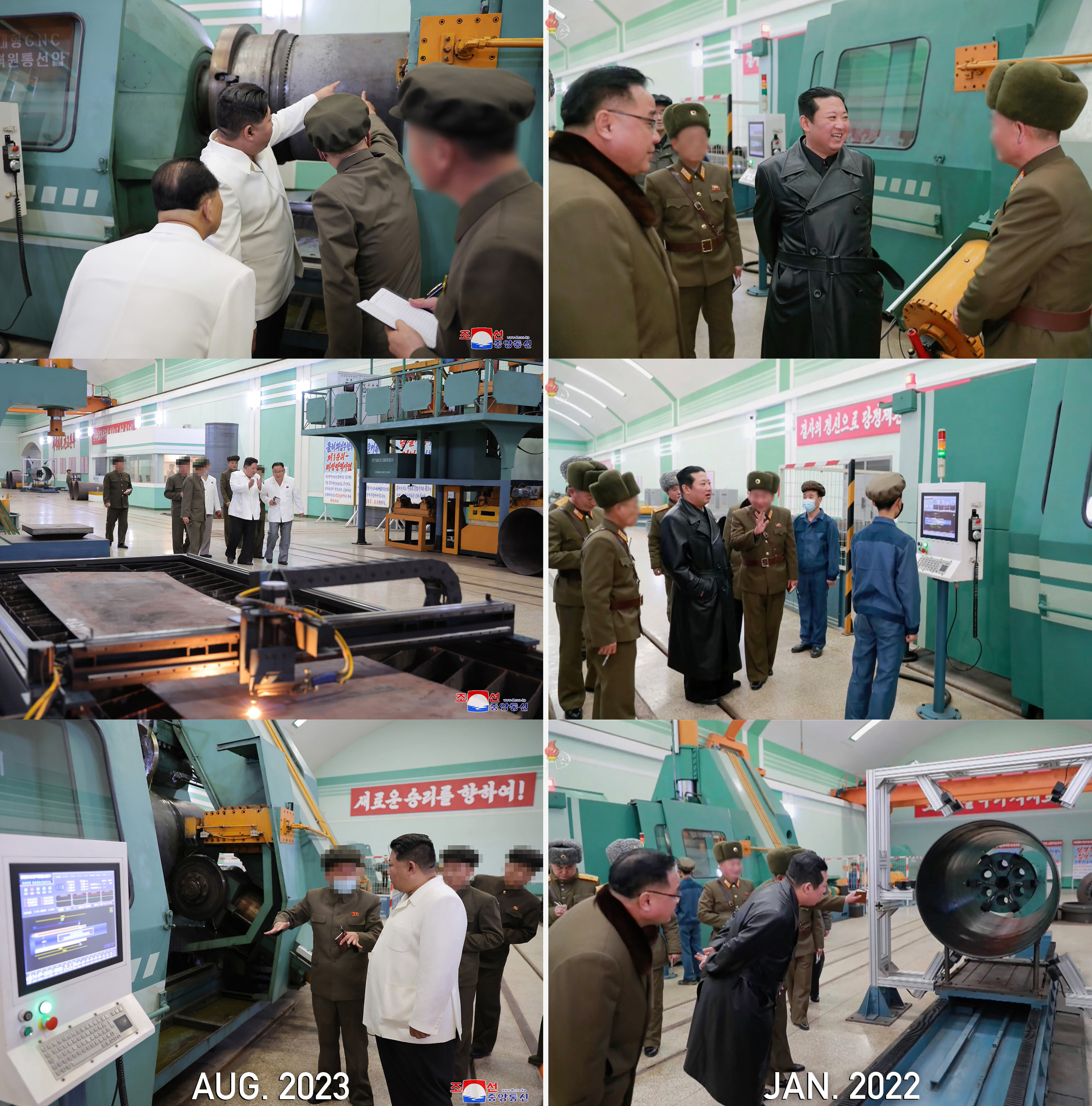
Analysis Arms odyssey: Inside Kim Jong Un’s second tour of weapons factories this monthNK Pro identifies all the upgraded facilities and weapons the North Korean leader inspected on the east coast 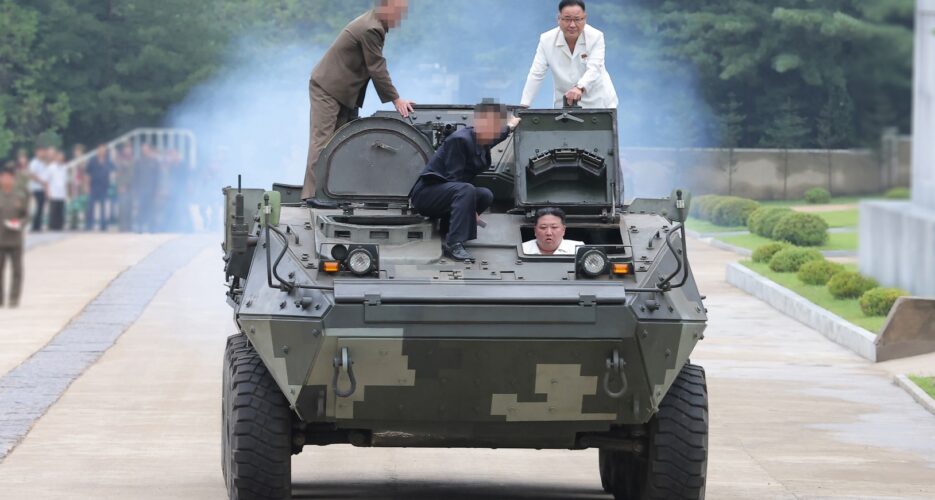 North Korean leader Kim Jong Un toured another four missile and launch vehicle factories in recent days, according to state media, and NK Pro analysis shows that several of the facilities have received substantial upgrades to push forward the mass-production of weapons targeting South Korea. Kim’s latest factory visits come after he inspected five plants producing nuclear missiles and their delivery systems earlier this month. But while those facilities were located near Pyongyang and a munitions hub in the north, this time Kim traveled to factories around Hamhung on the east coast. Like the earlier tour, state media focused mostly on short-range missiles and other weapons systems designed for use in a war with the ROK. However, longer-range systems appeared in photos released on both occasions, offering hints at production capabilities that remain shrouded in secrecy. The following NK Pro analysis details the likely locations of the four latest factory visits and the weapons the plants appear to be producing. 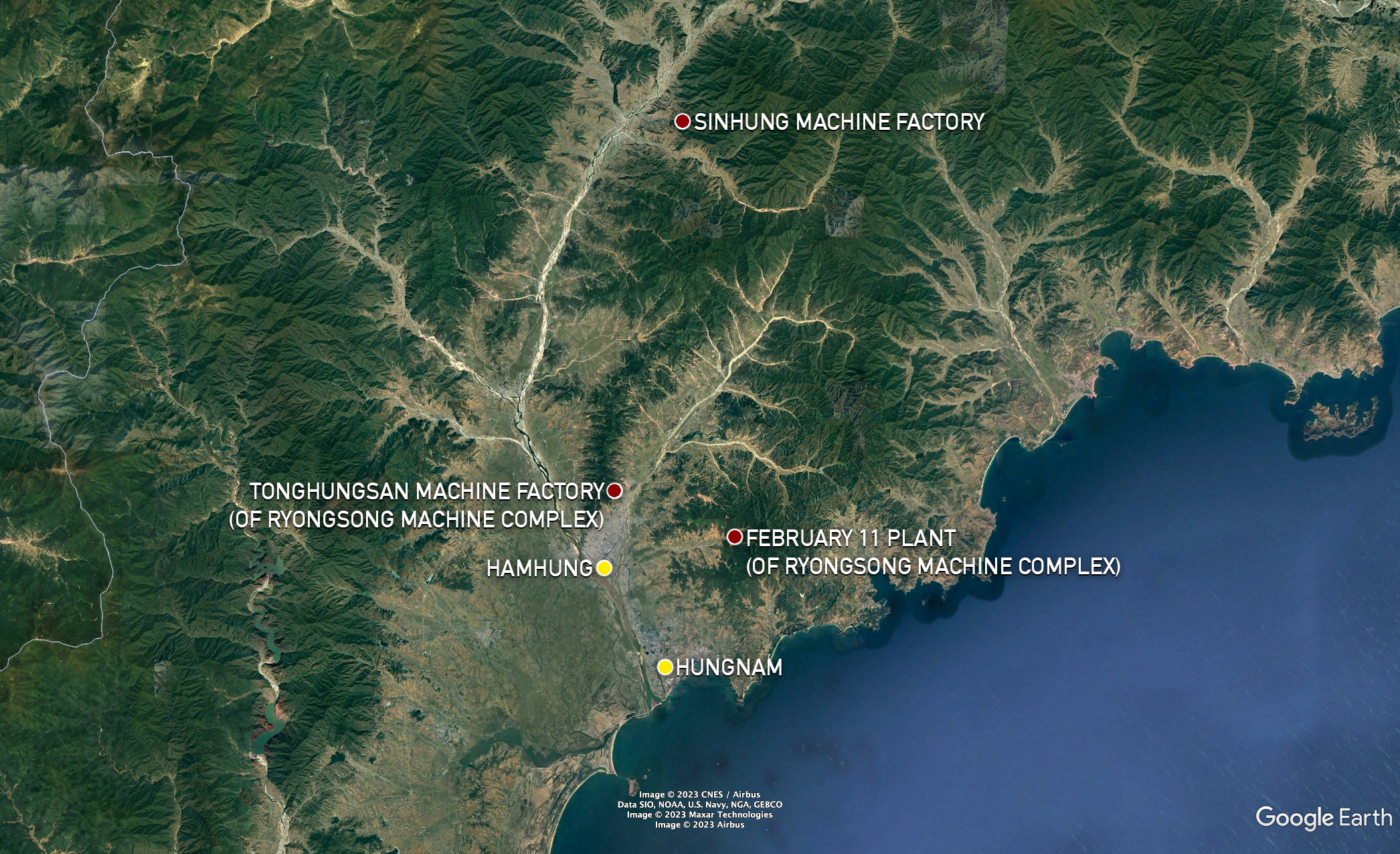 1. SHORT-RANGE NUKE PLANT (FEBRUARY 11 PLANT, HAMHUNG) State media did not name any of the factories on Kim’s Aug. 11-12 tour with top munitions officials Jo Chun Ryong and Kim Jong Sik and blurred the faces of managers and workers, but described the DPRK leader’s first stop as a “factory producing tactical missiles” (전술미싸일생산공장). The word “tactical” refers to nuclear-capable short-range ballistic missiles (SRBMs). NK Pro has identified this factory as the February 11 Plant located in a valley to the east of Hamhung and affiliated with the Ryongsong Machine Complex (룡성기계련합기업소 2월11일공장), based on interior details in Korean Central News Agency (KCNA) photos that match details in photos from a previous visit in Jan. 2022. State media only referred to it as a “munitions factory producing major weapon systems” at the time, but analysts from the James Martin Center for Nonproliferation Studies identified it as the February 11 Plant by comparing interior details to those from previous Kim Jong Un visits in March 2016, May 2015 and June 2013. Planet Labs satellite imagery shows that construction started on a large new production facility at the east end of the factory campus in March 2020 and that it was mostly complete by Kim’s Jan. 2022 visit. 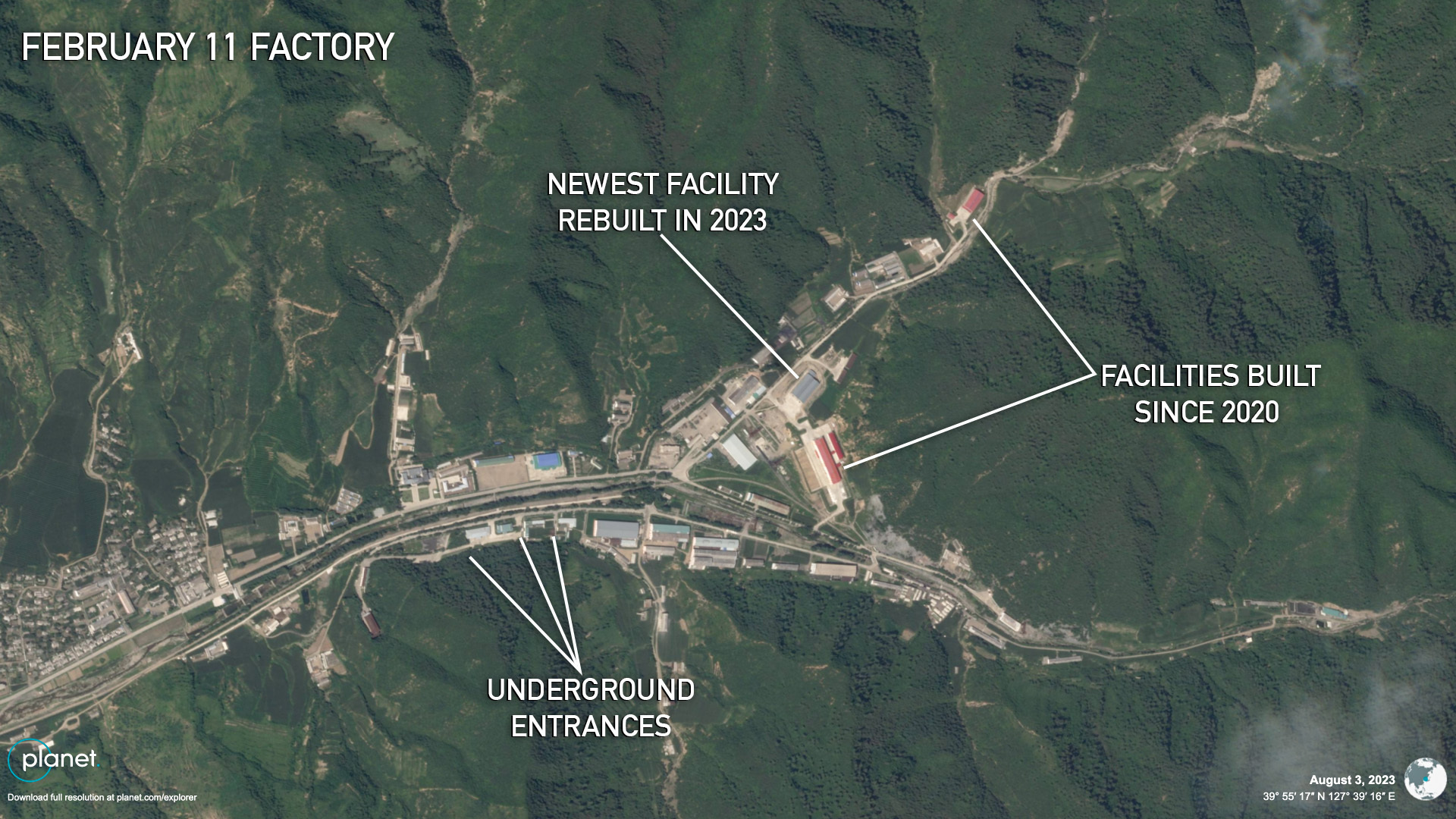

 Another production building next door was rebuilt starting in early June this year. Dave Schmerler, a senior research associate at the James Martin Center, told NK Pro the fact that the buildings are surrounded by berms points to caution over explosives. North Korea satellite imagery expert Jacob Bogle also recently analyzed that entrances to the factory’s underground tunnel production halls were reinforced in the last year, possibly to “protect against explosions/accidents.” KCNA said the factory has “perfected the scientific and technological issues arising in production,” has improved automation and modernization and is “steadily expanding its production capacity.” The report also refers to assembly-line or “serial production.” On top of his high praise for the factory’s development, Kim ordered its workers to “drastically boost the existing missile production capacity.” Images of Kim’s latest visit show dozens of SRBMs being assembled in two above-ground production halls, possibly facilities recently built based on their newer-looking interior details, as well as tunnel-based production lines. NK Pro analysis indicates that one of the missiles is a Hwasong-11B (KN-24) solid-fuel SRBM in a tan color scheme in a near finished state, seen during past tests and an Oct. 2021 weapons expo. There is also a large number of partially assembled missiles in a green color scheme that resemble the Hwasong-11A (KN-23) SRBM. Kim said in March that the DPRK developed a smaller nuclear warhead designed to fit on both of these missiles, but Pyongyang is not known to have conducted a nuclear test to prove the new warhead’s effectiveness. 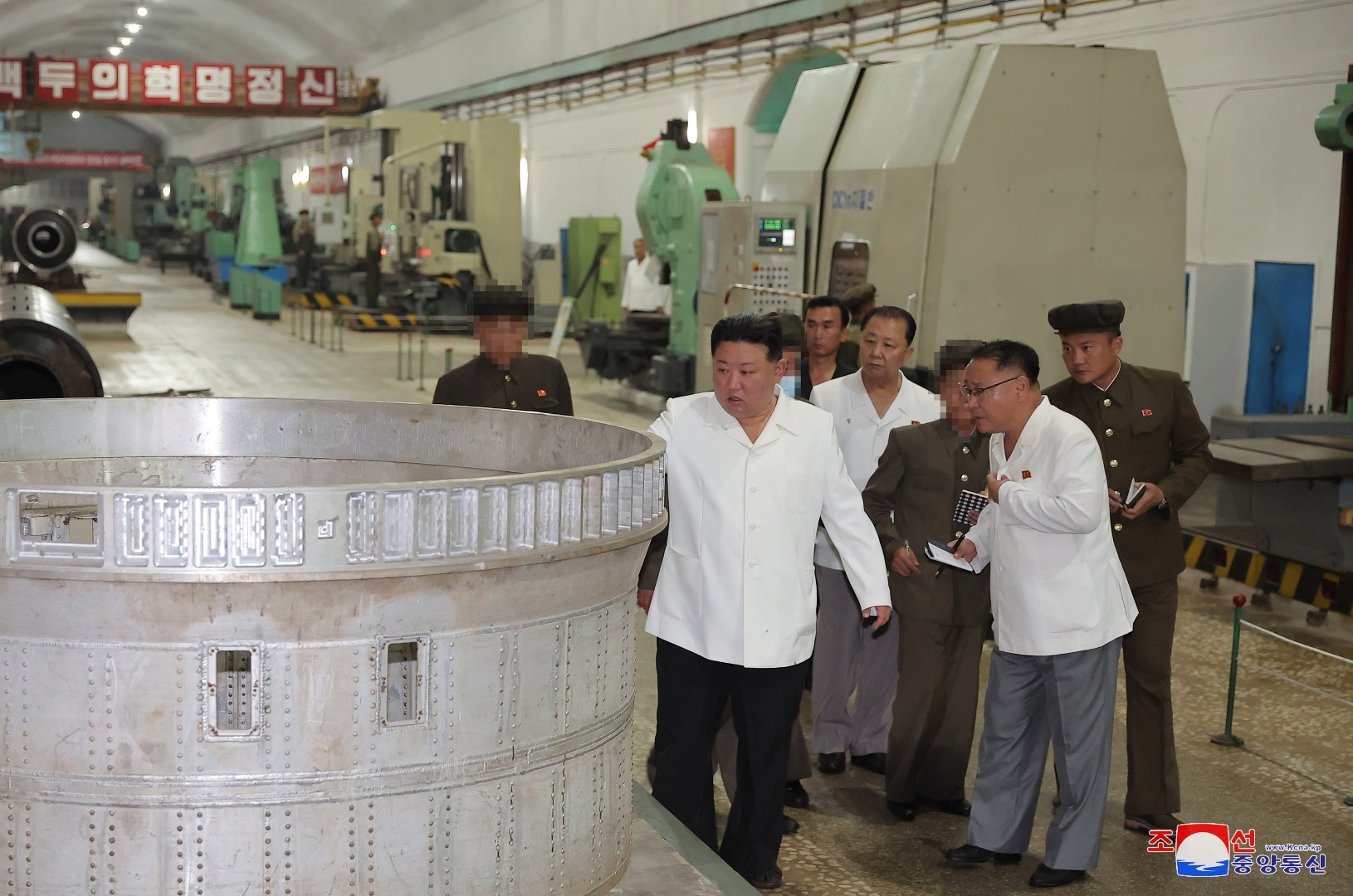 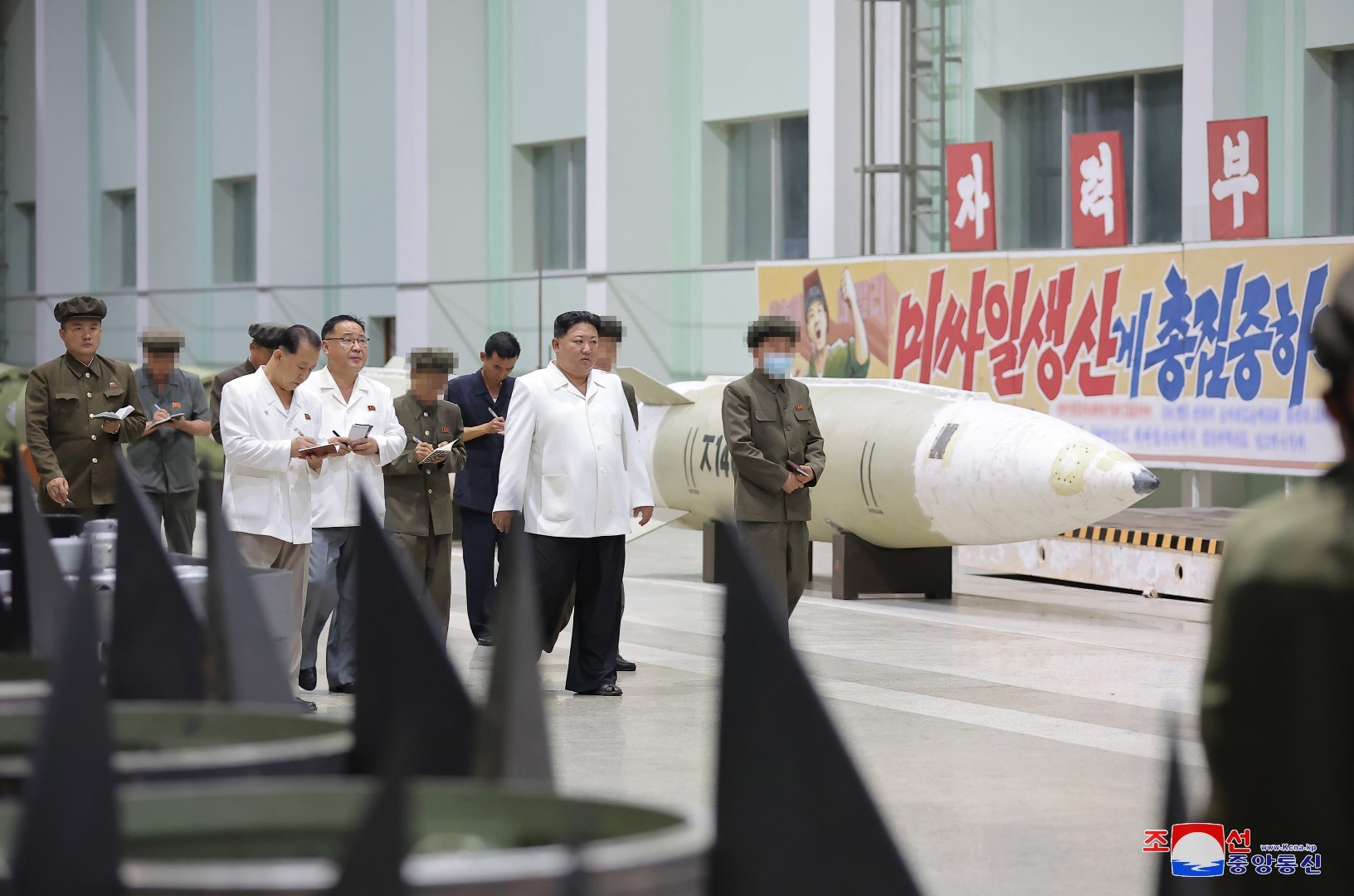
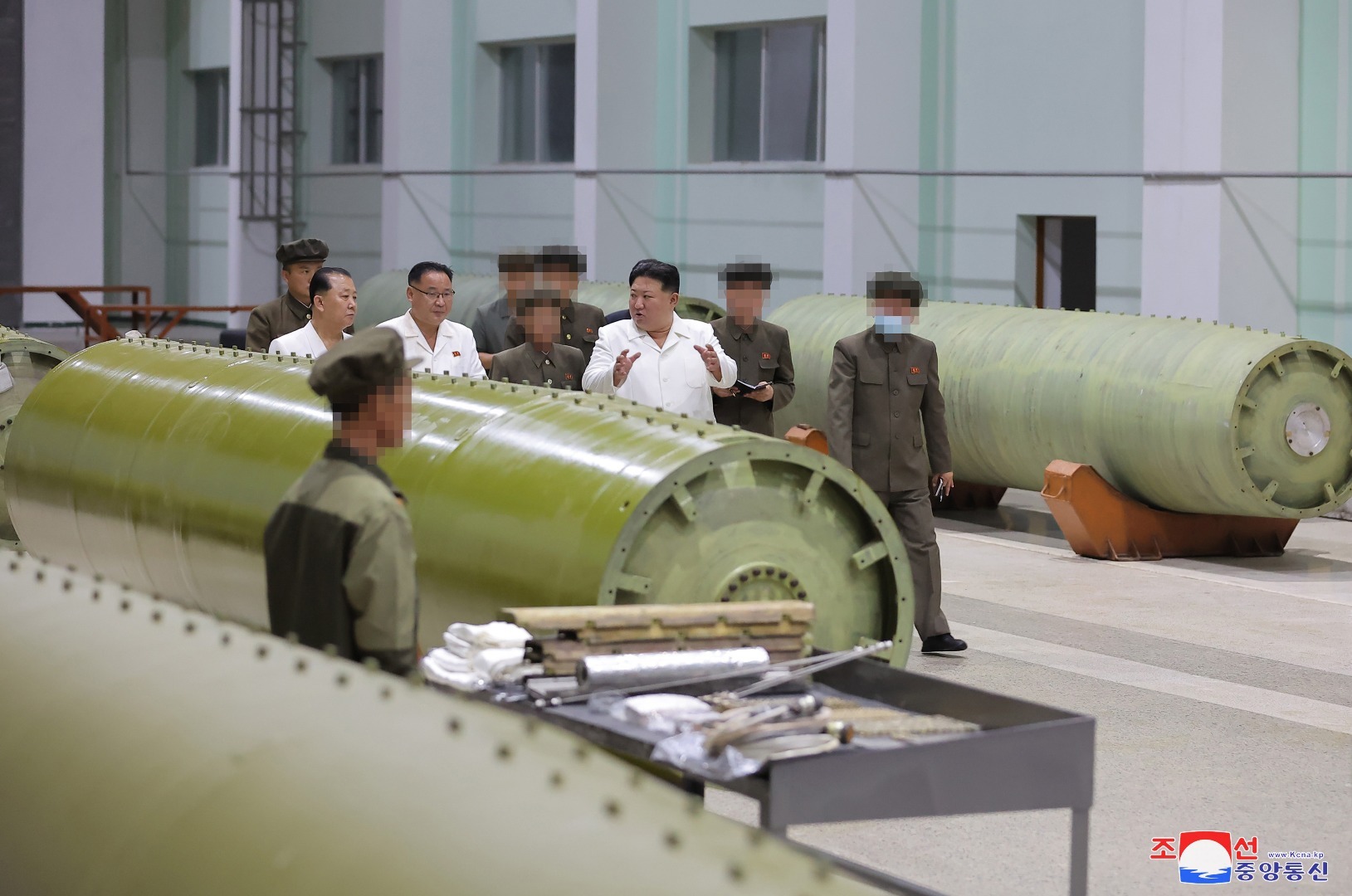
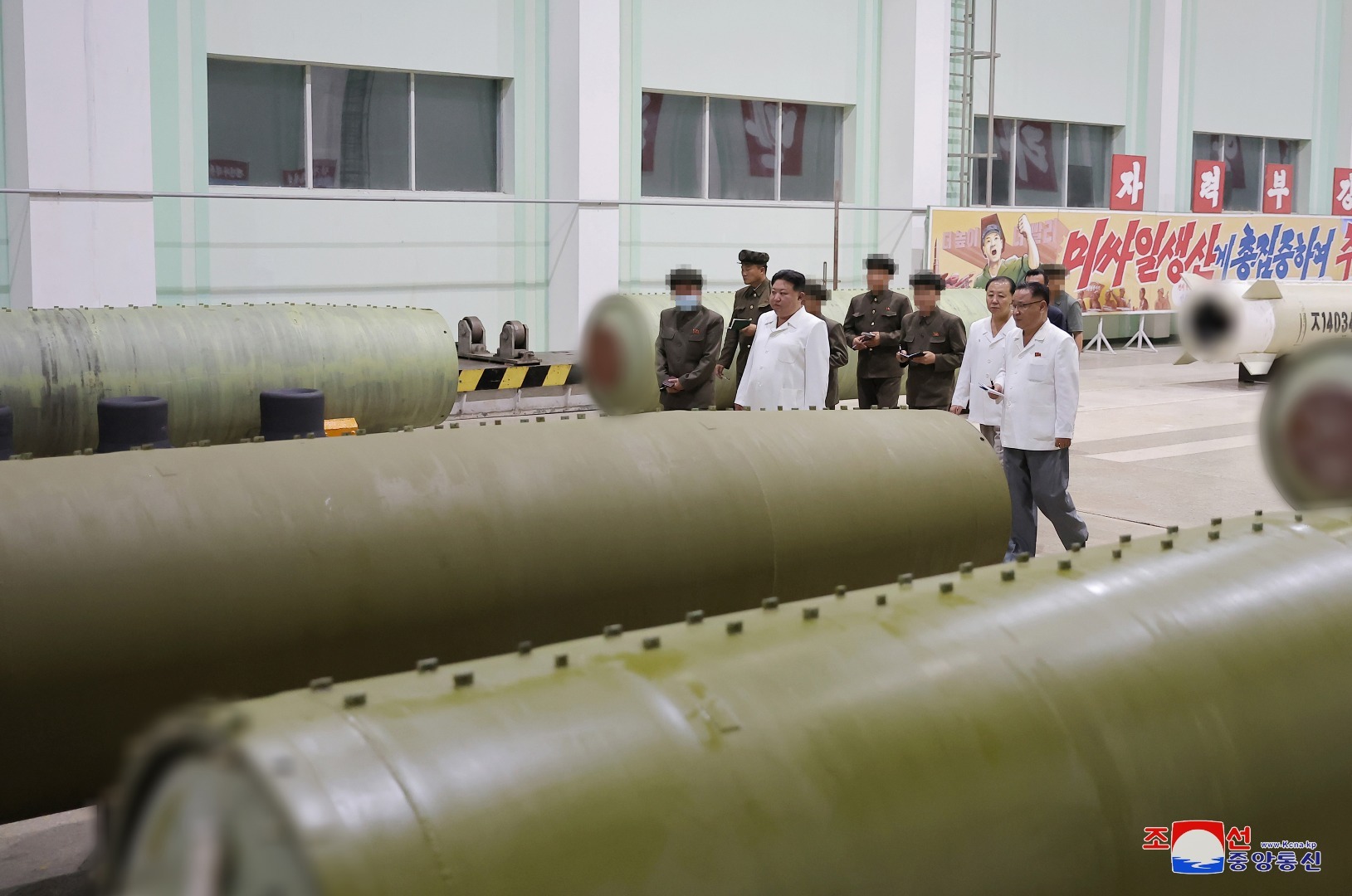
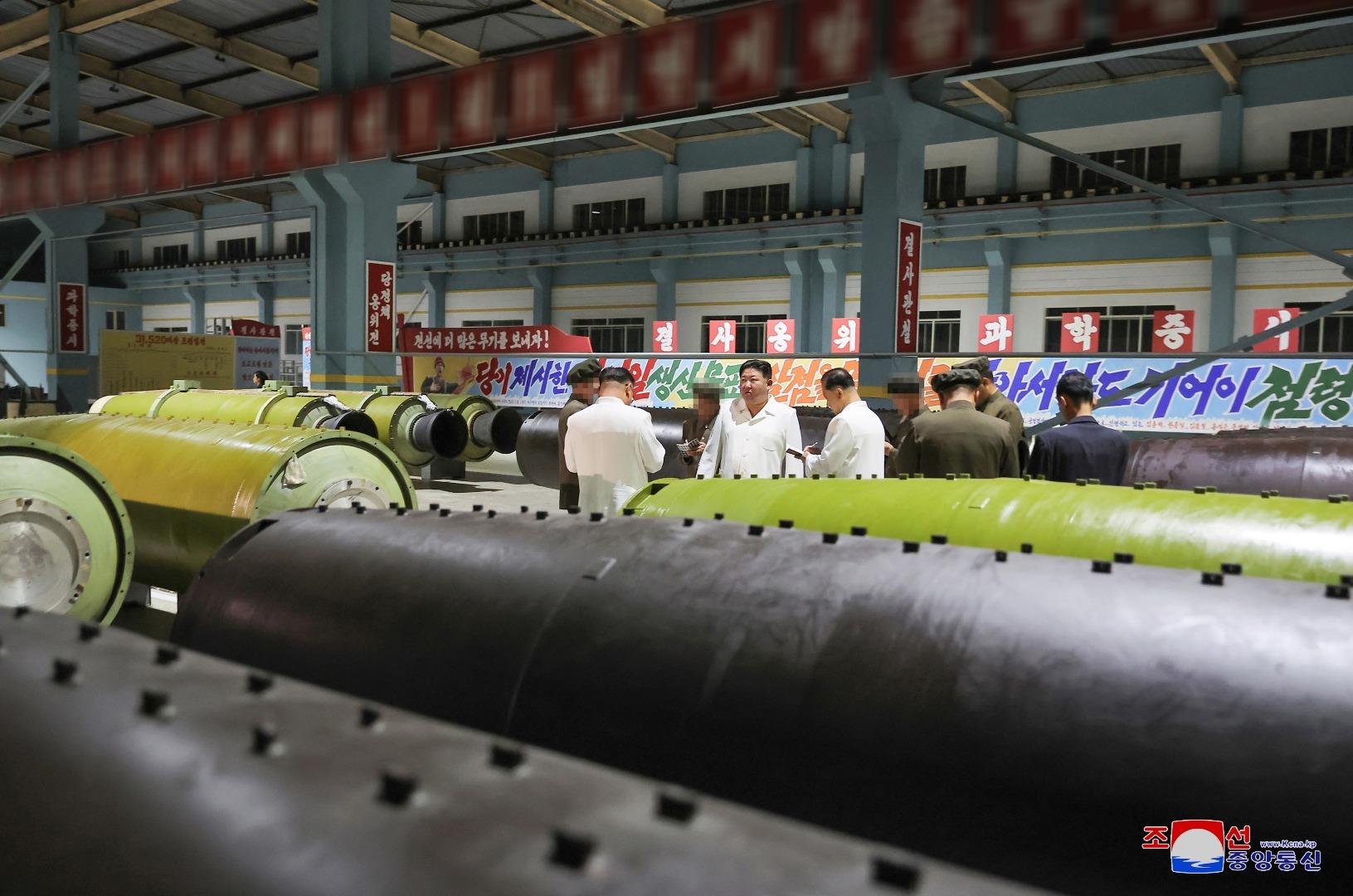
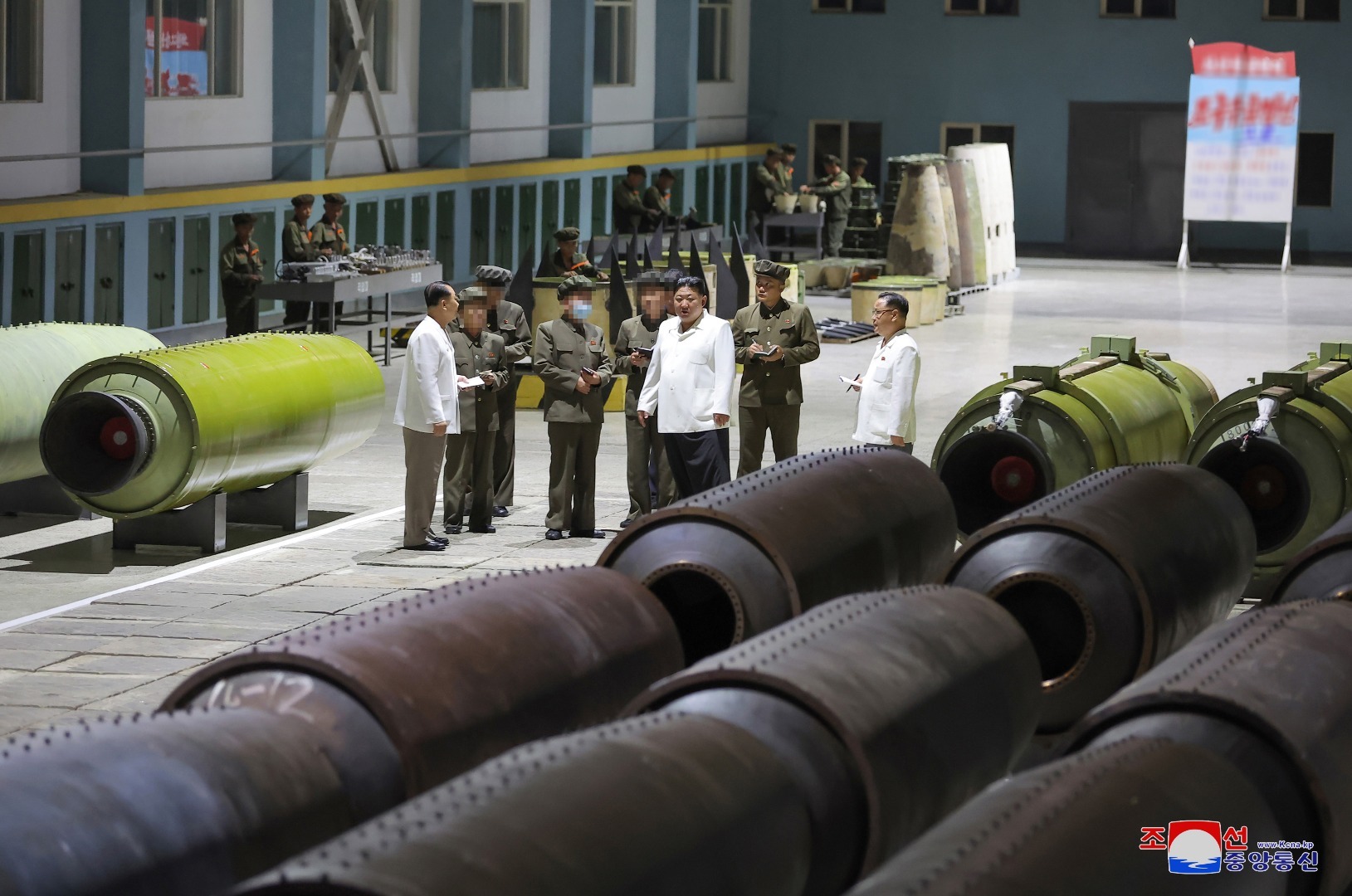
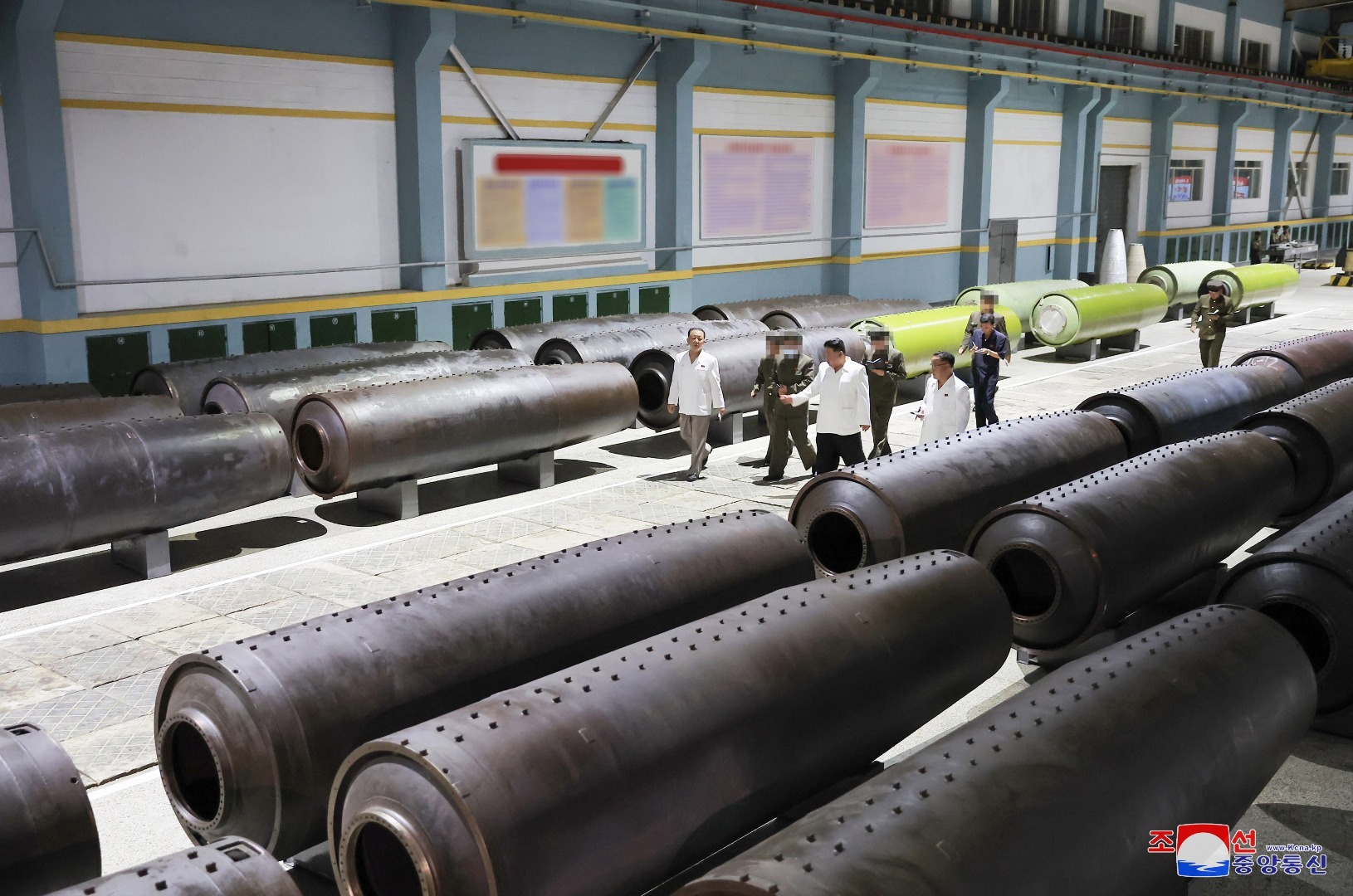
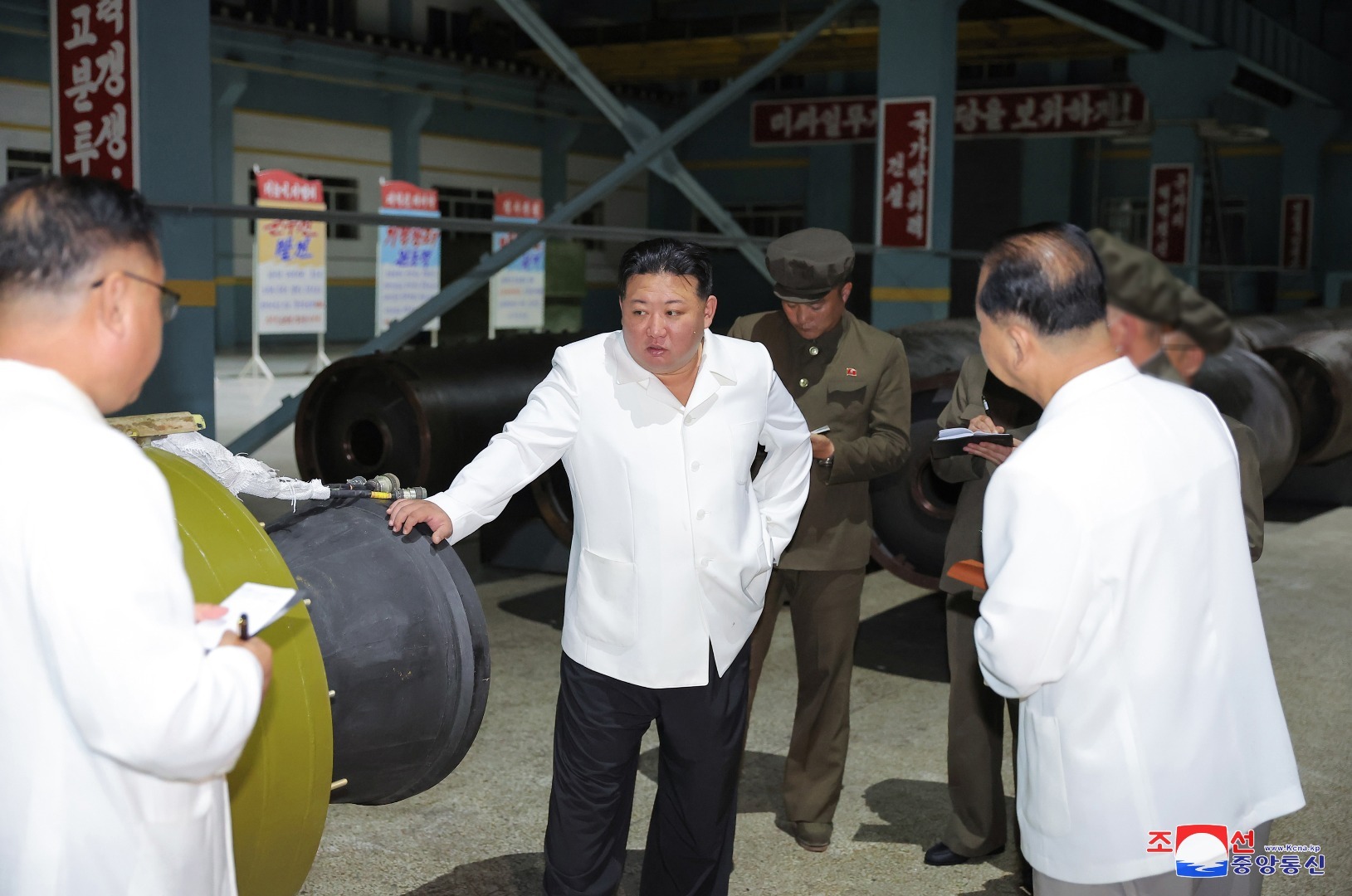
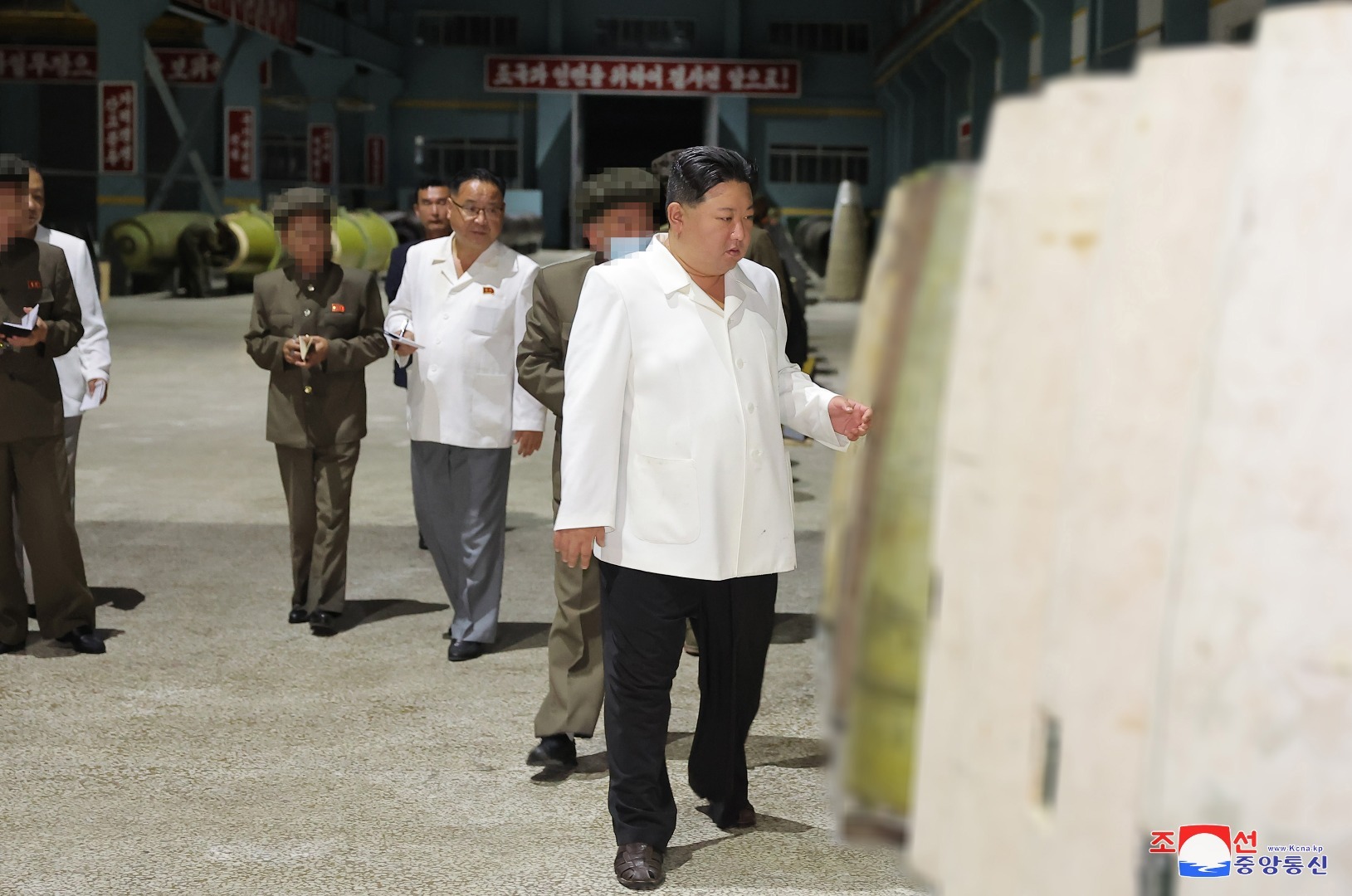
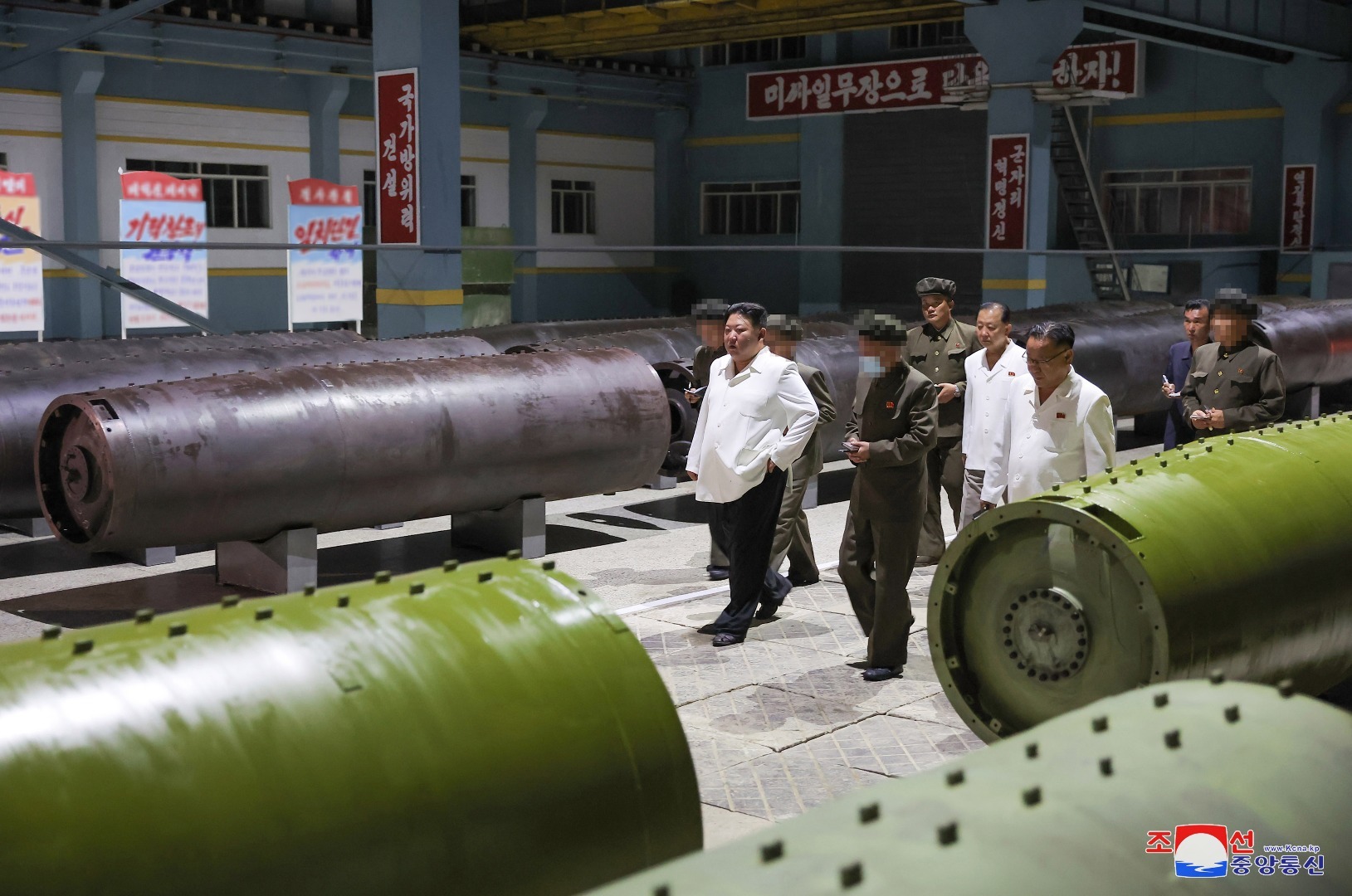
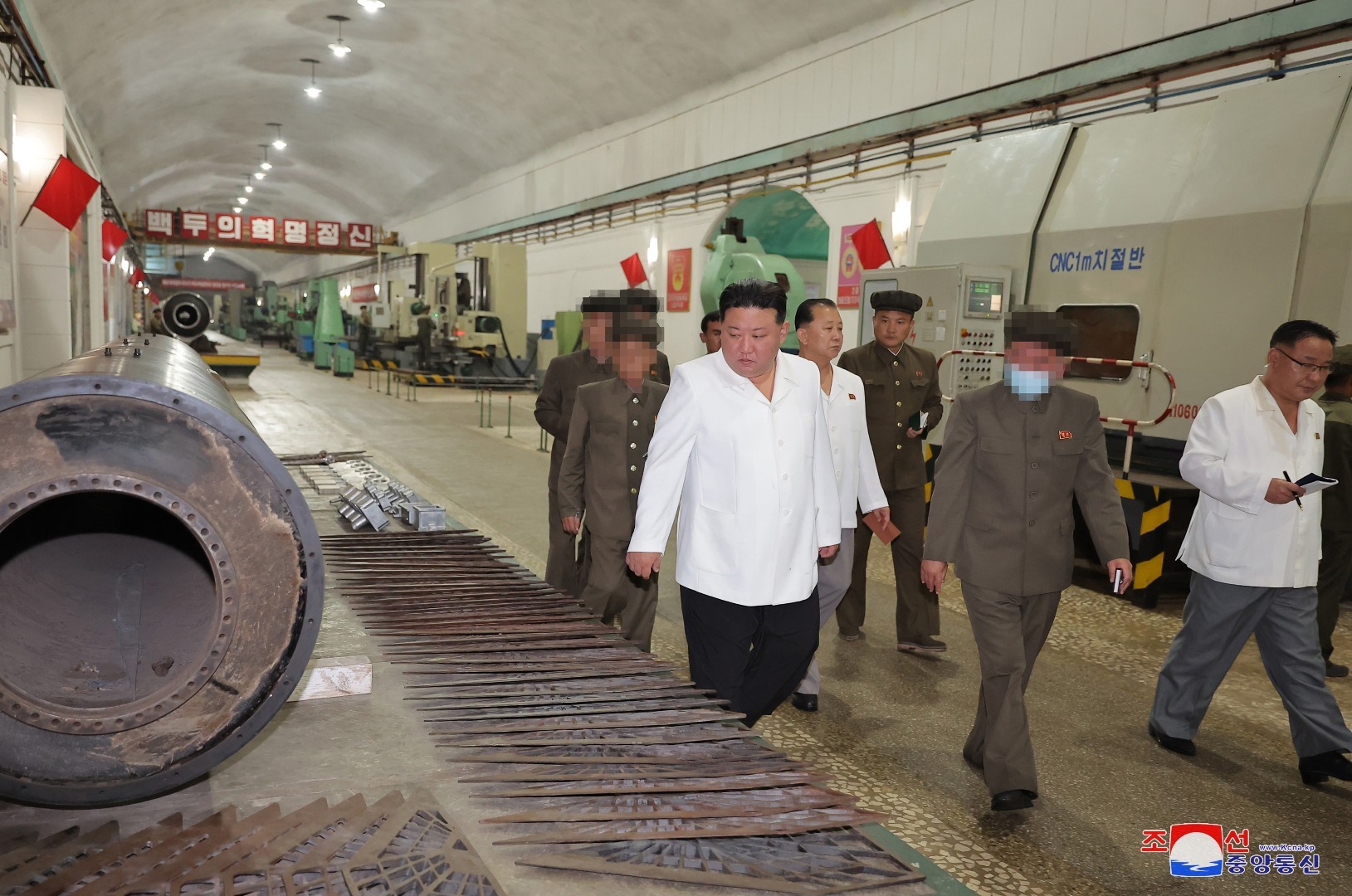
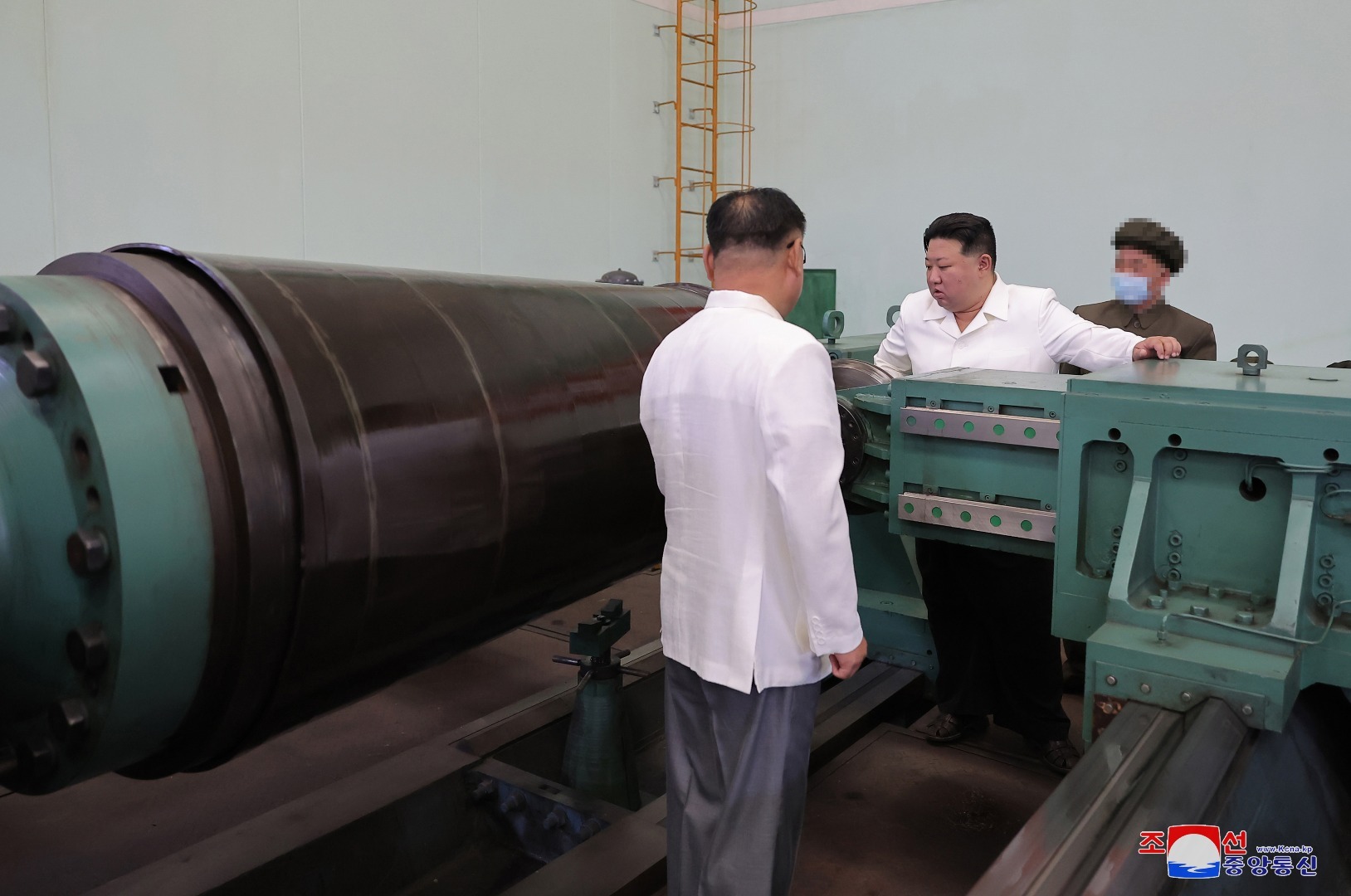
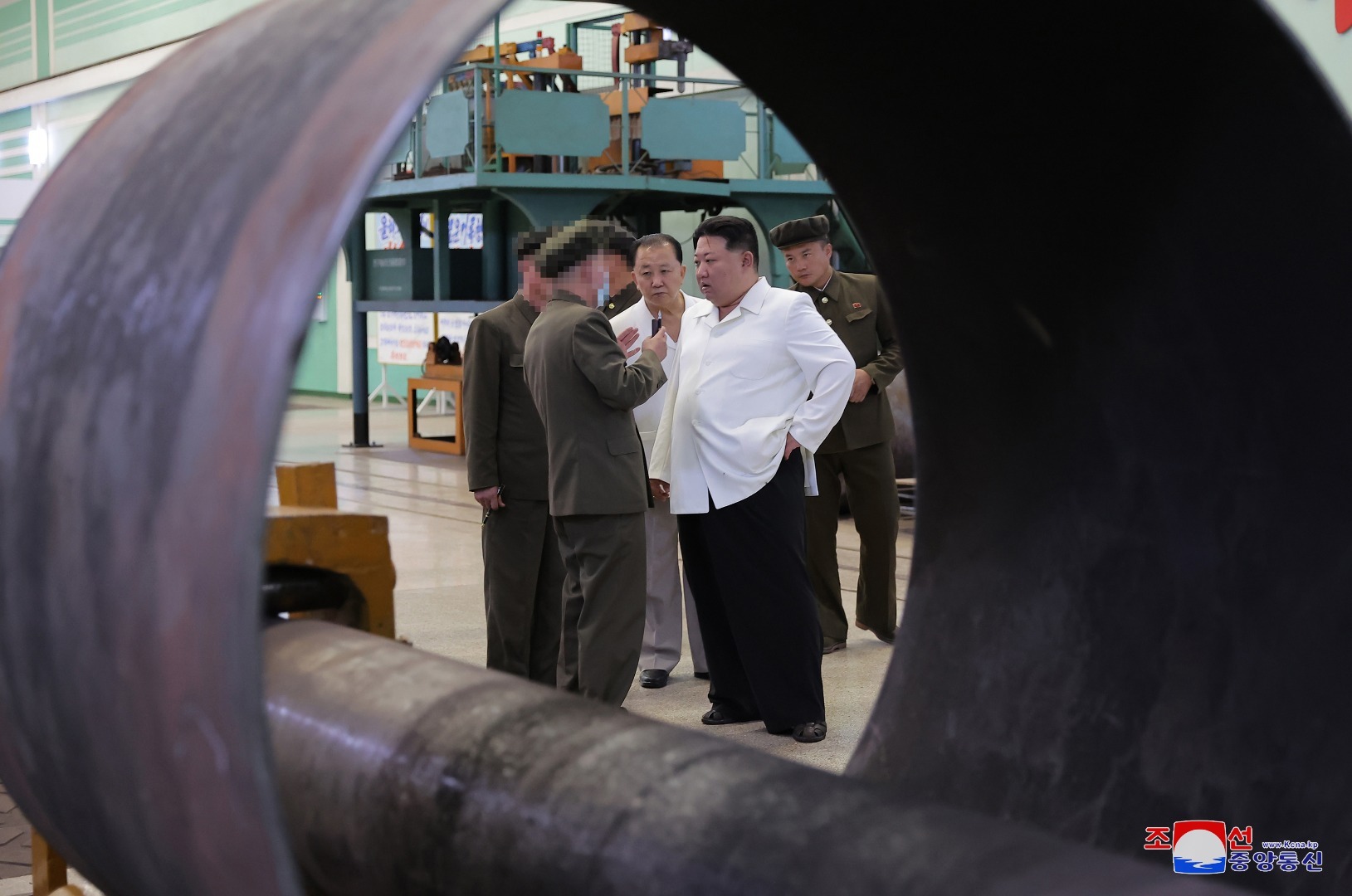
Multiple analysts noted the appearance of a short section of a large-diameter missile or rocket body inside a tunnel and next to production lines for the smaller SRBMs. Tianran Xu, an analyst with Open Nuclear Network, told NK Pro it “appears to be a section of a liquid-propellant rocket” and proposed it could be related to the rocket North Korea used for a failed attempt to put a new military satellite into orbit in late May. He said it can’t be ruled out that it’s “an interstage section” for a solid-fuel missile system like the Hwasong-18 intercontinental ballistic missile (ICBM), but that he leans toward it being for a liquid-fuel system. Nathan Hunt, an independent DPRK researcher who models North Korea’s launch facilities and weapon systems, told NK Pro that riveting on the side of the large-diameter metal ring “looks pretty much like what we have seen on sections of missiles and SLVs (satellite launch vehicles), and there are also what appear to be equipment ports on the side.” He also said “the part does not appear to match currently known dimensions of their SLV and ICBMs” but that “it’s possible this is an early prototype part or part of some newer system not yet seen.” North Korea military watchers have told NK Pro that the locations of factories producing the Hwasong-18 solid-fuel ICBM and large-diameter solid-fuel submarine-launched ballistic missiles (SLBMs) from the Pukguksong series are still unknown. 2. ROCKET SHELL PLANT (TONGHUNGSAN MACHINE FACTORY, HAMHUNG) NK Pro has identified the “factory producing large-caliber control multiple rocket launcher shells” (대구경조종방사포탄생산공장) as the Tonghungsan Machine Factory, also affiliated with the Ryongsong Machine Complex (룡성기계련합기엽소 동흥산기계공장), based on interior details in state media photos of a visit by Kim to the Tonghungsan facility published in April 2016. The latest report said the factory produces 122mm and 240mm multiple-launch rocket system (MLRS) shells, calling their development a “crucial change in the preparations for modern warfare.” 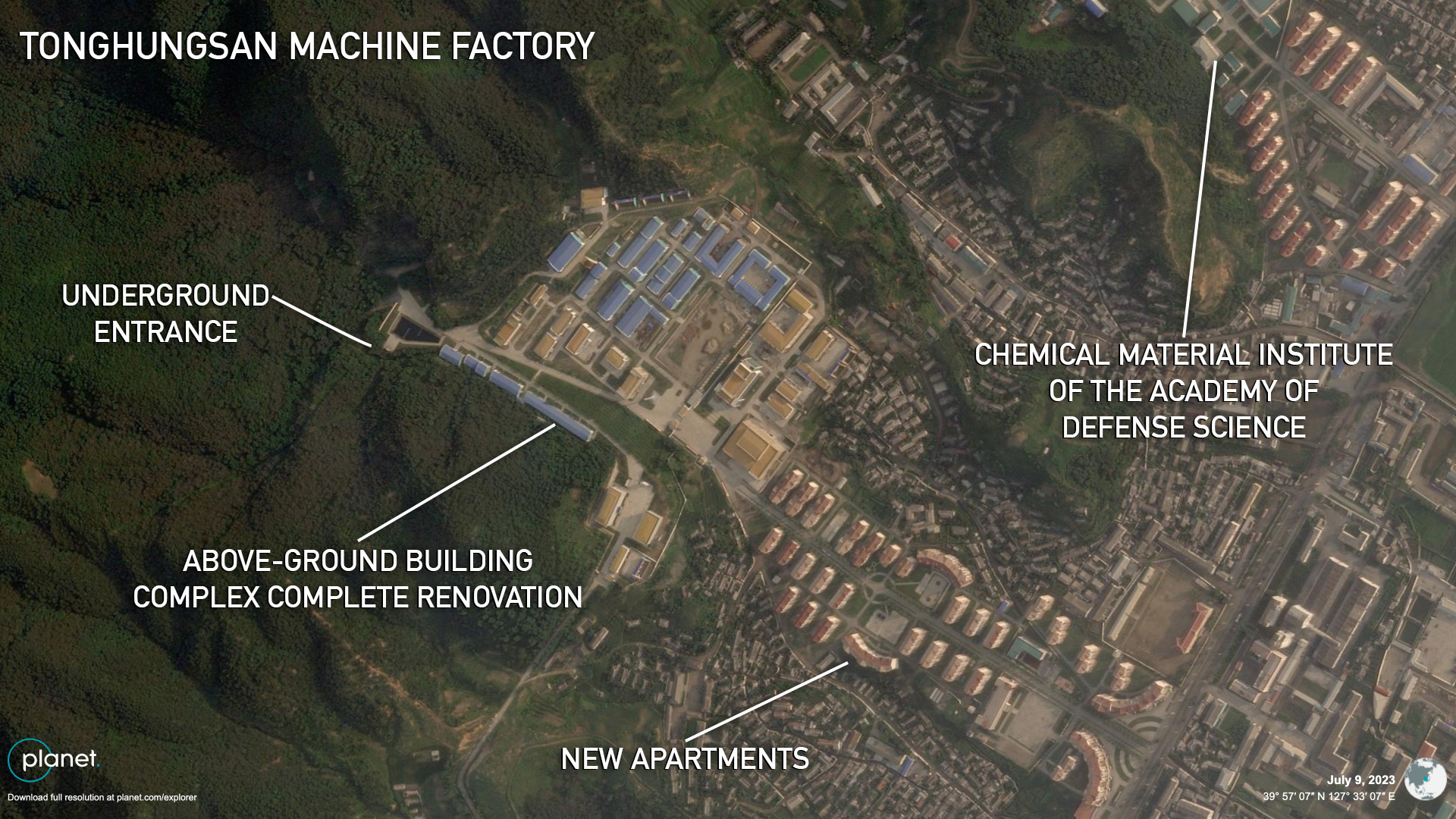
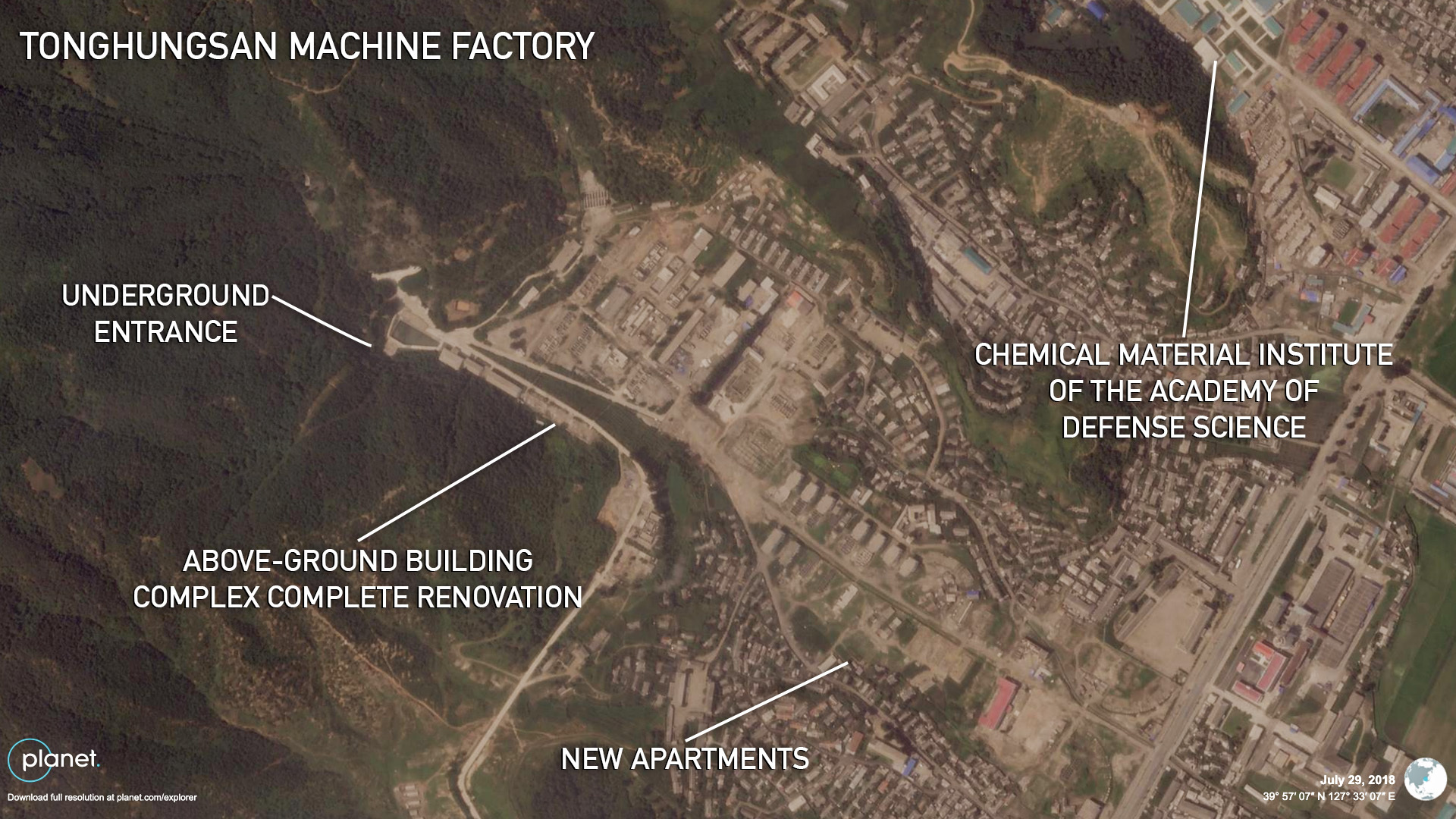
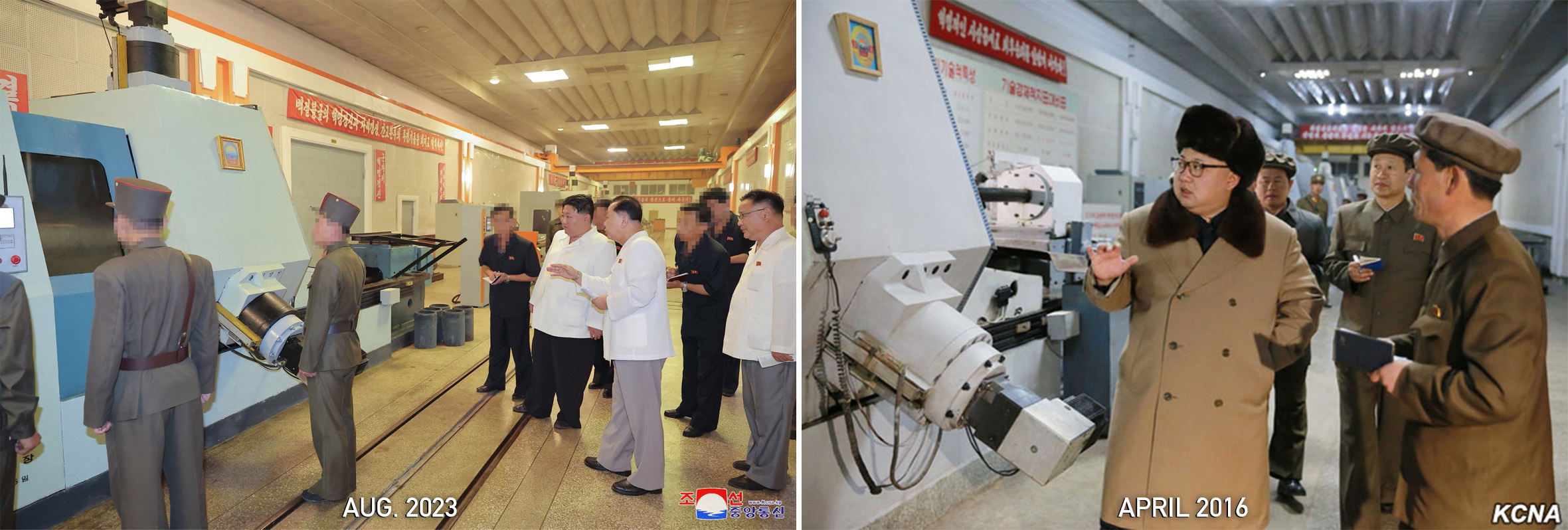 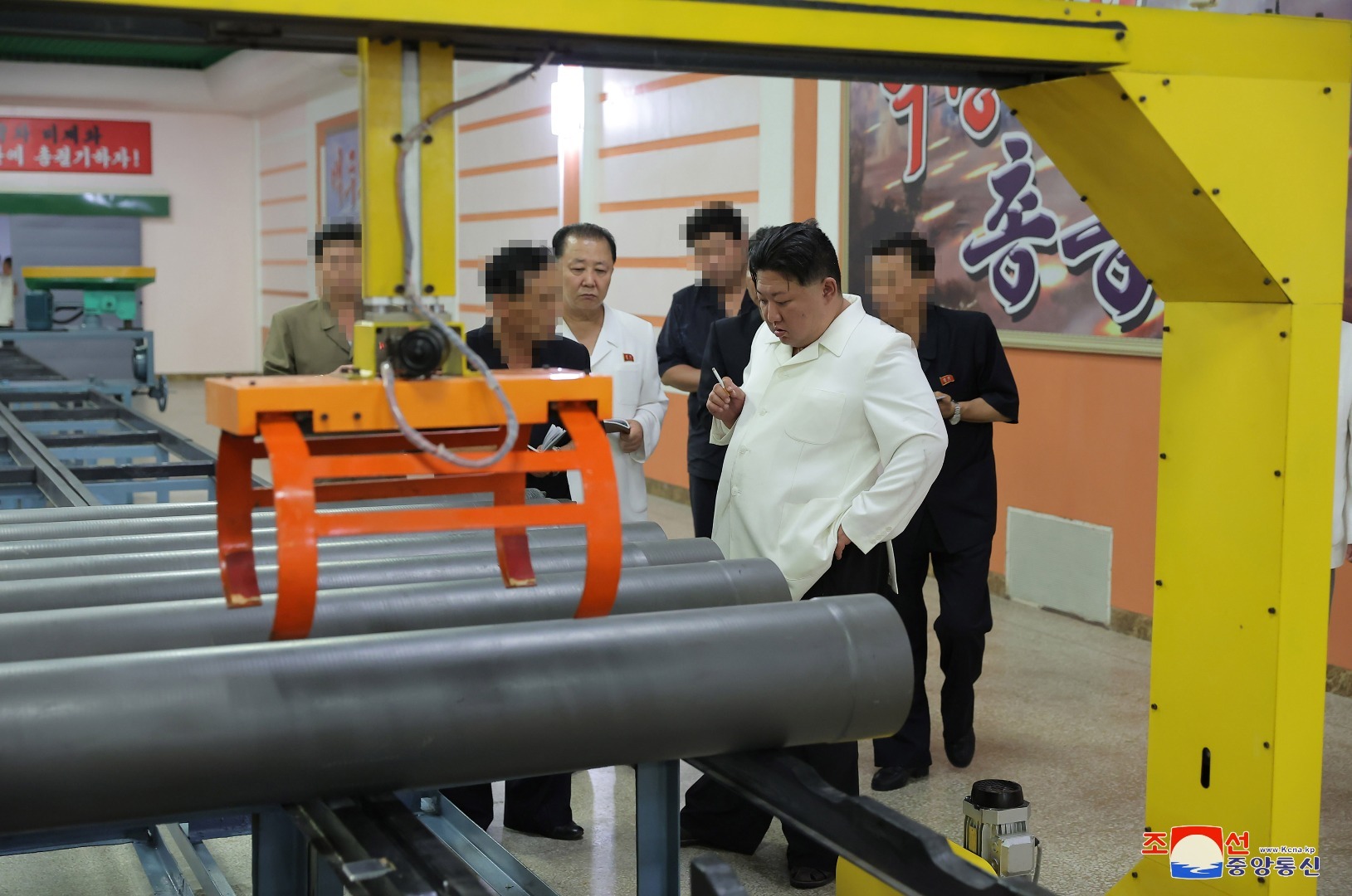
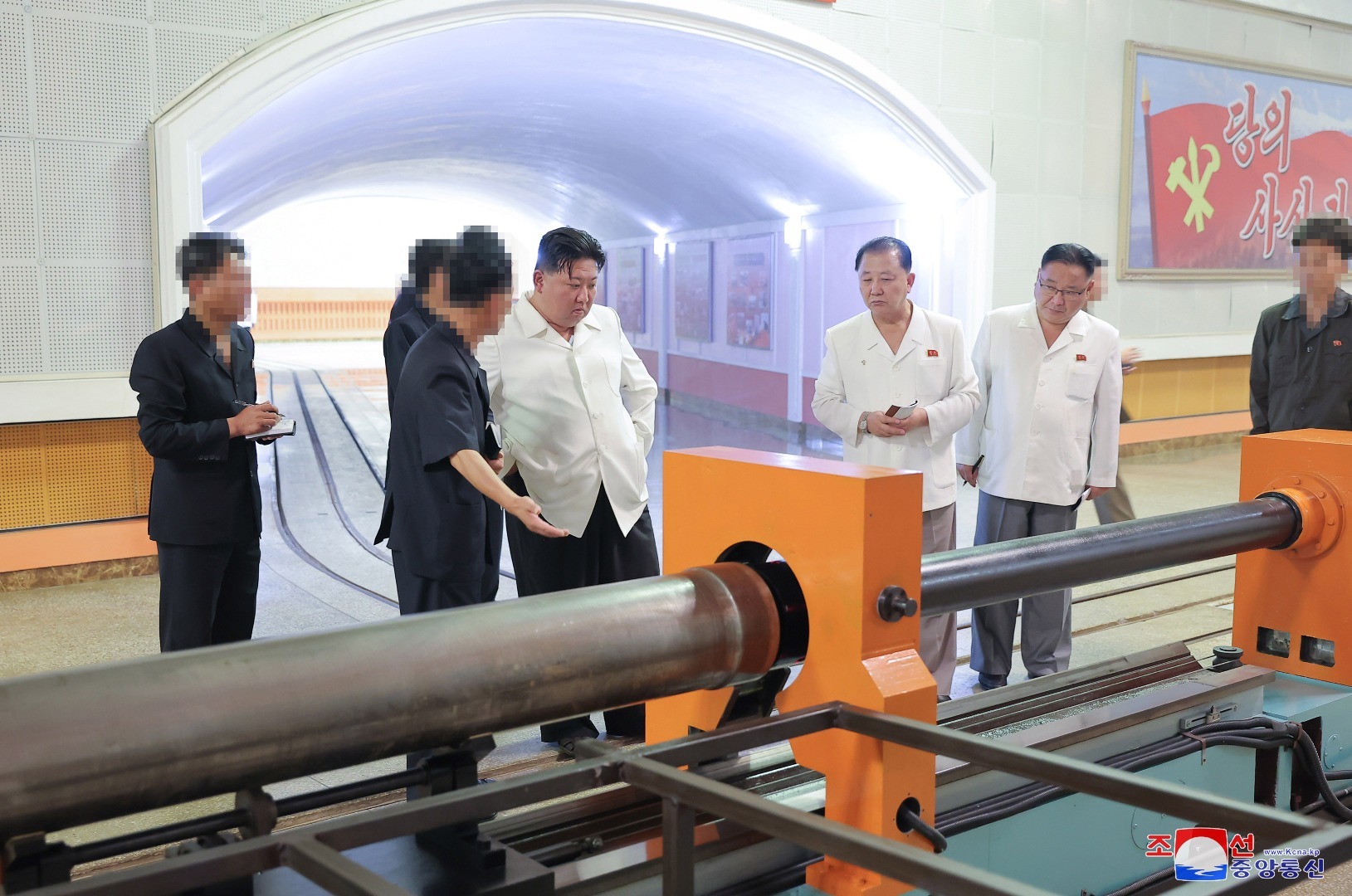
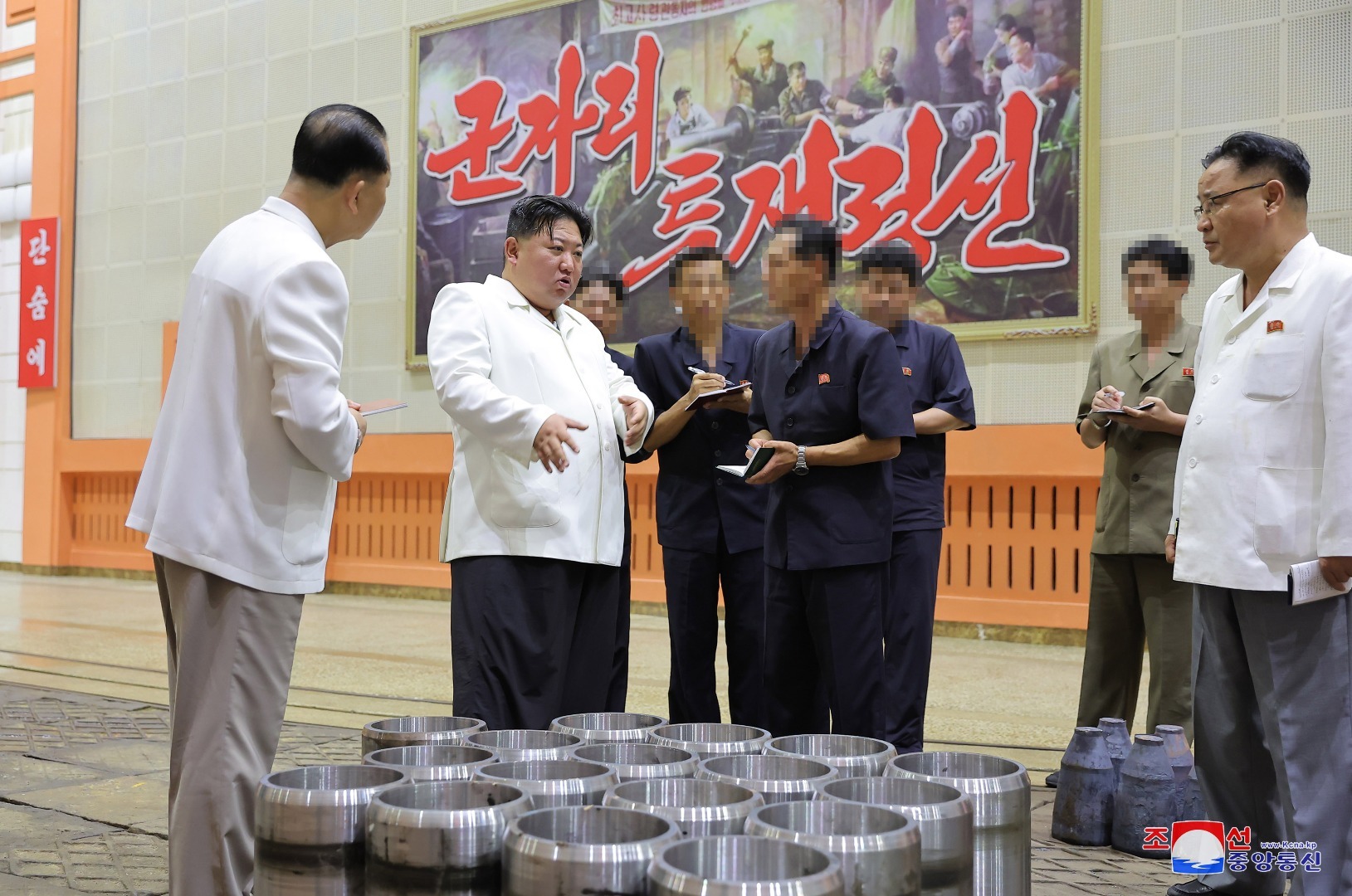
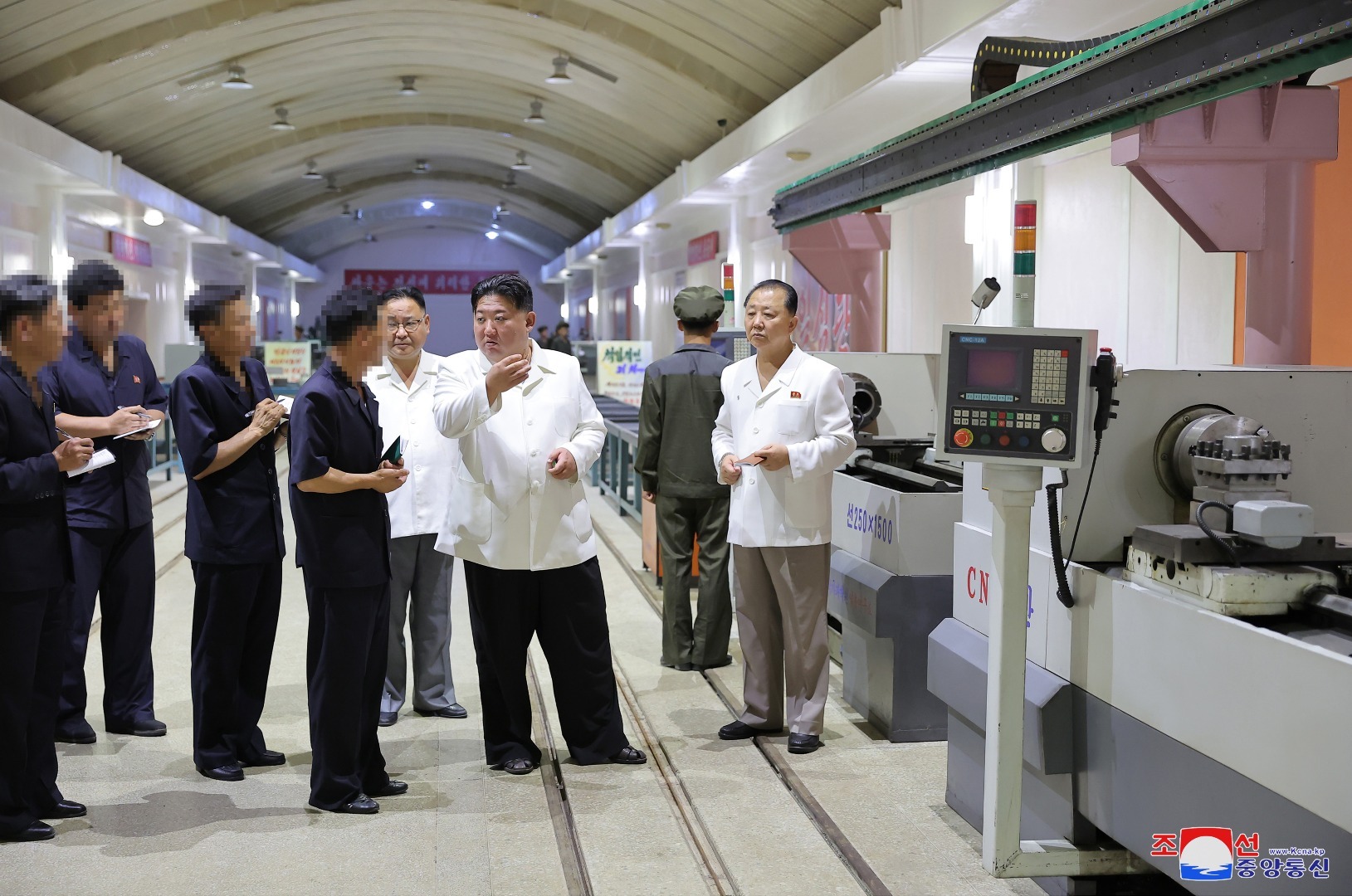
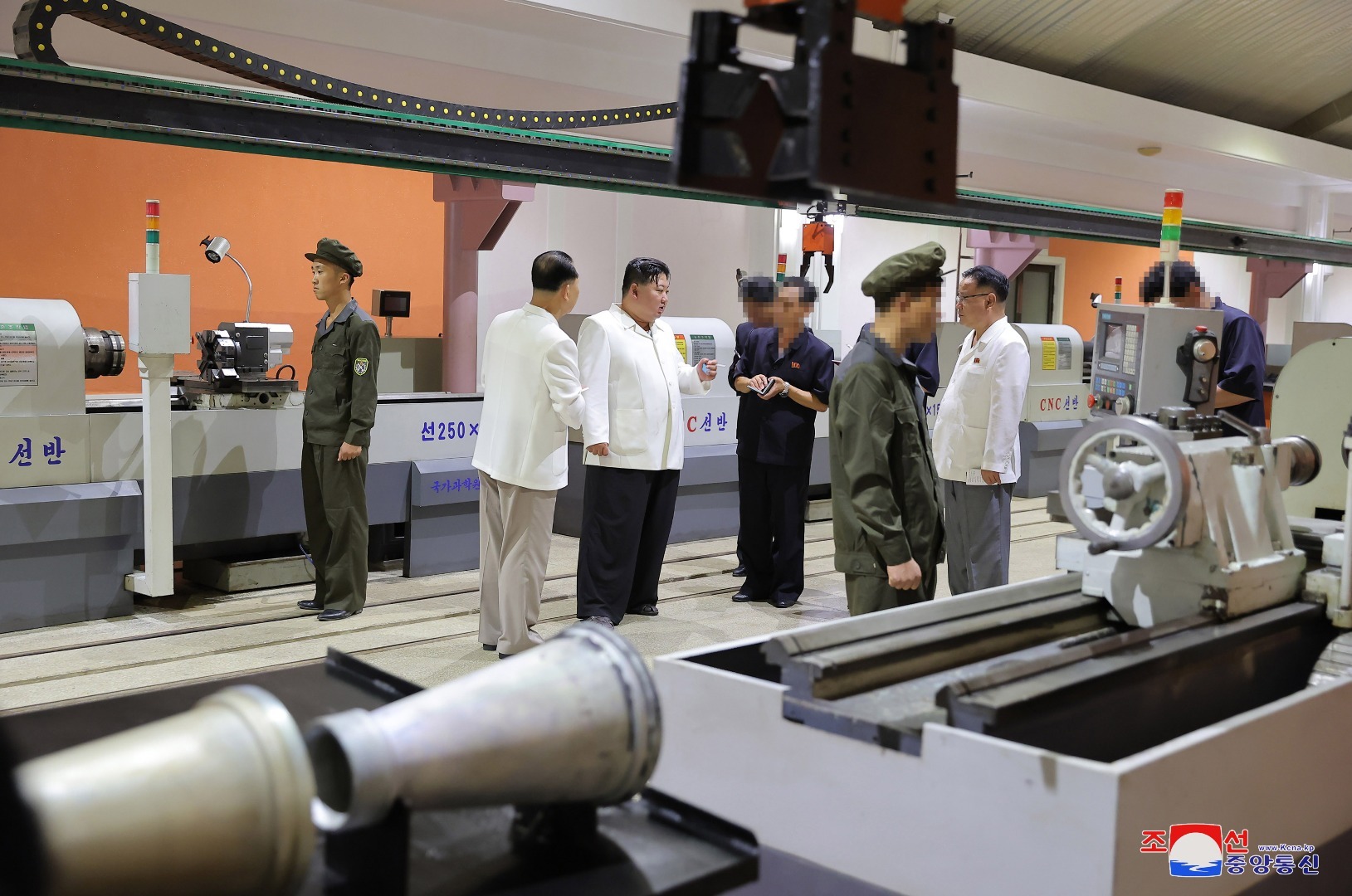
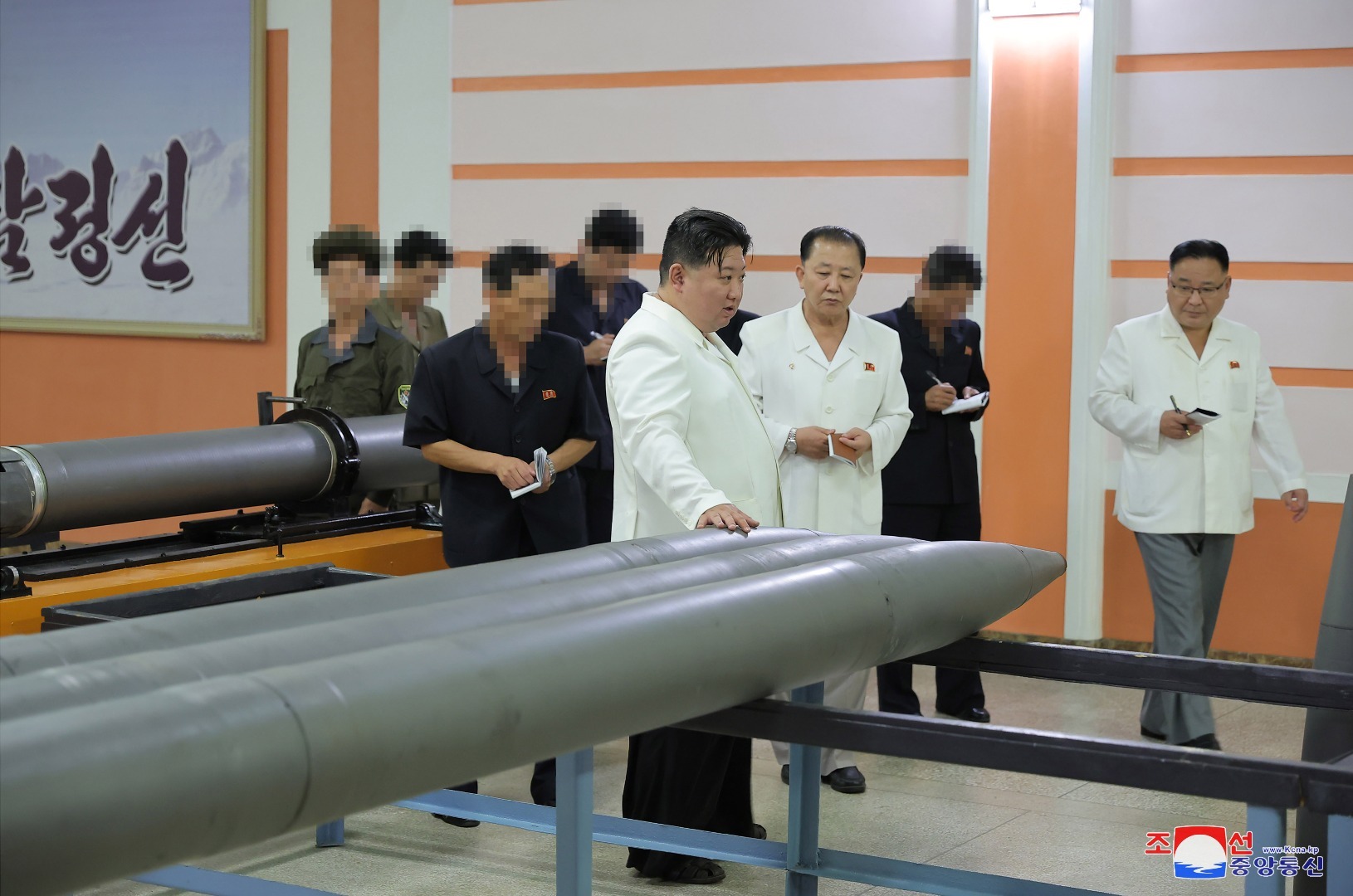
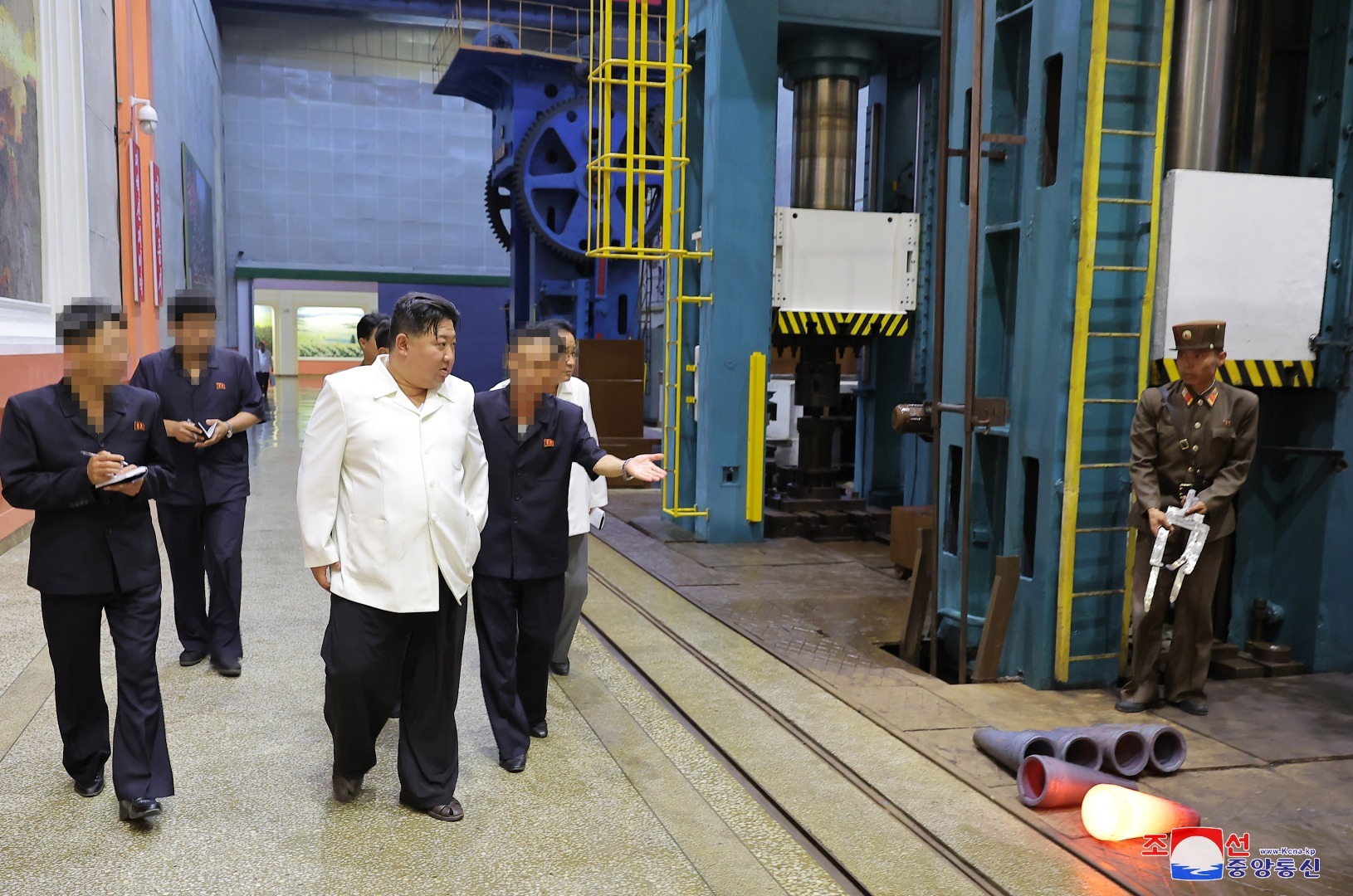
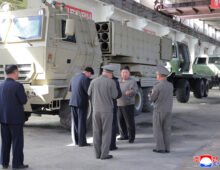
Photos showed them being manufactured in underground tunnels, likely under Mount Tonghung where the factory is located. Smaller-caliber rocket shells also appeared on display at the Kanggye General Tractor Plant that Kim visited earlier this month, though most photos from that inspection showed 600mm MLRS (KN-25) production lines. North Korea still considers its 240mm MLRS system an important piece of its arsenal, showing it off at the Feb. 8 military parade this year and at the July 2023 weapons expo. There have also been reports that North Korea is sending 122mm MLRS rockets to Russia. Russia’s defense minister Sergei Shoigu traveled to Pyongyang specifically to learn about North Korea’s weapons last month. Planet Labs satellite imagery shows that the total reconstruction and modernization of the Tonghungsan factory, as well as work on a new upscale apartment complex outside its front gates, started just after Kim’s April 2016 visit. The project appeared to stall before seeing progress in 2020 and possibly being ready for new production in 2021, though a sports field in the center of the campus still appeared unfinished as of July 2023. 3. SHORT-RANGE MISSILE TEL PLANT (SINHUNG MACHINE FACTORY, SINHUNG) State media on Monday morning didn’t publish any wide exterior photos of a “factory producing tactical missile transporter erector launchers (TELs)” (전술미싸일발사대차생산공장), but the appearance of a building housing around two dozen TELs offers clues about its location. The long and narrow production hall features a gable roof with large indentions for vertical skylights, closely matching a known munitions plant called the Sinhung Machine Factory (신흥기계공장) located just north of Hamhung. 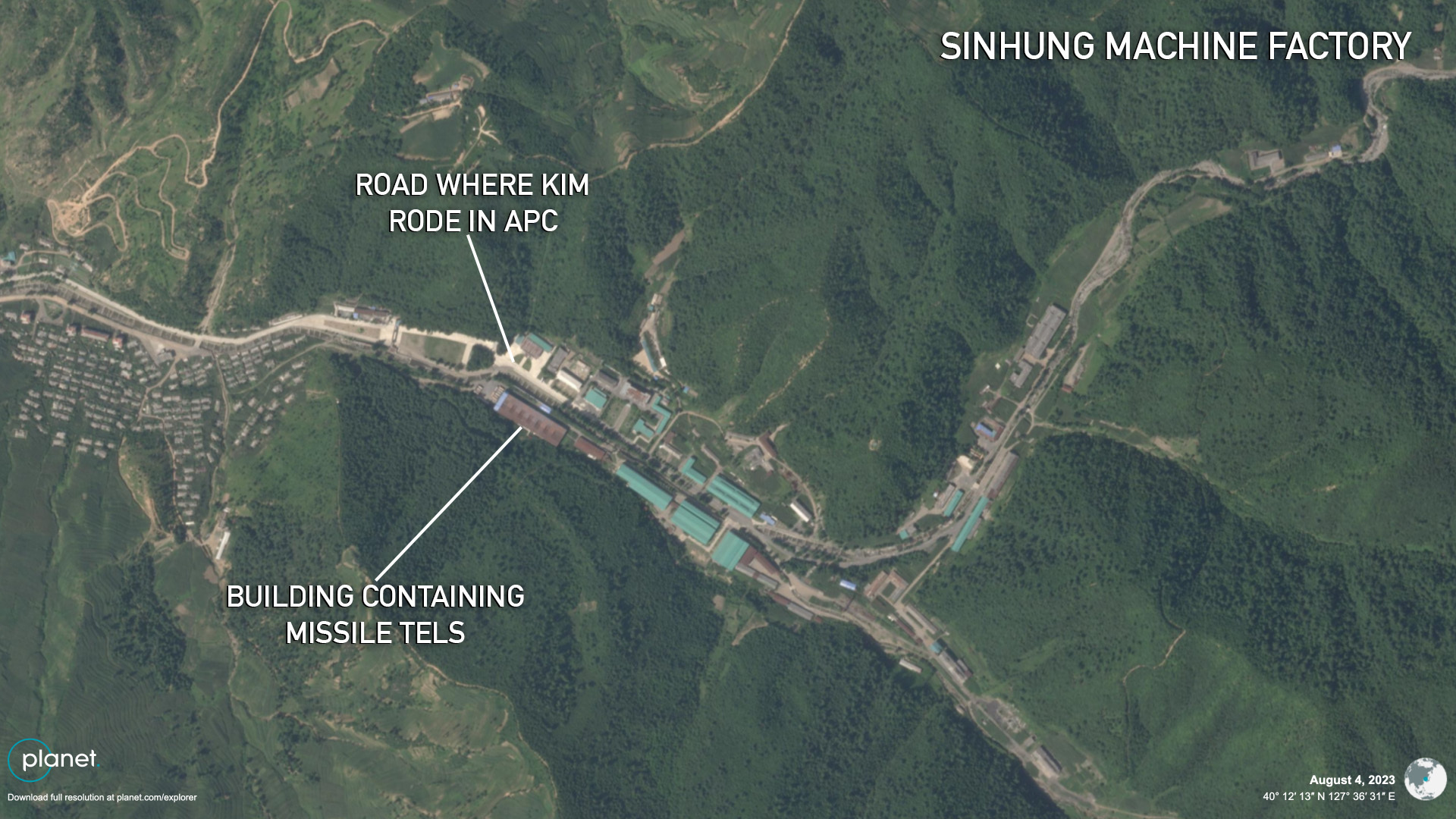
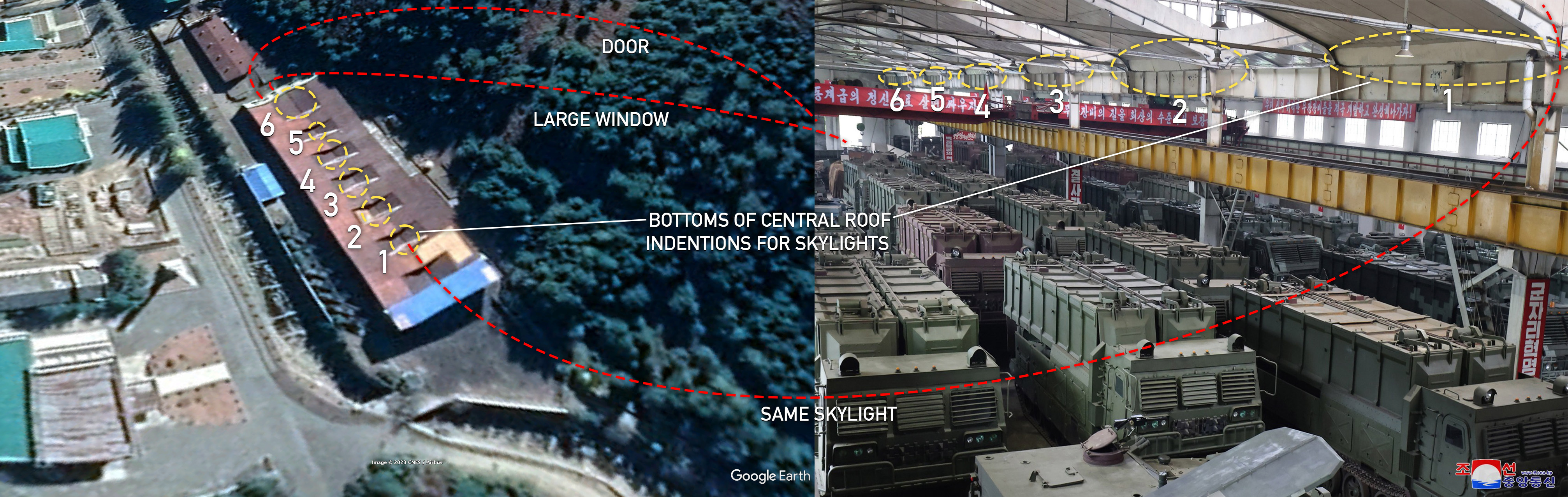
The TELs on display include both wheeled and tracked versions for the Hwasong-11B (KN-24) SRBM. Most appear fully assembled in available images. State media implied in its report on Kim’s arms plant tour earlier this month that TELs for the Hwasong-11A (KN-23), Hwasong-11C (KN-23 mod), 600mm MLRS (KN-25) as well as Hwasong-17 and Hwasong-18 ICBMs were produced at the March 16 Factory in Phyongsong to the north of the capital. It would not be unusual for Kim to visit the Sinhung factory on the same tour as the others in Hamhung, after state media reported on such successive inspections in both April 2016 and June 2013. Planet Labs satellite imagery reveals there have been only minor upgrades to the factory grounds in recent years, though it could have received more substantial equipment upgrades. None of the images published Monday morning showed TEL production lines. 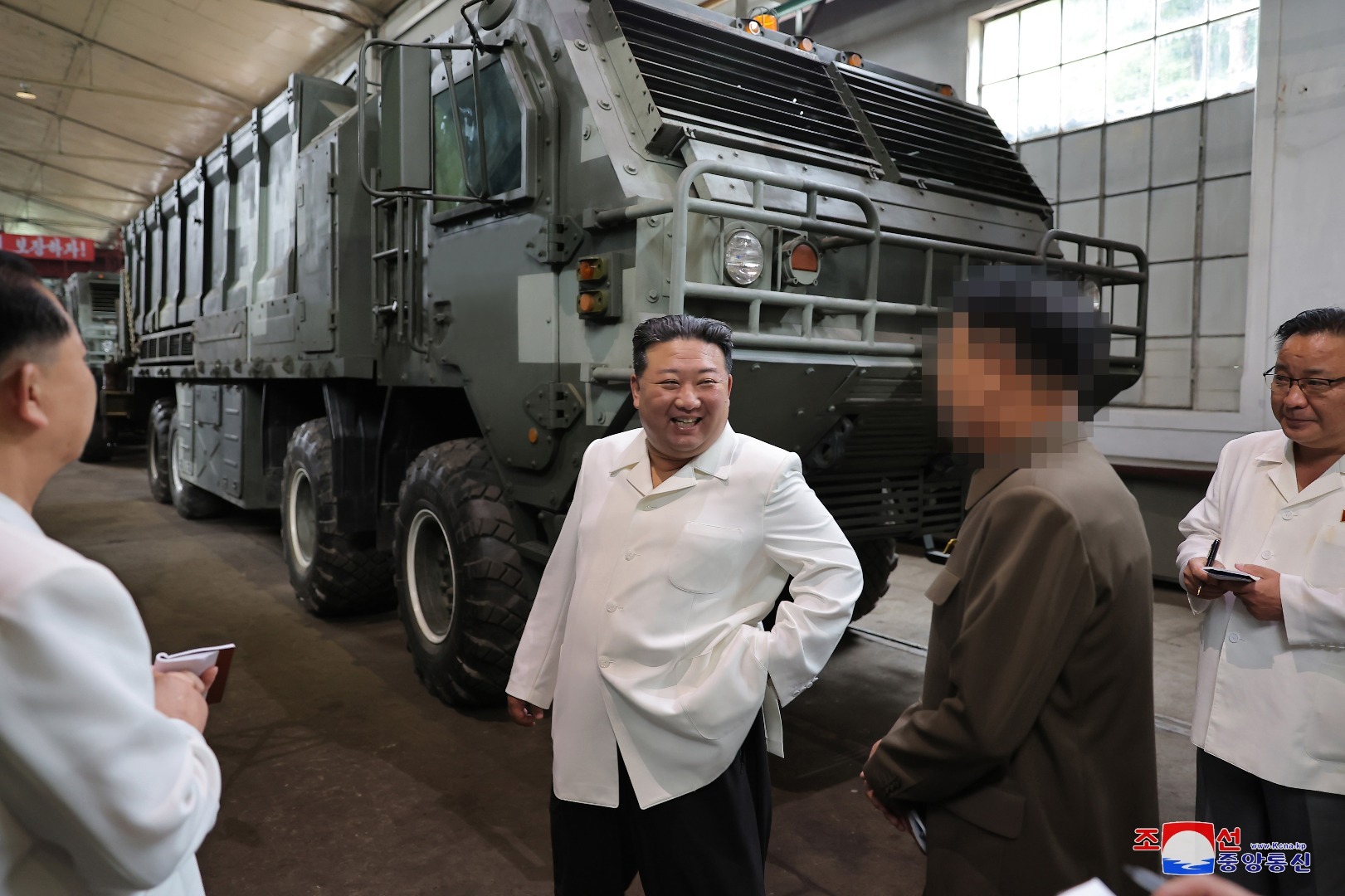
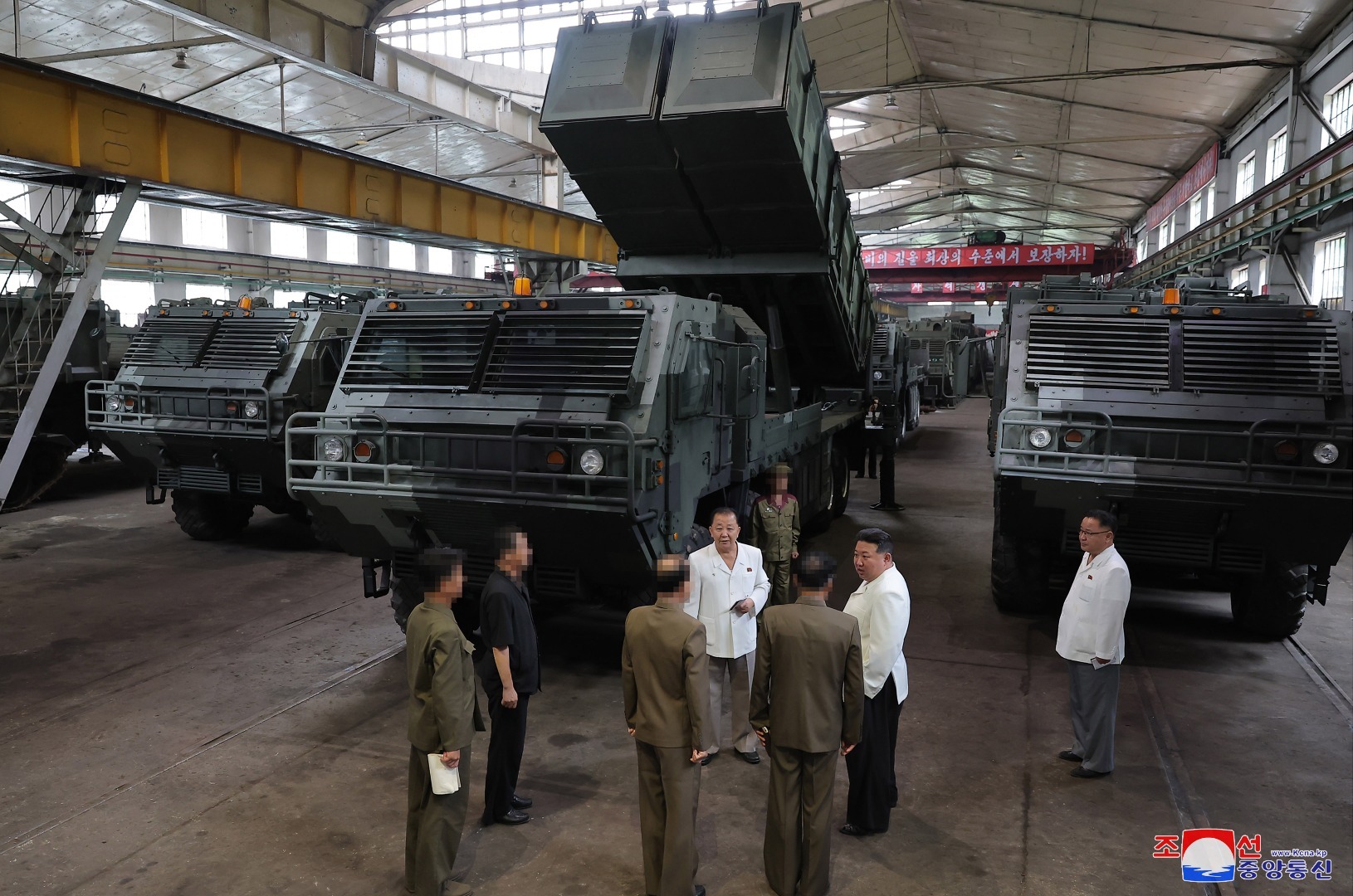
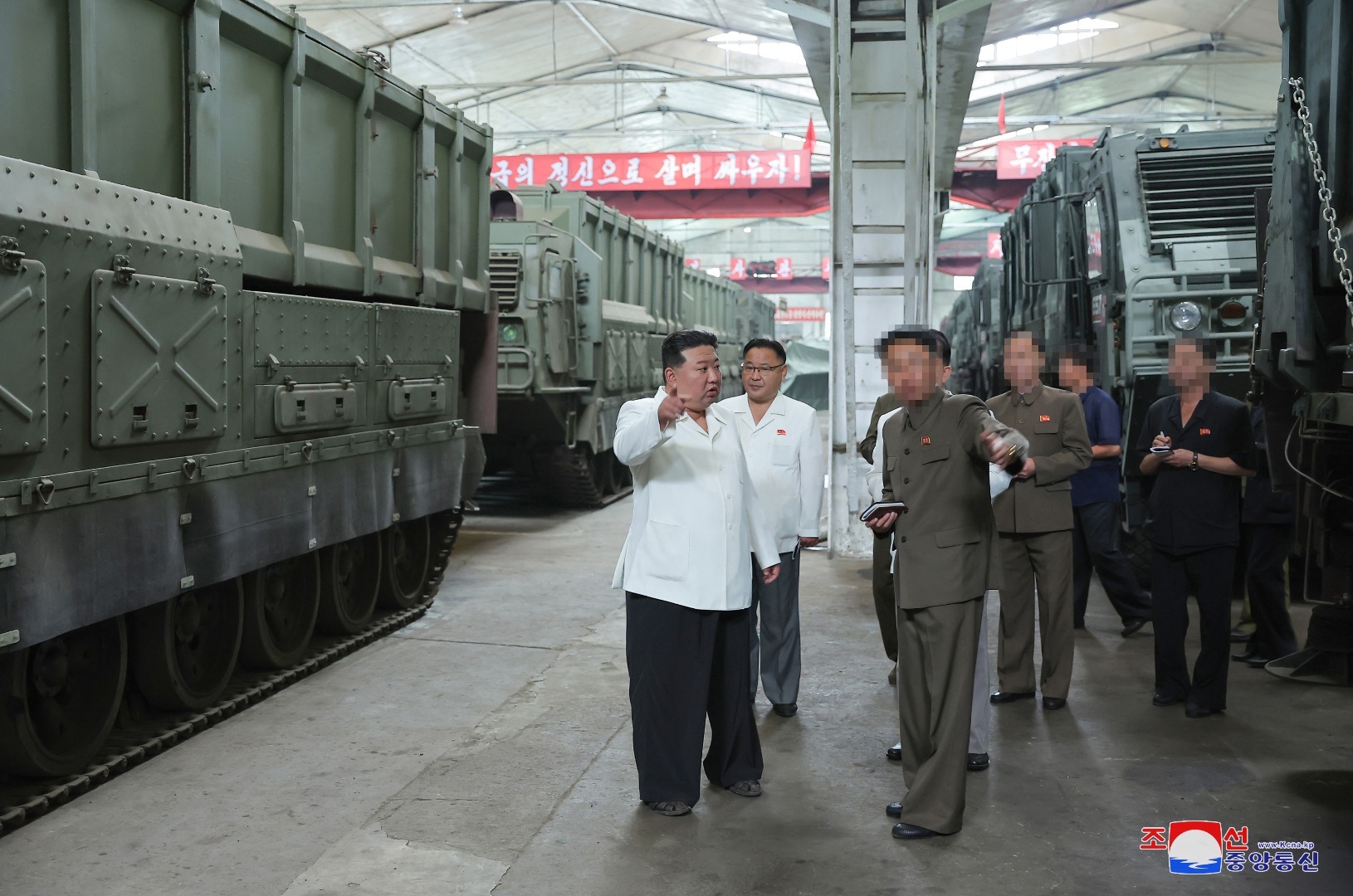
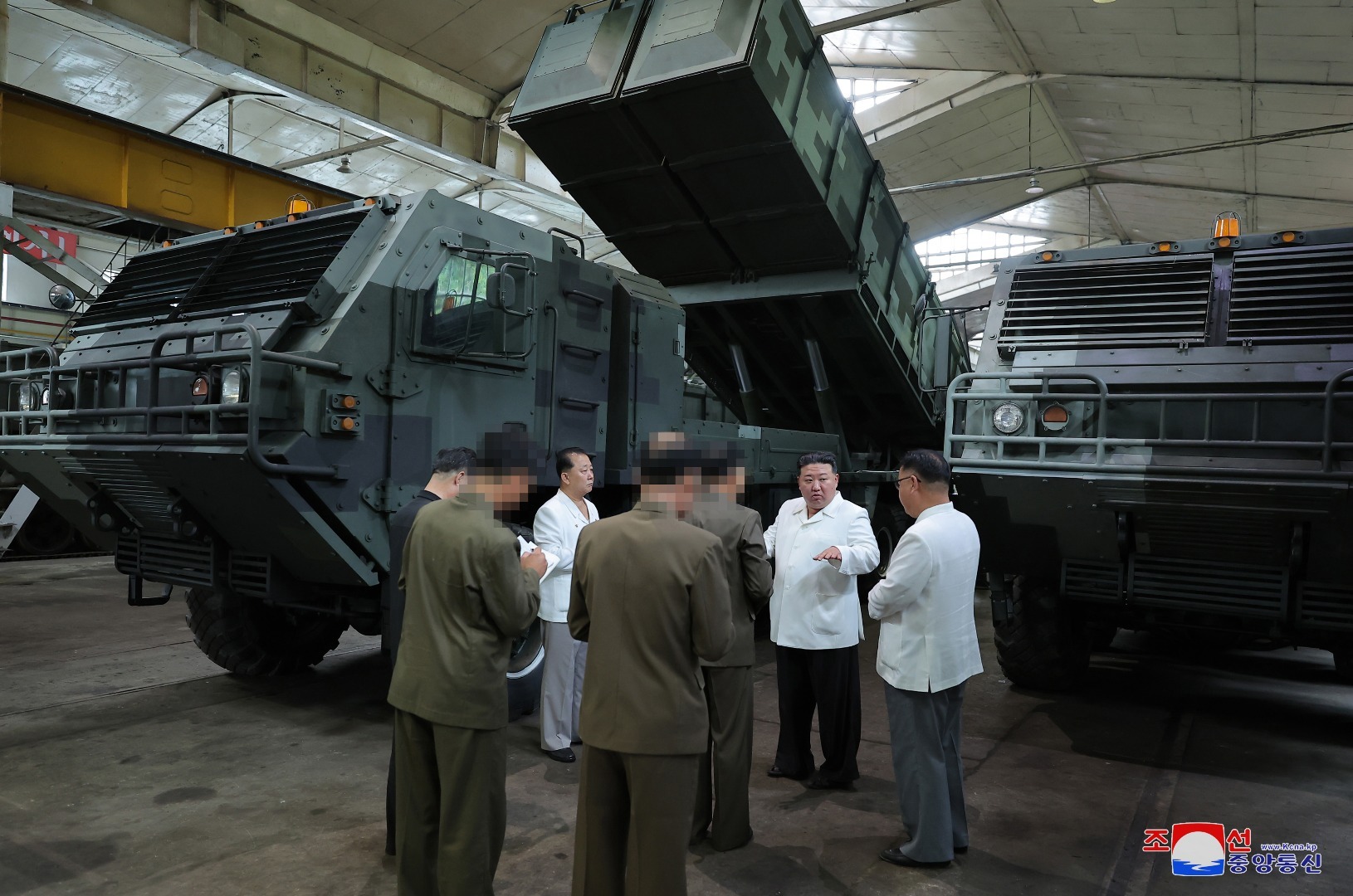
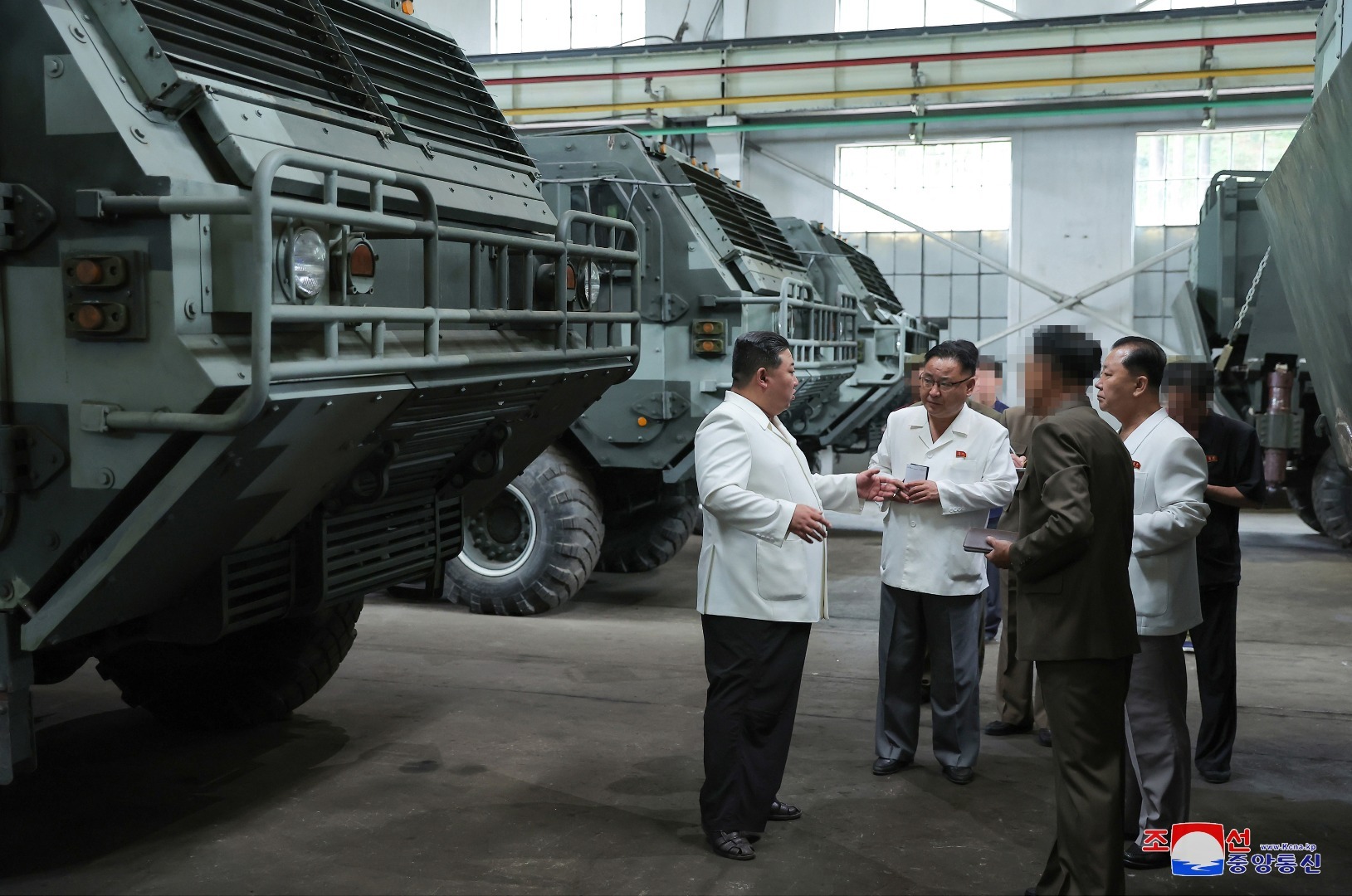
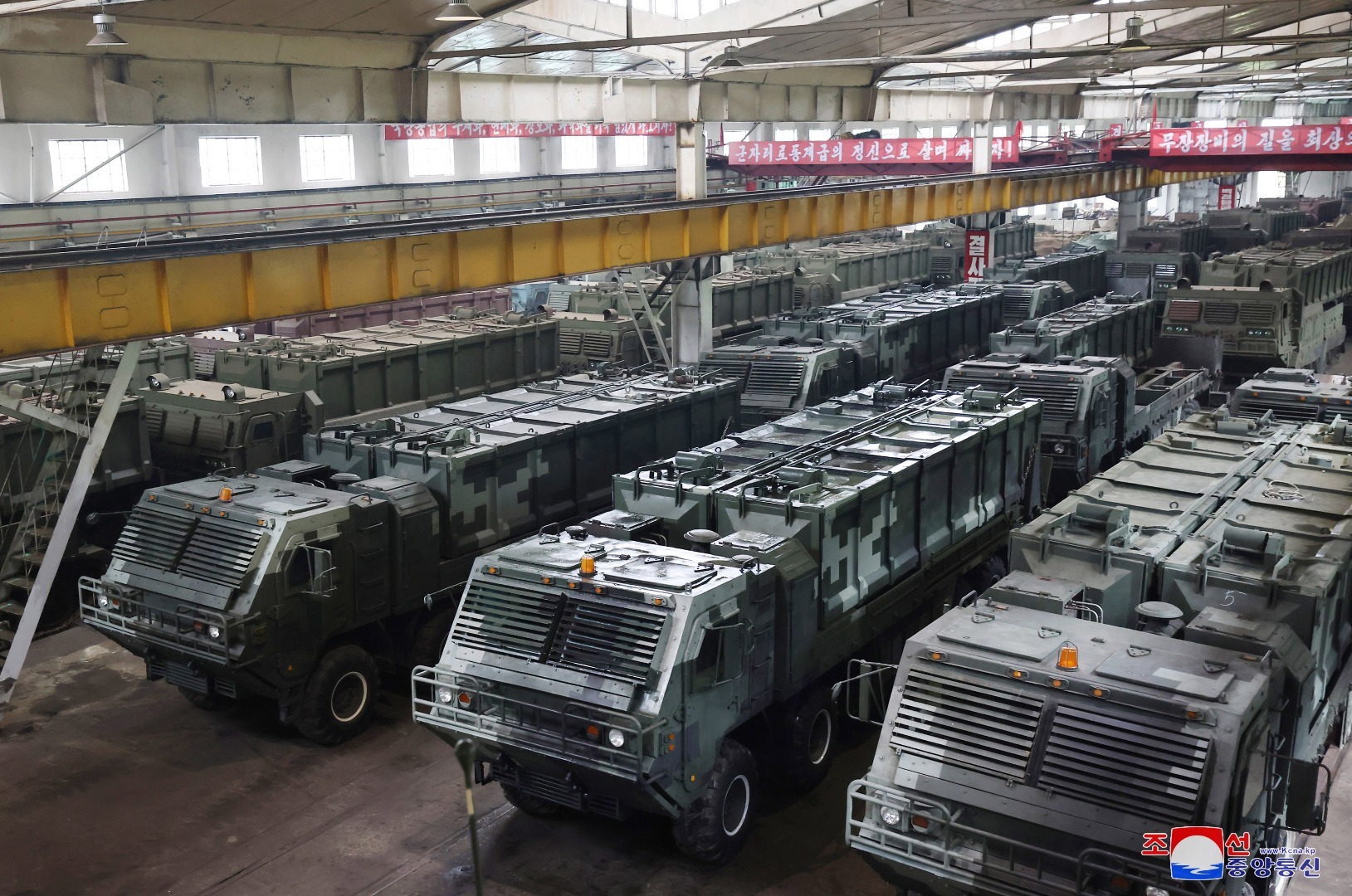
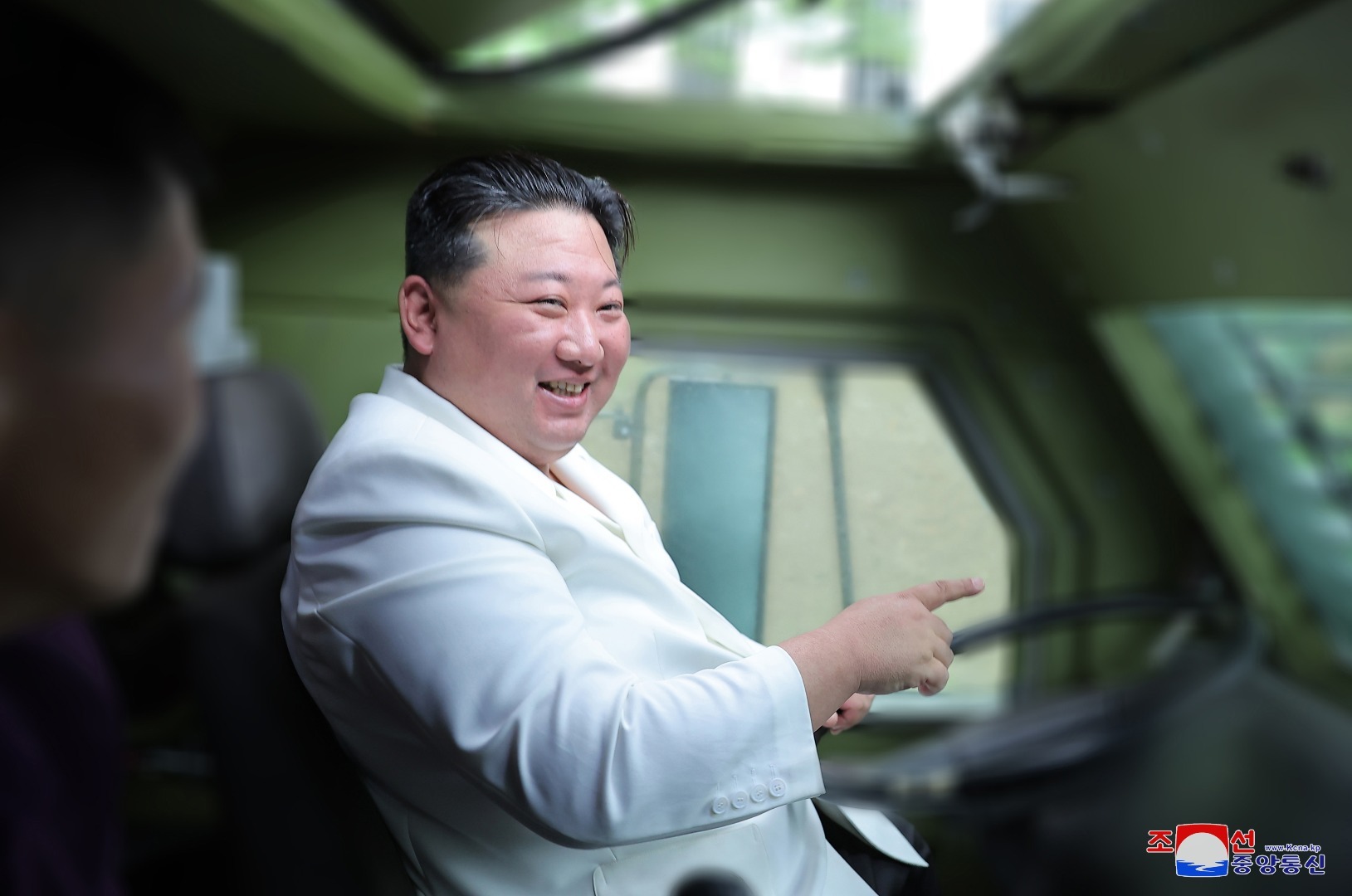
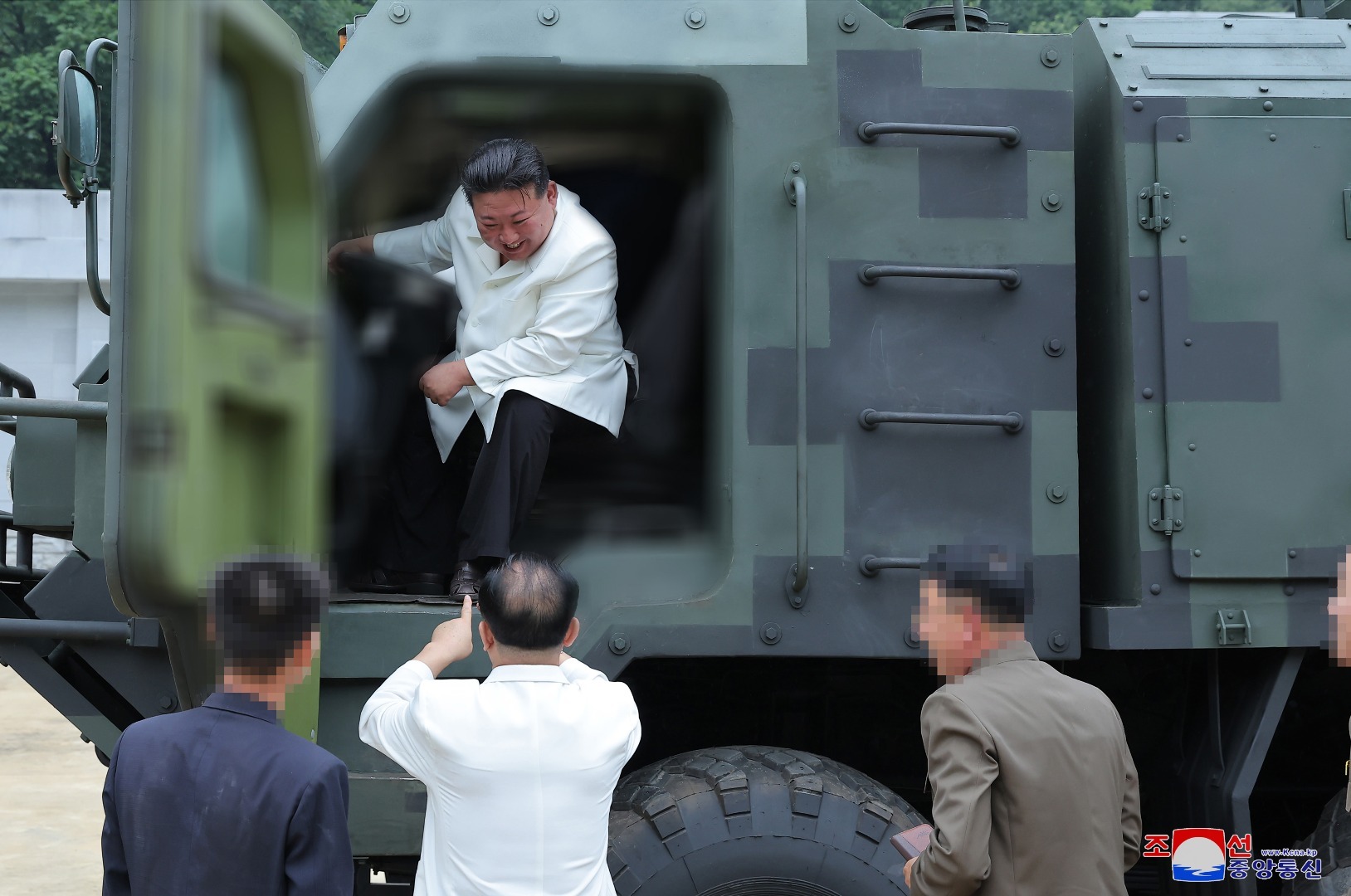
High-resolution Planet Labs imagery shows frequent activity outside the assembly building in recent months, with over a dozen large vehicles or containers measuring around 33 feet (10 meters) parked in the west end parking lot at various times. These could be Hwasong-11B TELs or components. Singhung was hit by severe flooding in 2021, but authorities ordered substantial resources for reconstruction in the town, possibly due to its role in the country’s weapons production. 4. ARMORED PERSONNEL CARRIER PLANT (SINHUNG MACHINE FACTORY, SINHUNG) The final visit mentioned in Monday’s report on Kim’s latest tour, referred to as a “factory producing combat armored vehicles” (전투장갑차생산공장), also appears to be related to the Sinhung Machine Factory, according to NK Pro analysis. The KCNA report was short on details, but images show an armored personnel carrier (APC) that looks similar to an APC-based anti-tank guided missile (ATGM) carrier that first appeared at the Oct. 2020 military parade. Interior details of a production facility shown in Monday’s images, such as the flooring and machinery, match a building shown in the April 2016 report on Kim’s previous visit to the Sinhung factory, though the interior in the latest photos appears slightly more modern. Declassified U.S. intelligence documents have also identified the “Sinhung Armored Vehicle Repair Plant PUG (partially underground)” at the same coordinates as a production base for APCs. The images of Kim Jong Un riding in the new APC were taken in the main thoroughfare of the Sinhung factory, on a road passing the “immortality tower” monument to the former Kim leaders and the TEL assembly building mentioned above, according to NK Pro analysis. 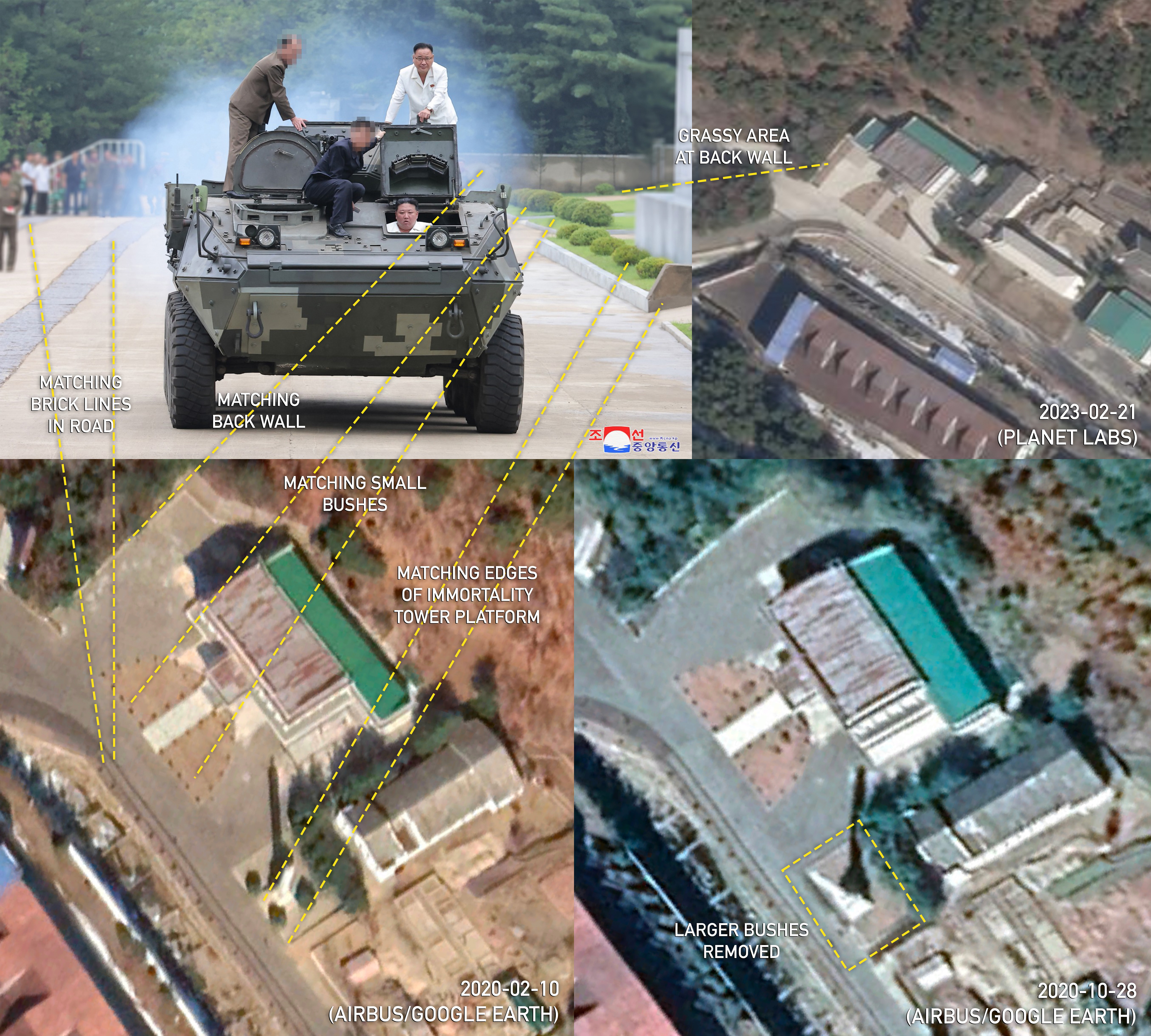 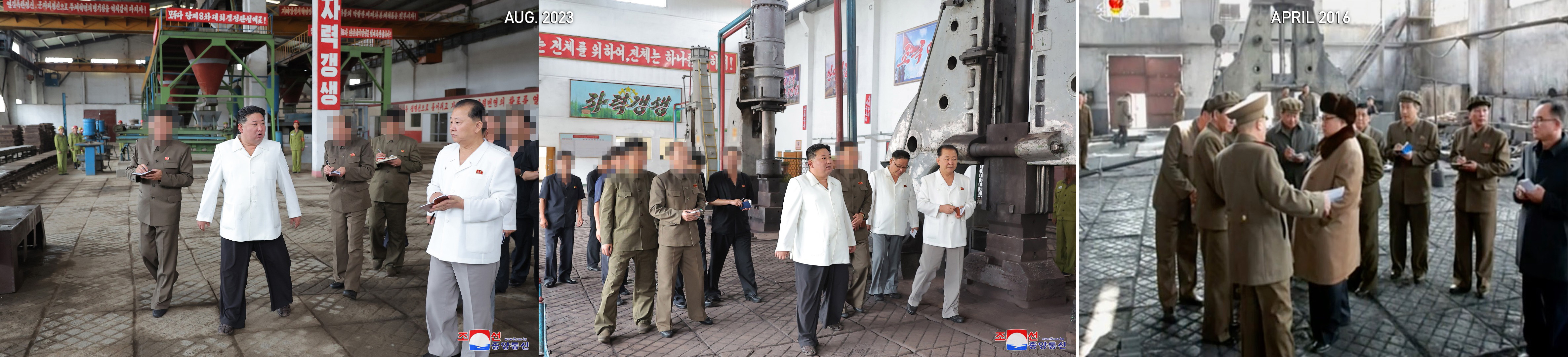 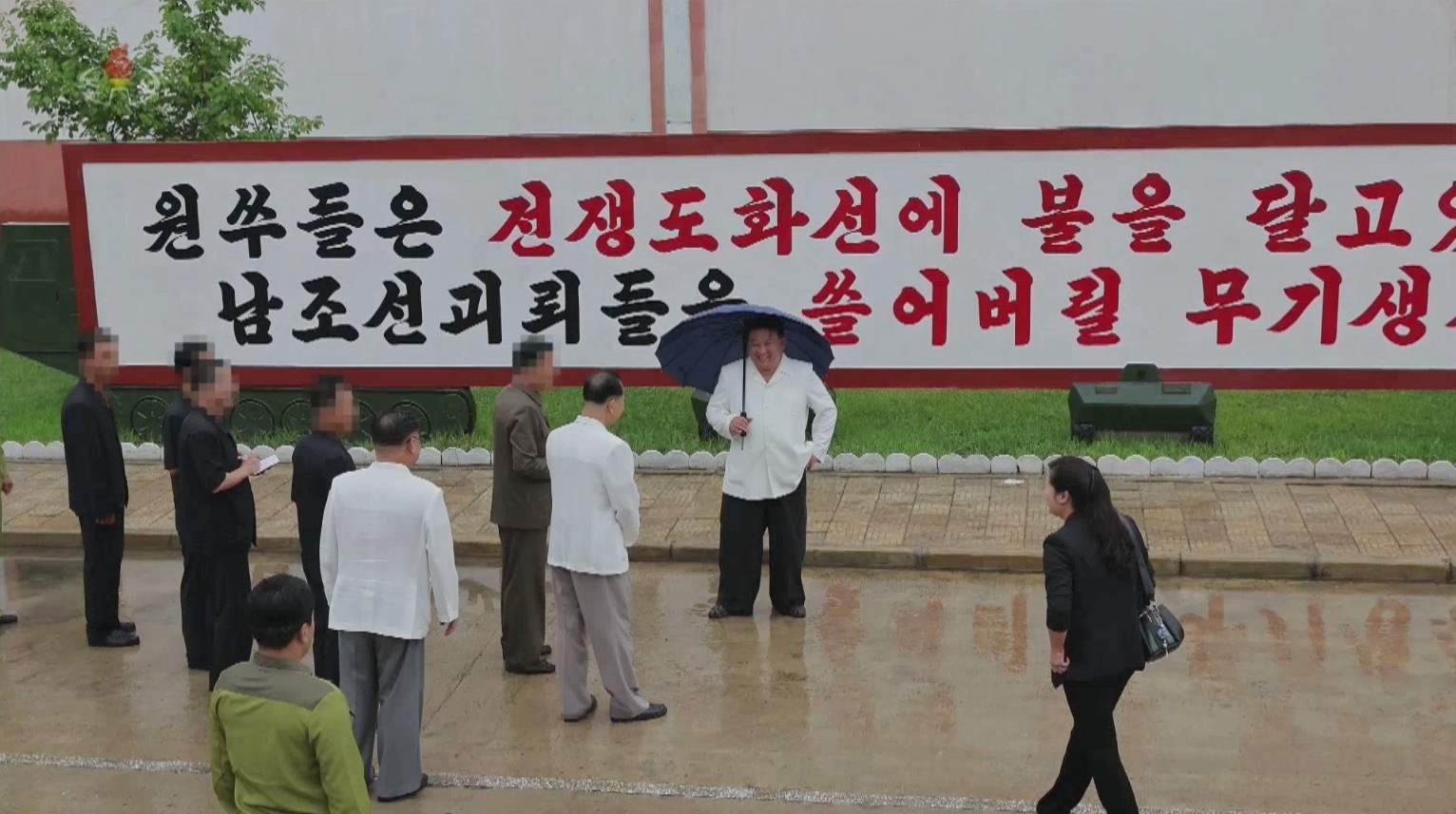
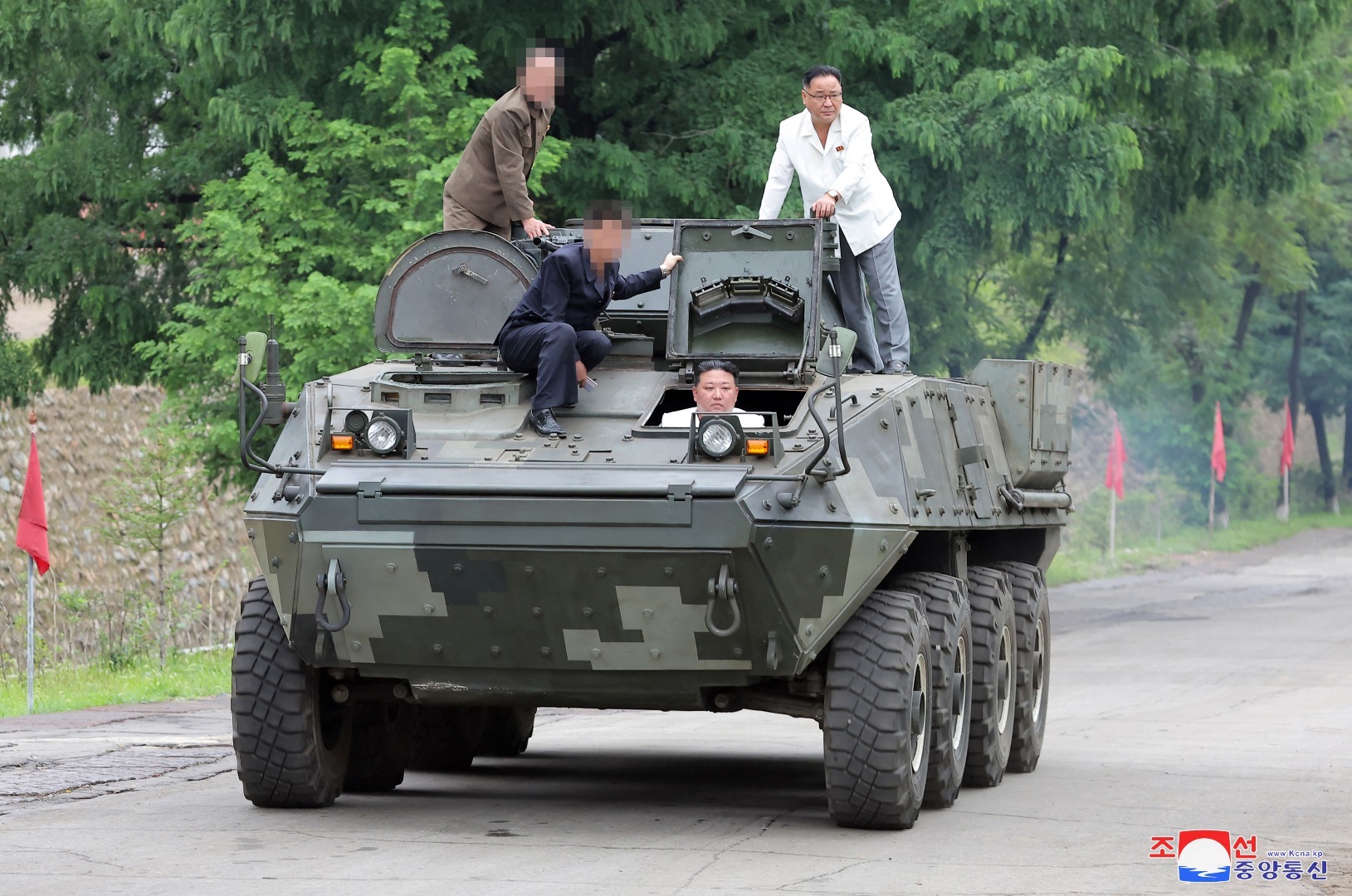
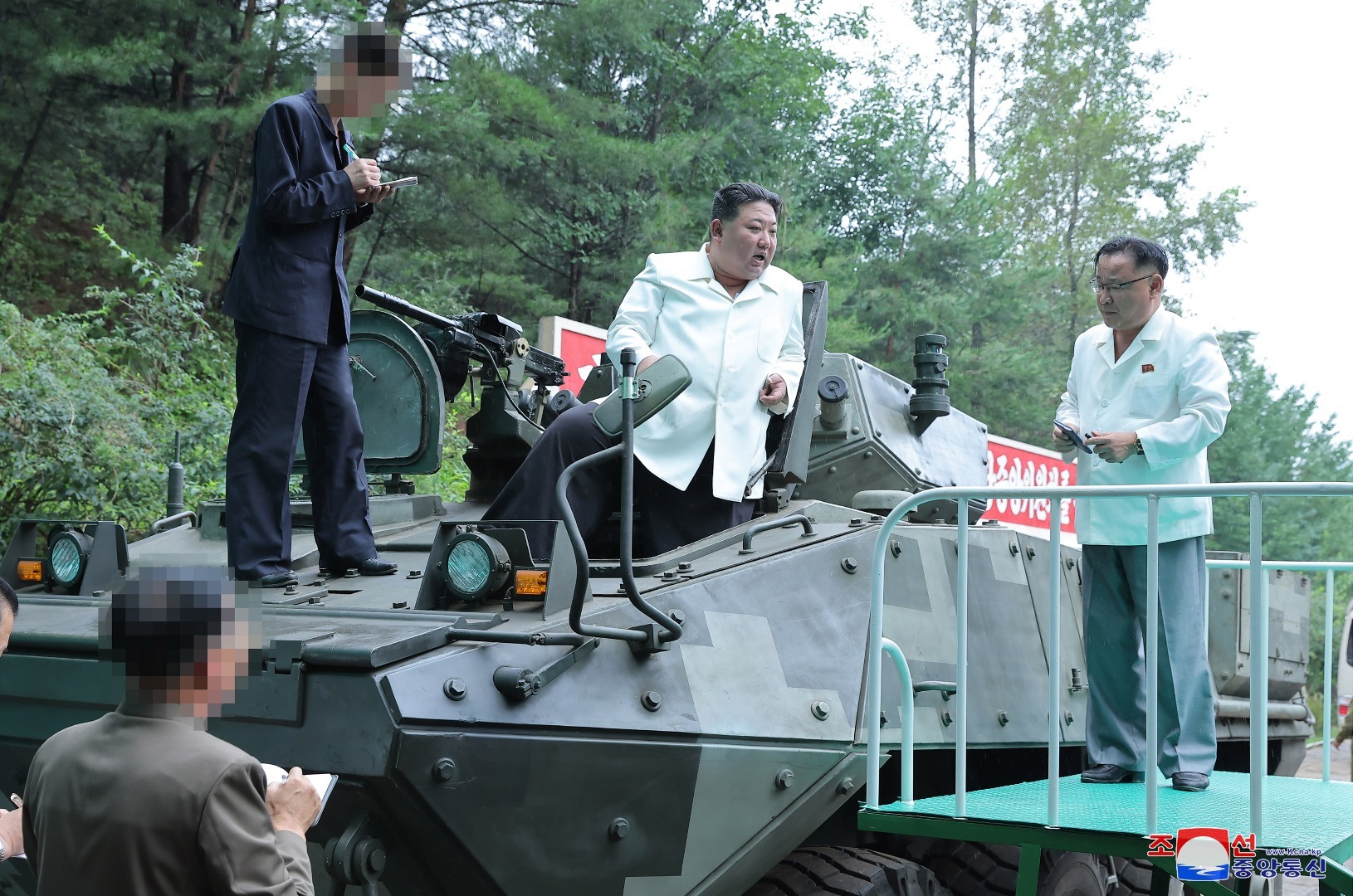
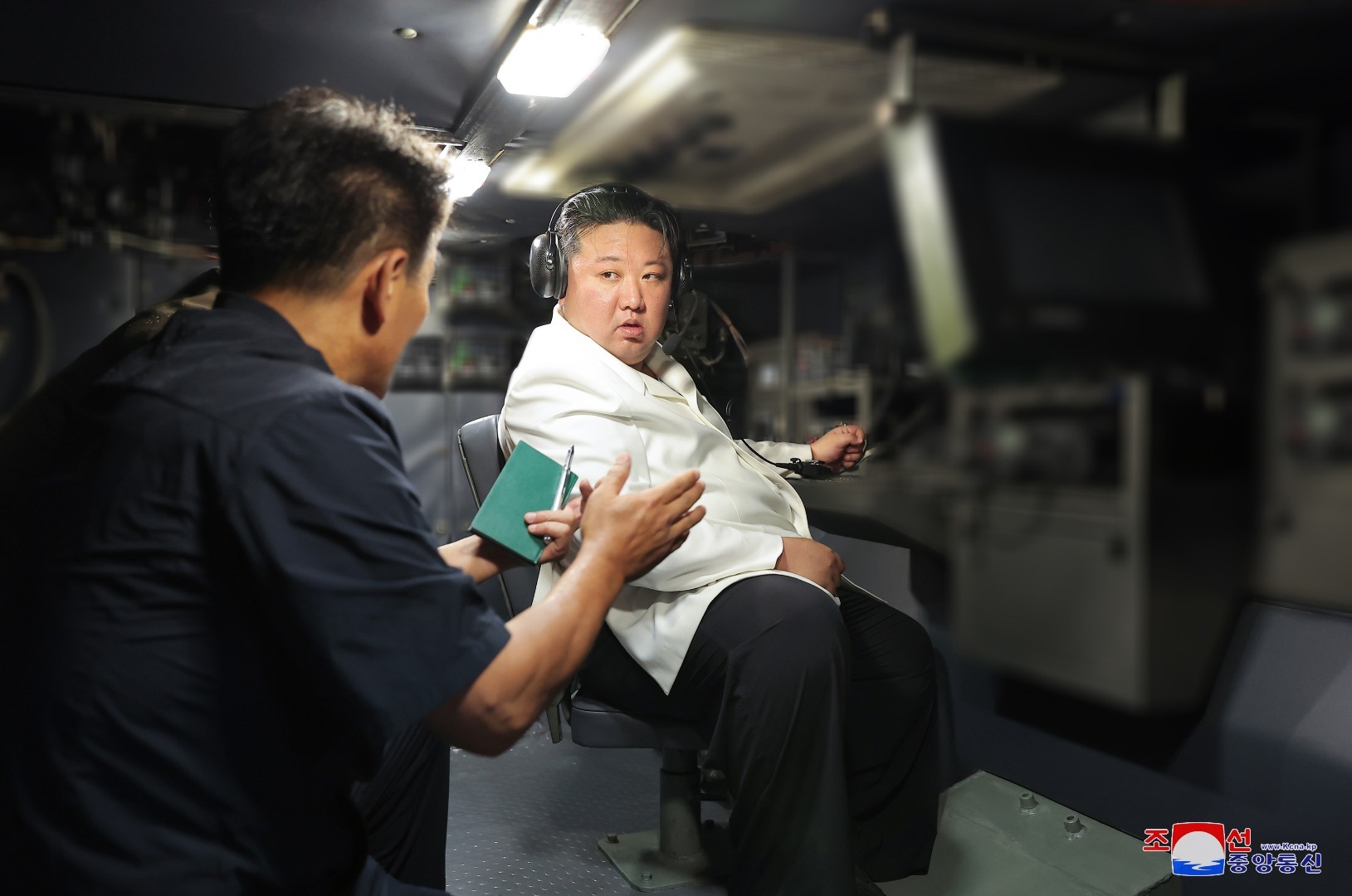
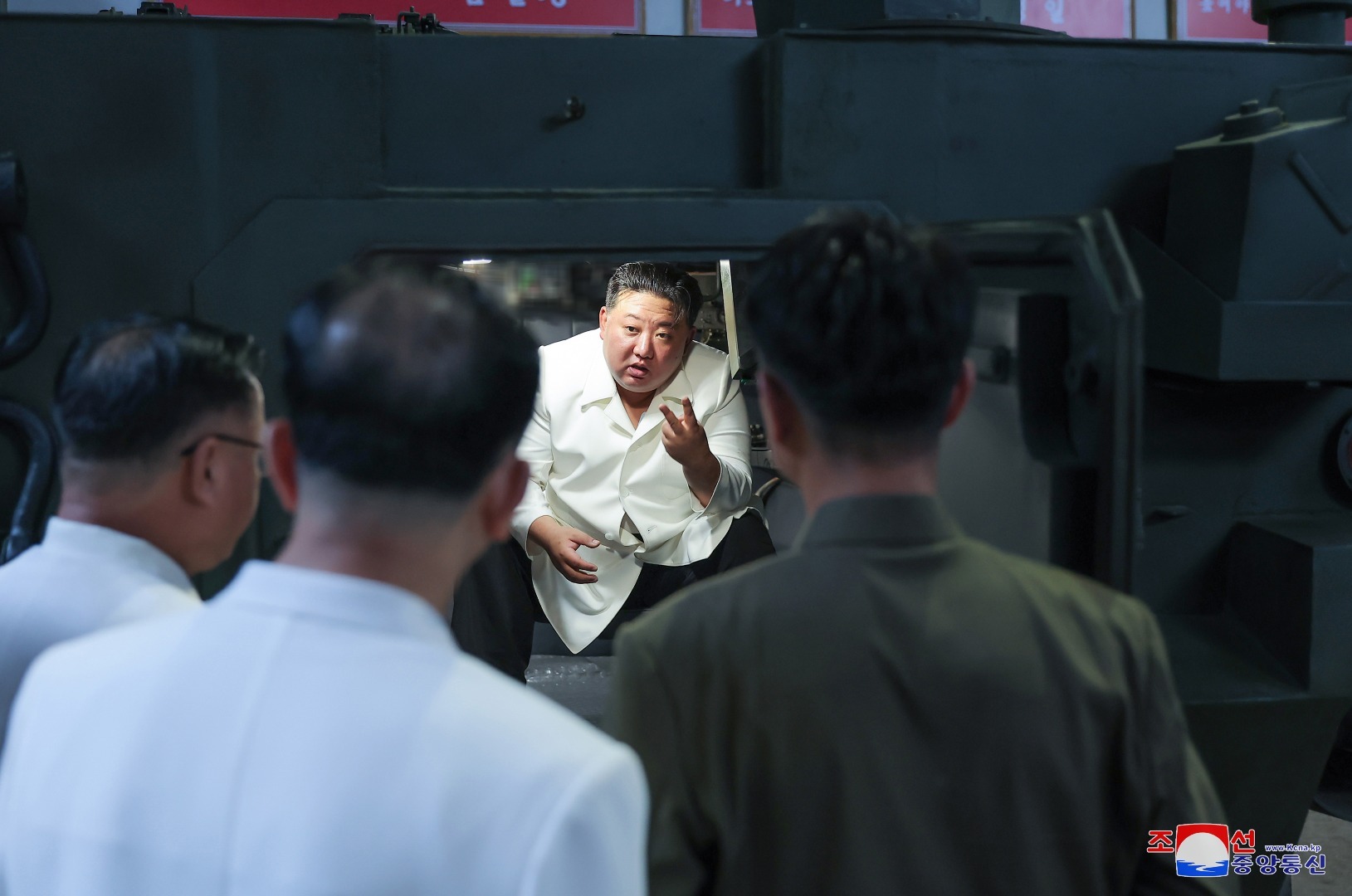
However, Jeffrey Lewis, director of the East Asia Nonproliferation Program at the James Martin Center, analyzed that the actual APC production lines are likely at a separate factory complex just up the road from the Sinhung Machine Factory. He concluded that at least one photo of Kim published in the report on the APC factory visit was taken inside a large production building there. It is unclear how closely the two factories are related. They could divide production duties on common systems, given that at least one model of what appears to be a different ATGM carrier than the one Kim test drove, as well as another unknown combat vehicle, also appear in a KCNA image among the TELs inside the large assembly hall at the Sinhung Machine Factory. Or, as Lewis suggested, some APC models may have been moved to the Sinhung Machine Factory to simplify Kim’s inspection itinerary. Independent North Korean state media analyst Migs Caldeo previously suggested that the APC Kim test drove may have been the “newly developed ultramodern tactical weapon” Kim Jong Un inspected for a test in Nov. 2018, when state media only released vague descriptions but no photos of the weapon. Caldeo based his conclusion on a photo of Kim standing outdoors with military officials, which resembled the location where state TV showed the ATGM carrier undergoing testing in coverage of the Oct. 2021 weapons expo. State TV also released newer footage showing it firing a Pulsae-5 ATGM (resembling Russia’s Kornet ATGM) from a coastal road at a target across the water as part of coverage of the July 2023 weapons expo. The footage was likely filmed on the east coast near Hamhung given its factory location. Meanwhile, Kim’s two tours this month also follow extensive renovations in the last year of the Kusong Tank Plant on the west coast, indicating mass production of a new main battle tank (MBT) design may also be underway. Edited by Bryan Betts Updated on Aug. 15 at 7:40 a.m. KST with additional details from Jeffrey Lewis on the APC factory © Korea Risk Group. All rights reserved.

|

September 24, 2026Sep 24, 2026

The ultimate resources for professionals working on North Korea
 SHARE
SHARE COPY LINK
 X
X MASTODON