  
Analysis China building giant trade and tourism zone across from North Korean ‘holy’ cityCompany overseeing project promotes trade in sanctioned goods as key draw of new border crossing 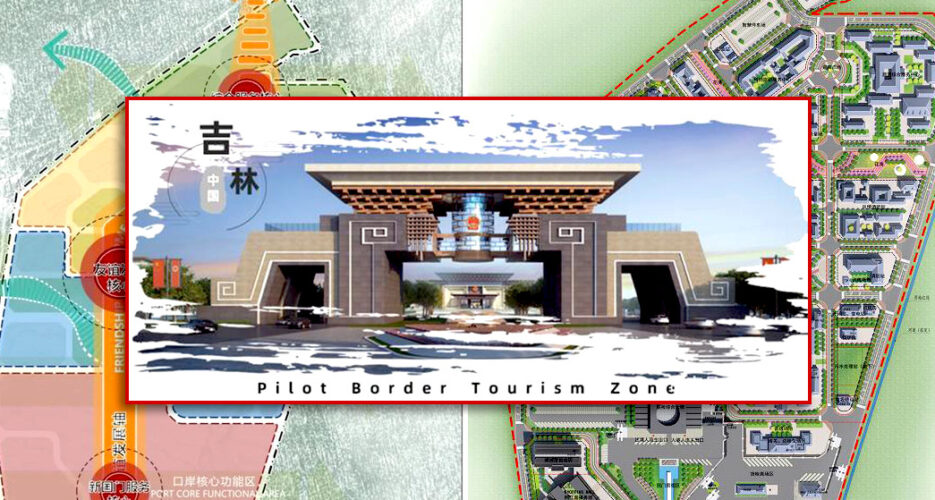 China is building a giant new tourism and economic zone in a remote area near North Korea’s “holy” city of Samjiyon and Mount Paektu, according to NK Pro analysis of satellite imagery and Chinese media. The new Chinese project is aimed at boosting sightseeing and trade in sanctioned goods and follows similar initiatives elsewhere along the border in recent years, as the two countries continue preparations to resume cross-border exchanges. Work appeared to start on the customs and crossing area of the “Jilin Antu Changbai Mountain Border Tourism Experimental Zone” project last October, when crews began to clear a 37-acre (15-hectare) patch of forest just a few yards from the border. Planet Labs imagery reveals a blue-roofed structure and building foundations began to take shape in the now-cleared forest near the existing Shuangmu Hill Port crossing in the last week of April. 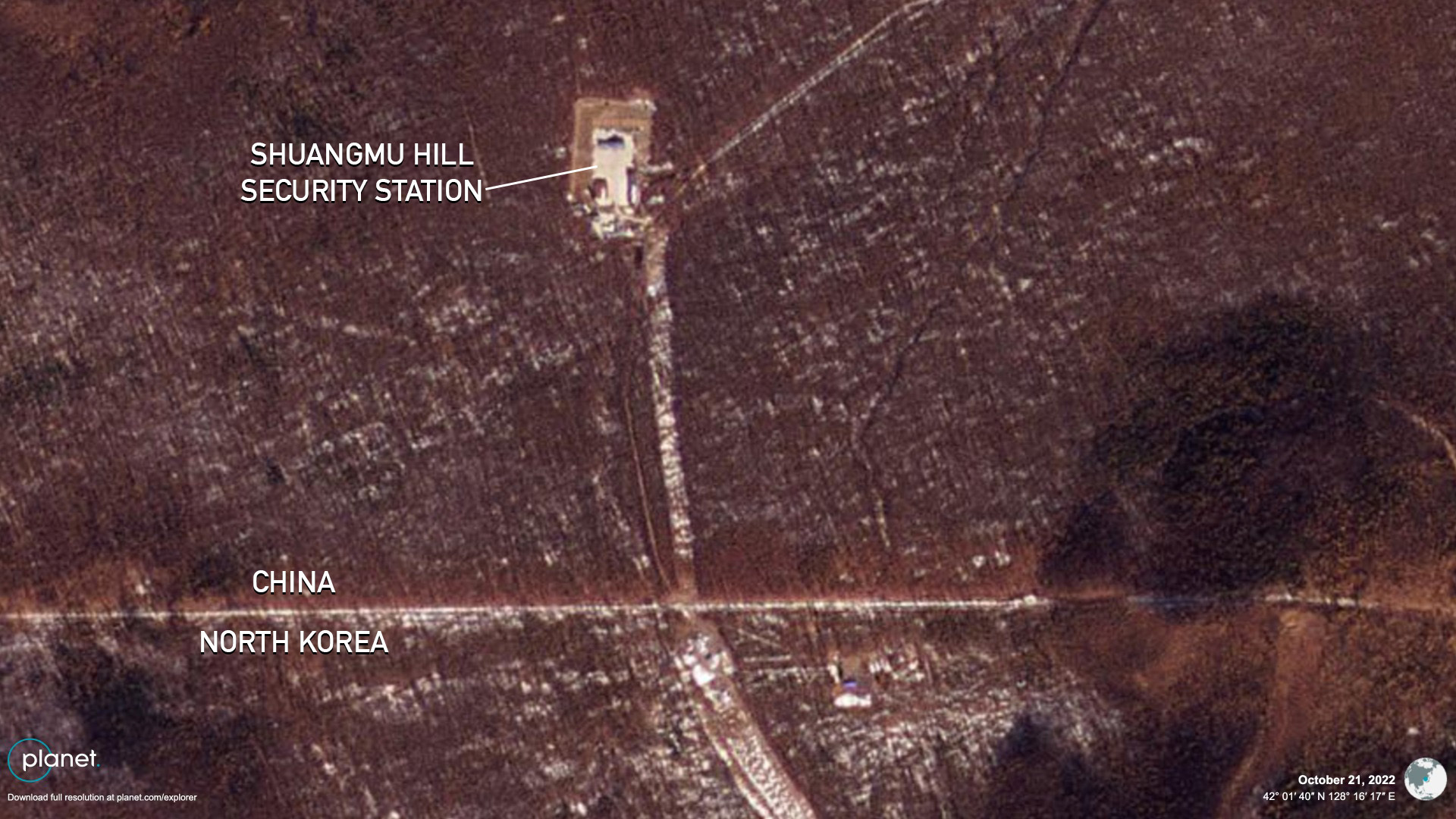 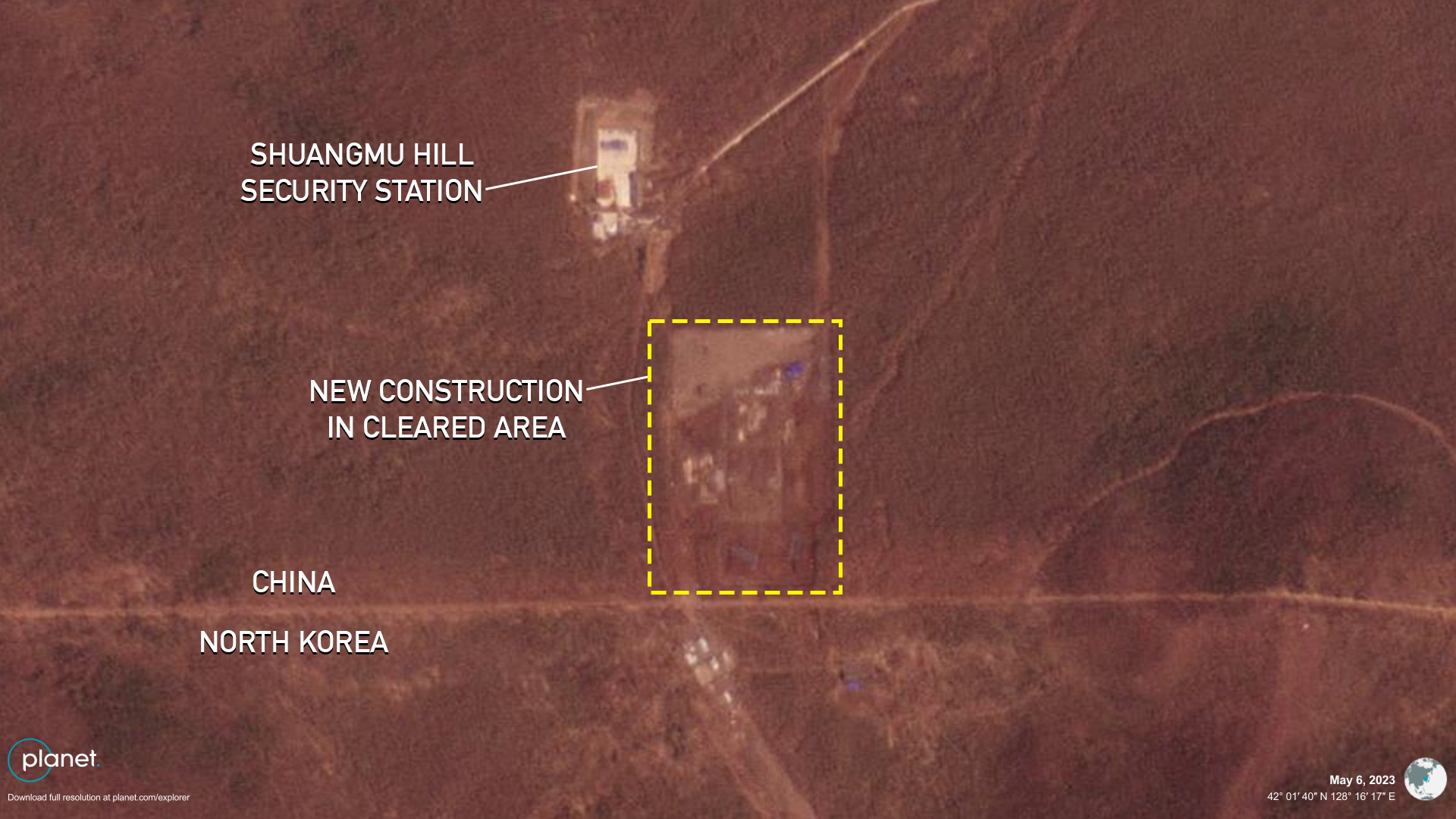 This comparison shows the new trade and tourism zone construction site before forest clearing began and earlier this week as the project picked up pace | Images: Planet Labs (Oct. 21, 2022; May 8, 2023); edited by NK Pro (Please refresh page if images do not load) 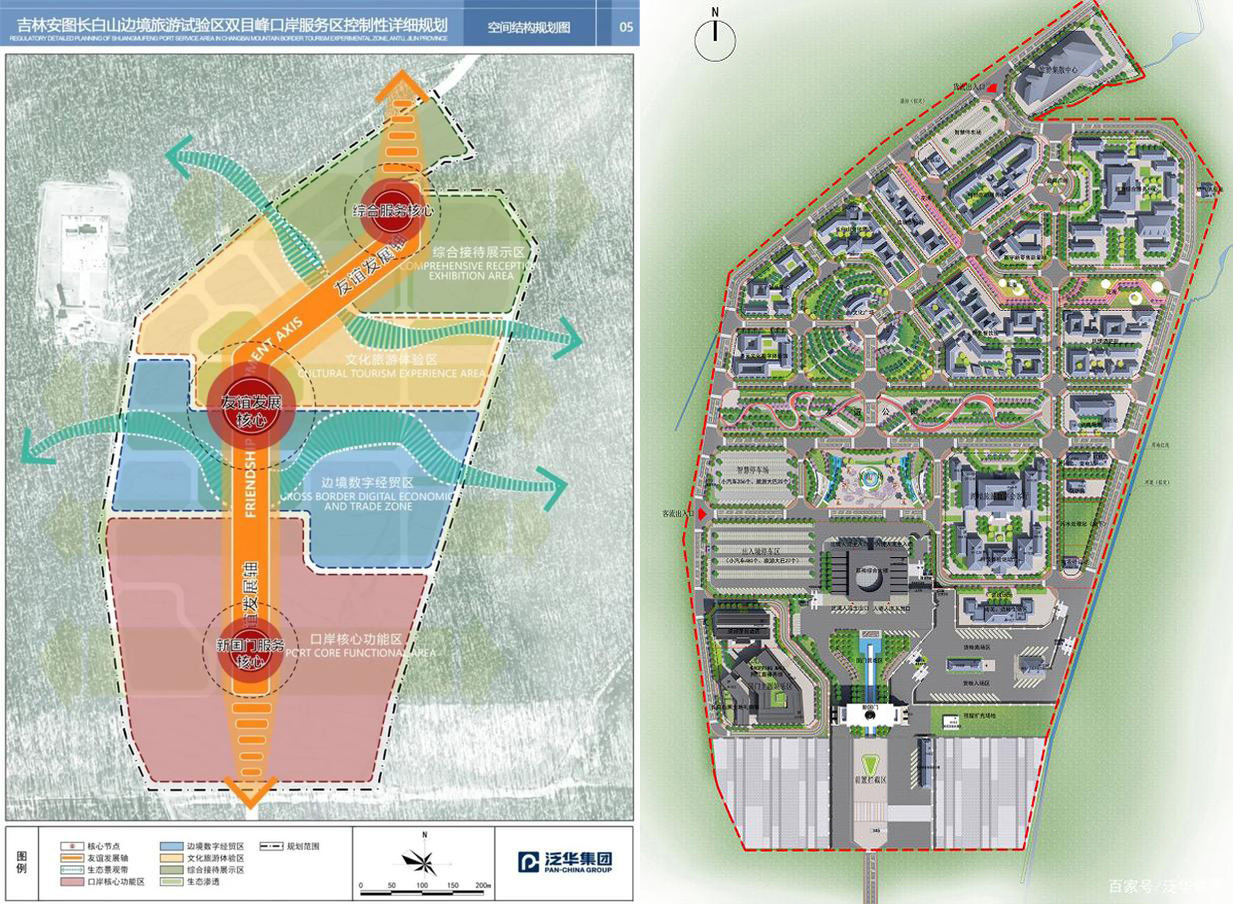 Fanhua Construction Group Co., Ltd. — the company that won the local Antu County government bid for the project — released detailed 3D renders and other construction plans last year. Their plans show that the customs facility now under construction is only one of four parts to the project and that a “cross-border digital economic and trade zone,” “cultural tourism experience area” and “comprehensive reception exhibition area” are slated to be built directly to the north, forming a single complex of structures in the remote forest. Fanhua says it hopes the economic and trade zone facilitates activities such as “cross-border labor, financial and industrial cooperation” and importing North Korean ore and exporting Chinese steel — all of which are currently prohibited under U.N. sanctions. The recent construction push comes after Antu County Magistrate Zheng Zhe said at a winter festival in January that the Mountain Border Tourism Experimental Zone project should be “accelerated,” according to Yanbian Daily. 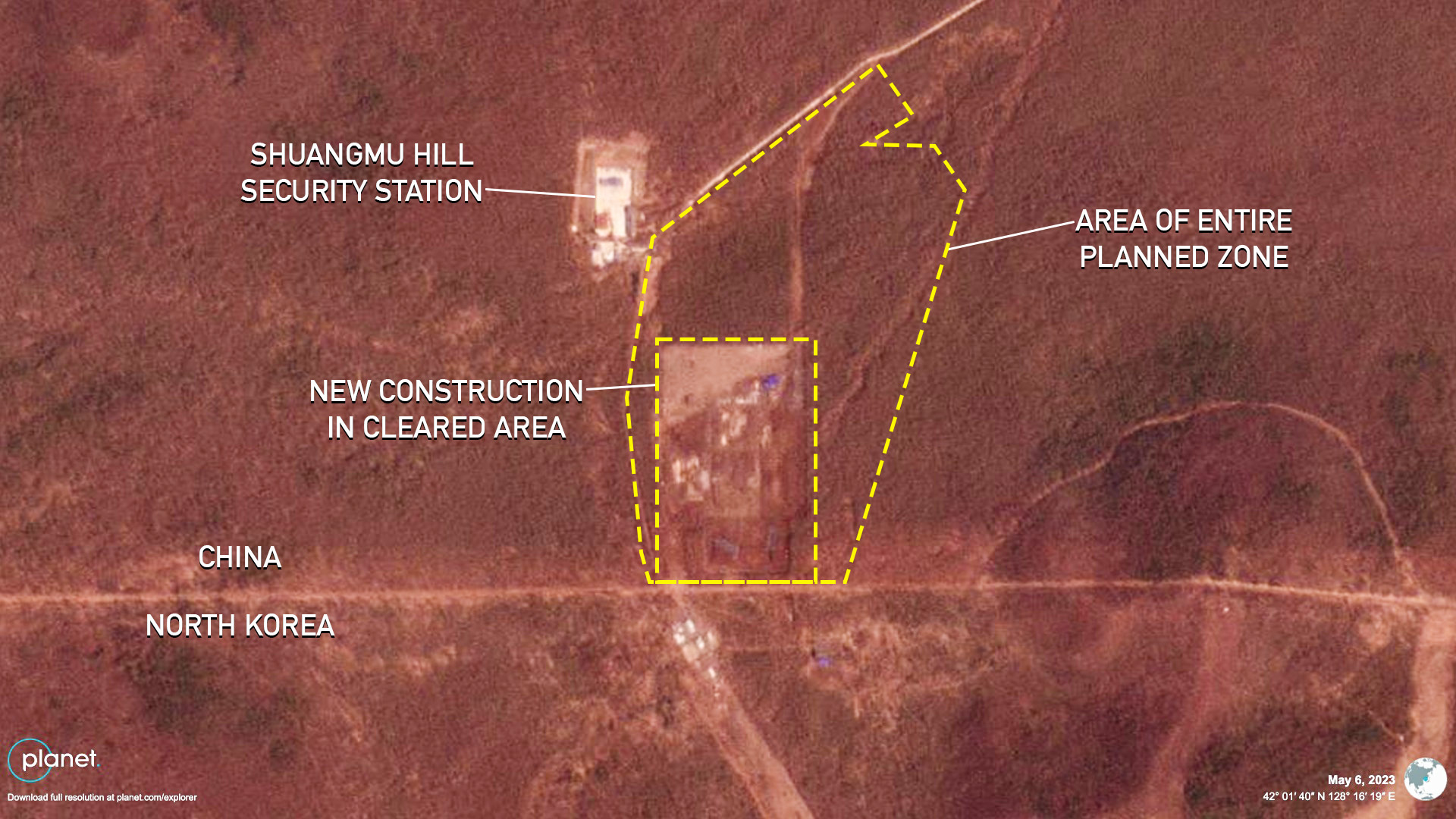 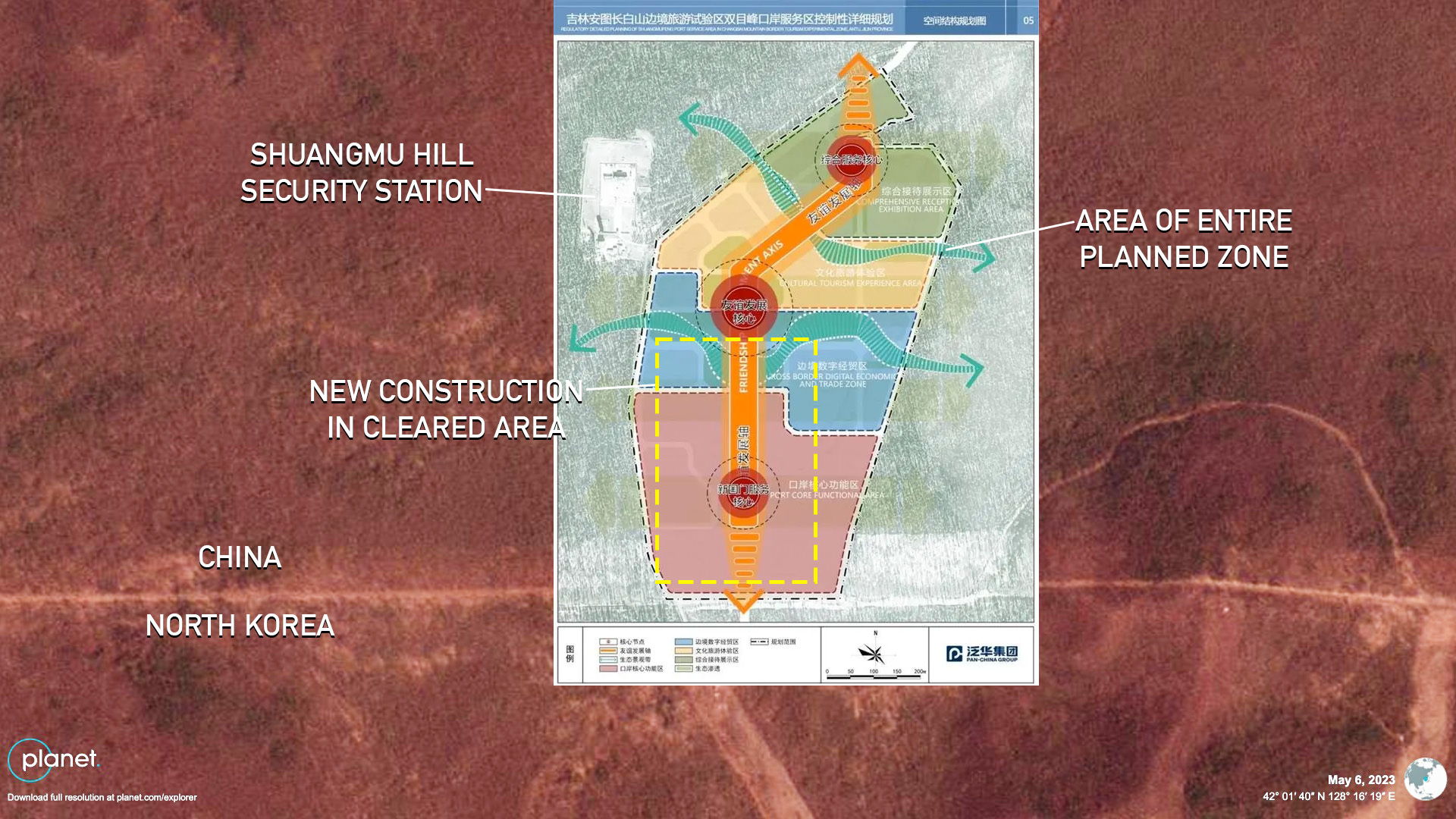 Slide to compare a satellite image of the construction area (left) with the Fanhua project map (right) | Images: Planet Labs (May 6, 2023); Fanhua Construction Group (Jan. 10, 2022); edited by NK Pro | Please refresh page if images do not load 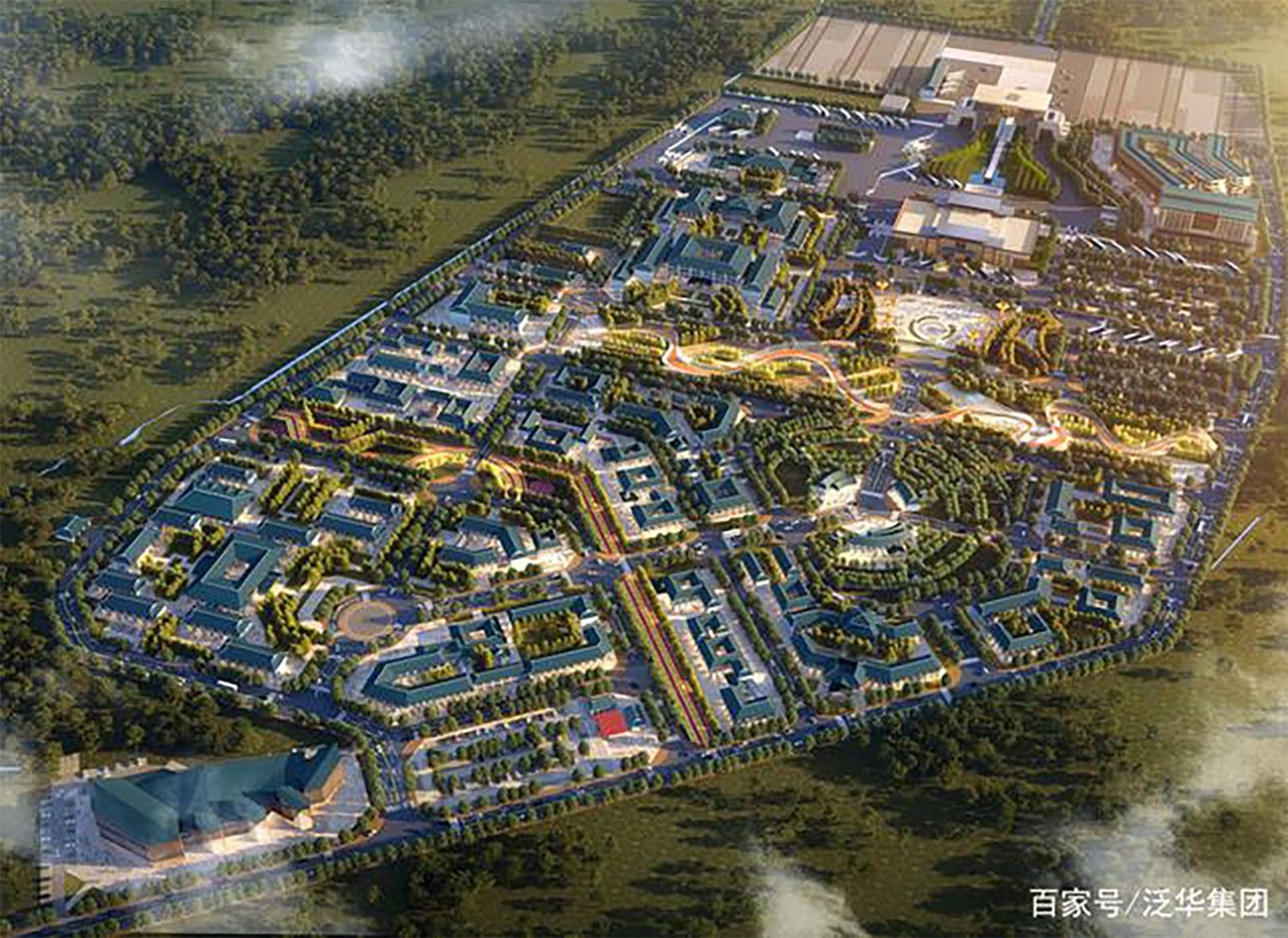 China has built similarly sized customs ports along the border with North Korea in recent years, even since Pyongyang shut the country’s borders in 2020 amid the COVID-19 pandemic, but this has typically been a sign of local Chinese officials making long-term preparations instead of imminent reopening. The size of the cleared land for the newest customs port area is similar to still unopened facilities built at the New Yalu River Bridge near Dandong on the west coast and at Quanhe port near Hunchun on the east end of the shared border. It is slightly larger than one finished before the pandemic in Jian across from North Korea’s Manpho. North Korea does not appear to have started any construction on their side of the border directly across from the new customs and tourism zone, but DPRK leader Kim Jong Un has pushed a megaproject to completely rebuild the Samjiyon and Mount Paektu area since 2016. The rebuilt city features new hotels and attractions for Chinese visitors, such as a traditional palace stay experience, horse riding facilities and sports zone, while yet another new ski resort now appears to be under construction atop the hill overlooking the city. 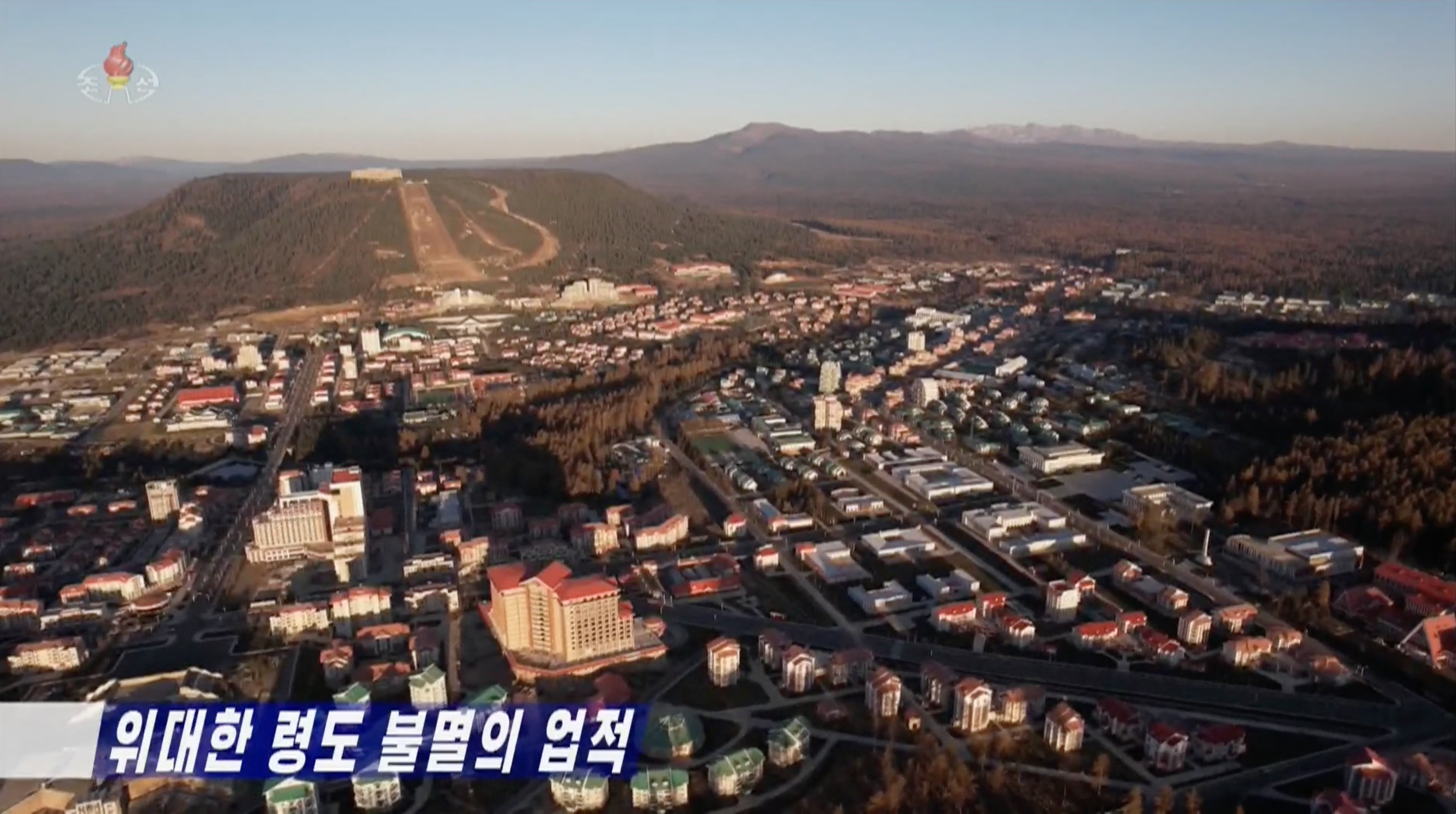 It is unclear how many Chinese tourists are expected to go through the upgraded land border crossing, which is a 30-mile (50 km) drive from the nearest town, the Antu County seat, and 93 miles (150 km) from Helong City. Tourists coming from further away could land at the small Samjiyon Airport, where North Korea has recently built a new train line and railway station to take visitors into Samjiyon City. Official North Korean government lore states that former leader Kim Jong Il was born near Mount Paektu and that founding leader Kim Il Sung performed “revolutionary” exploits on the mountain and around Samjiyon, making it the “holy land of the sun.” Authorities frequently bring work groups and even young children to the region for ideological training involving long marches in sometimes extremely cold weather. Soviet Union records show Kim Jong Il was actually born in the Russian Far East near Khabarovsk in 1941. Edited by Arius Derr © Korea Risk Group. All rights reserved.

|

September 27, 2026Sep 27, 2026

The ultimate resources for professionals working on North Korea
 SHARE
SHARE COPY LINK
 X
X MASTODON