
  
News Obscure vessels conduct likely ship-to-ship transfer in North Korean watersActivity aligns with trend of illegal transfers well outside ports due to COVID-19 and sanctions concerns, expert says 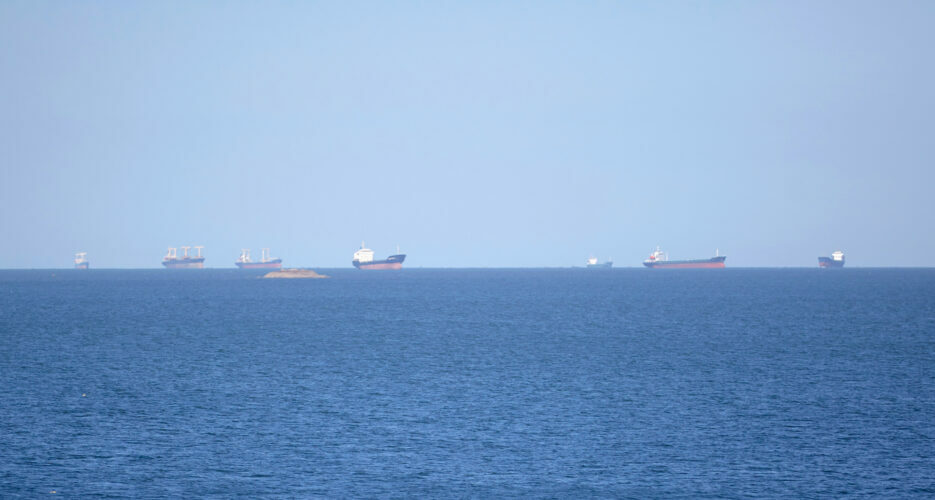 A cargo ship that departed from China appears to have conducted an illegal ship-to-ship transfer in North Korean waters off the country’s west coast last week, satellite imagery and ship-tracking data show. The activity fits with the DPRK’s recent pattern of conducting transfers for coal exports away from ports due to COVID-19 concerns, one expert told NK Pro. Planet Labs satellite imagery taken on June 11 shows two cargo ships positioned next to each other some 42 miles (70 km) from North Korea’s main port of Nampho. The vessels’ barges are open, suggesting an illicit transfer of bulk cargo. The length of one of the vessels matches the observed dimensions of the DATONGHAI001, a cargo ship that sailed from China into the vicinity of the apparent transfer at sea, according to automatic identification system (AIS) data from MarineTraffic. AIS data places the DATONGHAI001 at the Jingjiang port along the Yangtze River on May 31, and imagery shows that an approximately 109-meter-long cargo ship was the only vessel docked at the port, which handles bulk cargo including coal and minerals. 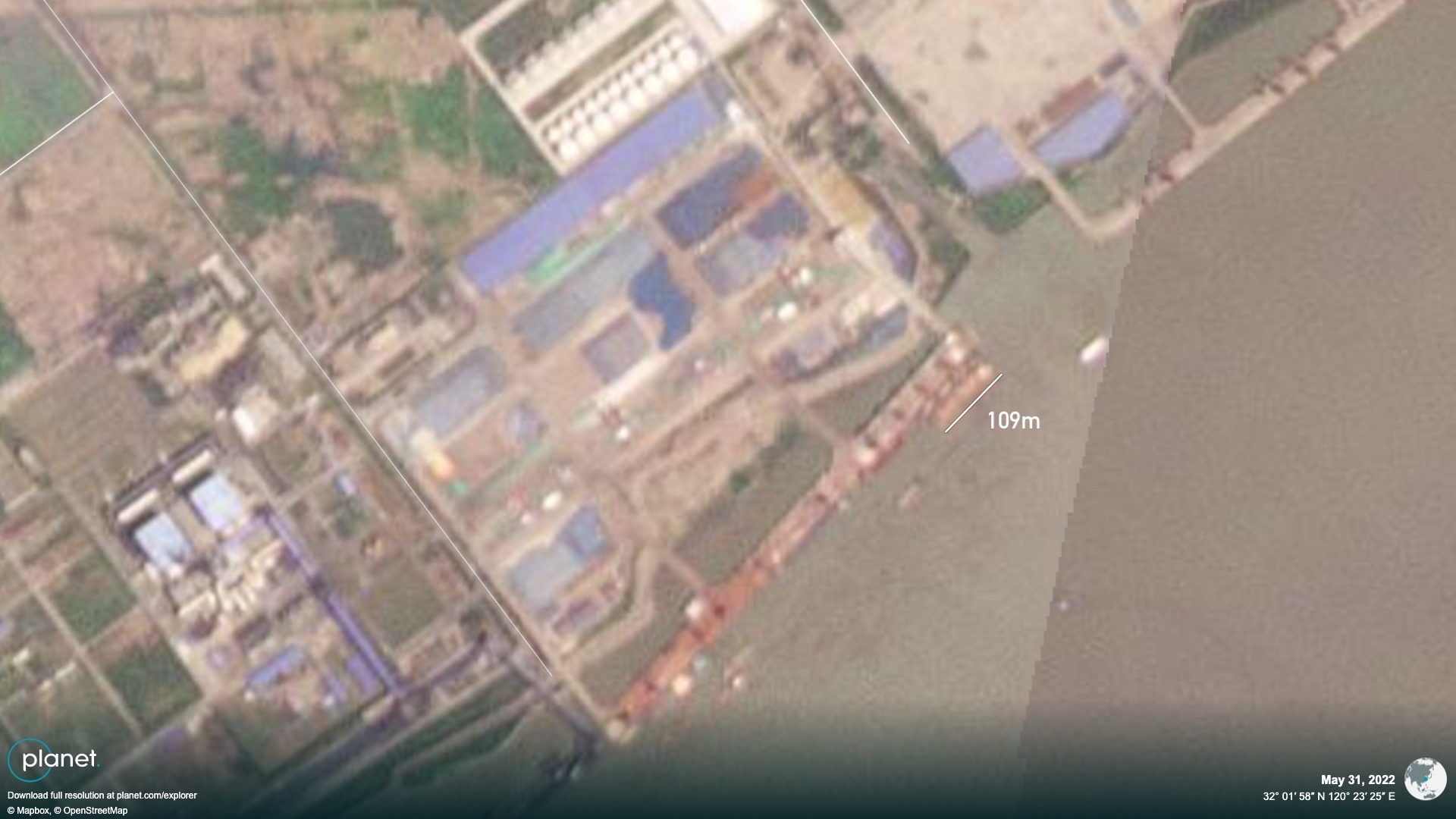 Then on June 10, the DATONGHAI001 entered North Korean waters heading toward Nampho, according to AIS data. A day later, the DATONGHAI001 reappears on AIS in the vicinity of the apparent ship-to-ship transfer off North Korea’s west coast. While satellite imagery shows a total of nine vessels at the location, the ship that most closely matches the DATONGHAI001’s 109-meter length is one of the two vessels engaged in the transfer at sea. Ship-tracking data also shows that an unknown vessel approached the DATONGHAI001 on June 11, after which both vessels turned off their AIS transmitters, a common technique that ships use to avoid being tracked. 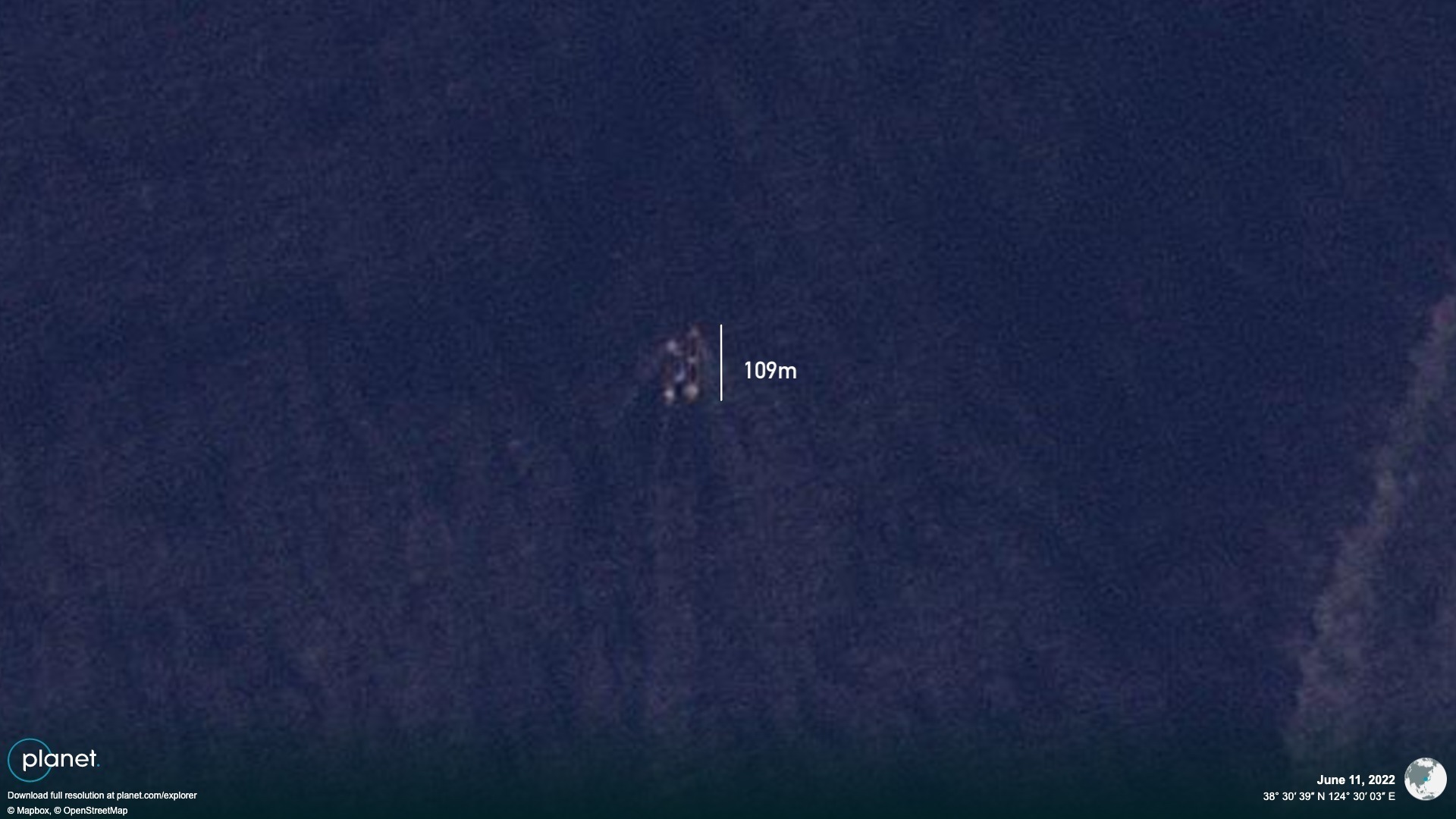 The evidence strongly suggests that the DATONGHAI001 participated in the ship-to-ship transfer, but little is known about the vessel, including its owner and flag. The ship sails under an apparently invalid Maritime Mobile Service Identity (MMSI) number that does not appear in the International Telecommunication Union’s database. Sanctions-evading vessels are known to display false MMSI numbers. Ship-to-ship transfers relatively far from Nampho are in line with trends in the DPRK’s sanctions-evasion techniques, James Byrne, director of open-source intelligence at Royal United Services Institute (RUSI), told NK Pro. “In recent months, North Korean vessels have been conducting transfers outside the ports and sometimes far away from the coast but inside the country’s Exclusive Economic Zones (EEZ),” Byrne said. “Clearly, this makes the transfers more difficult to track and also moves the vessels away from ports where Pyongyang worries they may be a vector for COVID transmission.” North Korea has used illicit ship-to-ship transfers for years to skirt U.N. sanctions on the country’s coal exports, which are believed to help fund Pyongyang’s weapons programs. The DPRK has also attempted to circumvent a yearly cap on how much oil it can import under U.N. sanctions using such transfers at sea. Edited by Bryan Betts © Korea Risk Group. All rights reserved.

|

September 18, 2026Sep 18, 2026

The ultimate resources for professionals working on North Korea
 SHARE
SHARE COPY LINK
 X
X MASTODON