
  
Analysis COVID-19 in Kaesong? What to make of North Korea’s suspicion of a viral presenceReport on suspected case marks a turning point in North Korea's approach to virus 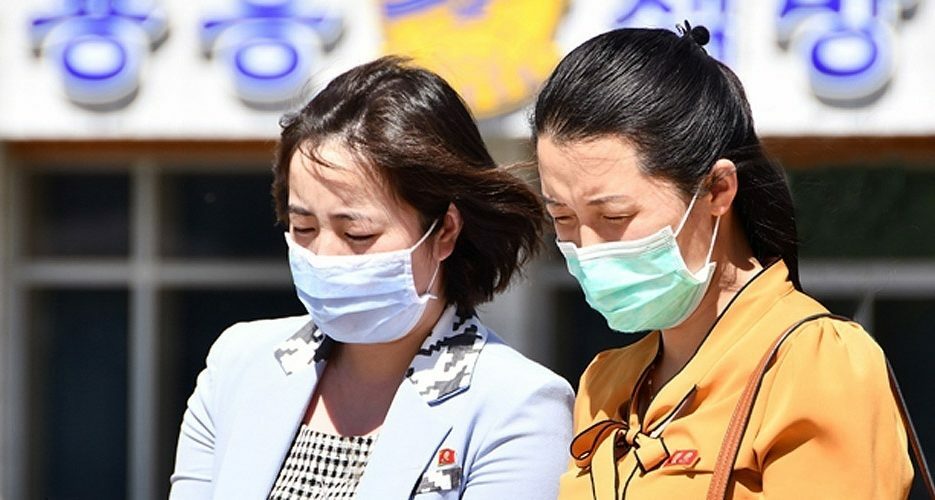 Kim Jong Un’s convening of an emergency politburo meeting on July 25 — where he discussed the possibility that COVID-19 has been introduced to the country by a returning defector — is the first official acknowledgment that the virus may now be present in North Korea. Unconfirmed (as many aspects of the story are), a former DPRK resident infected with the virus is said to have successfully crossed the heavily guarded Military Demarcation Line (MDL) from the South Korean side on July 19. The individual is feared to have spread it through the nearby city of Kaesong – the report marks a major turning point in how official state media report on COVID-19. On the one hand, it is possible that the so-called “re-defector” does not have COVID-19 and that authorities are taking what appear to be extreme actions based principally on a sense of significant caution. On the other hand, it’s also possible that the concerns surrounding the man’s health status are valid and that he may have unwittingly spread the virus since his undetected arrival several days ago. In any case, it appears that North Korean authorities now have a narrative that can be used to publicly reveal what many outsiders have long-suspected: that COVID-19 is already present in the country. SUSPICION OR SYMPTOMS? So far, North Korean state media has yet to confirm that the re-defector – a suspected young man who had lived in Gimpo – has, in fact, contracted COVID-19. Instead, the Korea Central News Agency (KCNA) reported Sunday that the state “anti-epidemic organization” had received an “uncertain result” after testing the person’s upper respiratory organs and blood. The absence of confidence surrounding the man’s status suggests that authorities in Kaesong have not yet actually been able to conduct a reliable COVID-19 test. With only 12,500 test kits having been pledged to the North by international organizations since January – and no assurances all have even been delivered – it’s quite possible there is an absence of reliable diagnostic capabilities in Kaesong. As such, the man may have been tested using alternative and unreliable methods, explaining the ambiguity. Nevertheless, his sudden arrival – which broke myriad North Korean rules on quarantine and disinfection – is likely being seen with genuine concern in the North. While the reaction to what is actually an unconfirmed case seems extreme – Kim Jong Un’s convening of an emergency meeting and Kaesong being put into a state of lockdown – it is worth considering the anti-COVID 19 context in which it emerges:
In other words, North Korea has extreme concern about anything arriving from overseas when it comes to COVID-19. In light of how these concerns have articulated this year in such ways, North Korea’s response to the arrival of the re-defector from a country known to have experienced over 14,000 cases of COVID-19 seems consistent. The measures reported so far may thus represent a genuinely motivated form of emergency quarantine process, responding to a situation in which certainty about the patient’s status is difficult and in an environment where virus fears are significant. IN CASE OF TRANSMISSION Given how low COVID-19 case numbers are in South Korea, the chances of the re-defector having contracted it prior to his alleged arrival in North Korea are statistically very low. However, it is of course possible that the North Korean account of events are true: they have serious reason to suspect he has COVID-19 but were unable to definitively prove it due to the aforementioned absence of testing capability. In such a case, there is naturally a risk that the infected man has passed COVID-19 onto others in North Korea since his arrival. Having most likely crossed the border from at closest about 10 km from Kaesong – or at furthest 25 km – the man would have come across many North Korean citizens along his probable walk to the city. Whether he spent sufficient time with anyone along the way to have transmitted the virus is uncertain, but there is naturally a risk. And this risk is magnified should he have had acquaintances in the region who helped him, for example – providing lodging or food. Yet even if the virus has spread this way, it appears that on the surface the prospects of a major outbreak seem relatively low. It is hard to imagine, for example, of the individual taking part in mass gatherings after an extremely dangerous border crossing. In addition, existing regional travel restrictions and precautions surrounding mask-wearing mean a natural level of containment and mitigation has likely occurred. WHAT IT MEANS It remains uncertain whether the re-defector actually has COVID-19 or not. As such, the steps taken so far are logically all precautionary for now. But of course, the re-defectors’ arrival and the significant concern communicated about the possibility of him transmitting the virus also has an advantage for North Korean authorities. As a result, this incident may be viewed by propaganda authorities as an opportunity to begin to justify transparency about the likely fact that clusters of COVID-19 have emerged already in several parts of the country. While there have likely been hundreds of illegal border crossings between the PRC and DPRK since the virus broke out in December, the current warm relations between Beijing and Pyongyang may have made it difficult for North Korean state media to seize on illegal crossings along the northern border to make claims about suspected transmission. But having just implemented a significant anti-South Korea campaign throughout June, this re-defectors’ arrival from the ROK provides a much easier way to lay blame elsewhere. As a result, his arrival is a turning point in North Korea’s approach to reporting on COVID-19. It may open the door for the DPRK to reveal details of other suspected cases to World Health Organization officials based in Pyongyang, which in turn could enable the DPRK to more transparently seek aid from the international community. But it may also help justify draconian new controls and measures to respond to other suspected cases. And it will likely mean that hopes among Pyongyang’s expat community of being able to freely travel in and out of the country any time soon are likely to be dashed. © Korea Risk Group. All rights reserved.

|

September 16, 2026Sep 16, 2026

The ultimate resources for professionals working on North Korea
 SHARE
SHARE COPY LINK
 X
X MASTODON