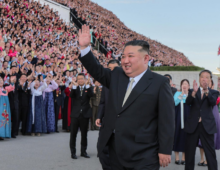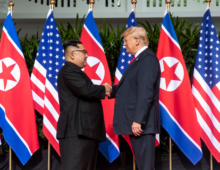
  
Analysis View from Jingshan: curiosity about coronavirus in North Korea permeates ChinaChinese netizens have bashed Pyongyang's denial of any cases of COVID-19 and its decision to close the Sino-DPRK border 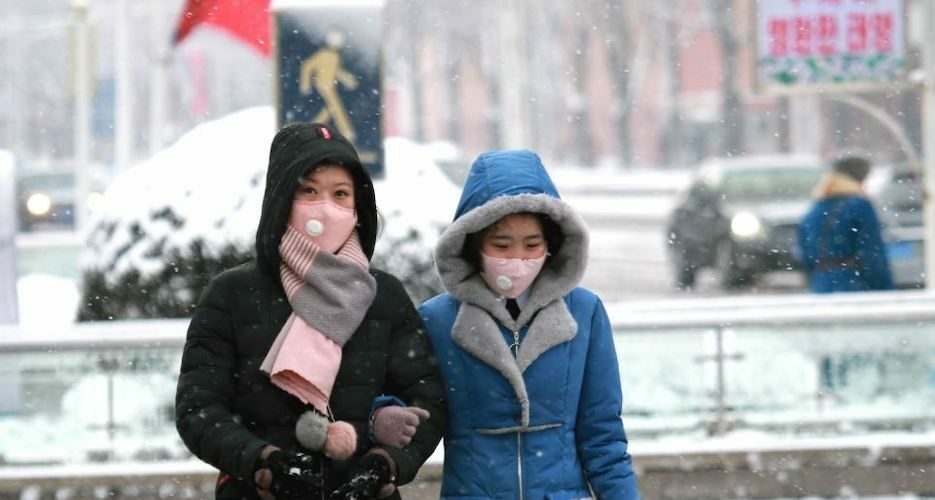 As China emerges from a challenging domestic coronavirus outbreak, it is eyeing the responses of other nations to the pandemic. North Korea has been no exception. Perceived as a curious and stubborn neighbor — a reflection of China decades ago, frozen in time — North Korea has attracted the ire and ridicule of Chinese observers for years. Chinese frustration with its neighbor has simmered during the coronavirus crisis. North Korea closes border with China North Korea acted quickly to cut off the entry of tourists and close border crossings to China after reports emerged of the spreading coronavirus in late January. Analysts cite the weakness of the North Korean healthcare system as a primary motivating factor. Reporting on the measure was sparse in mainland Chinese media, and commentary among media outlets was similarly limited. One article that was republished several times simply quoted a South Korean doctor who noted the backwardness of the North Korean healthcare system and its limited foreign trade as explanations for its reaction. Social media responses to the border closure were heavily censored but some posts on Weibo remained visible. While Chinese netizens expressed anger at restrictions on their travel imposed by India, Japan, and the U.S. in the wake of the coronavirus outbreak, many saved their harshest words for North Korea.  One derided a photo of Kim Jong Un and his wife on February 4, writing that “the fastest [to close its borders to China] was North Korea….the little boat of [Sino-DPRK] friendship is said to [have been] overturned!” Another wrote, “I really wonder if North Korea in dealing [with the virus], having closed the border with China in the first hour [of the outbreak], has not also prohibited Chinese tourists from entering!” North Korea has not made such exceptions for Chinese tourists. However, the post alluded to the frustration that many Chinese feel toward a neighbor which does not hesitate to thumb its nose at Beijing while only too happy to accept tourism revenue from Chinese visitors (an economic lifeline for Pyongyang). Rumors circulate about joint border action Reports that North Korea requested China to tighten border controls to prevent coronavirus transmission in early March spread quickly through Chinese social media. In particular, a notice issued to residents of Jian and Baishan, both near the Sino-DPRK border, warned that those who got too close to the border may be shot by North Korean guards. However, these reports were also the source of widespread confusion. Many comments on posts about the notice issued by municipal governments in Northeast China referred to it as a “rumor” that had been “retracted” and asserted that officials had denied the veracity of the notice. This led to confusion: one commenter wrote, “If this is true but the residents were notified that it is not true, it will claim their lives.” Another commenter took the opportunity to vent: “Russia and North Korea were the earliest and most ruthless [in closing their borders to Chinese as the virus spread].” A few others simply laughed. Notably, comments on posts about the border action did not appear heavily censored, suggesting that authorities wanted to sow doubts about its veracity among observers outside the affected regions.  Lack of coronavirus cases draws skepticism Throughout the duration of the march of the coronavirus around the world, even as it implemented harsh quarantines and border closures, North Korea has continued to report zero cases of COVID-19 within its borders. Sources suggest that the virus has both entered the country and claimed upwards of 1,000 lives. A few Chinese media outlets reported the official lack of cases in North Korea and even suggested skepticism at the claim. An article that was republished several times acknowledged that “information [in] North Korea is sealed off, and it is very difficult to understand the situation inside.” However, reports of the rumored coronavirus deaths in North Korea were not present in Baidu News search results. A post on Weibo by Ifeng Media, a mainland Chinese outlet, quoted reports from South Korea’s Yonhap and North Korea’s Rodong Sinmun that some North Koreans were no longer wearing face masks as of March 9. This was a “demonstration of relaxed vigilance” as “the infectious disease still has not flowed into the country.” The last sentence of the post noted the emphasis of North Korean media on “unconditional obedience of official command and control.” Commenters ridiculed the North Korean claims of having kept the virus outside the country. Several sarcastically wrote “Great work!” and another joked, “stronger than South Korea.” Two comments assailed the last sentence of the post, deeming it “unbelievable.” Another wrote, “still some fools continue to praise?” It was unclear if their sentiment was directed at the North Korean leadership or at Ifeng’s reporting of the situation. North Korean missile tests resume Despite coronavirus concerns, North Korea conducted two separate missile tests in early March. Provocative actions by North Korea have repeatedly drawn the anger of Chinese observers and frustration of Beijing, which has urged North Korea to refrain from such actions on numerous occasions. In the past, when provocative North Korean behavior coincided with American activities, such as joint U.S.-ROK military exercises, China could assign blame to both parties. However, the March launches came after the U.S. and South Korea postponed scheduled joint exercises, which had already been scaled down to facilitate diplomacy with North Korea, due to the coronavirus outbreak. Coverage of the missile tests was limited in Chinese media. Reports quoted Yonhap as well as other foreign media sources and stated the facts of the March 2 and March 9 tests alongside limited commentary from overseas observers. The Chinese Foreign Ministry acknowledged reports of the March 2 test and encouraged the denuclearization of the Korean peninsula and regional peace in a brief statement. A similar report was given on March 9.  Baidu was slow to display search results for “North Korea launch” and comments on Weibo posts on the tests were heavily censored. On one post where comments were visible, netizens appeared to mock North Korea using veiled insults. Many wrote expressions of thanks, apparently a sarcastic response to North Korea’s stirring up trouble. One wrote, “for attracting the USA…thanks!” Another wrote “Thanks to the Party, gratitude to the leader of the Party,” though it was unclear if the poster was referring to North Korean or Chinese leaders. Another suggested the test was North Korea’s response to a “lack of face masks,” a reference to both North Korean bellicosity and the ongoing coronavirus crisis. Conclusions North Korea’s response to the coronavirus outbreak in China and its denial of the presence of the virus within its own borders has furthered the status of the country as a laughing stock among Chinese individuals. On a deeper level, North Korea’s border closure and missile tests in early 2020 have fed lingering Chinese anger at their neighbors across the Yalu River. The prohibition of entry by Chinese citizens landed a particularly stinging blow. Although most Chinese were not affected (and had more pressing concerns vis-à-vis the coronavirus), the fact that North Korea closed its border within “the first hour” of the crisis did not escape the attention of Chinese observers. Responses to the closure among Chinese who rely on trade with North Korea were not clear. On internet forums discussing the warning distributed to residents of Jian and Baishan, commenters requested insight from locals but received none (or replies were censored). The apparent capitulation of Northeast Chinese officials to North Korea’s request for border control support, particularly when the lives of Chinese residents could be at risk from North Korean gunfire, seemed an embarrassing development. This may have led to rumors that the warning issued by Chinese authorities to residents of Jian and Baishan was retracted. However, given the risk posed by the coronavirus to North Korea and the pressure on North Korean guards to maintain the border closure, Chinese authorities likely had no choice but to warn their citizens about the situation for safety reasons. North Korea’s missile tests on March 2 and March 9 similarly placed Beijing in an awkward position as there were no American or South Korean actions (besides ongoing sanctions) underway to explain them. Such behavior not only suggests that North Korea is not interested in peace or denuclearization (two key Chinese objectives), it also weakens the standing of South Korean President Moon Jae-in, who has pursued closer relations with China. Frustration among South Koreans at Moon’s handling of the coronavirus crisis coupled with his failure to tame North Korea could spell losses for his party in the ROK parliamentary elections scheduled for next month. All things considered, Beijing’s responses to the North Korean border closure and missile tests have been tepid. However, this is simply a reflection of China’s focus on the coronavirus crisis. North Korea is not a priority for China at the moment, and this will not change until the coronavirus outbreak is fully brought to heel. Edited by James Fretwell and Oliver Hotham © Korea Risk Group. All rights reserved.

|

September 16, 2026Sep 16, 2026

The ultimate resources for professionals working on North Korea
 SHARE
SHARE COPY LINK
 X
X MASTODON